
Safety
General information, not medical advice
Your prescriber and the leaflet in your pack know your situation. This page does not.
- Follow your prescriber and the leaflet
- Don't start, stop, or change a dose on your own
- Doses and warnings differ by country and product
Dificid Tablet: Uses, Dosage, Side Effects, Precautions and Alternates
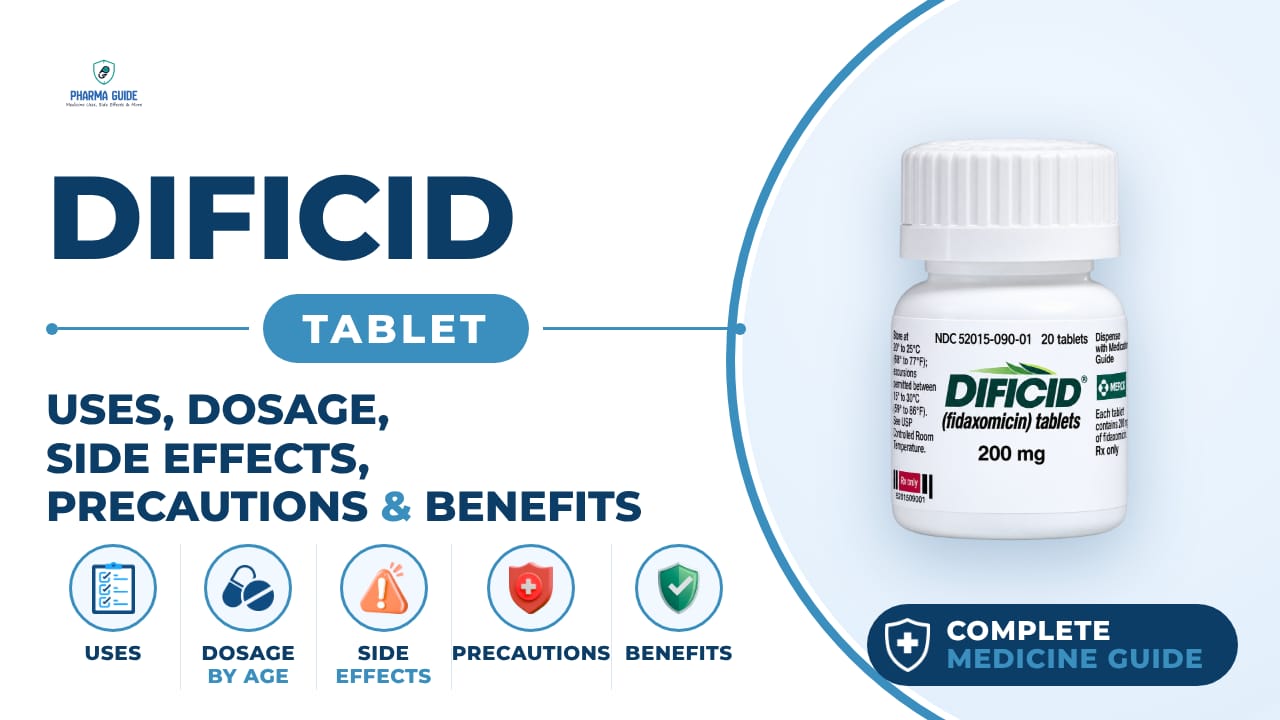
| Generic name | fidaxomicin |
|---|---|
| Drug class | macrolide antibiotic |
| Forms | Oral tablet (200 mg), Oral suspension (liquid), 40 mg/mL |
Quick overview
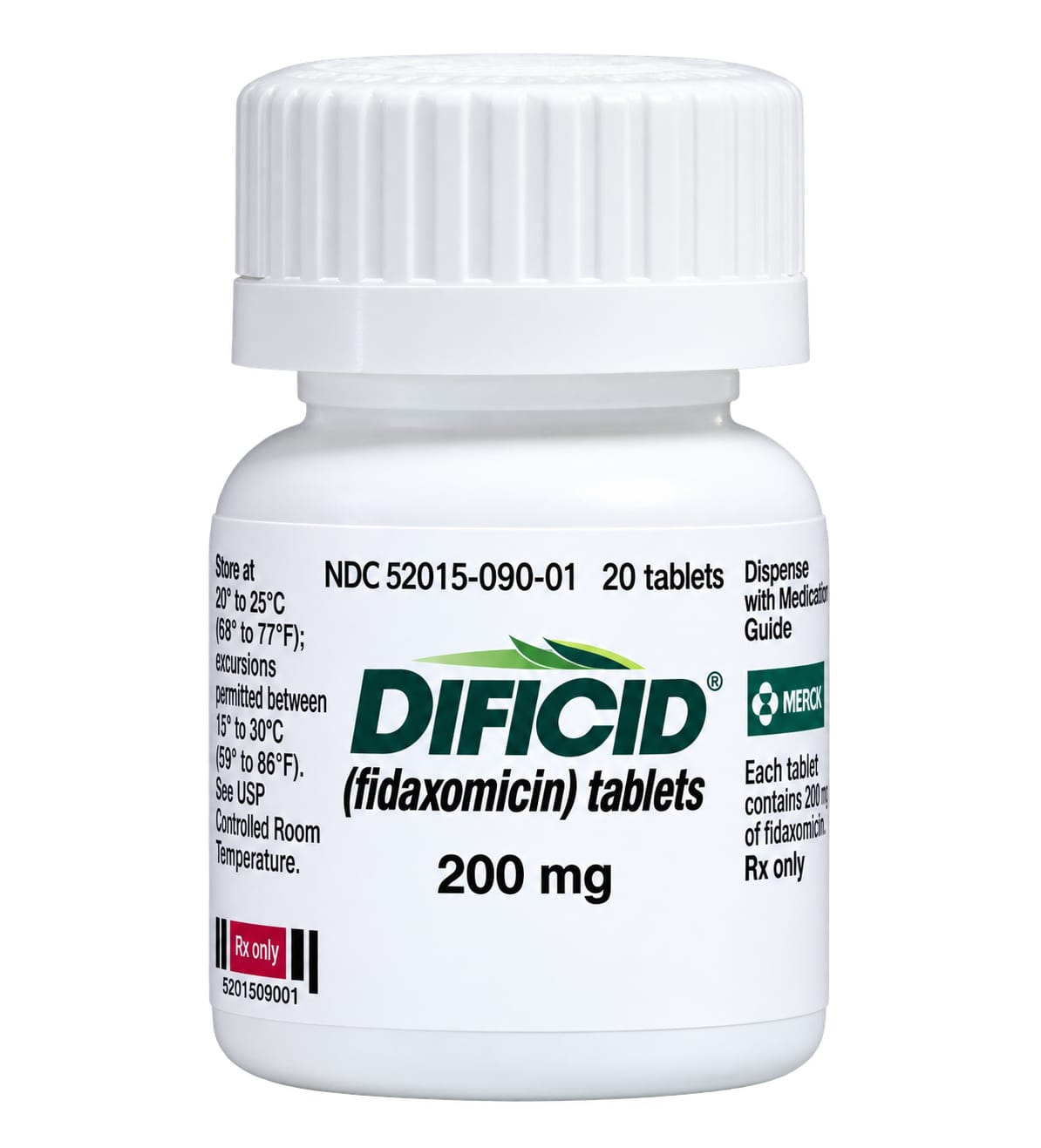
Dificid Tablet (fidaxomicin) is a prescription macrolide antibiotic used to treat diarrhea caused by an overgrowth of bacteria called Clostridioides difficile, or "C. diff." It is available as a tablet or liquid that is swallowed, and it only treats this specific gastrointestinal infection, not viral illnesses like colds or flu. It is used in both eligible pediatric and adult patients, following a 10-day course as prescribed.
What is Dificid Tablet
Dificid is a prescription macrolide antibiotic used to treat diarrhea caused by an overgrowth of bacteria called Clostridioides difficile, or 'C. diff.' It comes as a tablet or liquid that you swallow, and it only treats this specific gastrointestinal infection, not viral illnesses like colds or flu.
Dificid Tablet uses
- Treats Clostridioides difficile infection (CDI)
- Treats C. difficile-associated diarrhea
- Helps reduce C. difficile bacterial growth
- Used in both eligible pediatric and adult patients
Benefits of Dificid Tablet
- Provides targeted activity against C. difficile
- Has minimal systemic absorption
- May reduce the risk of CDI recurrence
- Provides convenient oral treatment
How Dificid Tablet works
Dificid works by stopping C. diff bacteria from making the proteins or nutrients they need to grow and multiply, which kills the bacteria causing the infection.
Dificid Tablet dosage
Take exactly as prescribed by your doctor and follow all directions on your prescription label. It can be taken with or without food. Shake the oral liquid well before measuring a dose, and use a proper dosing syringe or medicine measuring device for the liquid, not a kitchen spoon. Doses for children are based on their weight.
Take the liquid out of the refrigerator and let it sit for about 15 minutes before each dose, and do not leave it out longer than that. Complete the full prescribed course of treatment even if symptoms improve or go away, to reduce the risk of the infection coming back or becoming resistant to treatment.
If you miss a dose, take it as soon as you remember, but skip it if it is almost time for your next dose; do not take two doses at once.
| Age group | Dose |
|---|---|
| Under 6 months | Safety and effectiveness are not established |
| 12–17 years | 200 mg twice daily for 10 days |
| 18–64 years | 200 mg twice daily for 10 days |
Available forms and strengths
- Oral tablet (200 mg)
- Oral suspension (liquid), 40 mg/mL
Side effects of Dificid Tablet
Common
- Nausea or vomiting
- Stomach pain
- Diarrhea or constipation (especially in children)
- Fever (especially in children)
- Rash (especially in children)
- Stomach bleeding
- Low blood cell counts
- Abnormal liver function tests
- Indigestion
- Itching
Serious
- Severe allergic reaction: hives, rash, itching, swelling of the face, lips, tongue, or throat, trouble breathing or wheezing
- Inflammation in the colon: stomach pain and bloating, painful or bloody stools, fast heartbeat, cool or clammy skin, feeling like you might pass out
- Low blood cell counts: fever, chills, tiredness, mouth sores, skin sores, easy bruising, unusual bleeding, pale skin, cold hands and feet, feeling light-headed or short of breath
- Signs of stomach bleeding: bloody or tarry stools, coughing up blood, or vomit that looks like coffee grounds
Warnings and precautions
- Do not use Dificid if you are allergic to fidaxomicin, other macrolide antibiotics such as azithromycin, clarithromycin, erythromycin, or telithromycin, or any ingredient in the product.
- Dificid should only be used to treat diarrhea caused by C. diff infection, not other conditions, and it will not work against viral infections like the common cold or flu.
- People allergic to a type of antibiotic called a macrolide may also be allergic to Dificid, so tell your healthcare provider about any past allergic reactions to antibiotics.
- Do not take Dificid unless it has been prescribed to you, and do not share it with others even if they have similar symptoms.
- Keep Dificid, including the refrigerated liquid, out of the reach of children.
- Severe allergic reactions to Dificid are possible, including life-threatening reactions like facial swelling and anaphylaxis (closing of the throat).
- It is not known if Dificid affects pregnancy or could harm an unborn baby. Tell your healthcare provider if you are or plan to become pregnant.
- It is not known if Dificid passes into breast milk. Tell your healthcare provider if you are breastfeeding or plan to breastfeed, and they can advise whether it is safe for you.
- No routine dose adjustment is generally required for kidney or liver function.
- It isn't known for certain if alcohol affects Dificid, but heavy drinking can weaken your immune response and make it harder for your body to fight infection.
- Dificid usually does not affect driving.
Storage
- Store the tablets in the original bottle at room temperature, between 68°F to 77°F (20°C to 25°C), away from moisture and heat
- Tablets can be exposed to temperatures between 59°F to 86°F (15°C to 30°C) for short periods, such as during transport
- The oral liquid is mixed by the pharmacy and must be used within 12 days of mixing
- Store the mixed liquid in the refrigerator, between 36°F to 46°F (2°C to 8°C), in the original bottle; do not freeze
- Take the liquid out of the refrigerator 15 minutes before each dose
- After using a dose, put the cap back on the bottle and return it to the refrigerator
- Safely throw away any unused liquid after the full treatment course is finished or after 12 days
When to see a doctor
- Stop taking Dificid and get help right away if you have symptoms of a serious allergic reaction, such as breathing problems or wheezing, racing heart, fever, swollen lymph nodes, swelling of the face, lips, mouth, tongue, or throat, trouble swallowing, hives, dizziness, or fainting.
- Call your doctor right away if you have signs such as fever, chills, flu symptoms, mouth sores, pale skin, feeling light-headed or short of breath, rapid heart rate, trouble concentrating, or bloody or tarry stools, or coughing up blood or vomit that looks like coffee grounds.
- Get emergency medical help if you think you or someone else has taken too much Dificid.
- Call 911 right away if you notice hives, rash, red skin, swelling of the lips or tongue, or difficulty breathing after taking Dificid.
Alternatives
- Oral vancomycin
- Bezlotoxumab
- Fecal microbiota
Watch the video
FAQs
What is Dificid Tablet used for?
Dificid is a prescription macrolide antibiotic used to treat diarrhea caused by an overgrowth of bacteria called Clostridioides difficile, or C. diff. It only treats this specific gastrointestinal infection, not viral illnesses like colds or flu.
How does Dificid Tablet work?
Dificid works by stopping C. diff bacteria from making the proteins or nutrients they need to grow and multiply, which kills the bacteria causing the infection.
What is the dosage of Dificid Tablet?
For ages 12 to 64, the dose is 200 mg twice daily for 10 days. It can be taken with or without food, and the full prescribed course should be completed even if symptoms improve.
What are the common side effects of Dificid Tablet?
Common side effects include nausea or vomiting, stomach pain, diarrhea or constipation, fever and rash (especially in children), stomach bleeding, low blood cell counts, abnormal liver function tests, indigestion, and itching.
What are alternatives to Dificid Tablet?
Alternatives mentioned include oral vancomycin, bezlotoxumab, and fecal microbiota treatments.
General information, not medical advice
Your prescriber and the leaflet in your pack know your situation. This page does not.
- Follow your prescriber and the leaflet
- Don't start, stop, or change a dose on your own
- Doses and warnings differ by country and product
Sources
Video
Related medicines

AzaSite Eye Drops: Uses, Dosage, Side Effects, Precautions and Alternates
macrolide antibiotic
AzaSite Eye Drops treat bacterial conjunctivitis with a 7-day course of azithromycin, requiring only once-daily dosing after the first 2 days.
Clarimac Tablet: Uses, Dosage, Side Effects, Precautions and Alternates
Macrolide antibiotic
Clarimac Tablet contains clarithromycin, used for respiratory, skin, ear infections and H. pylori treatment. Learn its uses, dosage, side effects and