
Safety
General information, not medical advice
Your prescriber and the leaflet in your pack know your situation. This page does not.
- Follow your prescriber and the leaflet
- Don't start, stop, or change a dose on your own
- Doses and warnings differ by country and product
Beconase Nasal Spray: Uses, Dosage, Side Effects, Precautions and Alternates
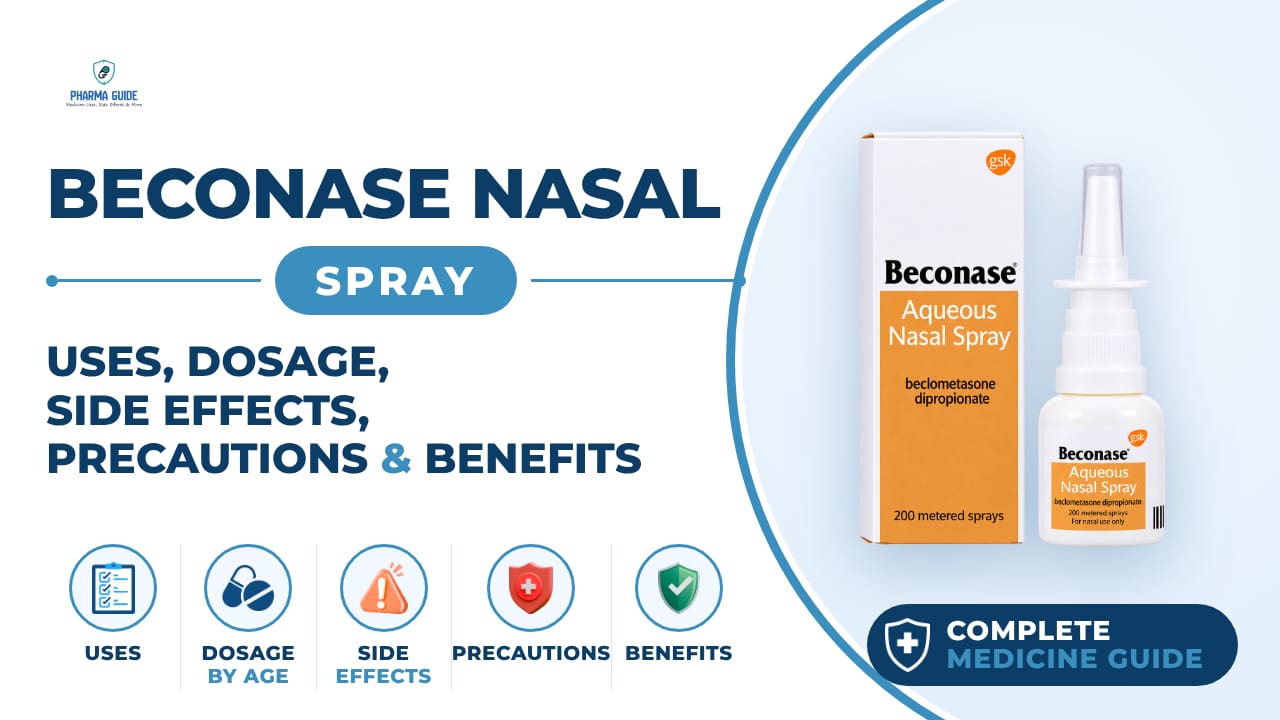
| Generic name | beclometasone dipropionate |
|---|---|
| Drug class | Corticosteroid (steroid) |
| Forms | Nasal spray |
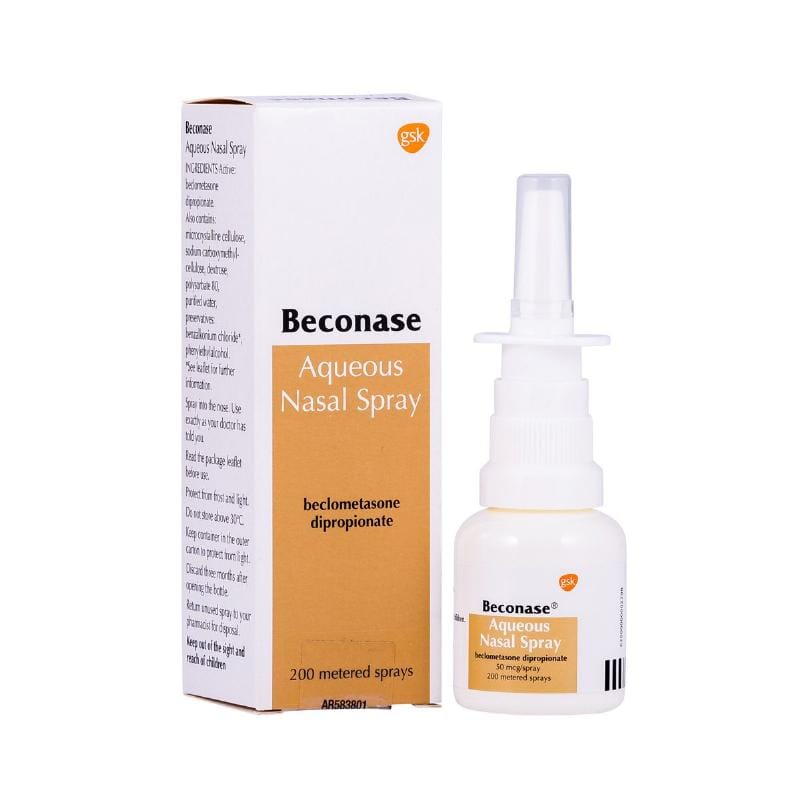
Quick overview
Beconase Nasal Spray contains beclometasone dipropionate, a corticosteroid (steroid) medicine used to reduce inflammation, swelling, and irritation inside the nose. It is used for allergic rhinitis, such as hay fever and animal allergies, and to help prevent nasal polyps from returning after surgical removal. It is used daily and works directly in the nose, with symptom relief typically starting within a few days.
What is Beconase Nasal Spray
Beconase is a nasal spray containing beclometasone dipropionate, a type of medicine called a steroid (corticosteroid). It is used to reduce inflammation, swelling, and irritation inside the nose.
Beconase Nasal Spray uses
- Prevent and treat inflammation in the lining of the nose (rhinitis) caused by seasonal allergies, such as hay fever
- Prevent and treat inflammation in the lining of the nose (rhinitis) caused by year-round (perennial) allergies, such as animal allergies
- Relieve common allergy symptoms like sneezing and a runny, itchy, or blocked-up nose
- Prevent nasal polyps from growing back after surgical removal
Benefits of Beconase Nasal Spray
- Reduces swelling and irritation in the nose
- Helps relieve itching, sneezing, and a blocked or runny nose
- Symptom relief can start within a few days
- Works directly in the nose so it causes fewer side effects than steroid tablets or injections
- Does not cause drowsiness or dizziness like some allergy tablets
How Beconase Nasal Spray works
Beconase is a steroid that reduces inflammation and swelling inside the nose. It works like natural body chemicals to control this inflammation and calm the body's reaction to allergens (triggers) in the environment.
Beconase Nasal Spray dosage
Use the spray every day, not just when symptoms appear. It takes a few days to start working, so keep using it even if you don't feel better straight away. Shake the bottle well before use, and spray into the nose only; do not swallow it. If the bottle is new or hasn't been used for a few days, prime it by pumping until a fine mist appears. Blow your nose gently before using the spray. Close one nostril, tilt your head forward slightly, keep the bottle upright, and breathe in slowly through your nose while pressing the spray. Breathe out through your mouth after each spray. Wipe the nozzle with a clean tissue and replace the dust cap after use.
If you miss a dose, just use the next dose when it is due; do not take two doses together. Do not stop using it even if you feel better unless your doctor tells you to, as symptoms may come back. It can be used at any time of day, with or without food. Do not use in children under 6 years old.
| Age group | Dose |
|---|---|
| Under 18 years | Safety and effectiveness are not established; no standard pediatric dose |
| 18–39 years | Usually 0.5 mg twice daily initially; may be increased to 1 mg twice daily if needed and tolerated |
| 40–64 years | Usually 0.5 mg twice daily initially; may be increased to 1 mg twice daily based on response |
| 65 years and older | Same labeled adult dosing may be used, but treatment should be individualized cautiously because adverse effects may be more serious |
Available forms and strengths
- Nasal spray
Side effects of Beconase Nasal Spray
Common
- Sneezing right after using the spray, which soon stops
- An unpleasant taste or smell
- Dry or painful nose or throat
- Bad nose bleeds
- Nasal irritation
- Sneezing attacks
- Headache
- Nausea
- Lightheadedness
- Nasal stuffiness
- Nosebleeds
Serious
- Allergic reactions such as rash, swelling of the mouth, face or throat, or difficulty breathing
- Becoming very wheezy or having difficulty breathing
- Collapse or loss of consciousness
- Damage to the nose
- Cloudy lens in the eye (cataract)
- Increased pressure in the eye (glaucoma)
- Mild allergic reactions including skin rashes, redness, itching, or hives
- Blurred vision or other visual disturbances
- Changes in the nasal septum (the cartilage between the nostrils) with long-term use
- Slower wound healing after nose surgery or injury
- Slower growth in children with long-term use
- Unusual bleeding or bruising
- Fast heartbeat
- Rapid, shallow breathing
- Eye pain or tearing
- Bloody mucus
- Cough or hoarseness
- Loss of taste and smell
- Sores inside the nose
Warnings and precautions
- Do not use this medicine if you are allergic to beclometasone dipropionate or any of its other ingredients.
- Check with your doctor before using this spray if you have had long-term steroid treatment, have had nose surgery, or have a nose infection.
- This medicine contains benzalkonium chloride, which can irritate or swell the inside of the nose, especially with long-term use, and can cause wheezing or breathing difficulties, particularly in people with asthma.
- Do not use for more than 3 months unless your doctor tells you to.
- Long-term use at high doses can raise your chances of changes in the nasal septum (the cartilage between the nostrils), and your doctor will check your nose regularly if you need long-term treatment.
- If you have recently had nose or sinus surgery, ulcers, or an injury, this medicine can slow healing, so talk to your doctor before starting it.
- Long-term use can raise eye pressure, worsen glaucoma, and cause cataracts.
- If you are pregnant, think you may be pregnant, or are planning to have a baby, ask your doctor or pharmacist for advice before using this medicine.
- If you are breast-feeding, ask your doctor or pharmacist for advice before using this medicine.
- Beconase is not likely to affect your ability to drive or use tools or machines.
Storage
- Keep this medicine out of the sight and reach of children
- Protect from frost and light
- Do not store above 30°C (86°F)
- Do not use this medicine after the expiry date which is stated on the label and carton after 'EXP'
- Stop using this bottle three months after you first opened it
- If you are told to stop taking this medicine, return any unused spray to your pharmacist to be destroyed
- Do not throw away any medicines via wastewater or household waste; ask your pharmacist how to throw away medicines you no longer use
- Keep the container in the outer carton to protect from light
- Do not store in a fridge
When to see a doctor
- Get a doctor's help straight away if you have an allergic reaction, such as becoming very wheezy, having trouble breathing, swelling around the face or throat, or collapse or loss of consciousness.
- Contact your doctor if you have blurred vision or other visual changes.
- Tell your doctor as soon as possible if you notice a dry or painful nose or throat, or bad nosebleeds.
- Stop using the medicine and get immediate medical help if you have an allergic reaction such as a rash, swelling of the mouth or face, or difficulty breathing.
- Stop using the medicine and tell your doctor if you have eye problems like pain or blurred vision, or nose problems like pain or persistent bleeding.
Alternatives
- Fluticasone nasal spray
- Mometasone nasal spray
- Azelastine nasal spray
- Ryaltris
Watch the video
FAQs
What is Beconase Nasal Spray used for?
It is used to prevent and treat inflammation in the nose caused by seasonal or year-round allergies like hay fever and animal allergies, relieve symptoms such as sneezing and a runny or blocked nose, and prevent nasal polyps from growing back after surgical removal.
How long does it take for Beconase Nasal Spray to work?
Symptom relief typically starts within a few days, so it should be used daily and continued even if you don't feel better right away.
What is the dosage of Beconase Nasal Spray for adults?
Adults usually start with 0.5 mg twice daily, which may be increased to 1 mg twice daily if needed and tolerated, based on response.
Can children use Beconase Nasal Spray?
No, it should not be used in children under 6 years old, and safety and effectiveness have not been established for those under 18.
What are the common side effects of Beconase Nasal Spray?
Common side effects include sneezing right after use, an unpleasant taste or smell, dry or painful nose or throat, nosebleeds, nasal irritation, headache, nausea, lightheadedness, and nasal stuffiness.
General information, not medical advice
Your prescriber and the leaflet in your pack know your situation. This page does not.
- Follow your prescriber and the leaflet
- Don't start, stop, or change a dose on your own
- Doses and warnings differ by country and product
Sources
Video
Related medicines
Beclomethasone Inhaler: Uses, Dosage, Side Effects, Precautions and Alternates
Corticosteroid (steroid)
Beclomethasone Inhaler is a prescription corticosteroid used to prevent asthma symptoms by reducing airway inflammation. Learn dosage, benefits, side effects,
Loteprednol Eye Drops: Uses, Dosage, Side Effects, Precautions and Alternates
Corticosteroid (steroid)
Loteprednol Eye Drops treat eye pain, redness, swelling, and itching from allergies, infections, injury, or surgery. Learn dosage, side effects, and