
Safety
General information, not medical advice
Your prescriber and the leaflet in your pack know your situation. This page does not.
- Follow your prescriber and the leaflet
- Don't start, stop, or change a dose on your own
- Doses and warnings differ by country and product
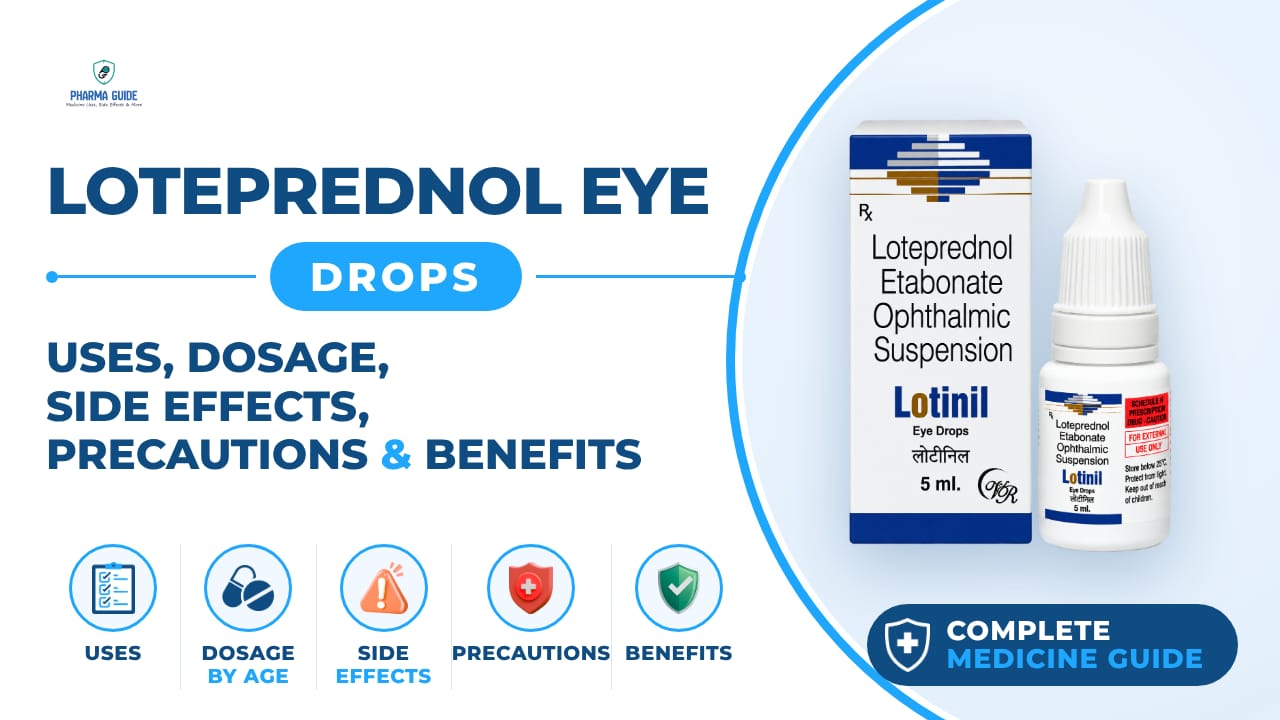
Loteprednol Eye Drops: Uses, Dosage, Side Effects, Precautions and Alternates
| Generic name | Loteprednol |
|---|---|
| Drug class | Corticosteroid (steroid) |
| Forms | Ointment, Suspension, Gel/Jelly, Eye drops |
Quick overview
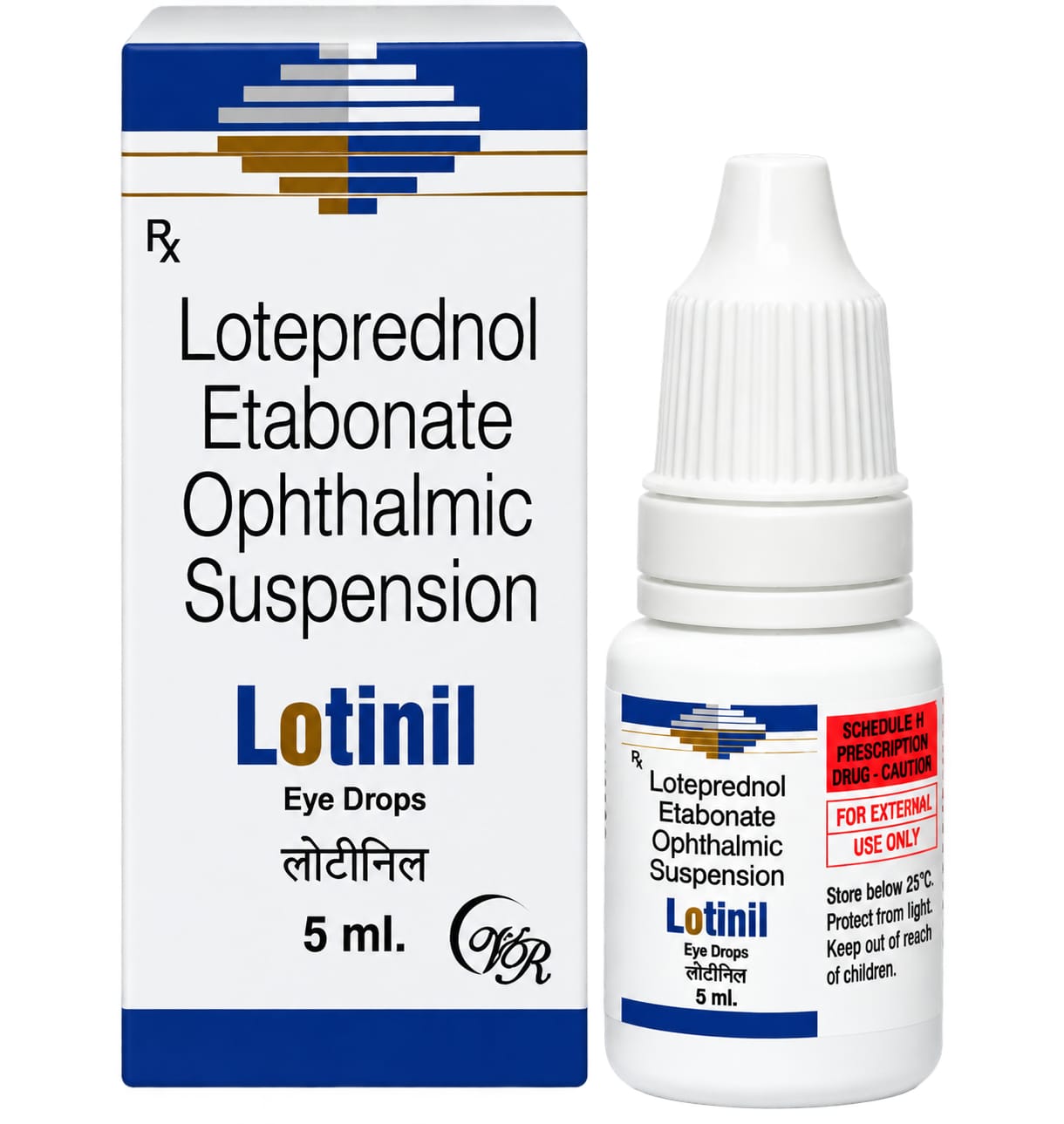
Loteprednol Eye Drops contain loteprednol, a corticosteroid (steroid) medicine. They are used to treat eye pain, redness, swelling, and itching caused by certain eye conditions, infections, injury, or eye surgery. The medicine works by reducing inflammation in the eye and is available in several forms, including drops, ointment, suspension, and gel.
What is Loteprednol Eye Drops
Loteprednol is a steroid eye medicine used to treat eye pain, redness, swelling, and itching caused by certain eye conditions, infections, injury, or eye surgery. It belongs to the group of medicines known as corticosteroids.
Loteprednol Eye Drops uses
- Eye pain, redness, and swelling caused by certain eye problems or eye surgery
- Itching of the eye caused by seasonal allergic conjunctivitis
- Short-term treatment of the signs and symptoms of dry eye disease
- Eye swelling, redness, or itching caused by infections, injury, or other conditions
- Postoperative ocular inflammation and pain
Benefits of Loteprednol Eye Drops
- Reduces eye swelling, redness, and pain
- Relieves eye itching caused by seasonal allergies
- Helps treat dry eye disease symptoms for a short period
How Loteprednol Eye Drops works
It works by decreasing inflammation and stopping the release of certain substances in the body that cause swelling, redness, and pain.
Loteprednol Eye Drops dosage
Wash your hands with soap and water before and after using this medicine. Turn the closed bottle upside down and shake it before putting the medicine into your eye, then remove the cap while still holding the bottle upside down.
Tilt your head back and gently pull the lower eyelid away from the eye to make a small pouch, then place the medicine into this space. After applying, close your eyes gently without blinking, and press a finger against the inner corner of the eye for a minute or two to help the medicine absorb.
Do not let the applicator tip touch your eye, fingers, or any other surface to avoid contamination. If you use more than one eye medicine, wait several minutes between using this medicine and other eye products.
If you wear contact lenses, remove them before using the eye drops and wait a period of time recommended by your doctor before putting them back in. Use this medicine only as often and for as long as your doctor has directed; do not stop early even if you feel better, unless your doctor tells you to. Children and elderly patients should use this medicine only under a doctor's guidance, as dosing may need special care.
| Age group | Dose |
|---|---|
| Under 18 years | Safety and effectiveness not established |
| 18–64 years | 1–2 drops in affected eye(s) 4 times daily |
| 65+ years | 1–2 drops in affected eye(s) 4 times daily |
Available forms and strengths
- Ointment
- Suspension
- Gel/Jelly
- Eye drops
Side effects of Loteprednol Eye Drops
Common
- Blurred vision or other change in vision
- Redness or swelling of the eye
- Sensitivity of the eyes to light
- Swelling of the membrane covering the white part of the eye
- Burning feeling when medicine is applied
- Dry eyes
- Feeling of something in the eye
- Headache
- Itching
- Runny nose
- Sore throat
- Discharge from eyes
- Eye discomfort
Serious
- Decreased vision
- Discharge from the eye
- Eye discomfort, irritation, or pain
- Redness of the eyelid or inner lining of the eyelid
- Tiny bumps on the inner lining of the eyelid
- Blindness
- Gradual blurring or loss of vision
- Loss of vision
- Slow wound healing
- Sudden eye pain or change in vision such as blurry vision, seeing halos around lights, vision loss
- Allergic reactions—skin rash, itching, hives, swelling of the face, lips, tongue, or throat
Warnings and precautions
- This medicine is not meant for long-term use. Steroid eye drops used too long may cause glaucoma (increased eye pressure) or a rare type of cataract, and may slow healing after cataract surgery. Regular eye exams are needed to check for these problems.
- This medicine should not be used if you have certain untreated eye infections, such as fungal, herpes simplex, tuberculosis, smallpox, or chickenpox eye infections, since it can make these worse.
- This medicine should not be used if you have an untreated bacterial or fungal eye infection, as it can hide the symptoms of infection and make the condition worse.
- Use with caution if you have certain eye diseases that thin the cornea, since this medicine could cause a hole to form in the eye.
- Use with caution if you have glaucoma, as this medicine may make the condition worse.
- This medicine is not recommended for children under 18 years of age because safety and effectiveness have not been clearly established for some products.
- This medicine is not recommended for use during pregnancy unless necessary. Talk with your doctor about the risks and benefits.
- This medicine is not recommended while breastfeeding unless necessary. Talk with your doctor about the risks and benefits.
- The interaction with alcohol is not known. It's best to check with your doctor before drinking alcohol while using this medicine.
- This medicine can cause temporary blurred vision after use. Avoid driving or operating machinery until your vision is clear.
Storage
- Store the medicine in a closed container at room temperature, away from heat, moisture, and direct light.
- Keep from freezing.
- Keep out of the reach of children.
- Do not keep outdated medicine or medicine no longer needed.
- Ask your healthcare professional how you should dispose of any medicine you do not use.
When to see a doctor
- Get medical help right away if you notice sudden eye pain, changes in vision such as blurriness, seeing halos around lights, or loss of vision.
- Seek medical attention right away if you have signs of an allergic reaction, such as skin rash, itching, hives, or swelling of the face, lips, tongue, or throat.
- Contact your doctor right away if you hurt your eye or think you have developed an eye infection while using this medicine.
- Check with your eye doctor right away if your symptoms do not improve within a few days or if they get worse.
- Contact a poison control center or emergency room right away if you think you have used too much of this medicine.
Alternatives
- Prednisolone acetate 1%
- Difluprednate 0.05%
- Loteprednol etabonate 1%
Watch the video
FAQs
What is Loteprednol Eye Drops used for?
It treats eye pain, redness, swelling, and itching caused by certain eye conditions, infections, injury, or eye surgery, including seasonal allergic conjunctivitis and short-term dry eye disease symptoms.
What is the usual dose of Loteprednol Eye Drops?
For adults aged 18 to 64 and adults 65 and older, the usual dose is 1-2 drops in the affected eye(s) 4 times daily. Safety and effectiveness have not been established for those under 18 years.
Can Loteprednol Eye Drops be used long-term?
No, this medicine is not meant for long-term use. Extended use of steroid eye drops may cause glaucoma or a rare type of cataract and may slow healing after cataract surgery, so regular eye exams are needed.
What are the common side effects of Loteprednol Eye Drops?
Common side effects include blurred vision, eye redness or swelling, light sensitivity, burning when applied, dry eyes, a feeling of something in the eye, headache, itching, runny nose, and sore throat.
Can I wear contact lenses while using Loteprednol Eye Drops?
You should remove contact lenses before using the eye drops and wait a period of time recommended by your doctor before putting them back in.
General information, not medical advice
Your prescriber and the leaflet in your pack know your situation. This page does not.
- Follow your prescriber and the leaflet
- Don't start, stop, or change a dose on your own
- Doses and warnings differ by country and product
Sources
Video
Related medicines
Beconase Nasal Spray: Uses, Dosage, Side Effects, Precautions and Alternates
Corticosteroid (steroid)
Beconase Nasal Spray contains beclometasone to treat hay fever, allergic rhinitis, and prevent nasal polyps returning. Learn dosage, side effects, and
Beclomethasone Inhaler: Uses, Dosage, Side Effects, Precautions and Alternates
Corticosteroid (steroid)
Beclomethasone Inhaler is a prescription corticosteroid used to prevent asthma symptoms by reducing airway inflammation. Learn dosage, benefits, side effects,