
Safety
General information, not medical advice
Your prescriber and the leaflet in your pack know your situation. This page does not.
- Follow your prescriber and the leaflet
- Don't start, stop, or change a dose on your own
- Doses and warnings differ by country and product
Betnesol Tablet: Uses, Dosage, Side Effects, Precautions and Alternates
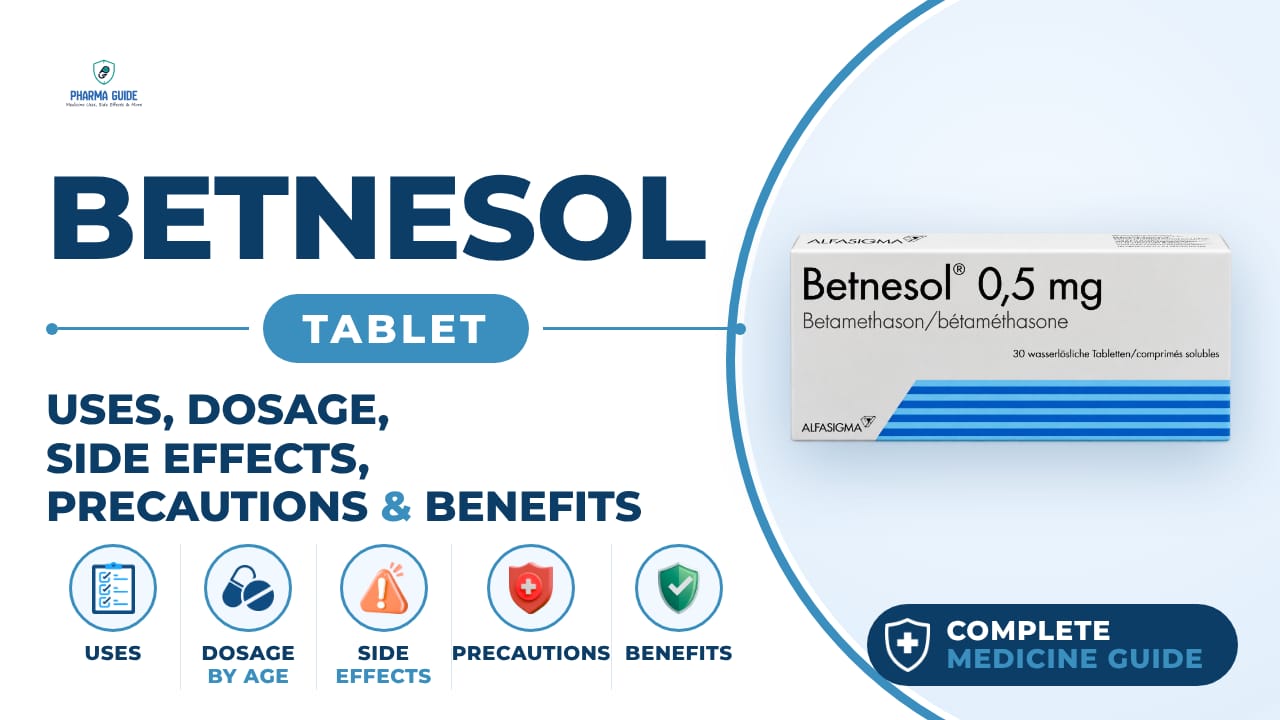
| Generic name | Betamethasone |
|---|---|
| Drug class | Corticosteroid |
| Forms | Tablet, Oral Drops, Eye, Ear & Nasal Drops |
Quick overview
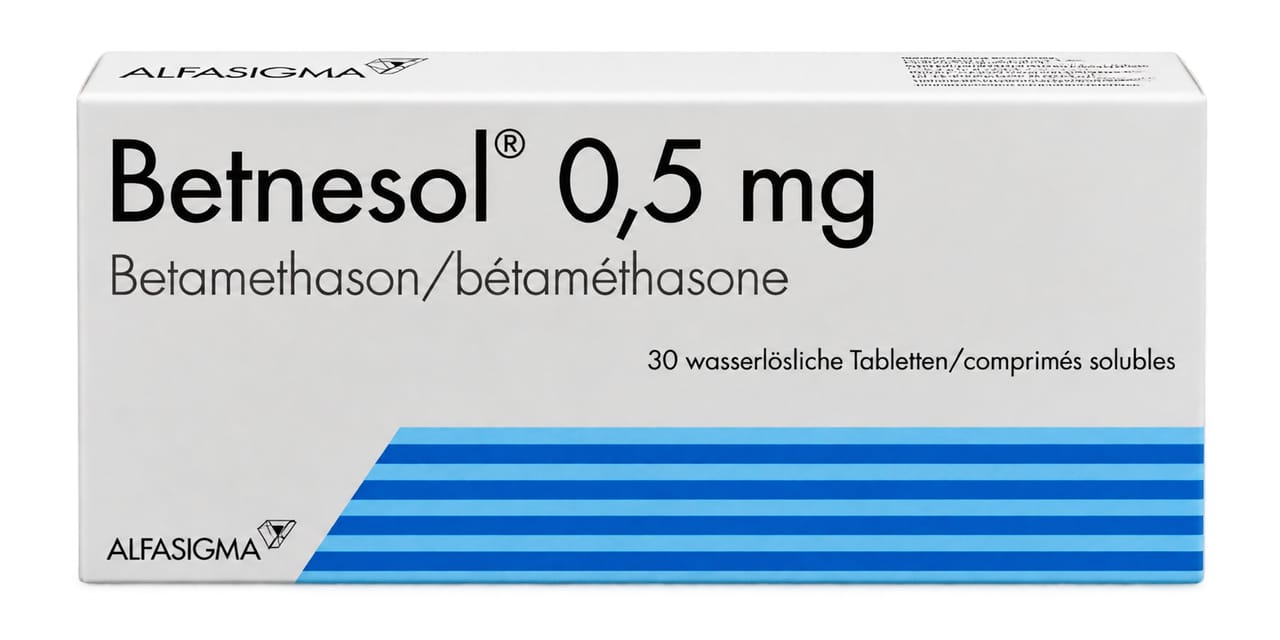
Betnesol Tablet contains betamethasone, a corticosteroid (steroid) medicine used to reduce inflammation and calm an overactive immune system in a wide range of conditions. It is used for allergic reactions, joint and skin inflammation, breathing difficulties, and several other inflammatory and autoimmune conditions. It is available as a tablet, along with oral drops and eye, ear, and nasal drops. Use it exactly as directed by your doctor, as it requires gradual dose changes and careful monitoring.
What is Betnesol Tablet
Betnesol Tablet contains betamethasone, a corticosteroid (steroid) medicine. It is used to reduce inflammation and calm an overactive immune system in a wide range of conditions.
Betnesol Tablet uses
- Allergy and inflammation
- Joint inflammation
- Severe allergic reactions
- Skin problems like eczema and psoriasis
- Asthma and breathing difficulties
- Rheumatoid arthritis and joint pain
- Inflammatory bowel disease
- Eye inflammation
- Brain swelling
- Adrenal gland problems
- Blood disorders
Benefits of Betnesol Tablet
- Rapid relief from swelling, redness, and itching
- Flexible use across acute allergic reactions and chronic autoimmune diseases
- Available as an oral tablet, making it easy to take
- Longer-lasting action compared with some other steroid tablets
How Betnesol Tablet works
Betnesol works by stopping the release of certain chemicals in the body that cause swelling, redness, and itching, and by calming down an overactive immune system.
Betnesol Tablet dosage
Betnesol Tablet can be taken with or without food. Take it every day at the same time to help you remember. Do not take more or less than what your doctor prescribes, and do not stop taking this medicine suddenly without talking to your doctor, even if you feel better. The tablet can be dissolved in water and the solution drunk, or swallowed whole with some water.
If you miss a dose, take it as soon as you remember; if it's almost time for your next dose, skip the missed one and do not double up. Tell your doctor if you're pregnant, breastfeeding, or have liver, kidney, heart, or bone problems before taking this medicine.
| Age group | Dose |
|---|---|
| Children | 0.02–0.3 mg/kg/day depending on medical condition (as prescribed) |
| Adults (18–64 Years) | 0.5–5 mg/day depending on condition and response |
| Older Adults (65+ Years) | Lowest effective dose (usually 0.5–2 mg/day initially) adjusted as needed |
Available forms and strengths
- Tablet
- Oral Drops
- Eye, Ear & Nasal Drops
Side effects of Betnesol Tablet
Common
- Blurred vision
- Increased appetite
- Indigestion
- Anxiety and nervousness
- Skin discolouration
- Irregular menstrual periods
- Growth retardation in children
- Hoarseness of voice
- Bloating
- Headache
- Nausea
- Shortness of breath
- Weight gain
- Stomach upset
- Dizziness
- Mood changes
- Trouble sleeping
- Increased blood sugar
- Fluid retention
Serious
- Severe allergic reaction (skin rash, itching/swelling of face, tongue, or throat, severe dizziness, breathing difficulty)
- Vision problems including cataracts and glaucoma
- Severe stomach pain and ulcers
- Unusual bruising
- Mental changes
- Bone pain and osteoporosis
- Muscle weakness
Warnings and precautions
- Do not stop this medicine suddenly — this can cause withdrawal symptoms like weakness, tiredness, weight loss, and reduced appetite, which can last from a few days up to two weeks. Any dose reduction should be done gradually with your doctor's guidance.
- This medicine can increase eye pressure and may cause glaucoma or cataracts, so it should be used very carefully if you have eye disease.
- Avoid using this medicine if you have chickenpox, since it suppresses the immune system and can make the illness worse.
- Use caution in children, since this medicine carries a significant risk of growth problems, brittle bones, and other developmental issues.
- This medicine should not be used if you have a fungal infection affecting your internal organs, since it suppresses the immune system and could make the infection worse.
- This medicine can raise the risk of infections because it suppresses the immune system, especially at higher doses.
- This medicine is not recommended during pregnancy as it may harm the unborn baby. Talk to your doctor before using it if you are pregnant.
- This medicine is not recommended while breastfeeding because it passes into breast milk and may harm your baby.
- Use with caution if you have kidney problems, as this medicine may worsen your condition. Your doctor may need to adjust your dose or prescribe a different medicine.
- Use with caution if you have liver problems, as this medicine may worsen your condition. Your doctor may need to adjust your dose or prescribe a different medicine.
- It isn't known how this medicine interacts with alcohol. Check with your doctor before drinking alcohol while taking this medicine.
- This medicine isn't expected to directly affect your ability to drive, but some side effects like eye problems, nerve problems, or muscle weakness could reduce your ability to drive safely.
Storage
- Store below 25°C
- Store in the original package to protect the content from light
- Keep the medicine away from the reach of children and pets
- Do not use it after the date of expiry
- Ensure that the unused medicine is disposed of properly
When to see a doctor
- Get medical help right away if you notice signs of an allergic reaction, such as skin rash, itching or swelling of the face, tongue, or throat, severe dizziness, or difficulty breathing.
- Get medical help right away if you think you have taken too much of this medicine. An overdose can cause increased acne or facial hair, menstrual problems, and skin bruising.
Alternatives
- Prednisolone
- Prednisone
- Hydrocortisone
Watch the video
FAQs
What is Betnesol Tablet used for?
Betnesol Tablet is used for allergic reactions, joint and skin inflammation, asthma and breathing difficulties, inflammatory bowel disease, eye inflammation, brain swelling, adrenal gland problems, and blood disorders.
How does Betnesol Tablet work?
It works by stopping the release of certain chemicals in the body that cause swelling, redness, and itching, and by calming down an overactive immune system.
Can I stop taking Betnesol Tablet suddenly?
No, you should not stop this medicine suddenly, as it can cause withdrawal symptoms like weakness, tiredness, weight loss, and reduced appetite lasting a few days up to two weeks. Any dose reduction should be done gradually under your doctor's guidance.
What are the common side effects of Betnesol Tablet?
Common side effects include blurred vision, increased appetite, indigestion, anxiety, skin discolouration, irregular periods, headache, nausea, weight gain, dizziness, mood changes, trouble sleeping, and fluid retention.
Is Betnesol Tablet safe during pregnancy and breastfeeding?
It is not recommended during pregnancy as it may harm the unborn baby, and not recommended while breastfeeding since it passes into breast milk and may harm the baby. Talk to your doctor before use.
General information, not medical advice
Your prescriber and the leaflet in your pack know your situation. This page does not.
- Follow your prescriber and the leaflet
- Don't start, stop, or change a dose on your own
- Doses and warnings differ by country and product
Sources
Video
Related medicines
Fludrocortisone Tablet: Uses, Dosage, Side Effects, Precautions and Alternates
corticosteroid
Fludrocortisone Tablet helps treat Addison's disease and salt-losing adrenogenital syndrome by helping the body retain sodium and water. Learn uses, dosage,
Anusol-HC Suppository: Uses, Dosage, Side Effects, Precautions and Alternates
Corticosteroid
Anusol-HC Suppository is a short-term steroid treatment for hemorrhoid itching, swelling, and irritation. Learn uses, dosage, side effects, and warnings.