
Safety
General information, not medical advice
Your prescriber and the leaflet in your pack know your situation. This page does not.
- Follow your prescriber and the leaflet
- Don't start, stop, or change a dose on your own
- Doses and warnings differ by country and product
Fludrocortisone Tablet: Uses, Dosage, Side Effects, Precautions and Alternates
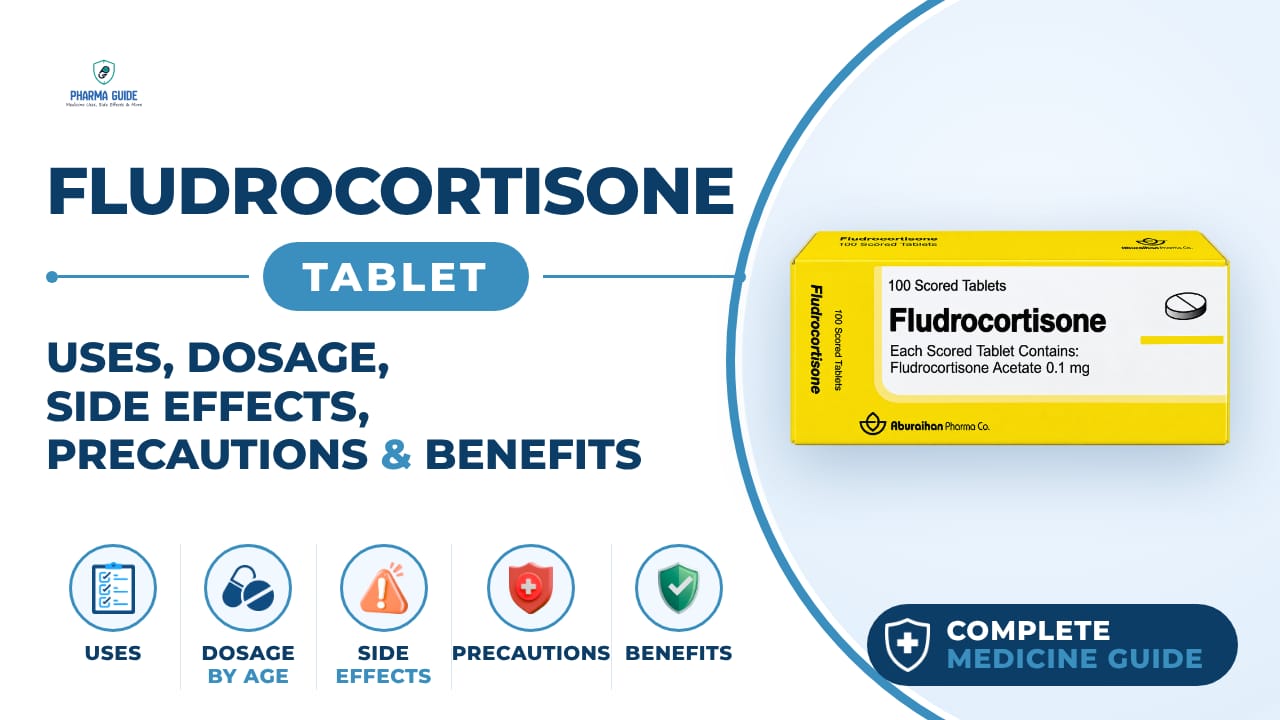
| Generic name | fludrocortisone acetate |
|---|---|
| Drug class | corticosteroid |
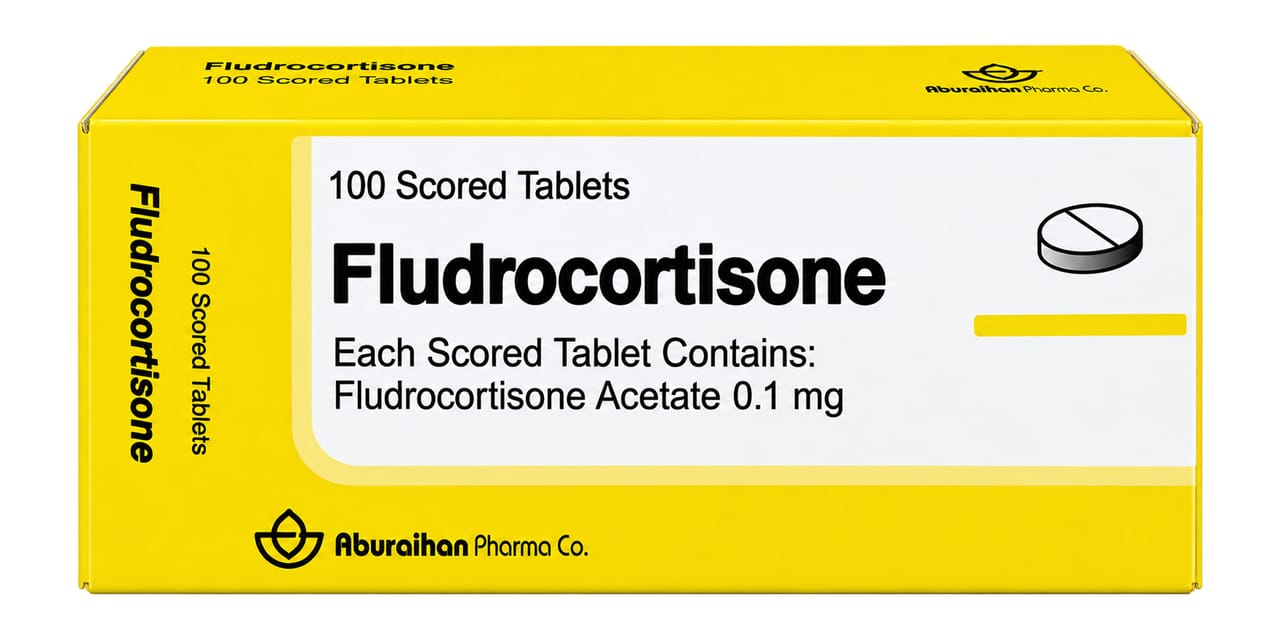
| Forms | tablet |
Quick overview
Fludrocortisone Tablet (fludrocortisone acetate) is a corticosteroid medicine taken by mouth. It is used to partly replace steroid hormones in people whose adrenal glands do not make enough of them, including those with Addison's disease and salt-losing adrenogenital syndrome. It works mainly on the kidneys to help the body hold onto sodium and water. It should be taken exactly as prescribed, and it carries certain side effects and precautions that your doctor will discuss with you.
What is Fludrocortisone Tablet
Fludrocortisone is a man-made corticosteroid medicine taken as a tablet by mouth. It is used to partly replace steroid hormones in people whose adrenal glands do not make enough of them.
Fludrocortisone Tablet uses
- Addison's disease, a condition in which the adrenal glands do not make enough essential hormones
- Salt-losing adrenogenital syndrome, a disorder that causes too much salt to be lost in the urine
- Treats Addison's disease
- Provides mineralocorticoid replacement
- Treats salt-losing adrenal disorders
Benefits of Fludrocortisone Tablet
- Helps replace low levels of steroid hormones caused by adrenal gland problems
- Helps the kidneys hold onto fluid and salt in the body
- Replaces deficient mineralocorticoid activity
- Helps retain sodium and water
- Helps maintain circulating blood volume
- Helps prevent excessive potassium accumulation
- Supports blood-pressure control in adrenal insufficiency
How Fludrocortisone Tablet works
Fludrocortisone acts like a natural hormone from the adrenal glands. It works mainly on the kidneys, helping the body hold onto sodium (salt) and water while releasing more potassium. This helps make up for low hormone levels and can also raise blood pressure.
Fludrocortisone Tablet dosage
Take this medicine only as prescribed by your doctor, and do not share it with others. It is usually taken continuously every day, though some people may be told to take it every other day instead. Do not stop taking it suddenly without talking to your doctor, since stopping too quickly can cause serious side effects.
If you miss a dose, take it as soon as you remember; if it is almost time for your next dose, skip the missed one and continue your normal schedule. Do not take a double dose. Your doctor may need to adjust your dose during times of illness, injury, surgery, or other physical stress.
| Age group | Dose |
|---|---|
| Children and adolescents | Dose is individualized by a specialist according to diagnosis, growth, blood pressure, and electrolyte levels |
| 18–64 years | For Addison's disease, commonly 0.1 mg once daily; some patients require 0.1 mg three times weekly to 0.2 mg daily |
| 65–74 years | No fixed age-specific adjustment; dose is individualized with closer monitoring of blood pressure, swelling, and electrolytes |
| 75 years and older | Usually treated cautiously with individualized dosing because hypertension, fluid retention, and low potassium may be more likely |
Available forms and strengths
- Tablet
Side effects of Fludrocortisone Tablet
Common
- Increased blood pressure
- Fluid retention (swelling)
- Low potassium levels
- Muscle weakness
- Thinning of skin
- Poor wound healing
- Stomach upsets
- Headache
- Dizziness
- Menstrual irregularities in women
- Eye problems
- Masking of infections
Serious
- Severe allergic reactions, such as swelling of the face, lips, mouth, tongue, or throat, trouble breathing, or hives
- Increased risk of infections, including serious ones
- Vision problems such as cataracts or glaucoma, which can lead to blindness
- Severely high blood pressure
- Serious fluid retention affecting the heart or causing major swelling
- Dangerously low potassium levels
- Mood changes, including depression, mood swings, or trouble sleeping
- Reactivation of old infections such as tuberculosis
Warnings and precautions
- Do not take this medicine if you have a fungal infection affecting your whole body, or if you are allergic to fludrocortisone or any of its ingredients.
- This medicine can hide the signs of an infection, and new infections can develop while you are taking it.
- Taking this medicine for a long time can cause cataracts or glaucoma, which may damage your eyesight.
- Avoid contact with chickenpox or measles while taking this medicine, since it can make these infections more serious. Tell your doctor right away if you think you've been exposed.
- Do not stop taking this medicine suddenly, and do not have certain vaccines without checking with your doctor first.
- This medicine should only be used for the conditions it is approved for, because of its strong effect on sodium (salt) levels in the body.
- It is not known if fludrocortisone can harm an unborn baby. Tell your doctor if you are pregnant or planning to become pregnant so they can discuss the risks and benefits with you.
- This medicine passes into breast milk. Tell your doctor if you are breastfeeding or planning to breastfeed so they can advise you.
- Tell your doctor if you have kidney problems, as this medicine needs to be used carefully in that case.
- People with liver problems, including cirrhosis, may be more strongly affected by this medicine, so tell your doctor if you have liver disease.
- It is not known whether drinking alcohol affects this medicine.
- As far as is known, this medicine does not affect alertness or concentration, but be careful driving or using machinery until you know how it affects you.
Storage
- Store at room temperature, between 68°F and 77°F (20°C and 25°C).
- It can be exposed to temperatures between 59°F and 86°F (15°C and 30°C) for shorter periods, such as during transport.
- Store in a cool, dry place away from moisture, heat, or sunlight.
- Do not store in the bathroom, near a sink, in the car, or on window sills.
- Keep out of the reach of children.
- Do not use after the expiry date.
- If you no longer need the medicine or it has expired, take it to a pharmacy for safe disposal.
When to see a doctor
- Stop taking the medicine and get emergency help right away if you have signs of a serious allergic reaction, such as breathing trouble, swelling of the face or throat, or a fast heartbeat.
- Get medical attention right away if your blood pressure reading is very high (top number 180 or more, or bottom number 120 or more).
- Call your doctor right away if you have chest pain, an irregular heartbeat, shortness of breath, or sudden swelling of your body, such as your belly or ankles.
- Contact your doctor immediately if you think you have any kind of infection while taking this medicine.
- If you think you have taken too much of this medicine, get medical help right away, such as by going to an emergency department.
- Tell your doctor right away about sudden changes in vision, eye pain or redness, or severe headache with vomiting, since these can be signs of serious eye problems.
Alternatives
- Florinef
- Hydrocortisone
- Cortisone acetate
Watch the video
FAQs
What is Fludrocortisone Tablet used for?
It is used to partly replace steroid hormones in people whose adrenal glands do not make enough of them, including those with Addison's disease and salt-losing adrenogenital syndrome.
How does Fludrocortisone Tablet work?
It acts like a natural adrenal hormone, working mainly on the kidneys to help the body hold onto sodium and water while releasing more potassium, making up for low hormone levels and helping raise blood pressure.
What is the usual dose of Fludrocortisone Tablet for adults?
For Addison's disease, adults commonly take 0.1 mg once daily, though some patients require doses ranging from 0.1 mg three times weekly to 0.2 mg daily, as prescribed by a doctor.
What are the common side effects of Fludrocortisone Tablet?
Common side effects include increased blood pressure, fluid retention, low potassium levels, muscle weakness, thinning of skin, poor wound healing, stomach upsets, headache, dizziness, menstrual irregularities, eye problems, and masking of infections.
Can I stop taking Fludrocortisone Tablet suddenly?
No, you should not stop taking it suddenly without talking to your doctor, since stopping too quickly can cause serious side effects.
General information, not medical advice
Your prescriber and the leaflet in your pack know your situation. This page does not.
- Follow your prescriber and the leaflet
- Don't start, stop, or change a dose on your own
- Doses and warnings differ by country and product
Sources
Video
Related medicines
Anusol-HC Suppository: Uses, Dosage, Side Effects, Precautions and Alternates
Corticosteroid
Anusol-HC Suppository is a short-term steroid treatment for hemorrhoid itching, swelling, and irritation. Learn uses, dosage, side effects, and warnings.
Deflazacort Tablet: Uses, Dosage, Side Effects, Precautions and Alternates
Corticosteroid
Deflazacort Tablet is a corticosteroid used for Duchenne muscular dystrophy and inflammatory conditions. Learn its uses, dosage, side effects, and precautions.