
Safety
General information, not medical advice
Your prescriber and the leaflet in your pack know your situation. This page does not.
- Follow your prescriber and the leaflet
- Don't start, stop, or change a dose on your own
- Doses and warnings differ by country and product
Deflazacort Tablet: Uses, Dosage, Side Effects, Precautions and Alternates
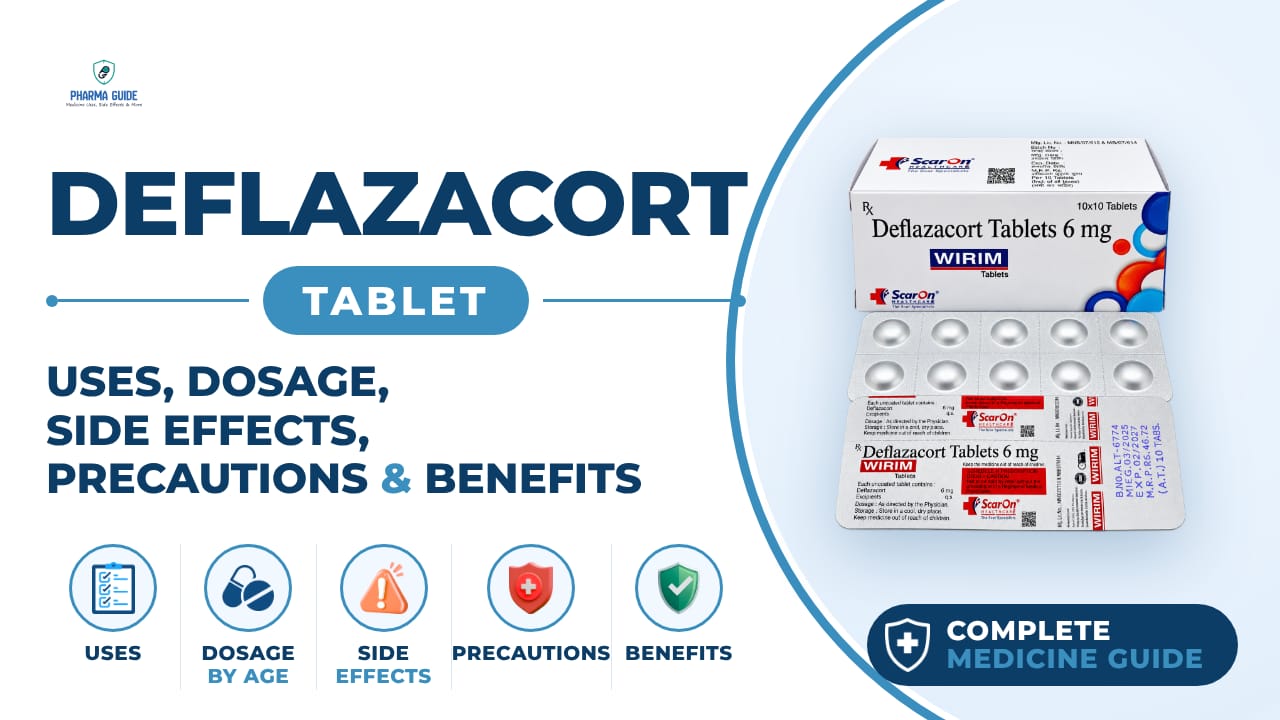
| Generic name | Deflazacort |
|---|---|
| Drug class | Corticosteroid |
| Forms | Tablet, Oral suspension (liquid) |
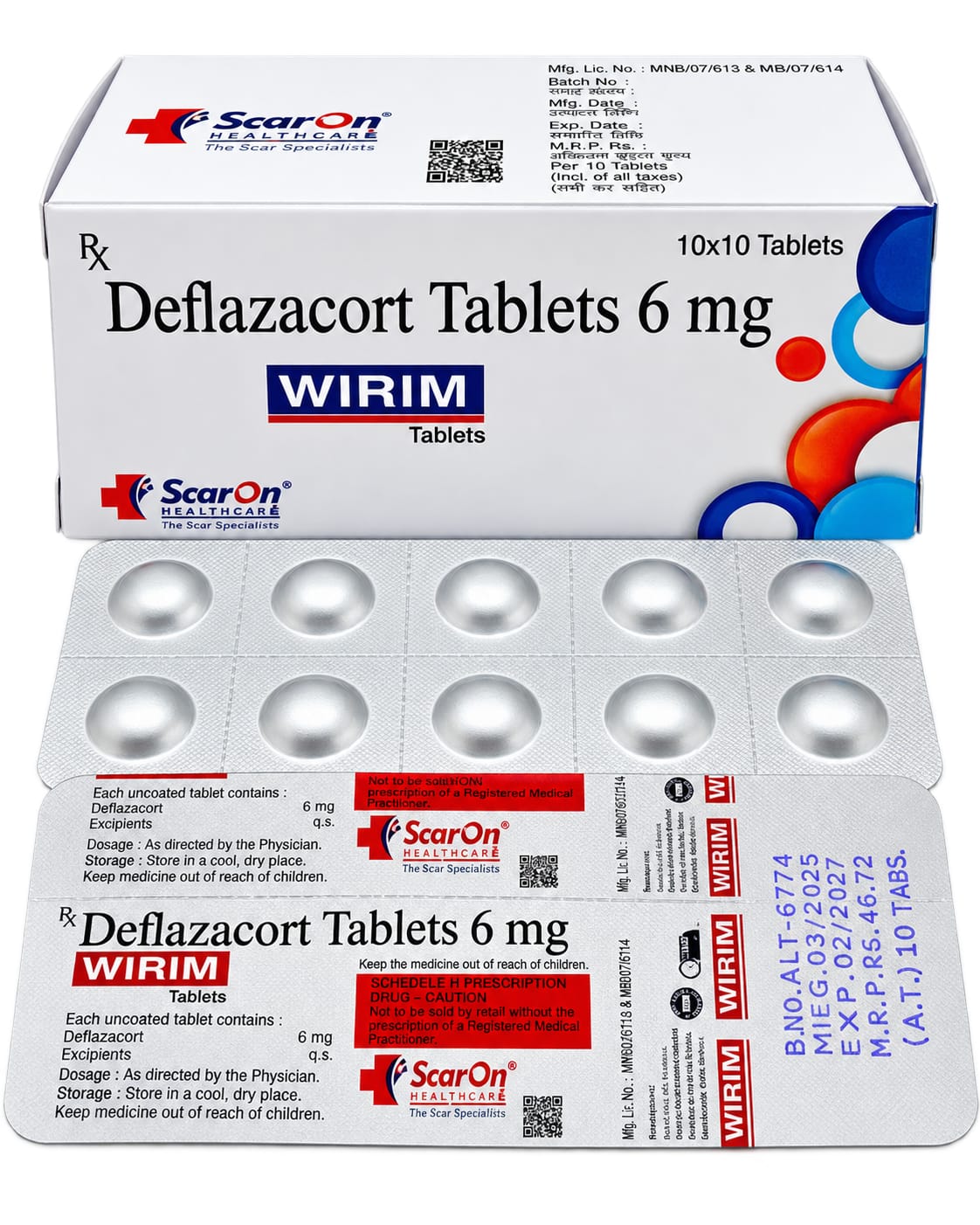
Quick overview
Deflazacort Tablet is a corticosteroid medicine used to treat Duchenne muscular dystrophy (DMD) in patients 2 years of age and older. It is also used by doctors for other inflammatory and immune-related conditions. It works by reducing inflammation and calming an overactive immune system, and it is taken once daily.
What is Deflazacort Tablet
Deflazacort is a corticosteroid medicine used to treat Duchenne muscular dystrophy (DMD), a disease in which muscles do not work properly. It is also used by doctors for other conditions involving inflammation or an overactive immune system.
Deflazacort Tablet uses
- Duchenne muscular dystrophy (DMD) in patients 2 years of age and older
- Other inflammatory and immune-related conditions such as severe allergic reactions, asthma, arthritis, lupus, certain skin and kidney conditions, and some cancers, as determined by a doctor
- Treats Duchenne muscular dystrophy
Benefits of Deflazacort Tablet
- Can improve muscle strength in people with Duchenne muscular dystrophy
- Reduces inflammation (swelling) in the body
- Changes the way the immune system works to help control disease
- Provides once-daily corticosteroid treatment
- Helps reduce inflammation associated with DMD
How Deflazacort Tablet works
Deflazacort is changed in the body into an active substance that attaches to receptors that reduce inflammation and calm an overactive immune system. Doctors are not fully sure how it helps specifically with Duchenne muscular dystrophy.
Deflazacort Tablet dosage
Take this medicine once a day, with or without food, trying to take it at around the same time every day. Do not take it with grapefruit juice. If you cannot swallow the tablet whole, you may crush it and mix with applesauce, then take the mixture right away. Do not stop taking this medicine suddenly without talking to your doctor, as your dose usually needs to be lowered gradually. If you miss a dose, take it as soon as you remember, but if it is almost time for your next dose, skip the missed dose and continue your regular schedule — do not take two doses at once. Your doctor may need to adjust your dose during times of illness, infection, surgery, or other physical stress.
| Age group | Dose |
|---|---|
| Under 2 years | Safety and effectiveness are not established |
| 2–5 years | Approximately 0.9 mg/kg once daily, based on body weight |
| 6–74 years | Approximately 0.9 mg/kg once daily |
Available forms and strengths
- Tablet
- Oral suspension (liquid)
Side effects of Deflazacort Tablet
Common
- Cushingoid appearance (rounded face, fat redistribution)
- Weight gain
- Increased appetite
- Upper respiratory tract infection
- Cough
- Frequent urination
- Increased hair growth (hirsutism)
- Central weight gain around the trunk
- Nasal congestion or runny nose
- Headache
- Back pain
- Joint or muscle pain/aches
- Trouble sleeping
- Acne
- Irritability
- Upset stomach or heartburn
- Thin, fragile skin or easy bruising
- Irregular or absent menstrual periods
Serious
- Signs of infection such as fever, chills, sore throat, or cough
- Severe stomach pain, bloody or black stools, or vomit that looks like coffee grounds
- Changes in mood or behavior, including depression, mood swings, or thoughts of suicide
- Vision changes, eye pain, or blurred vision
- Swelling of the face, lips, tongue, throat, hands, or legs
- Difficulty breathing or swallowing
- Sudden weight gain
- Rash, blistering, peeling, or loosening of the skin
- Bone or joint pain suggesting weak bones or fractures
- Signs of blood clots such as swelling, pain, chest pain, or shortness of breath
- Seizures
- Red or purple skin spots that could indicate a rare cancer (Kaposi's sarcoma)
- Signs of severe allergic reaction (anaphylaxis) such as hives, trouble breathing, or swelling
Warnings and precautions
- Do not stop taking this medicine suddenly, especially after using it for more than a few days.
- Your doctor will need to lower your dose gradually to prevent a dangerous drop in your body's natural steroid hormone levels.
- This medicine can weaken your immune system, making infections more likely and more severe, and it can hide the usual signs of infection.
- Avoid contact with people who have chickenpox or measles, since these illnesses can become serious or life-threatening in people taking this medicine.
- This medicine can raise blood pressure and cause your body to retain salt and water while losing potassium.
- There is an increased risk of a hole forming in the stomach or intestine, especially in people with certain digestive conditions, and warning signs may be masked.
- This medicine can cause serious mood and behavior changes such as euphoria, insomnia, mood swings, depression, or psychosis.
- Long-term use can weaken bones, increasing the risk of fractures.
- This medicine can cause eye problems including cataracts and glaucoma; eye pressure should be checked if used for more than 6 weeks.
- Do not receive live or live-attenuated vaccines while taking this medicine; any such vaccines should be given at least 4 to 6 weeks before starting treatment.
- Stop the medicine and get medical help right away at the first sign of a serious skin rash.
- Long-term use in children may slow growth and development.
- This medicine may increase the risk of blood clots, particularly with long-term or high-dose use.
- Do not drink grapefruit juice while taking this medicine, as it can increase the amount of drug in your body.
- This medicine should be used in pregnancy only if the benefits outweigh the risks.
- It can cross the placenta and has been linked to birth defects such as cleft lip/palate and lower birth weight in some studies. Tell your doctor right away if you become pregnant while taking it.
- This medicine passes into breast milk and could affect a nursing infant's growth or hormone levels. Talk with your doctor about the benefits and risks of breastfeeding while using this medicine.
- No dose change is usually needed for kidney problems, but people with severe kidney disease should use this medicine with caution and under close monitoring.
- People with liver problems may have higher levels of this medicine in their blood, so doctors may need to watch them closely and adjust the dose.
- Alcohol may worsen stomach irritation and some corticosteroid adverse effects.
- Based on how this medicine works and its reported side effects, it is unlikely to affect your ability to drive or operate machinery.
Storage
- Store at room temperature, away from excess heat and moisture (not in the bathroom)
- Keep from freezing
- Keep out of the reach and sight of children, with safety caps locked
- Do not keep outdated or no-longer-needed medicine
- Dispose of unused medicine through a medicine take-back program rather than flushing it down the toilet
- Throw away any unused oral liquid after 1 month of first opening the bottle
When to see a doctor
- Get medical help right away if you have signs of infection such as fever, chills, sore throat, or cough.
- Seek immediate care for severe stomach pain, black or bloody stools, or vomit that looks like coffee grounds.
- Contact your doctor immediately if you notice mood or behavior changes, depression, or thoughts of suicide.
- Seek care right away for eye pain, blurred vision, or other vision changes.
- Get emergency help for swelling of the face, lips, tongue, or throat, trouble breathing or swallowing, or hives — these can be signs of a severe allergic reaction.
- Seek medical attention right away for signs of a serious skin reaction such as blistering, peeling, or loosening skin.
- Call your doctor immediately if you think you have been exposed to chickenpox or measles.
- Seek urgent medical help for symptoms of a possible blood clot, such as swelling and pain in an arm or leg, chest pain, or shortness of breath.
- If you suspect an overdose or poisoning, get medical help right away or contact your local poison control center.
Alternatives
- Prednisone
- Prednisolone
Watch the video
FAQs
What is Deflazacort Tablet used for?
Deflazacort Tablet is used to treat Duchenne muscular dystrophy (DMD) in patients 2 years of age and older. It is also used by doctors for other inflammatory and immune-related conditions such as severe allergic reactions, asthma, arthritis, lupus, and certain skin and kidney conditions.
How should I take Deflazacort Tablet?
Take this medicine once a day, with or without food, at around the same time every day, without grapefruit juice. If you cannot swallow the tablet whole, you may crush it and mix with applesauce and take it right away. Do not stop taking it suddenly without talking to your doctor.
What are the common side effects of Deflazacort Tablet?
Common side effects include cushingoid appearance, weight gain, increased appetite, upper respiratory tract infection, cough, frequent urination, increased hair growth, headache, back pain, joint or muscle pain, trouble sleeping, acne, irritability, and upset stomach.
What precautions should I follow while taking Deflazacort Tablet?
Avoid contact with people who have chickenpox or measles, avoid grapefruit juice, do not receive live vaccines while on this medicine, and do not stop it suddenly. It can weaken your immune system, raise blood pressure, weaken bones, and cause eye problems with long-term use.
What are the alternatives to Deflazacort Tablet?
Alternatives mentioned include Prednisone and Prednisolone.
General information, not medical advice
Your prescriber and the leaflet in your pack know your situation. This page does not.
- Follow your prescriber and the leaflet
- Don't start, stop, or change a dose on your own
- Doses and warnings differ by country and product
Sources
Video
Related medicines
Fludrocortisone Tablet: Uses, Dosage, Side Effects, Precautions and Alternates
corticosteroid
Fludrocortisone Tablet helps treat Addison's disease and salt-losing adrenogenital syndrome by helping the body retain sodium and water. Learn uses, dosage,
Anusol-HC Suppository: Uses, Dosage, Side Effects, Precautions and Alternates
Corticosteroid
Anusol-HC Suppository is a short-term steroid treatment for hemorrhoid itching, swelling, and irritation. Learn uses, dosage, side effects, and warnings.