
Safety
General information, not medical advice
Your prescriber and the leaflet in your pack know your situation. This page does not.
- Follow your prescriber and the leaflet
- Don't start, stop, or change a dose on your own
- Doses and warnings differ by country and product
Beyfortus Injection: Uses, Dosage, Side Effects, Precautions and Alternates
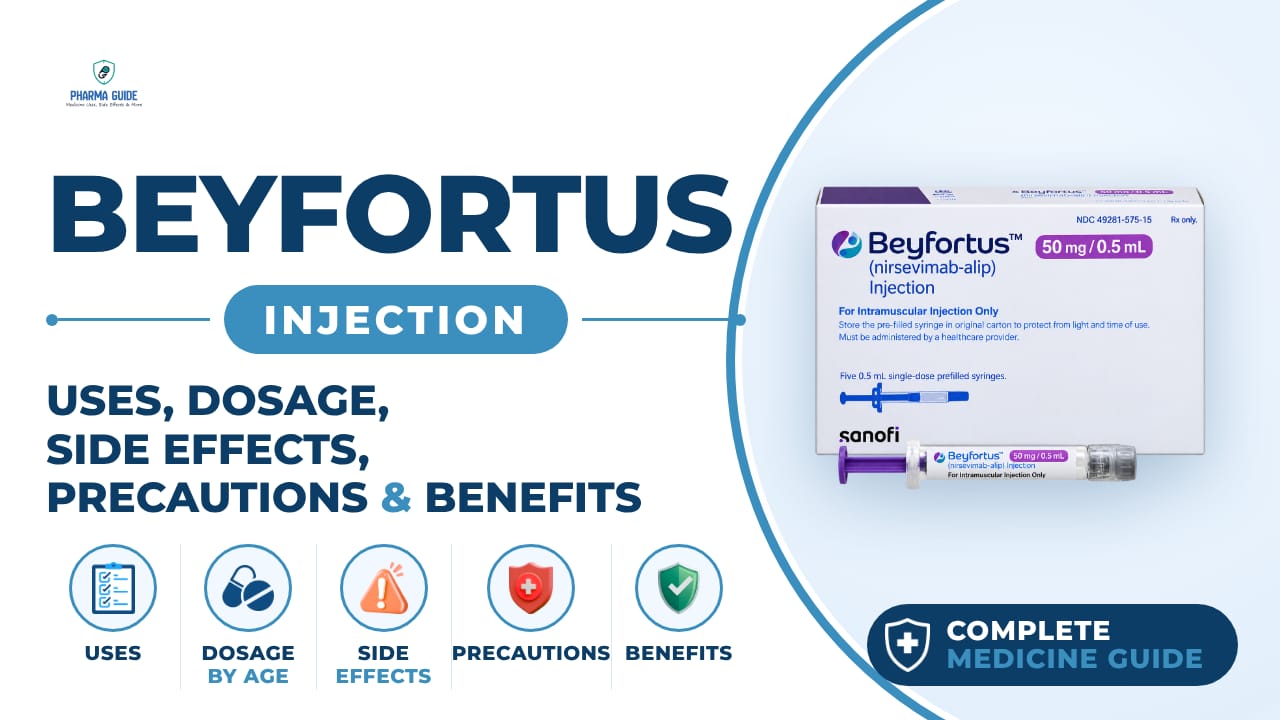
| Generic name | nirsevimab-alip |
|---|---|
| Drug class | Antiviral monoclonal antibodies |
| Forms | Injection |
Quick overview
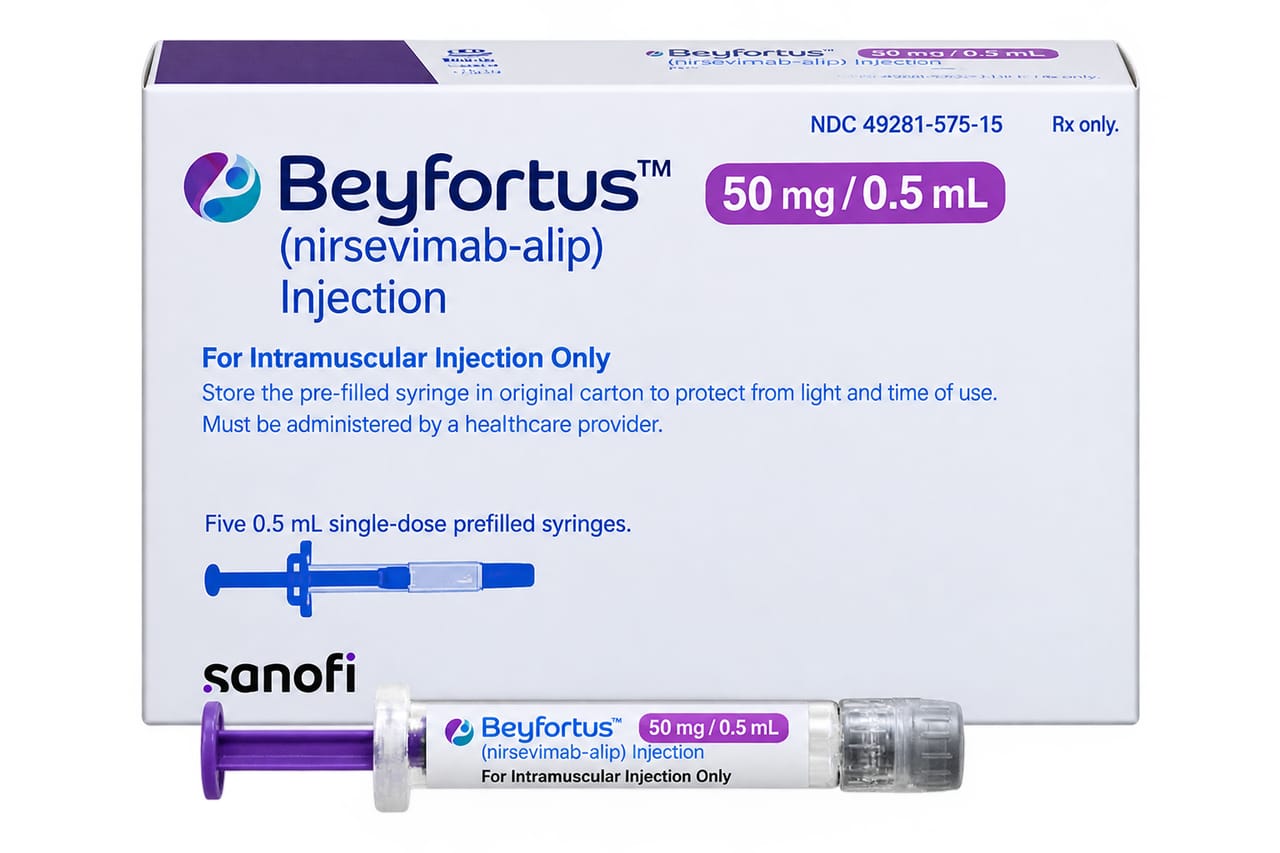
Beyfortus Injection (nirsevimab-alip) is an antiviral monoclonal antibody shot given to babies to help protect them against serious lung infections caused by respiratory syncytial virus (RSV). It is not a vaccine and is given as a single injection into the muscle, usually in the thigh, by a doctor or nurse. It works by providing ready-made antibodies that block the virus from infecting cells, offering protection for about 5 months.
What is Beyfortus Injection
Beyfortus is a shot that gives babies ready-made antibodies to help protect them against serious lung infections caused by respiratory syncytial virus (RSV). It is not a vaccine. It is given by a doctor or nurse as a single injection into the muscle, usually in the thigh.
Beyfortus Injection uses
- Helps prevent serious lung disease (such as bronchiolitis or pneumonia) caused by RSV in newborns and babies under 1 year of age born during or entering their first RSV season
- May be given to children up to 24 months of age who remain at risk of severe RSV disease through their second RSV season
- An extra dose may be given to children having heart surgery with cardiopulmonary bypass, as soon as they are stable after the operation
Benefits of Beyfortus Injection
- Helps prevent severe RSV disease in infants
- Reduces the risk of RSV-related lower respiratory tract infections
- Provides protection during the RSV season
- Helps reduce the risk of RSV-related hospitalization
- Provides long-lasting antibody protection against RSV
How Beyfortus Injection works
Beyfortus contains an antibody called nirsevimab that attaches to the RSV virus and blocks a protein it needs to infect the body. This stops the virus from entering and infecting cells, giving quick protection that lasts about 5 months, the length of a typical RSV season.
Beyfortus Injection dosage
Beyfortus is given by a healthcare professional as a single injection into the muscle, usually in the outer part of the thigh. It should be given before RSV season starts, or as soon as possible after birth if the baby is born during RSV season. It can be given at the same time as childhood vaccines, but using a separate syringe and a different injection site. It should not be mixed with any vaccine in the same syringe or vial. A baby should not receive palivizumab if they have already received Beyfortus in the same RSV season.
Use exactly as prescribed by your doctor or pharmacist.
Available forms and strengths
- Injection
Side effects of Beyfortus Injection
Common
- Rash
- Injection-site redness
- Injection-site swelling
- Injection-site pain
- Fever
Serious
- Swelling of the face, mouth, or tongue
- Difficulty swallowing or breathing
- Unresponsiveness or loss of muscle tone (goes floppy)
- Bluish color of skin, lips, or under fingernails
- Muscle weakness
- Severe rash, hives, or itching
Warnings and precautions
- Do not give Beyfortus to a child who has had a serious allergic reaction to nirsevimab or any ingredient in Beyfortus
- Use caution in children with bleeding or clotting problems, since an injection could cause bruising or bleeding
- Serious allergic reactions, including anaphylaxis, have happened with Beyfortus
- A baby may still get RSV disease even after receiving Beyfortus, since it may not protect all children
- In children with conditions that cause too much protein loss, such as nephrotic syndrome, Beyfortus may not protect as well
- In children with chronic liver disease, which can cause protein loss, Beyfortus may be cleared from the body faster and may not protect as well
- Beyfortus is not meant for use in adults, so it does not apply to pregnancy or breastfeeding
Storage
- Store in a refrigerator (2°C - 8°C)
- Keep the pre-filled syringe in the outer carton to protect it from light
- After removal from the refrigerator, must be used within 8 hours or discarded
- Do not freeze, shake, or expose to heat
- Keep this medicine out of the sight and reach of children
- Any unused medicine or waste material should be disposed of according to local requirements
When to see a doctor
Get medical help right away if your child has swelling of the face, mouth, or tongue, trouble swallowing or breathing, becomes unresponsive, turns bluish in the skin, lips, or under the fingernails, has sudden muscle weakness, or a severe rash, hives, or itching. Seek medical help immediately if your child shows difficulty breathing or swallowing, swelling of the face, lips, tongue or throat, or severe itching with a red rash or raised bumps.
Alternatives
- Enflonsia
- Synagis
Watch the video
FAQs
What is Beyfortus Injection used for?
Beyfortus is used to help prevent serious lung disease, such as bronchiolitis or pneumonia, caused by RSV in newborns and babies under 1 year of age during their first RSV season. It may also be given to children up to 24 months who remain at risk through their second RSV season, and an extra dose may be given to children having heart surgery with cardiopulmonary bypass.
Is Beyfortus a vaccine?
No, Beyfortus is not a vaccine. It is a shot that gives babies ready-made antibodies to help protect them against serious lung infections caused by RSV.
How is Beyfortus Injection given?
Beyfortus is given by a healthcare professional as a single injection into the muscle, usually in the outer part of the thigh. It should be given before RSV season starts, or as soon as possible after birth if the baby is born during RSV season.
How long does Beyfortus protection last?
Beyfortus provides protection for about 5 months, which is the length of a typical RSV season.
What are the common side effects of Beyfortus?
Common side effects include rash, injection-site redness, swelling, pain, and fever.
General information, not medical advice
Your prescriber and the leaflet in your pack know your situation. This page does not.
- Follow your prescriber and the leaflet
- Don't start, stop, or change a dose on your own
- Doses and warnings differ by country and product
Sources
Video
Related medicines
Palivizumab Injection: Uses, Dosage, Side Effects, Precautions and Alternates
Antiviral monoclonal antibodies
Palivizumab Injection helps prevent severe RSV lung disease in high-risk infants. Learn about its uses, monthly dosing, side effects, and precautions.

Injectafer Injection: Uses, Dosage, Side Effects, Precautions and Alternates
Iron products
Injectafer (ferric carboxymaltose) treats iron deficiency anemia and heart failure-related iron deficiency via IV. Learn uses, dosage, side effects, and