
Safety
General information, not medical advice
Your prescriber and the leaflet in your pack know your situation. This page does not.
- Follow your prescriber and the leaflet
- Don't start, stop, or change a dose on your own
- Doses and warnings differ by country and product
Bremelanotide Injection: Uses, Dosage, Side Effects, Precautions and Alternates
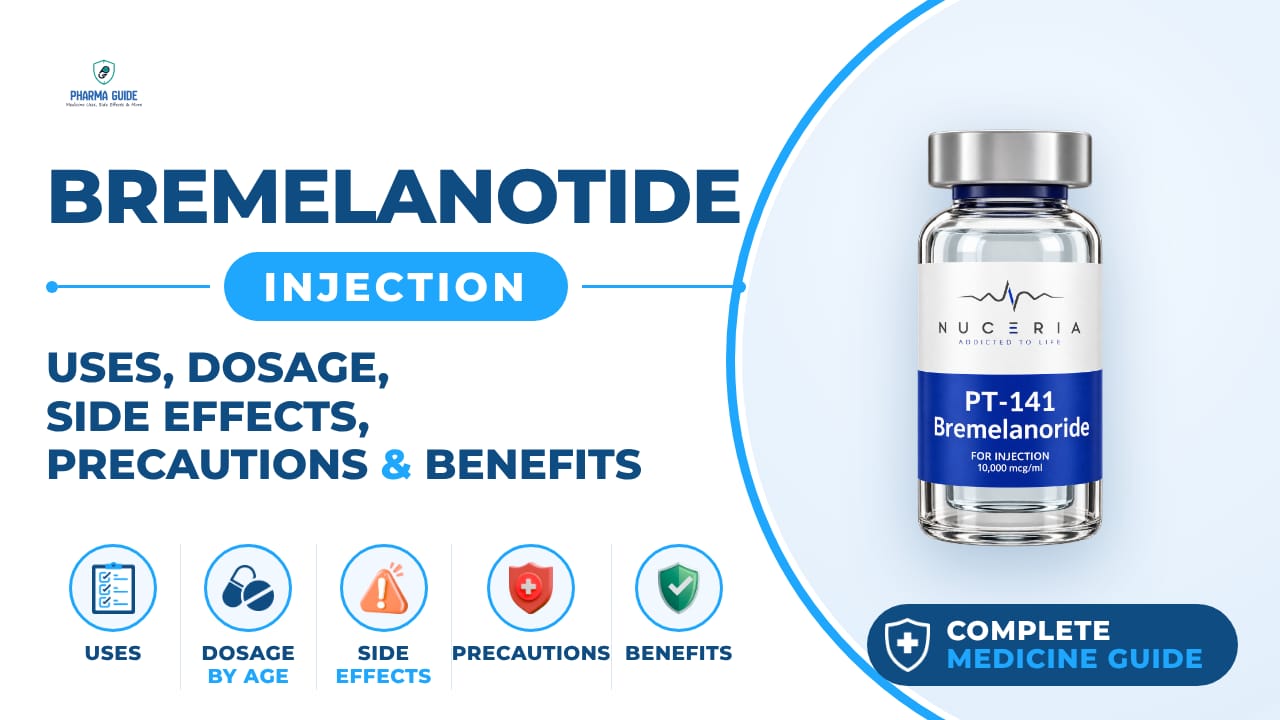
| Generic name | Bremelanotide |
|---|---|
| Drug class | Melanocortin receptor agonist |
| Forms | Solution (in a prefilled autoinjector pen) |
Quick overview
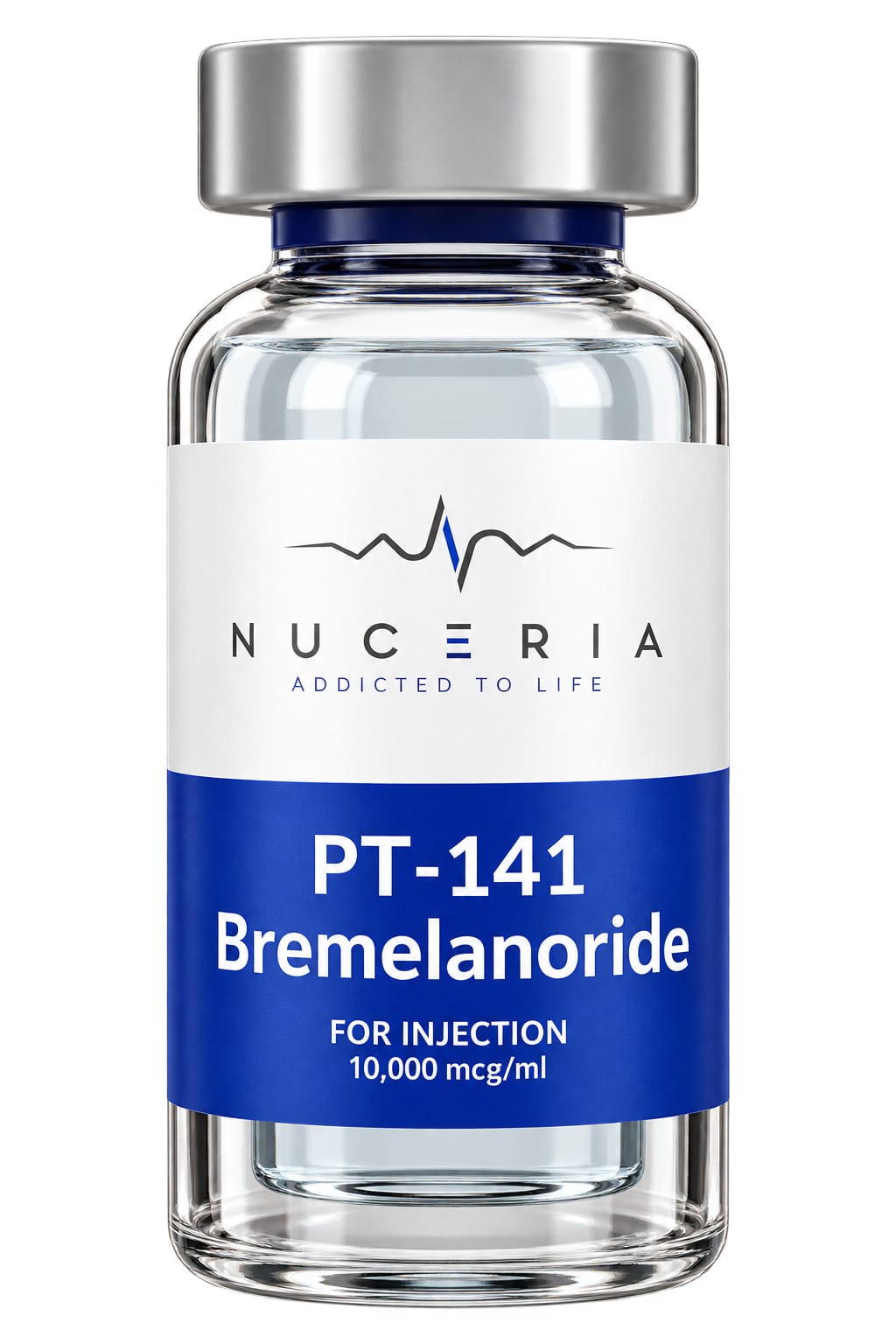
Bremelanotide Injection is a prescription medicine used to treat hypoactive sexual desire disorder (HSDD) in premenopausal women. It is given as a shot under the skin using a prefilled autoinjector pen, used as needed before anticipated sexual activity. It works by activating melanocortin receptors in the brain involved in sexual response. It is not intended for use in men, postmenopausal women, or children.
What is Bremelanotide Injection
Bremelanotide is an injectable prescription medicine used to treat low sexual desire in women who have not gone through menopause. It comes as a solution in a prefilled autoinjector pen that you use under the skin.
Bremelanotide Injection uses
- Treats hypoactive sexual desire disorder (HSDD) in premenopausal women who previously had normal sexual desire
- For low sexual desire that is troubling to the patient and is not caused by a medical or mental health problem, relationship problems, or medicine/drug use
Benefits of Bremelanotide Injection
- Helps treat acquired, generalized hypoactive sexual desire disorder (HSDD) in premenopausal women
- Can help increase sexual desire and interest
- May reduce distress associated with persistently low sexual desire
- Provides an on-demand, non-hormonal treatment option before anticipated sexual activity
How Bremelanotide Injection works
Bremelanotide works by activating natural brain chemicals that help control mood and thinking, which can increase sex drive.
Bremelanotide Injection dosage
This medicine is given as a shot under the skin, usually in the stomach area or the front of the thigh. It is injected as needed, at least 45 minutes before sexual activity. Avoid injecting within the 2-inch area around the belly button, and do not inject into skin that is irritated, sore, bruised, red, hard, or scarred, or through clothing. Use a different injection site each time to help prevent skin problems.
Use a new needle and a new prefilled autoinjector each time; do not reuse or share devices, and do not save an open autoinjector. Check that the liquid is clear or colorless before use; do not use it if it is cloudy, discolored, or has particles in it. If symptoms do not improve after 8 weeks of treatment, contact your doctor. This medicine is not recommended for use in children, and its use in the elderly has not been studied for safety and effectiveness.
| Age group | Dose |
|---|---|
| Under 18 years | Not indicated; safety and effectiveness not established |
| 18+ years – Premenopausal women with HSDD | 1.75 mg subcutaneously as needed, at least 45 minutes before anticipated sexual activity |
| Maximum per 24 hours | 1 dose (1.75 mg) |
| Maximum monthly use | No more than 8 doses per month |
| Postmenopausal / 65+ years | Not indicated |
Available forms and strengths
- Solution (in a prefilled autoinjector pen)
Side effects of Bremelanotide Injection
Common
- Nausea (most common after the first dose, may last 2 hours or more)
- Vomiting
- Headache
- Flushing (redness of the face, neck, arms, and sometimes upper chest)
- Feeling of warmth
- Nasal stuffiness/runny nose
- Cough
- Tiredness
- Dizziness
- Pain, redness, bruising, itching, numbness, tingling, swelling, or other reactions at the injection site
- Diarrhea
- Joint pain or swelling
- Muscle pain, cramps, or stiffness
- Stomach pain
- Loss of appetite
- Trouble sleeping
- Chills, fever, sweating, or general feeling of illness
Serious
- Blurred vision
- Nervousness
- Pounding in the ears
- Slow or fast heartbeat
- Increase in blood pressure and decrease in heart rate that may last up to 12 hours after a dose
- Darkening of the skin on the face, gums, or breasts
- Dark urine, light-colored stools, upper right abdominal pain, yellow eyes and skin
- Allergic reaction signs such as rash, itching, hives, or swelling of the face, lips, tongue, or throat
Warnings and precautions
- This medicine should not be used by people with uncontrolled high blood pressure or heart/blood vessel disease.
- Blood pressure may rise too high while using this medicine, which can cause headaches, dizziness, or blurred vision. You may need to check your blood pressure at home, and should call your doctor right away if you think it's too high.
- This medicine can cause darkening of the skin on the face, gums, or breasts, especially with darker skin tones and repeated daily use. This skin darkening may not go away even after stopping the medicine.
- Nausea can occur after the first dose and may last 2 hours or longer; contact your doctor right away if it is severe or does not stop.
- This medicine is not for use in women who have gone through menopause, in men, or to improve sexual performance.
- Do not use naltrexone together with this medicine unless your doctor specifically directs it, as this combination is usually not recommended.
- Using this medicine during pregnancy can harm an unborn baby. Use effective birth control while being treated, and tell your doctor right away if you think you might be pregnant.
- There isn't enough research to know how this medicine affects breastfeeding infants, so you and your doctor should weigh the benefits and risks before using it while breastfeeding.
- People with severe kidney disease should use this medicine with caution, since it may stay in the body longer and increase side effects.
- People with severe liver disease should use this medicine with caution, since it may stay in the body longer and increase side effects.
- Talk with your healthcare professional about using this medicine along with alcohol.
Storage
- Store refrigerated at 2–8°C (36–46°F); it may be kept at 20–25°C (68–77°F) for up to 30 days.
- Keep the injection in its original carton to protect it from light.
- Do not freeze; discard if the medicine has been frozen.
- Protect from excessive heat and direct sunlight.
- Keep out of reach and sight of children and pets.
When to see a doctor
- Call your doctor right away if you think your blood pressure is too high, or if you have symptoms like headaches, dizziness, or blurred vision.
- Get medical help right away if you notice yellowing of the eyes or skin, dark urine, light-colored stools, tiredness, weakness, or upper right abdominal pain.
- Seek care if you have signs of an allergic reaction, such as rash, itching, hives, or swelling of the face, lips, tongue, or throat.
- Contact your care team if you have a slow heartbeat along with dizziness, feeling faint, confusion, trouble breathing, or unusual weakness or tiredness.
- If you think you have taken too much of this medicine, contact a poison control center or go to an emergency room right away.
Alternatives
- Prasterone (DHEA)
- Transdermal Testosterone
- Bupropion
- Addyi (Flibanserin)
Watch the video
FAQs
What is Bremelanotide Injection used for?
It is used to treat hypoactive sexual desire disorder (HSDD) in premenopausal women who previously had normal sexual desire and whose low desire is not caused by a medical or mental health problem, relationship issues, or medication/drug use.
How is Bremelanotide Injection given?
It is given as a subcutaneous injection, usually in the stomach area or front of the thigh, using a prefilled autoinjector pen, at least 45 minutes before anticipated sexual activity.
How often can I use Bremelanotide Injection?
You can use a maximum of 1 dose (1.75 mg) per 24 hours, and no more than 8 doses per month.
What are the common side effects of Bremelanotide Injection?
Common side effects include nausea, vomiting, headache, flushing, feeling of warmth, nasal stuffiness, cough, tiredness, dizziness, and injection site reactions.
Can Bremelanotide Injection be used by postmenopausal women or men?
No, it is not indicated for postmenopausal women, men, or children, and should not be used to improve sexual performance.
General information, not medical advice
Your prescriber and the leaflet in your pack know your situation. This page does not.
- Follow your prescriber and the leaflet
- Don't start, stop, or change a dose on your own
- Doses and warnings differ by country and product
Sources
Video
Related medicines
Vyleesi Injection: Uses, Dosage, Side Effects, Precautions and Alternates
Melanocortin receptor agonist
Vyleesi Injection (bremelanotide) treats low sexual desire in premenopausal women. Learn about dosage, side effects, warnings, and storage tips.

Injectafer Injection: Uses, Dosage, Side Effects, Precautions and Alternates
Iron products
Injectafer (ferric carboxymaltose) treats iron deficiency anemia and heart failure-related iron deficiency via IV. Learn uses, dosage, side effects, and