
Safety
General information, not medical advice
Your prescriber and the leaflet in your pack know your situation. This page does not.
- Follow your prescriber and the leaflet
- Don't start, stop, or change a dose on your own
- Doses and warnings differ by country and product
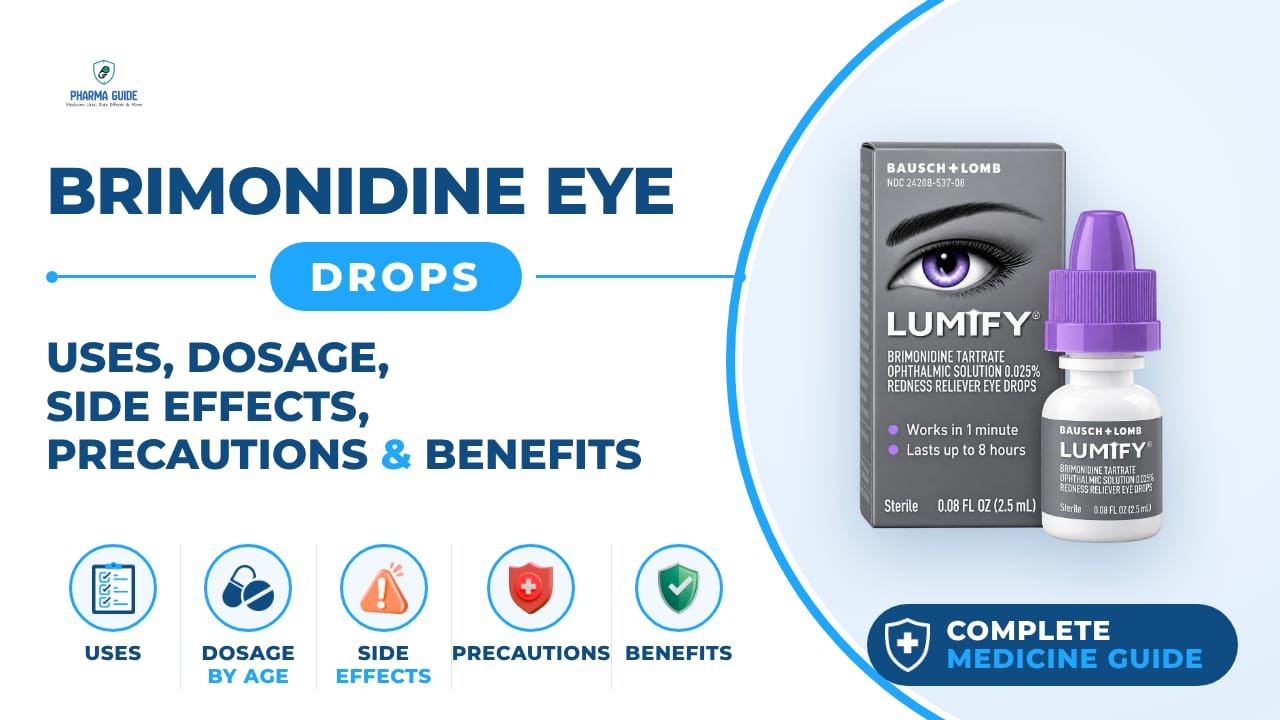
Brimonidine Eye Drops: Uses, Dosage, Side Effects, Precautions and Alternates
| Generic name | Brimonidine tartrate |
|---|---|
| Drug class | Alpha-adrenergic agonist |
| Forms | Solution (eye drops) |
Quick overview
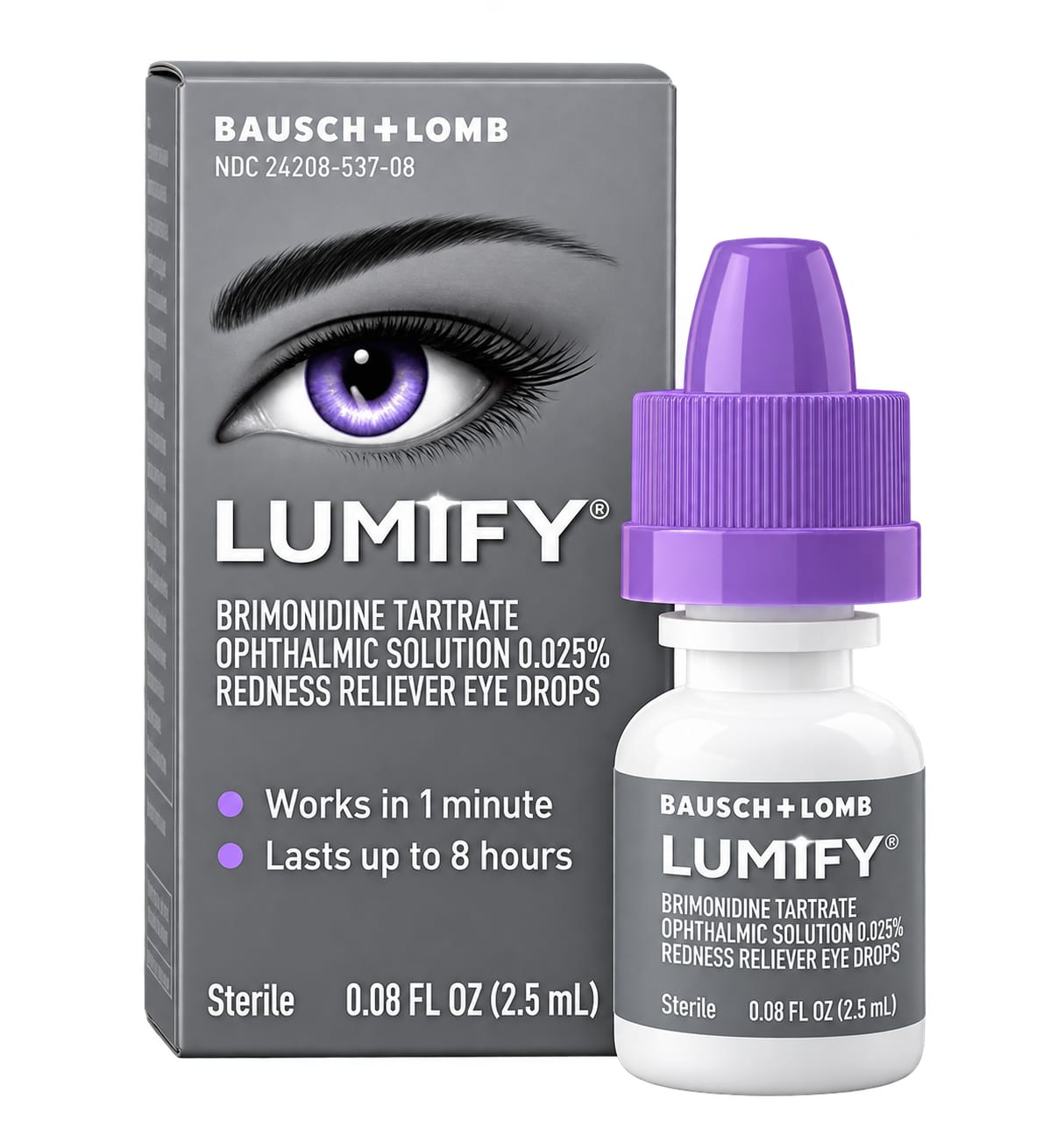
Brimonidine Eye Drops (generic name brimonidine tartrate) is a prescription medicine belonging to the alpha-adrenergic agonist drug class. It is used to lower pressure inside the eye, help prevent increased eye pressure after certain eye surgery, and relieve redness from minor eye irritation. It is also available as a skin gel for rosacea, but this article covers only the eye drop form.
What is Brimonidine Eye Drops
Brimonidine eye drops is a prescription medicine used to lower pressure inside the eye. It is also available as a skin gel for a different condition (rosacea), but this profile focuses on the eye drop form.
Brimonidine Eye Drops uses
- Lowering eye pressure caused by open-angle glaucoma or ocular hypertension
- Preventing increased eye pressure after certain eye surgery (such as laser trabeculoplasty)
- Relieving redness of the eye caused by minor eye irritation
Benefits of Brimonidine Eye Drops
- Lowers pressure inside the eye, which helps protect the optic nerve and vision in glaucoma and ocular hypertension
- Can reduce eye redness from minor irritation
- Has a fairly quick onset of action for lowering eye pressure
- Eye Pressure Control: Helps reduce elevated pressure inside the eye
How Brimonidine Eye Drops works
Brimonidine lowers eye pressure by reducing the amount of fluid made inside the eye and by helping more fluid drain out of the eye.
Brimonidine Eye Drops dosage
Use this medicine only as directed by your doctor; do not use more of it, more often, or for longer than prescribed. Try to use your doses at around the same times each day, spaced evenly apart as directed by your doctor. If you use more than one eye medicine, wait several minutes between the different drops. Wash your hands before and after using the eye drops. Shake the eye drops well just before each use, if using the form that requires shaking.
Tilt your head back, pull down the lower eyelid to form a small pocket, and place the drop inside without letting the dropper tip touch your eye or any surface. After placing the drop, close your eyes gently and press a finger at the inner corner of the eye for a couple of minutes to help the medicine absorb and reduce effects elsewhere in the body. Do not blink or squeeze your eyes shut tightly after instilling the drop.
If you wear contact lenses, remove them before using the drops and wait at least 10 to 15 minutes before putting them back in. If you think a drop missed your eye, you may repeat with a second drop. Continue using the eye drops even if you feel well; do not stop without talking to your doctor, since the drops control the condition but do not cure it.
| Age group | Dose |
|---|---|
| Under 2 Years | Not recommended |
| 2–17 Years | 1 drop in affected eye(s) 3 times daily, only under medical supervision |
| Adults (18–64 Years) | 1 drop in affected eye(s) 3 times daily, about 8 hours apart |
| Older Adults (65+ years) | 1 drop in affected eye(s) 3 times daily, as prescribed |
Available forms and strengths
- Solution (eye drops)
Side effects of Brimonidine Eye Drops
Common
- Blurred vision
- Burning, dry, or itching eyes
- Discharge or excessive tearing
- Headache
- Redness of the eye or eyelid
- Swelling of the eyelid
- Dryness of the mouth
- Drowsiness or tiredness
- Feeling of something in the eye
Serious
- Loss of vision or gradual blurring/loss of vision
- Chest pain, tightness, or fast/irregular heartbeat
- Difficult or labored breathing
- Fainting or severe dizziness when standing up
- Mental depression
- Signs of allergic reaction such as rash, swelling, or difficulty breathing
- Seeing flashes, sparks of light, or floating spots (possible sign of retinal problems)
- Bluish lips or skin, slow or irregular heartbeat, low body temperature
Warnings and precautions
- Do not use this medicine in newborns or infants younger than 2 years old, as it can cause serious, even life-threatening, side effects in this age group.
- Young children between 2 and 7 years old, especially those weighing less than 20 kg, are at higher risk of severe sleepiness and should be watched closely by a doctor.
- Do not use this medicine if you are taking certain antidepressants called MAO inhibitors or medicines that affect noradrenaline, as this combination is not recommended.
- If bacteria contaminate the eye drop bottle, it can lead to serious eye infections that may cause vision loss. Never let the dropper tip touch your eye or any surface.
- Use with caution if you have depression, heart or blood vessel problems (including a history of heart attack or stroke), low blood pressure on standing, Raynaud's disease, or thromboangiitis obliterans, since this medicine can make these conditions worse.
- If the liquid changes color or becomes cloudy, do not use it — get a new bottle from the pharmacy.
- It is not known if brimonidine eye drops are safe to use during pregnancy. Tell your doctor if you are pregnant or planning to become pregnant, and use only if your doctor decides the benefit outweighs the risk to the baby.
- It is not known whether brimonidine passes into human breast milk. It should not be used by women who are breastfeeding unless your doctor advises otherwise.
- This medicine has not been well studied in people with kidney problems, so it should be used with caution and only under a doctor's guidance if you have kidney disease.
- This medicine has not been well studied in people with liver problems, so it should be used with caution and only under a doctor's guidance if you have liver disease.
- This medicine may add to the drowsiness caused by alcohol. Ask your doctor about safe alcohol use while using these eye drops.
- This medicine can cause drowsiness, dizziness, or temporary blurred vision, especially in low light. Do not drive or use machinery until you know how it affects you.
Storage
- Store the medicine in a closed container at room temperature, away from heat, moisture, and direct light.
- Keep from freezing.
- Keep out of the reach of children.
- Do not keep outdated medicine or medicine no longer needed.
- Ask your healthcare professional how you should dispose of any medicine you do not use.
- Keep this medication in the container it came in, tightly closed, and out of reach of children. Store it at room temperature and away from excess heat and moisture (not in the bathroom).
- Dispose of unneeded medications in a way so that pets, children, and other people cannot take them. Do not flush this medication down the toilet. Use a medicine take-back program.
When to see a doctor
- Get medical help right away if you notice a skin rash, difficulty breathing, seeing flashes or spots of light, blind spots, or nausea, dizziness, or fainting.
- Contact your doctor right away if you have an eye injury or infection, or if you need eye surgery, since you may need to change or stop this medicine.
- If someone swallows this medicine, especially a young child, seek emergency medical help immediately, as it can cause serious effects like slowed breathing, low body temperature, or loss of consciousness.
Alternatives
- Latanoprost
- Bimatoprost
- Betaxolol
Watch the video
FAQs
What is Brimonidine Eye Drops used for?
It is used to lower pressure inside the eye caused by open-angle glaucoma or ocular hypertension, to prevent increased eye pressure after certain eye surgery like laser trabeculoplasty, and to relieve redness of the eye caused by minor irritation.
How does Brimonidine Eye Drops work?
It lowers eye pressure by reducing the amount of fluid made inside the eye and by helping more fluid drain out of the eye.
What is the dosage of Brimonidine Eye Drops for adults?
Adults aged 18 to 64 typically use 1 drop in the affected eye(s) 3 times daily, about 8 hours apart, as directed by a doctor.
Can children use Brimonidine Eye Drops?
It is not recommended for children under 2 years old. Children aged 2 to 17 may use 1 drop 3 times daily only under medical supervision, and those between 2 and 7 years, especially under 20 kg, need close monitoring due to higher risk of severe sleepiness.
What are common side effects of Brimonidine Eye Drops?
Common side effects include blurred vision, burning, dry, or itching eyes, discharge or excessive tearing, headache, redness or swelling of the eye or eyelid, dryness of the mouth, drowsiness or tiredness, and a feeling of something in the eye.
General information, not medical advice
Your prescriber and the leaflet in your pack know your situation. This page does not.
- Follow your prescriber and the leaflet
- Don't start, stop, or change a dose on your own
- Doses and warnings differ by country and product
Sources
Video
Related medicines

Alphagan Eye Drops: Uses, Dosage, Side Effects, Precautions and Alternates
Alpha-adrenergic agonist
Alphagan Eye Drops (brimonidine) lower eye pressure to treat glaucoma and ocular hypertension. Learn about dosage, side effects, warnings, and storage tips.

Injectafer Injection: Uses, Dosage, Side Effects, Precautions and Alternates
Iron products
Injectafer (ferric carboxymaltose) treats iron deficiency anemia and heart failure-related iron deficiency via IV. Learn uses, dosage, side effects, and