
Safety
General information, not medical advice
Your prescriber and the leaflet in your pack know your situation. This page does not.
- Follow your prescriber and the leaflet
- Don't start, stop, or change a dose on your own
- Doses and warnings differ by country and product
Brufen Syrup: Uses, Dosage, Side Effects, Precautions and Alternates
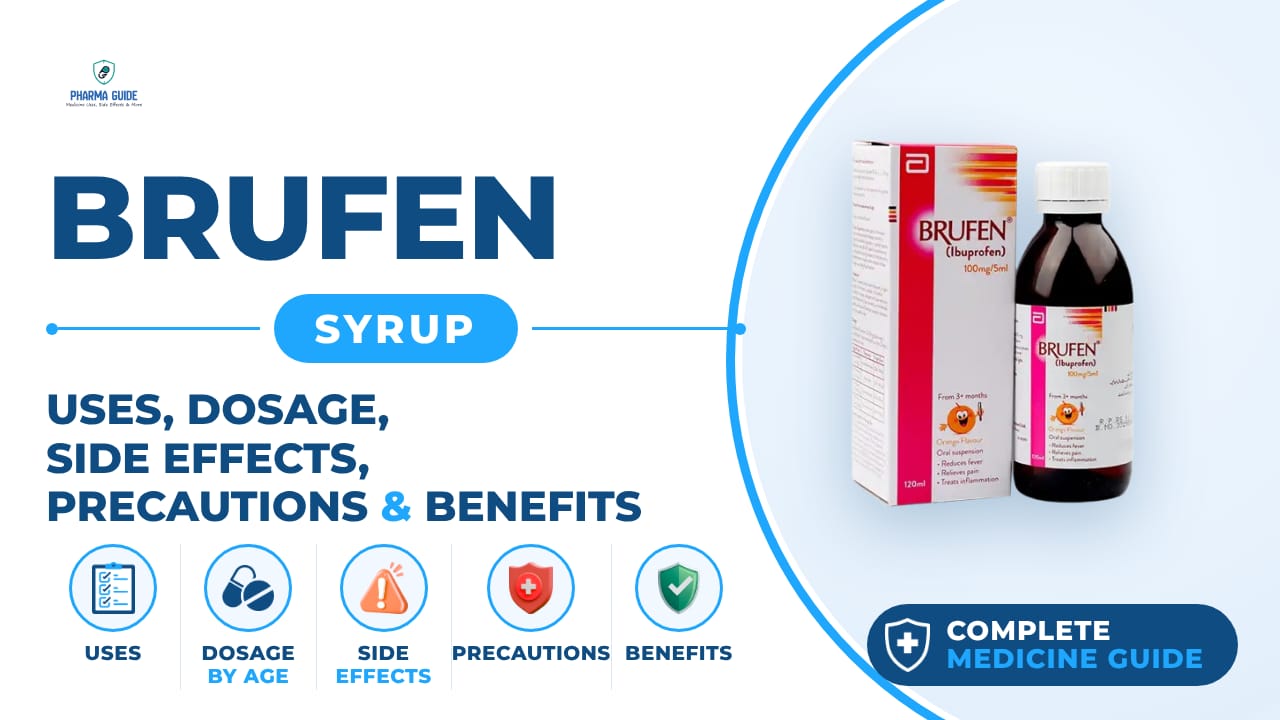
| Generic name | Ibuprofen |
|---|---|
| Drug class | Non-Steroidal Anti-Inflammatory Drug (NSAID) |
| Forms | Oral suspension (syrup) |

Quick overview
Brufen Syrup is an oral suspension containing ibuprofen, an NSAID, with each 5ml spoon providing 100mg. It is used to relieve pain, reduce inflammation and swelling, and lower high temperature in both adults and children over 1 year of age. It is intended for short-term use and should be given with or after food, using the measuring spoon provided.
What is Brufen Syrup
Brufen Syrup is an oral suspension that contains ibuprofen, a medicine that belongs to a group called Non-Steroidal Anti-Inflammatory Drugs (NSAIDs). Each 5ml spoon contains 100mg of ibuprofen. It helps relieve pain, swelling and high temperature.
Brufen Syrup uses
- Relieving pain and inflammation in conditions such as osteoarthritis, rheumatoid arthritis, spine arthritis and ankylosing spondylitis
- Joint swelling, frozen shoulder, bursitis, tendinitis and tenosynovitis
- Lower back pain, sprains and strains
- Toothache, post-operative pain, period pain, headache and migraine
- Short-term management of fever in children over 1 year of age
- Fever (high temperature), including post-immunisation fever
- Mild to moderate pain including headache, sore throat, teething pain, toothache, cold and flu symptoms and minor aches
Benefits of Brufen Syrup
- Relieves pain
- Reduces inflammation and swelling
- Lowers high temperature (fever)
How Brufen Syrup works
Ibuprofen works by changing how the body responds to pain, swelling and high temperature. Its action may be related to blocking the making of substances in the body called prostaglandins.
Brufen Syrup dosage
Doses should usually be given every 6 to 8 hours, preferably with or after food. Do not give more often than every 4 hours, and do not exceed 4 doses in any 24 hour period. Shake thoroughly or massage the sachet to mix the contents before use, and give this medicine using the measuring spoon provided. For oral use.
This medicine is for short term use only. To reduce the chance of side effects, especially in the elderly, use the lowest effective dose for the shortest possible time. If your child's symptoms persist for more than 3 days, or if new symptoms occur, talk to your doctor.
| Age group | Dose |
|---|---|
| Under 6 months | Not recommended unless prescribed by a doctor |
| 6–12 months | 2.5 mL, up to 3 times daily |
| 1–3 years | 5 mL, up to 3 times daily |
| 4–6 years | 7.5 mL, up to 3 times daily |
| 7–9 years | 10 mL, up to 3 times daily |
| 10–11 years | 15 mL, up to 3 times daily |
| 12 years and older | 10–20 mL, up to 3 times daily |
Available forms and strengths
- Brufen Syrup is available as an oral suspension (syrup), with each 5ml spoon containing 100mg of ibuprofen.
Side effects of Brufen Syrup
Common
- Acidity
- Heartburn
- Nausea
- Vomiting
- Abdominal discomfort
- Dizziness
- Diarrhoea
- Nervousness
- Decreased urine output
- Constipation
- Loss of appetite
- Headache
- Drowsiness
- Skin rash
- Ringing in the ears
- Flatulence
- Indigestion
Serious
- Stomach ulcer and bleeding in the stomach or intestines
- Passing blood in stools or black tarry stools
- Vomiting blood or dark particles like coffee grounds
- Yellowing of the skin and eyes (jaundice)
- Liver problems
- Kidney problems including kidney failure
- Allergic reactions such as swelling of the face, lips, tongue and throat, difficulty breathing, rapid heart rate, low blood pressure or collapse
- Severe skin reactions including blistering and peeling skin (DRESS syndrome)
- Heart attack, high blood pressure, heart failure or stroke
- Aseptic meningitis (severe headache, stiff neck, disorientation, fever, eye sensitivity to light)
- Blood disorders causing unusual bruising, bleeding, sore throat, mouth ulcers or extreme paleness and weakness
Warnings and precautions
- Anti-inflammatory painkillers like ibuprofen may be linked to a small increased risk of heart attack or stroke, especially when used at high doses. Do not exceed the recommended dose or duration of treatment.
- Do not give to children who have or have had a stomach ulcer, perforation or bleeding of the stomach, or who are allergic to ibuprofen, aspirin or other painkillers. NSAIDs can cause ulcers and bleeding in the stomach and intestines at any time during treatment, which can happen without warning symptoms and may cause death.
- Do not give to babies aged 3 to 6 months for more than 24 hours, and do not give to children under 3 months except for post-immunisation fever. Do not give to a child weighing less than 5kg.
- Do not take this medicine in the last 3 months of pregnancy. Talk to your doctor before taking it if you are in the first 6 months of pregnancy. Pregnant women should ask their doctor or pharmacist before taking this medication.
- If you are breastfeeding, talk to your doctor before taking this medicine. You should not take this medication without guidance from your health care provider.
- Do not give to children with kidney failure. Discuss treatment with your doctor or pharmacist first if there are liver or kidney problems. Prolonged use may lead to kidney stone formation; if you have any kidney disease, consult your health care provider. There is a risk of kidney impairment in dehydrated children and adolescents.
- Do not give to children with severe liver failure. Discuss treatment with your doctor or pharmacist first if there are liver problems. Liver problems may be indicated by yellowing of the skin and eyes (jaundice) and/or pale coloured stools and dark urine.
- Drinking alcohol can increase the chance of getting an ulcer or bleeding in the stomach and intestines.
- This medicine can cause drowsiness, which can make it hard to drive or operate machinery.
Storage
- Do not use after the expiry date shown on the pack.
- Do not store above 25°C. Store in the original container.
- Keep out of the sight and reach of children.
- Shake well before using. Store at controlled room temperature.
When to see a doctor
- Stop giving the medicine and get medical help straight away if there is an allergic reaction such as asthma or wheezing, swelling of the face, lips, tongue and throat, rapid heart rate, low blood pressure, collapse, or a severe skin reaction with blistering and peeling.
- Stop taking the medicine and consult a doctor immediately if you have severe headache, high fever, neck stiffness, intolerance to bright light, blood in stools, black tarry stools or blood in vomiting.
- If your child has taken more of the suspension than they should, or by accident, always contact a doctor or nearest hospital for advice.
- Get emergency help right away if you have shortness of breath or trouble breathing, chest pain, weakness in one part or side of your body, slurred speech, or swelling of the face or throat.
Alternatives
- Advil
- Motrin
- Nurofen
Watch the video
FAQs
What is Brufen Syrup used for?
Brufen Syrup is used to relieve pain and inflammation (such as arthritis, sprains, toothache, headache and migraine) and to lower high temperature, including fever in children over 1 year of age and post-immunisation fever.
What is the dosage of Brufen Syrup for children?
Dosage depends on age, ranging from 2.5 mL for 6–12 months up to 20 mL for ages 12 and older, given up to 3 times daily, preferably with or after food. It should not be given more often than every 4 hours, with no more than 4 doses in 24 hours.
Can Brufen Syrup be given to infants under 6 months?
It is not recommended for babies under 6 months unless prescribed by a doctor. It should not be given to children under 3 months except for post-immunisation fever, and not to babies aged 3 to 6 months for more than 24 hours.
What are the common side effects of Brufen Syrup?
Common side effects include acidity, heartburn, nausea, vomiting, abdominal discomfort, dizziness, diarrhoea, nervousness, decreased urine output, constipation, loss of appetite, headache, drowsiness, skin rash, ringing in the ears, flatulence and indigestion.
Is Brufen Syrup safe during pregnancy?
It should not be taken in the last 3 months of pregnancy, and a doctor should be consulted before use in the first 6 months of pregnancy.
General information, not medical advice
Your prescriber and the leaflet in your pack know your situation. This page does not.
- Follow your prescriber and the leaflet
- Don't start, stop, or change a dose on your own
- Doses and warnings differ by country and product
Sources
- US FDA MOTRIN (ibuprofen) Suspension label, accessdata.fda.gov
- MHRA Galpharm Children’s Ibuprofen 100mg/5ml Oral Suspension Patient Information Leaflet
- Brufen (Ibuprofen) Syrup information article
Video
Related medicines

Aleve Arthritis Tablet: Uses, Dosage, Side Effects, Precautions and Alternates
Non-steroidal anti-inflammatory drug (NSAID)
Aleve Arthritis Tablet (naproxen sodium 220 mg) relieves pain, inflammation, and fever. Learn uses, dosage, side effects, warnings, and alternatives.

Anadin Ultra Capsule: Uses, Dosage, Side Effects, Precautions and Alternates
Non-steroidal anti-inflammatory drug (NSAID)
Anadin Ultra Capsule contains 200mg ibuprofen in a fast-dissolving liquid gel. Learn its uses, dosage, side effects and precautions before taking it.