Cefpodoxime Tablet: Uses, Dosage, Side Effects, Precautions and Alternates
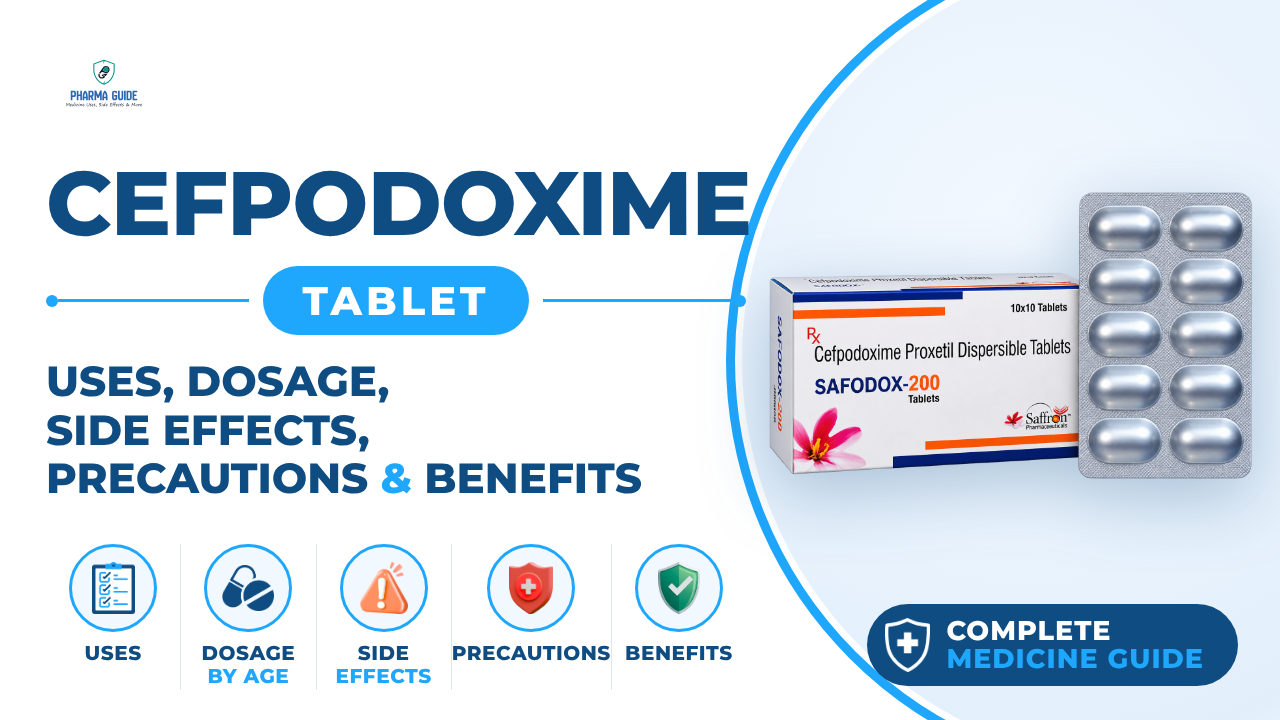
| Generic name | Cefpodoxime |
|---|---|
| Drug class | Cephalosporin antibiotic |
| Forms | Tablet, Powder for suspension / oral liquid |
Quick overview
Cefpodoxime Tablet is a prescription cephalosporin antibiotic used to treat bacterial infections in many parts of the body, such as bronchitis, ear infections, pneumonia, sinusitis, and urinary tract infections. It will not work for colds, flu, or other viral infections. It works by killing bacteria or stopping their growth, and it should be taken exactly as directed for the full prescribed course.
What is Cefpodoxime Tablet
Cefpodoxime is a prescription antibiotic that treats bacterial infections in many parts of the body. It belongs to a group of medicines called cephalosporin antibiotics. It will not work for colds, flu, or other infections caused by viruses.
Cefpodoxime Tablet uses
- Treats bacterial infections in many different parts of the body
- Bronchitis
- Ear infections
- Gonorrhea
- Pneumonia
- Sinusitis (sinus infections)
- Skin infections
- Sore throat and tonsillitis
- Urinary tract infections
Benefits of Cefpodoxime Tablet
- Can be taken by mouth, making it suitable for outpatient treatment
- Many people begin to feel better within the first few days of treatment
How Cefpodoxime Tablet works
Cefpodoxime works by killing bacteria or stopping them from growing. It does this by stopping bacteria from building the cell wall they need to survive.
Cefpodoxime Tablet dosage
Take this medicine only as directed by your doctor. Do not take more of it, take it more often, or take it for longer than ordered. Take the tablets with food, at around the same times every day.
Keep taking this medicine for the full treatment time, even if you feel better after the first few doses. Your infection may not clear up if you stop too soon.
If you use the oral liquid, shake it well before each use and measure it with a marked measuring spoon, oral syringe, or medicine cup rather than a household teaspoon.
| Age group | Dose |
|---|---|
| Under 12 years | Tablets are generally not preferred; dosing is usually weight-based using an oral suspension, under medical supervision |
| 12–17 years | If adult-sized, commonly 100–200 mg every 12 hours, depending on the infection |
| 18–64 years | Commonly 100–200 mg every 12 hours, depending on the infection |
| 65+ years | Usually adult dosing, but kidney function may require dose adjustment |
Available forms and strengths
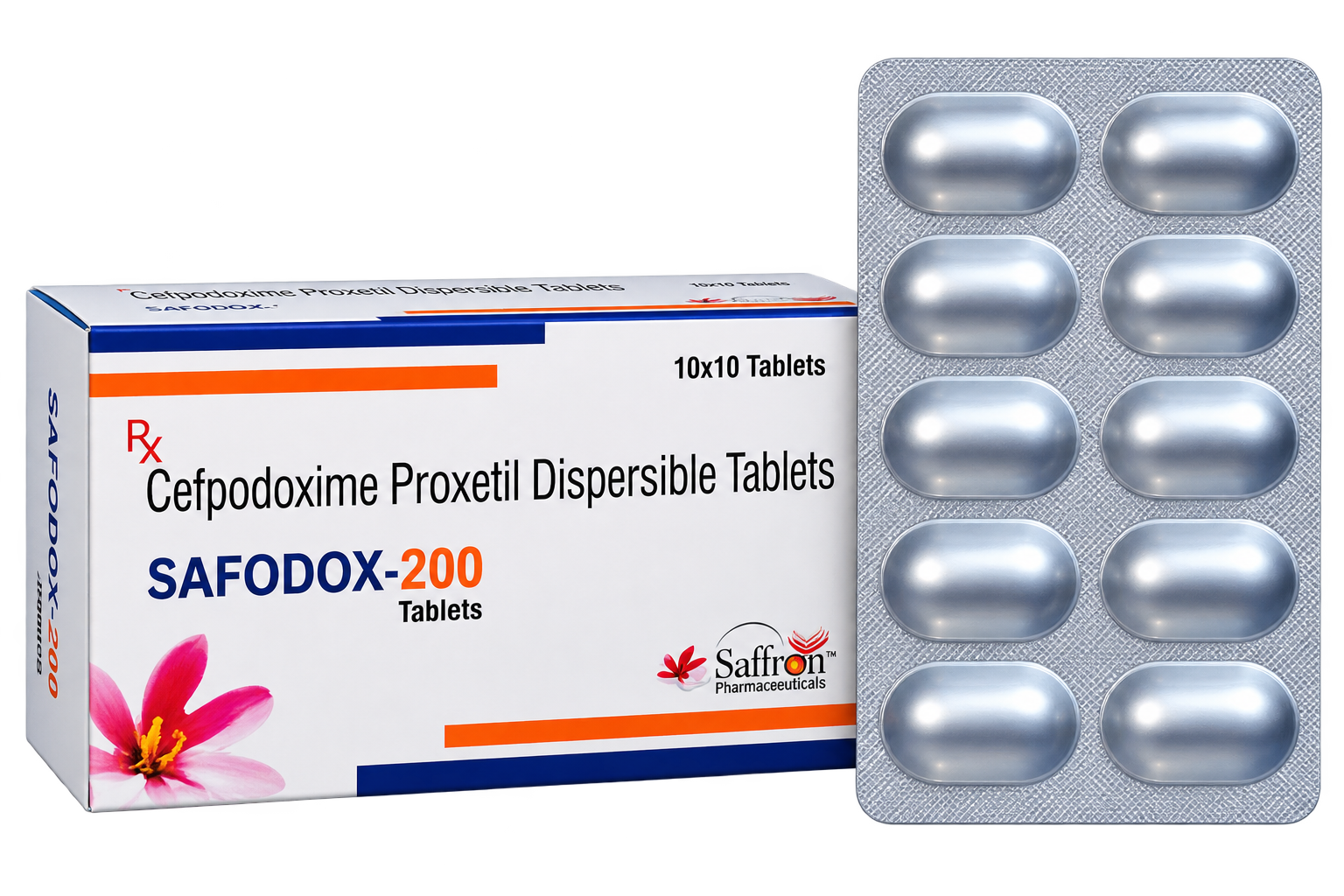
- Tablet
- Powder for suspension / oral liquid
Side effects of Cefpodoxime Tablet
Common
- Diarrhea or loose stools
- Nausea
- Vomiting
- Stomach pain or upset
- Headache
- Swelling, redness, irritation, burning, or itching of the vagina
- White vaginal discharge
- Mild rash or skin irritation
- Change in the color, amount, or odor of vaginal discharge
Serious
- Watery or bloody stools, stomach cramps, or fever during treatment or for up to two or more months after stopping treatment
- Rash, itching, hives; difficulty breathing or swallowing; wheezing
- A return of fever, sore throat, chills, or other signs of infection
- Severe allergic reaction with facial swelling, wheezing, or difficulty breathing
- Blistering, peeling, or loosening of the skin
- Seizures
- Yellowing of the eyes or skin
- Unusual bleeding or bruising
- Fainting or confusion
Warnings and precautions
- Cefpodoxime may cause diarrhea, which can sometimes be severe. Do not take or give any medicine to treat diarrhea without first checking with your doctor, as diarrhea medicines may make it worse or last longer.
- Cefpodoxime may make hormonal contraceptives (birth control pills, patches, rings, and injections) less effective.
- Use another method of contraception to prevent pregnancy while taking it.
- Keep taking cefpodoxime until you finish the prescription, even if you feel better. Stopping too soon or skipping doses may leave the infection untreated and lead to antibiotic resistance.
- If you have phenylketonuria (PKU), note that the suspension is sweetened with aspartame, which forms phenylalanine.
- Tell your doctor if you have ever had an allergic reaction to this medicine, other medicines, or to penicillin or cephalosporin antibiotics.
- Tell your doctor if you are pregnant or plan to become pregnant. If you become pregnant while taking cefpodoxime, call your doctor.
- There are no adequate studies on the risk to the baby when using this medicine while breastfeeding.
- Weigh the possible benefits against the possible risks before taking it while breastfeeding.
- Use with caution if you have kidney disease.
- The effects of the medicine may be increased because it is removed from the body more slowly. Older adults may have age-related kidney problems that may require a dose adjustment.
- Discuss with your healthcare professional the use of your medicine with food, alcohol, or tobacco.
Storage
- Keep out of the reach of children.
- Do not keep outdated medicine or medicine no longer needed.
- Ask your healthcare professional how you should dispose of any medicine you do not use.
- Store the tablets in a closed container at room temperature, away from heat, moisture, and direct light. Keep from freezing.
- Store the oral liquid in the refrigerator and throw away any unused medicine after 14 days.
- Do not flush this medication down the toilet. Use a medicine take-back program where possible.
When to see a doctor
- Get medical help right away if you have signs of a serious allergic reaction such as rash, itching, hives, difficulty breathing or swallowing, or wheezing.
- Call your doctor right away or get emergency care if you have watery or bloody stools, stomach cramps, or fever during treatment or for up to two or more months after stopping treatment.
- Contact your doctor if a fever, sore throat, chills, or other signs of infection return.
- Contact your doctor if your symptoms do not improve within a few days or if they get worse.
- In case of overdose, call your local poison control center. If the person has collapsed, had a seizure, has trouble breathing, or cannot be woken, call emergency services right away.
Alternatives
- Cefixime
- Cefuroxime
- Cefdinir
- Cephalexin
- Cefadroxil
- Amoxicillin
- Amoxicillin-Clavulanate
FAQs
What is Cefpodoxime Tablet used for?
It is a prescription cephalosporin antibiotic used to treat bacterial infections such as bronchitis, ear infections, gonorrhea, pneumonia, sinusitis, skin infections, sore throat and tonsillitis, and urinary tract infections. It will not work for colds, flu, or other viral infections.
How does Cefpodoxime Tablet work?
It works by killing bacteria or stopping them from growing by stopping bacteria from building the cell wall they need to survive.
What is the common dosage for Cefpodoxime Tablet?
For ages 12 to 64, the common dose is 100-200 mg every 12 hours, depending on the infection, taken with food at around the same times every day. Tablets are generally not preferred for children under 12, who typically receive weight-based oral suspension under medical supervision.
What are the common side effects of Cefpodoxime Tablet?
Common side effects include diarrhea or loose stools, nausea, vomiting, stomach pain or upset, headache, mild rash or skin irritation, and vaginal irritation or discharge.
Can Cefpodoxime Tablet affect birth control pills?
Yes, cefpodoxime may make hormonal contraceptives such as birth control pills, patches, rings, and injections less effective, so another method of contraception should be used during treatment.
Sources
- Mayo Clinic (https://www.mayoclinic.org/drugs-supplements/cefpodoxime-oral-route/description/drg-20073381)
- MedlinePlus (https://medlineplus.gov/druginfo/meds/a698024.html)
- Acıbadem International Health Library