
Safety
General information, not medical advice
Your prescriber and the leaflet in your pack know your situation. This page does not.
- Follow your prescriber and the leaflet
- Don't start, stop, or change a dose on your own
- Doses and warnings differ by country and product
Cetirizine Tablet: Uses, Dosage, Side Effects, Precautions and Alternates
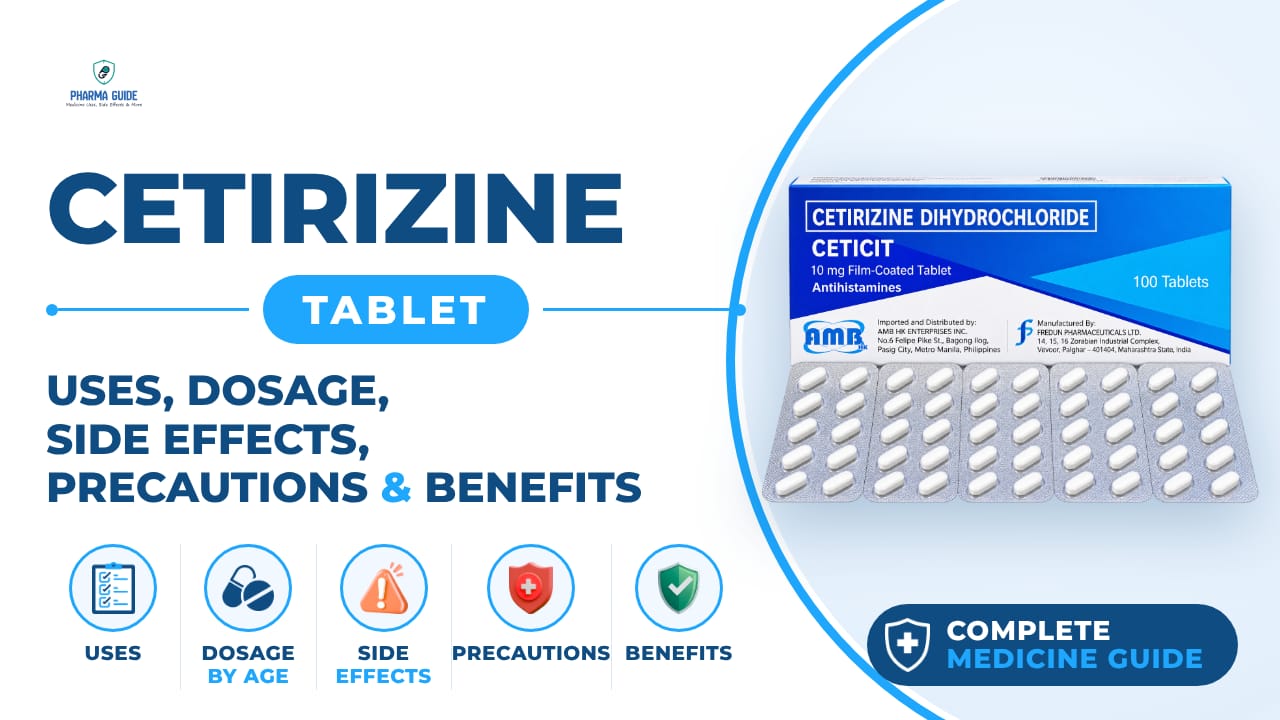
| Generic name | Cetirizine hydrochloride |
|---|---|
| Drug class | Antihistamine (Histamine H1 receptor antagonist) |
| Forms | Tablet, Syrup, Solution, Capsule |
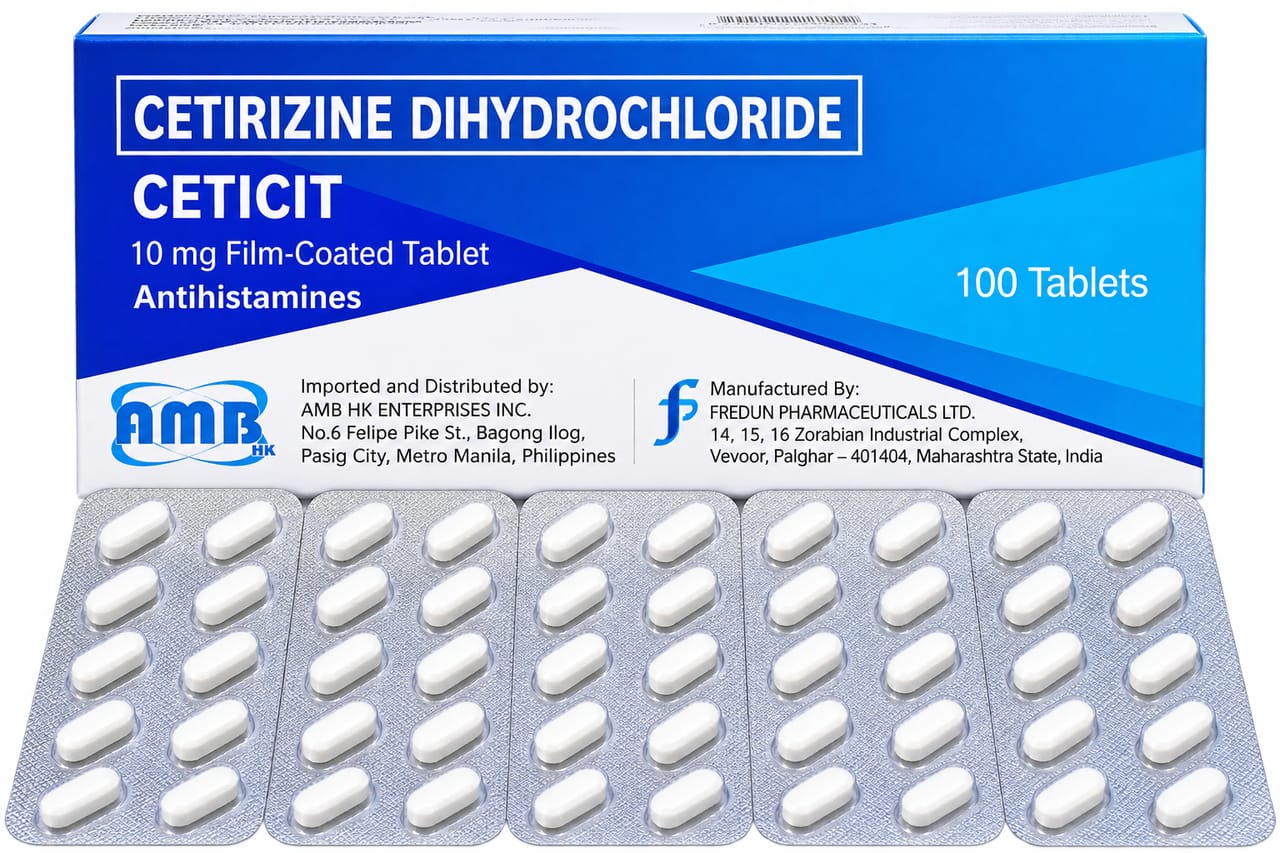
Quick overview
Cetirizine Tablet (cetirizine hydrochloride) is a second-generation antihistamine that reduces histamine in the body to relieve allergy symptoms such as sneezing, itching, watery eyes, and runny nose. It is also used to treat hives and itching from chronic idiopathic urticaria. Doses vary by age, and it is available as a tablet, syrup, solution, and capsule.
What is Cetirizine Tablet
Cetirizine is a second-generation antihistamine that reduces the natural chemical histamine in the body, which can produce symptoms of sneezing, itching, watery eyes, and runny nose. It belongs to the antihistamine drug class, specifically histamine H1 receptor antagonists.
Cetirizine Tablet uses
- Relief of nasal and non-nasal symptoms of seasonal allergic rhinitis (sneezing, runny nose, itchy/watery eyes, nasal congestion)
- Relief of symptoms of perennial (year-round) allergic rhinitis caused by dust mites, animal dander, and mold
- Treatment of itching and hives (chronic idiopathic urticaria)
- Treatment of cold or allergy symptoms such as sneezing, itching, watery eyes, or runny nose
Benefits of Cetirizine Tablet
- Reduces sneezing, itching, watery eyes, and runny nose
- Reduces the occurrence, severity, and duration of hives and itching
- Provides fast relief of nasal and non-nasal allergy symptoms
- Generally does not cause significant drowsiness or impair mental alertness at recommended doses in most people
How Cetirizine Tablet works
Allergy symptoms happen when your body releases a chemical called histamine in response to things like dust, pollen, or animal dander. Cetirizine works by blocking the receptors that histamine attaches to, which helps prevent or reduce symptoms like itching, watery eyes, sneezing, and runny nose. It also has anti-inflammatory effects that help reduce swelling, redness, and hives.
Cetirizine Tablet dosage
Cetirizine can be taken with or without food. The chewable tablet form must be chewed before swallowing. If using liquid forms, measure with a proper dose-measuring spoon or cup, not a regular table spoon.
If you miss a dose, take it as soon as you remember; if it is almost time for your next dose, skip the missed dose and continue your regular schedule; do not double up. Do not take more than the recommended amount or use it for longer than recommended. Older adults may need a lower dose than usual, so follow your doctor's instructions.
| Age group | Dose |
|---|---|
| 2–5 years | Usually 2.5 mg once daily; may increase to 5 mg/day |
| 6–11 years | 5–10 mg once daily |
| 12–17 years | 10 mg once daily |
| 18–64 years | 10 mg once daily |
| 65+ years | Often 5–10 mg once daily; consider kidney function |
Available forms and strengths
- Tablet
- Syrup
- Solution
- Capsule
Side effects of Cetirizine Tablet
Common
- Headache
- Sleepiness, drowsiness, fatigue
- Dry mouth
- Loss of taste
- Nausea
- Dizziness
- Trouble sleeping (insomnia)
- Sore throat, cough
- Constipation
- Eye pain or swelling
- Blurred vision
Serious
- Fast, pounding, or uneven heartbeat
- Weakness, tremors (uncontrolled shaking), or sleep problems
- Severe restless feeling, hyperactivity
- Confusion
- Problems with vision
- Urinating less than usual or not at all
- Allergic reaction: rash, hives, swelling of the face, lips, tongue, or throat, difficulty swallowing or breathing
- Severe skin reaction: rash with small pimples and redness on the skin folds, trunk, and arms, with or without fever
- Liver problems: yellowing of skin or eyes, upper right stomach pain, nausea, vomiting, unusual dark urine, unusual tiredness
- Hallucinations
- Memory problems, partial or total memory loss
- Difficulty urinating
- Severe widespread itching after stopping the medication after long-term use
Warnings and precautions
- There isn't enough well-controlled research in pregnant women, so you should ask a doctor before using this medicine if you are pregnant, and only use it if your doctor says it's needed.
- This medicine is not recommended while breastfeeding unless a doctor tells you otherwise.
- People with kidney problems, especially severe kidney impairment, should not use this medicine or may need a lower dose.
- Tell your doctor about any kidney problems before taking it.
- This medicine should be used carefully in people with liver disease, and a lower starting dose is recommended for those with moderate or severe liver problems.
- Avoid drinking alcohol while taking this medicine, as it can increase some side effects like drowsiness.
- This medicine can cause drowsiness, so be careful driving or operating machinery until you know how it affects you, and stop driving if you feel drowsy.
- This medicine is not a substitute for an epinephrine injector, and should not be used to prevent hives caused by known triggers like foods, insect stings, or medicines.
- Rare but serious skin reactions have been reported with cetirizine, which can appear soon after starting or be delayed, and may include fever with widespread small pimples and redness in skin folds.
- Do not use other medicines that cause drowsiness together with this medicine without talking to your doctor, as they can add to the sleepiness this medicine can cause.
- In rare cases, people have reported severe itching all over the body after stopping this medicine following long-term daily use.
Storage
- Store at room temperature away from moisture and heat
- Store between 15°C and 30°C
- Keep out of the reach and sight of children
When to see a doctor
- Get emergency medical help right away if you have trouble swallowing, dizziness, swelling of the tongue or around the mouth, trouble speaking, drooling, or wheezing while taking this for hives.
- Get emergency help for signs of an allergic reaction, including hives, difficulty breathing, or swelling of the face, lips, tongue, or throat.
- Call your doctor if your hives do not improve after 3 days, last more than 6 weeks, or look unusual, bruised, or blistered, or do not itch.
- Contact a healthcare professional or poison control right away if you think you or someone else has taken too much of this medicine, even without symptoms.
- Call your doctor if your symptoms do not improve, get worse, or if you also have a fever.
Alternatives
- Loratadine
- Fexofenadine
- Levocetirizine
- Desloratadine
- Bilastine
- Rupatadine
- Chlorpheniramine
Watch the video
FAQs
What is Cetirizine Tablet used for?
It is used to relieve nasal and non-nasal symptoms of seasonal and perennial allergic rhinitis such as sneezing, runny nose, itchy/watery eyes, and nasal congestion, and to treat itching and hives from chronic idiopathic urticaria.
How does Cetirizine Tablet work?
It blocks the histamine receptors that cause allergy symptoms, helping prevent or reduce itching, watery eyes, sneezing, and runny nose, and also has anti-inflammatory effects that reduce swelling, redness, and hives.
What is the dosage of Cetirizine Tablet for adults?
Adults aged 18–64 years usually take 10 mg once daily, while older adults may need a lower dose of 5–10 mg once daily depending on kidney function.
What are the common side effects of Cetirizine Tablet?
Common side effects include headache, sleepiness, drowsiness, fatigue, dry mouth, loss of taste, nausea, dizziness, trouble sleeping, sore throat, cough, constipation, eye pain or swelling, and blurred vision.
Can I drink alcohol while taking Cetirizine Tablet?
No, alcohol should be avoided while taking this medicine as it can increase side effects like drowsiness.
General information, not medical advice
Your prescriber and the leaflet in your pack know your situation. This page does not.
- Follow your prescriber and the leaflet
- Don't start, stop, or change a dose on your own
- Doses and warnings differ by country and product
Sources
Video
Related medicines
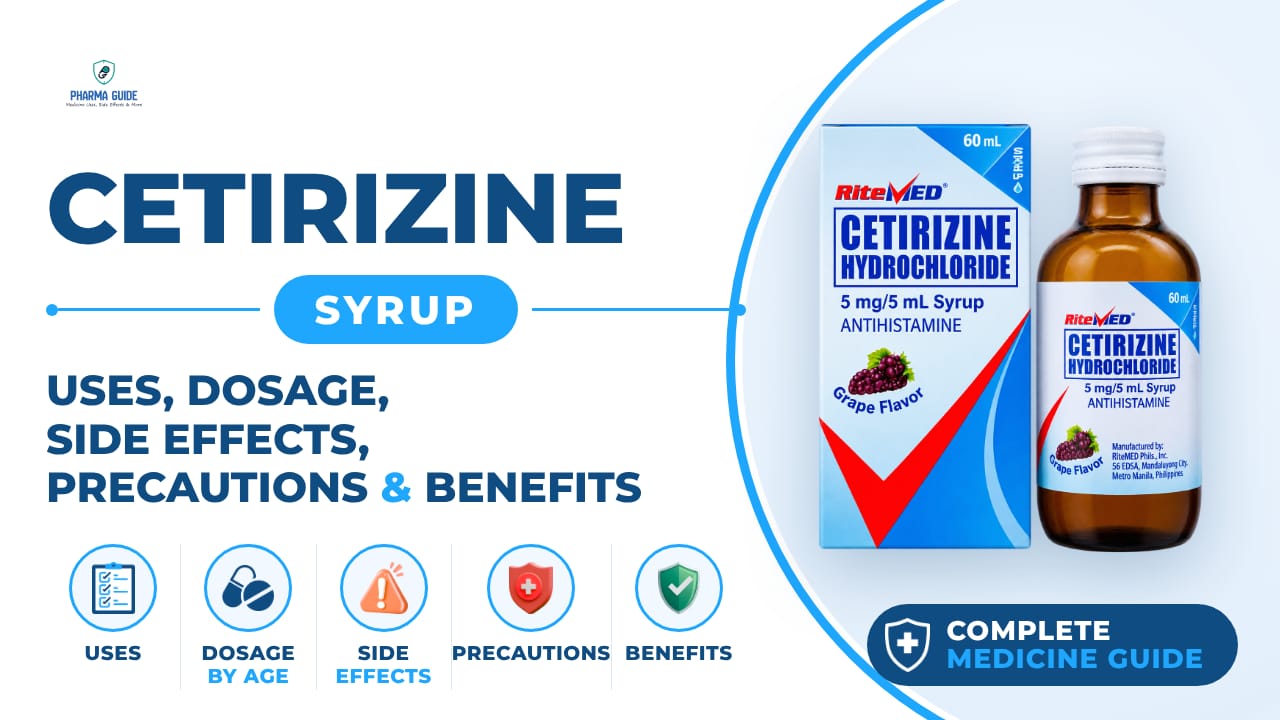
Cetirizine Syrup: Uses, Dosage, Side Effects, Precautions and Alternates
Antihistamine (Histamine H1 Receptor Antagonist)
Cetirizine Syrup relieves sneezing, itching, watery eyes, runny nose, and hives by blocking histamine. Learn dosage, side effects, and precautions.

Injectafer Injection: Uses, Dosage, Side Effects, Precautions and Alternates
Iron products
Injectafer (ferric carboxymaltose) treats iron deficiency anemia and heart failure-related iron deficiency via IV. Learn uses, dosage, side effects, and