
Safety
General information, not medical advice
Your prescriber and the leaflet in your pack know your situation. This page does not.
- Follow your prescriber and the leaflet
- Don't start, stop, or change a dose on your own
- Doses and warnings differ by country and product
Chenodal Tablet: Uses, Dosage, Side Effects, Precautions and Alternates
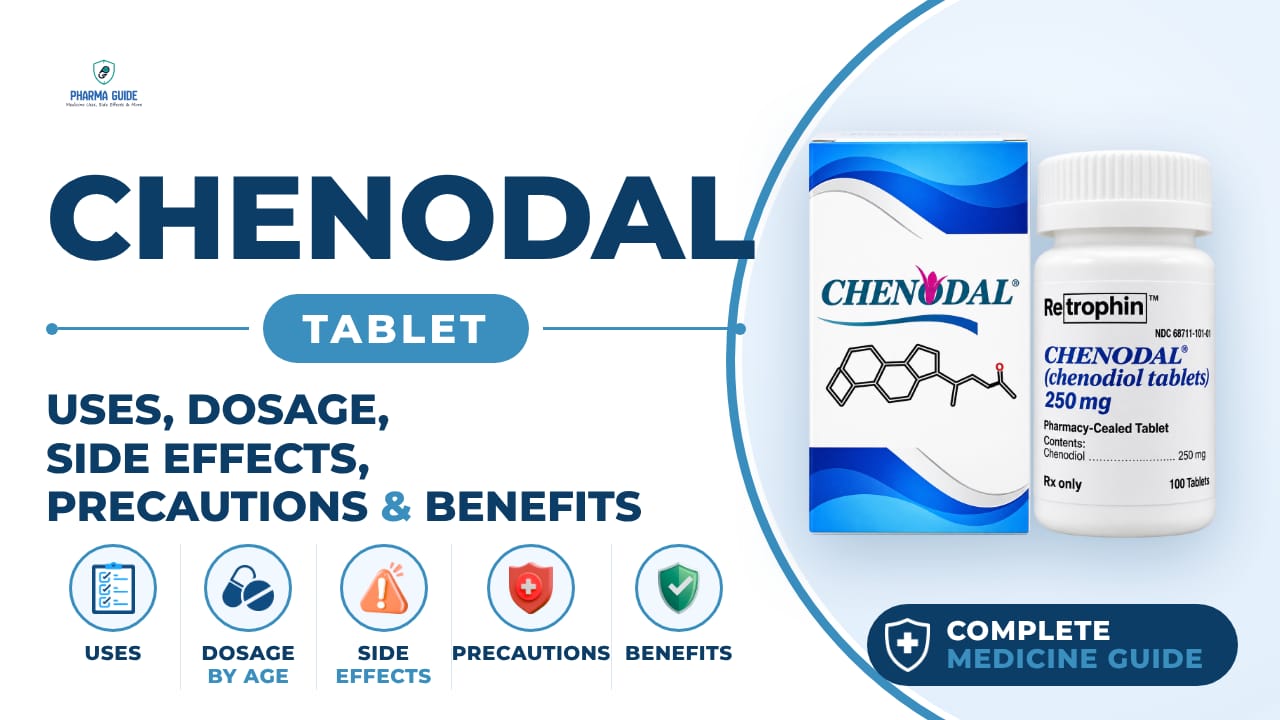
| Generic name | Chenodiol (chenodeoxycholic acid, CDCA) |
|---|---|
| Drug class | Bile acid / gallstone solubilizing agent |
| Forms | Film-coated oral tablet, 250 mg |
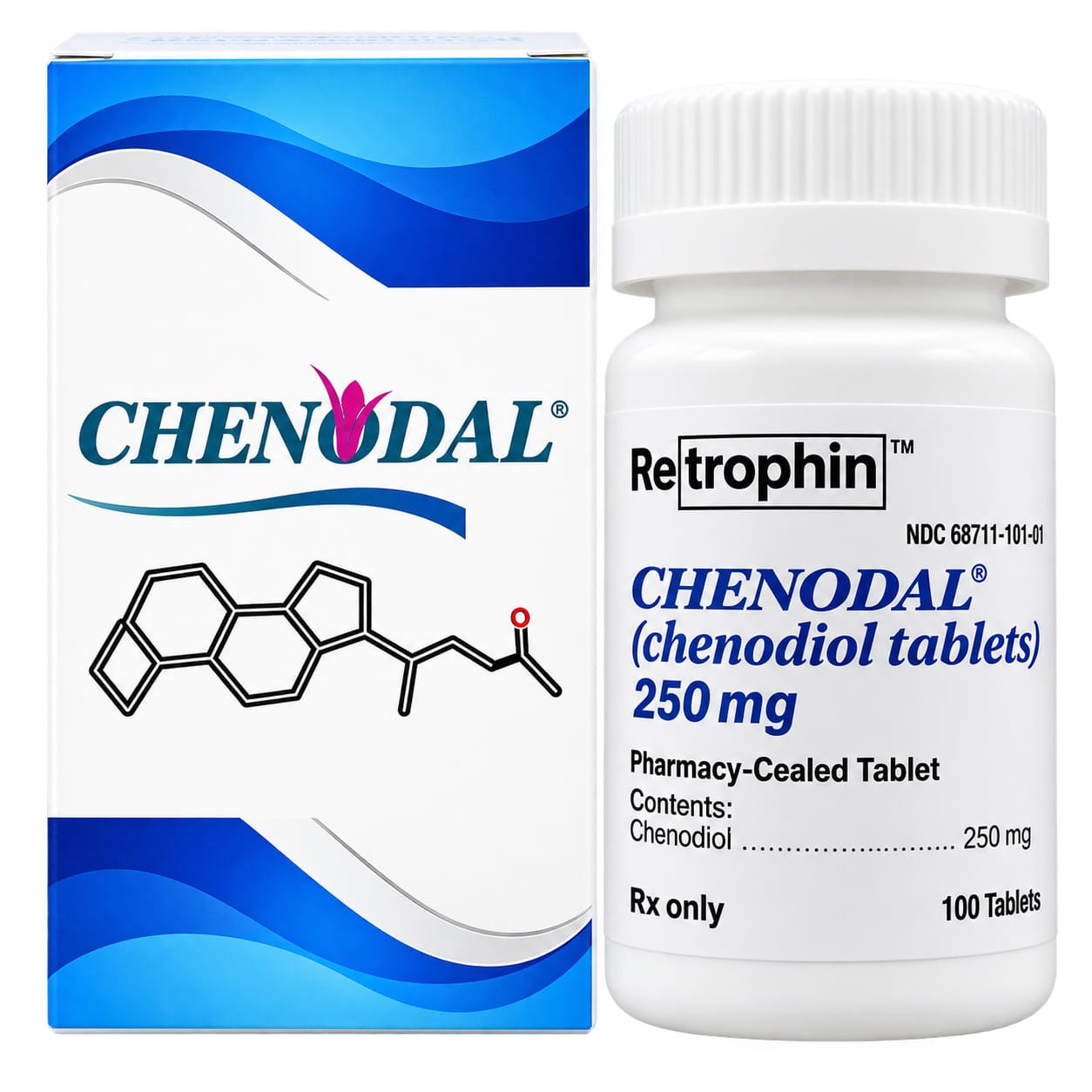
Quick overview
Chenodal Tablet (chenodiol, also called chenodeoxycholic acid or CDCA) is a bile acid medicine used to dissolve certain radiolucent gallstones in patients with a working gallbladder who are not good candidates for surgery. It is not effective for calcified gallstones or bile pigment stones. Treatment is taken by mouth, usually continued for a long period, and requires regular blood tests and imaging to monitor progress and liver health.
What is Chenodal Tablet
Chenodal contains chenodiol, a bile acid that the body makes naturally in small amounts. It is made synthetically for use as a medicine. It works by changing the balance of substances in bile, the fluid your liver makes to help digest fat.
Chenodal Tablet uses
- Treating certain radiolucent (non-calcified) gallstones in patients who have a working gallbladder but are not good candidates for surgery because of higher surgical risk from age or other health conditions
- Not effective for calcified (radiopaque) gallstones or bile pigment stones
Benefits of Chenodal Tablet
- May gradually dissolve radiolucent cholesterol gallstones over time, which could help some patients avoid or delay gallbladder surgery
- Higher chance of stones dissolving if stones are small or 'floatable'
- Provides a non-surgical option for carefully selected patients
- Can gradually dissolve certain cholesterol gallstones
- May help avoid surgery in patients who are poor surgical candidates
- Available as a standardized 250 mg tablet
How Chenodal Tablet works
Chenodiol reduces the liver's production of cholesterol and another bile acid called cholic acid. Over time it builds up in the bile acid pool and helps make the bile less saturated with cholesterol, which allows cholesterol gallstones to gradually dissolve.
Chenodal Tablet dosage
Chenodal is taken by mouth, usually in two divided doses, morning and night. Dosage is usually started low and gradually increased over several weeks until the recommended or maximum tolerated amount is reached. If diarrhea occurs, your doctor may have you temporarily lower the dose until it settles, then go back to the previous dose. Treatment is generally continued for a long period of time (up to about 24 months) to allow gallstones to dissolve; safety beyond this time is not established. Regular blood tests and imaging (cholecystogram or ultrasound) are needed throughout treatment to check how the stones are responding and to monitor your liver. This medicine is not established as safe or effective in children.
| Age group | Dose |
|---|---|
| Under 17 years | Not established. Safety and effectiveness have not been established in pediatric patients. |
| 18–64 years | 250 mg twice daily for the first 2 weeks |
| 65–74 years | 13–16 mg/kg/day |
Available forms and strengths
- Film-coated oral tablet, 250 mg
Side effects of Chenodal Tablet
Common
- Diarrhea
- Stomach cramps or stomach pain
- Constipation
- Nausea, vomiting, heartburn, flatulence, loss of appetite
- Headache
- High blood pressure
- Muscle weakness
- Nose or throat infection
- Mildly elevated liver enzyme test results
- Changes in cholesterol levels
Serious
- Liver damage (hepatotoxicity), including signs like yellowing of skin or eyes, dark urine, light-colored stools, severe tiredness, itching, or stomach pain
- Severe or persistent diarrhea
- Serious allergic reaction (swelling of face/lips/tongue/throat, difficulty breathing, hives)
- Worsening of gallstone symptoms or no improvement
Warnings and precautions
- This medicine is contraindicated in people with liver dysfunction or certain bile duct disorders such as intrahepatic cholestasis, primary biliary cirrhosis, or sclerosing cholangitis.
- Elevated liver enzyme levels above three times the normal upper limit require immediately stopping the medicine, as they usually come back if treatment is tried again.
- A patient with pre-existing serious liver and bile duct disease died during chenodiol treatment, and a contribution of the drug to this outcome could not be ruled out.
- This medicine must not be used in pregnancy because of the risk of serious harm to the developing baby.
- It is not fully known whether this treatment could contribute to colon cancer risk in susceptible individuals, based on indirect evidence from bile acid research.
- This medicine should not be used during pregnancy because it may seriously harm the unborn baby. Tell your doctor right away if you become pregnant while taking it.
- It isn't known whether this medicine passes into breast milk. Talk to your doctor about whether breastfeeding is safe while taking it.
- No specific renal dose adjustment is established in the prescribing information, but treatment should remain medically supervised.
- This medicine should not be used if you have liver disease or certain bile duct problems, and it requires regular blood tests to check for liver damage during treatment.
- It isn't known whether alcohol affects this medicine.
- Chenodal is not generally expected to impair driving, although patients should avoid driving if adverse effects affect alertness.
Storage
- Store at 20°C to 25°C (68°F to 77°F); brief excursions between 15°C to 30°C (59°F to 86°F) are permitted
- Store in a cool, dry place and keep the container tightly closed
- Dispense in a tight container
When to see a doctor
- Get emergency help right away if you have signs of a severe allergic reaction, such as swelling of the face, lips, tongue or throat, or trouble breathing.
- Call your doctor immediately if you notice signs of liver problems, such as yellowing of your skin or eyes, dark urine, light-colored stools, severe tiredness, itching, or upper stomach pain.
- Contact your doctor if diarrhea becomes severe or does not go away, as treatment may need to be stopped.
- Seek medical help or contact your local poison control center right away if you or someone else may have taken too much of this medicine.
Alternatives
- Ursodiol
- Laparoscopic cholecystectomy
Watch the video
FAQs
What is Chenodal Tablet used for?
Chenodal is used to treat certain radiolucent (non-calcified) gallstones in patients who have a working gallbladder but are not good candidates for surgery due to higher surgical risk from age or other health conditions. It is not effective for calcified gallstones or bile pigment stones.
How does Chenodal Tablet work?
Chenodiol reduces the liver's production of cholesterol and cholic acid. Over time it builds up in the bile acid pool, making bile less saturated with cholesterol, which allows cholesterol gallstones to gradually dissolve.
How long does Chenodal treatment take?
Treatment is generally continued for a long period, up to about 24 months, to allow gallstones to dissolve. Safety beyond this time is not established, and regular blood tests and imaging are needed throughout treatment.
What are the serious side effects of Chenodal Tablet?
Serious side effects include liver damage (signs include yellowing of skin or eyes, dark urine, light-colored stools, severe tiredness, itching, or stomach pain), severe or persistent diarrhea, serious allergic reactions, and worsening or no improvement of gallstone symptoms.
Who should not take Chenodal Tablet?
Chenodal is contraindicated in people with liver dysfunction or certain bile duct disorders such as intrahepatic cholestasis, primary biliary cirrhosis, or sclerosing cholangitis, and it must not be used during pregnancy due to the risk of serious harm to the developing baby.
General information, not medical advice
Your prescriber and the leaflet in your pack know your situation. This page does not.
- Follow your prescriber and the leaflet
- Don't start, stop, or change a dose on your own
- Doses and warnings differ by country and product
Sources
Video
Related medicines
Ursodiol Capsule: Uses, Dosage, Side Effects, Precautions and Alternates
bile acid, gallstone solubilizing agent
Ursodiol Capsule dissolves cholesterol gallstones and treats primary biliary cholangitis. Learn dosage, uses, side effects, and precautions.

Injectafer Injection: Uses, Dosage, Side Effects, Precautions and Alternates
Iron products
Injectafer (ferric carboxymaltose) treats iron deficiency anemia and heart failure-related iron deficiency via IV. Learn uses, dosage, side effects, and