
Safety
General information, not medical advice
Your prescriber and the leaflet in your pack know your situation. This page does not.
- Follow your prescriber and the leaflet
- Don't start, stop, or change a dose on your own
- Doses and warnings differ by country and product
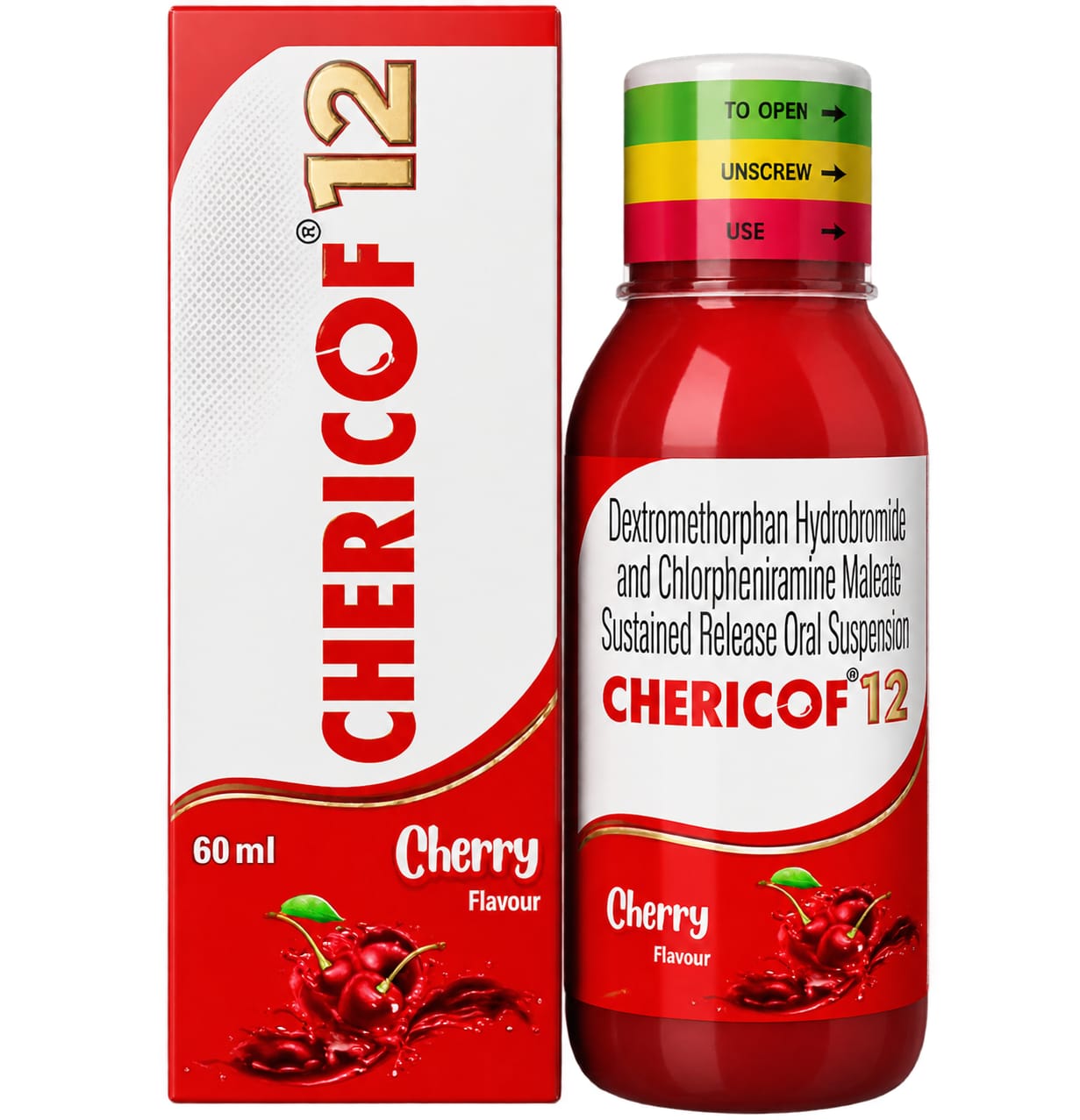
Chericof Syrup: Uses, Dosage, Side Effects, Precautions and Alternates

| Generic name | Chlorpheniramine + Dextromethorphan + Phenylephrine |
|---|---|
| Drug class | Antihistamine, Cough Suppressant, Decongestant |
| Forms | Syrup |
Quick overview
Chericof Syrup is a combination medicine containing Chlorpheniramine Maleate, Dextromethorphan Hydrobromide, and Phenylephrine, belonging to the antihistamine, cough suppressant, and decongestant drug classes. It is used to treat symptoms of the common cold and allergies such as runny nose, sneezing, cough, itching of the nose and throat, watery eyes, and a stuffy nose. The three ingredients work together to suppress cough, block histamine, and shrink swollen nasal blood vessels.
What is Chericof Syrup
Chericof Syrup is a combination medicine containing Chlorpheniramine Maleate, Dextromethorphan Hydrobromide, and Phenylephrine. It is used to treat symptoms of the common cold and allergies such as runny nose, sneezing, cough, itching of the nose and throat, watery eyes, and a stuffy nose.
Chericof Syrup uses
- Dry cough
- Nasal congestion
- Common cold
- Allergic rhinitis
- Sneezing
- Runny nose
- Watery eyes
- Itching
- Blocked nose
Benefits of Chericof Syrup
- Suppresses persistent dry cough
- Relieves blocked nose and sinus pressure
- Controls sneezing, runny nose and watery eyes
- Reduces activity in the cough centre of the brain to suppress cough
- Eases blocked or stuffy nose by narrowing blood vessels in the nose
- Provides relief from allergic symptoms
How Chericof Syrup works
This medicine combines three ingredients that work together. One ingredient suppresses the urge to cough by acting on the brain's cough center. Another is an antihistamine that blocks a chemical in the body called histamine to ease sneezing, watery eyes, and a runny nose. The third ingredient is a decongestant that shrinks swollen blood vessels in the nose to relieve stuffiness.
Chericof Syrup dosage
This medicine can be taken with or without food, as instructed by your doctor. Drink plenty of water or fluids while taking this medicine to avoid stomach irritation and to help loosen congestion. Use a special dose-measuring spoon or cup to measure the correct amount, not a regular kitchen spoon. Shake well before use. Complete the whole course even if you feel better after a few doses. Do not stop taking this medicine suddenly without talking to your doctor, as symptoms could come back.
This medicine is sugar-based, so people with diabetes should consult their doctor before use. Children should only be given this medicine after a doctor's advice on dosage and precautions. Older patients should use this medicine with caution due to increased chance of side effects.
| Age group | Dose |
|---|---|
| Under 2 Years | Use only if prescribed by a healthcare professional |
| 2–6 Years | 2.5 mL 2–3 times daily (as directed) |
| 6–12 Years | 5 mL 2–3 times daily (as directed) |
| 12 Years and Above | 10 mL 2–3 times daily (as directed) |
Available forms and strengths
- Syrup
Side effects of Chericof Syrup
Common
- Nausea
- Vomiting
- Loss of appetite
- Headache
- Confusion
- Constipation
- Dizziness
- Drowsiness
- Stomach pain
- Blurred or double vision
- Dry mouth
Serious
- Jaundice
- Increase in blood pressure
- Difficult or painful urination
Warnings and precautions
- Do not use this medicine if you have high blood pressure, certain heart conditions, or an enlarged prostate, as it can make these conditions worse.
- Do not take this medicine if you have glaucoma, asthma, heart disease, kidney disease, liver disease, COPD, depression, Parkinson's disease, hyperthyroidism, or diabetes unless your doctor tells you to.
- This medicine may interact seriously with certain other medicines, including some antidepressants and anti-nausea drugs, and may cause dangerous effects such as high blood pressure crisis or serotonin syndrome.
- Combining this medicine with sedatives or tranquilisers can increase drowsiness and sedation.
- If you are allergic to any of the ingredients, do not take this medicine and ask your doctor for a substitute.
- This medicine is not recommended during pregnancy unless your doctor prescribes it, as it may harm the developing baby. Talk to your doctor before use if you are pregnant.
- This medicine is not recommended while breastfeeding unless your doctor prescribes it. Talk to your doctor about the risks and benefits.
- Use this medicine with caution if you have severe kidney problems. Tell your doctor, who may need to adjust your dose.
- Use this medicine with caution if you have severe liver problems. Your doctor may need to adjust your dose.
- Avoid drinking alcohol while taking this medicine, as it can increase drowsiness and other side effects such as confusion and dizziness.
- This medicine can cause sleepiness and blurred vision, so avoid driving or operating heavy machinery until you know how it affects you.
Storage
- Store Chericof Syrup at room temperature.
- Keep it away from direct sunlight and moisture to maintain its efficacy.
- Ensure the bottle is tightly closed when not in use to prevent air exposure.
- Always keep this medicine out of reach of children for safety reasons.
- Check the expiry date before use and avoid using the syrup past this date.
- Store Below 30° C
When to see a doctor
- If side effects do not improve or become serious, contact your doctor right away.
- If you take more than the prescribed amount and have worsening drowsiness, dizziness, dry mouth, or any other symptoms, tell your doctor.
- Talk to your doctor if side effects such as nausea, vomiting, loss of appetite, and headache concern you.
Alternatives
- Vicks Formula 44
- Robitussin Syrup
- Tixylix Syrup
- Benadryl Cough Syrup
Watch the video
FAQs
What is Chericof Syrup used for?
Chericof Syrup is used to treat symptoms of the common cold and allergies such as dry cough, runny nose, sneezing, itching of the nose and throat, watery eyes, and a stuffy or blocked nose.
How does Chericof Syrup work?
It combines three ingredients that work together: one suppresses cough by acting on the brain's cough center, an antihistamine blocks histamine to ease sneezing, watery eyes, and runny nose, and a decongestant shrinks swollen nasal blood vessels to relieve stuffiness.
What are the common side effects of Chericof Syrup?
Common side effects include nausea, vomiting, loss of appetite, headache, confusion, constipation, dizziness, drowsiness, stomach pain, blurred or double vision, and dry mouth.
Can Chericof Syrup be taken during pregnancy?
Chericof Syrup is not recommended during pregnancy unless prescribed by a doctor, as it may harm the developing baby. Talk to your doctor before use if you are pregnant.
Is Chericof Syrup safe for diabetics?
Chericof Syrup is sugar-based, so people with diabetes should consult their doctor before using it.
General information, not medical advice
Your prescriber and the leaflet in your pack know your situation. This page does not.
- Follow your prescriber and the leaflet
- Don't start, stop, or change a dose on your own
- Doses and warnings differ by country and product
Sources
- MedlinePlus - Chlorpheniramine drug information
- MedlinePlus - Dextromethorphan drug information
- MedlinePlus - Phenylephrine drug information
- US Food and Drug Administration (FDA) - Vazculep (phenylephrine hydrochloride) package leaflet
- KD Tripathi. Seventh Edition. New Delhi, India: Jaypee Brothers Medical Publishers; 2013
- April Hazard Vallerand, Cynthia A. Sanoski. Sixteenth Edition. Philadelphia, China: F. A. Davis Company; 2019
Video
Related medicines

Tixylix Syrup: Uses, Dosage, Side Effects, Precautions and Alternates
Antihistamine, Cough suppressant, Decongestant
Tixylix Syrup relieves cough, congestion, sneezing, and runny nose from colds and allergies. Learn dosage, side effects, and safety precautions.

Grilinctus Syrup: Uses, Dosage, Side Effects, Precautions and Alternates
Antihistamine, Cough suppressant, Decongestant
Grilinctus Syrup relieves dry, allergic cough and cold symptoms. Learn its uses, dosage, side effects, warnings, and precautions before use.