
Safety
General information, not medical advice
Your prescriber and the leaflet in your pack know your situation. This page does not.
- Follow your prescriber and the leaflet
- Don't start, stop, or change a dose on your own
- Doses and warnings differ by country and product
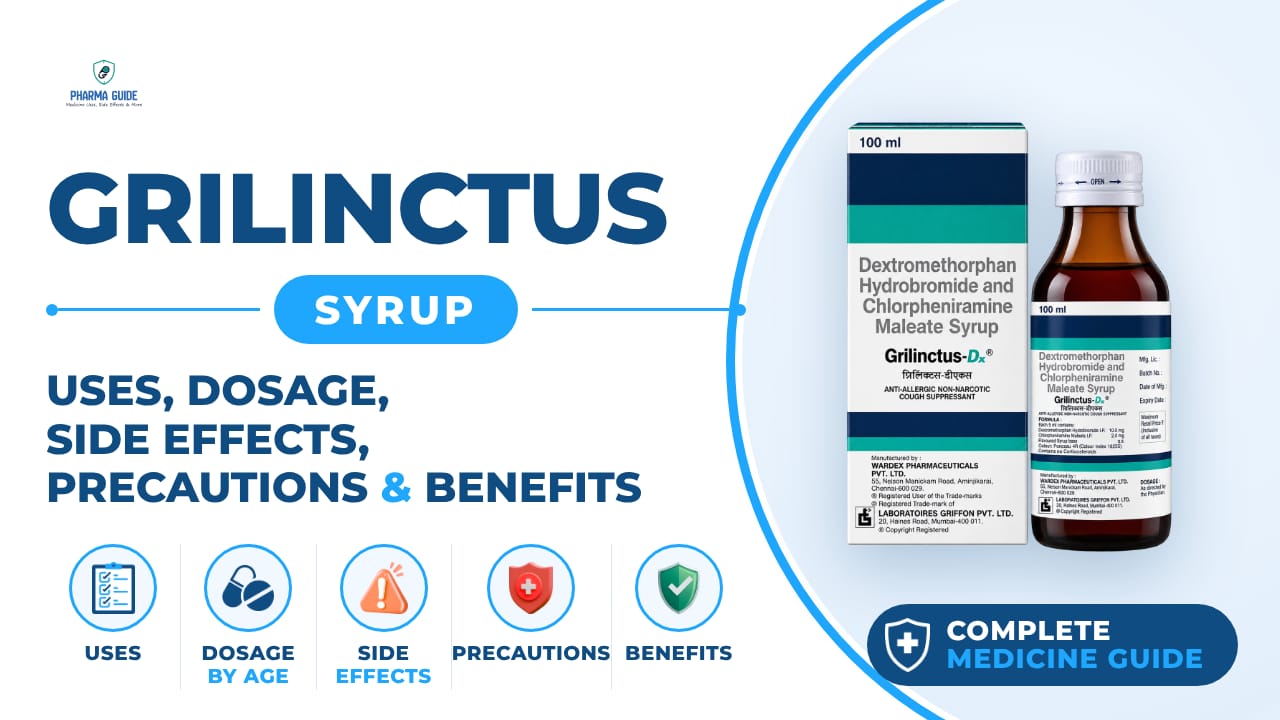
Grilinctus Syrup: Uses, Dosage, Side Effects, Precautions and Alternates
| Generic name | Chlorpheniramine Maleate + Dextromethorphan + Phenylephrine/Guaiphenesin/Ammonium Chloride (formulation varies by product) |
|---|---|
| Drug class | Antihistamine, Cough suppressant, Decongestant |
| Forms | Syrup, Tablet |
Quick overview
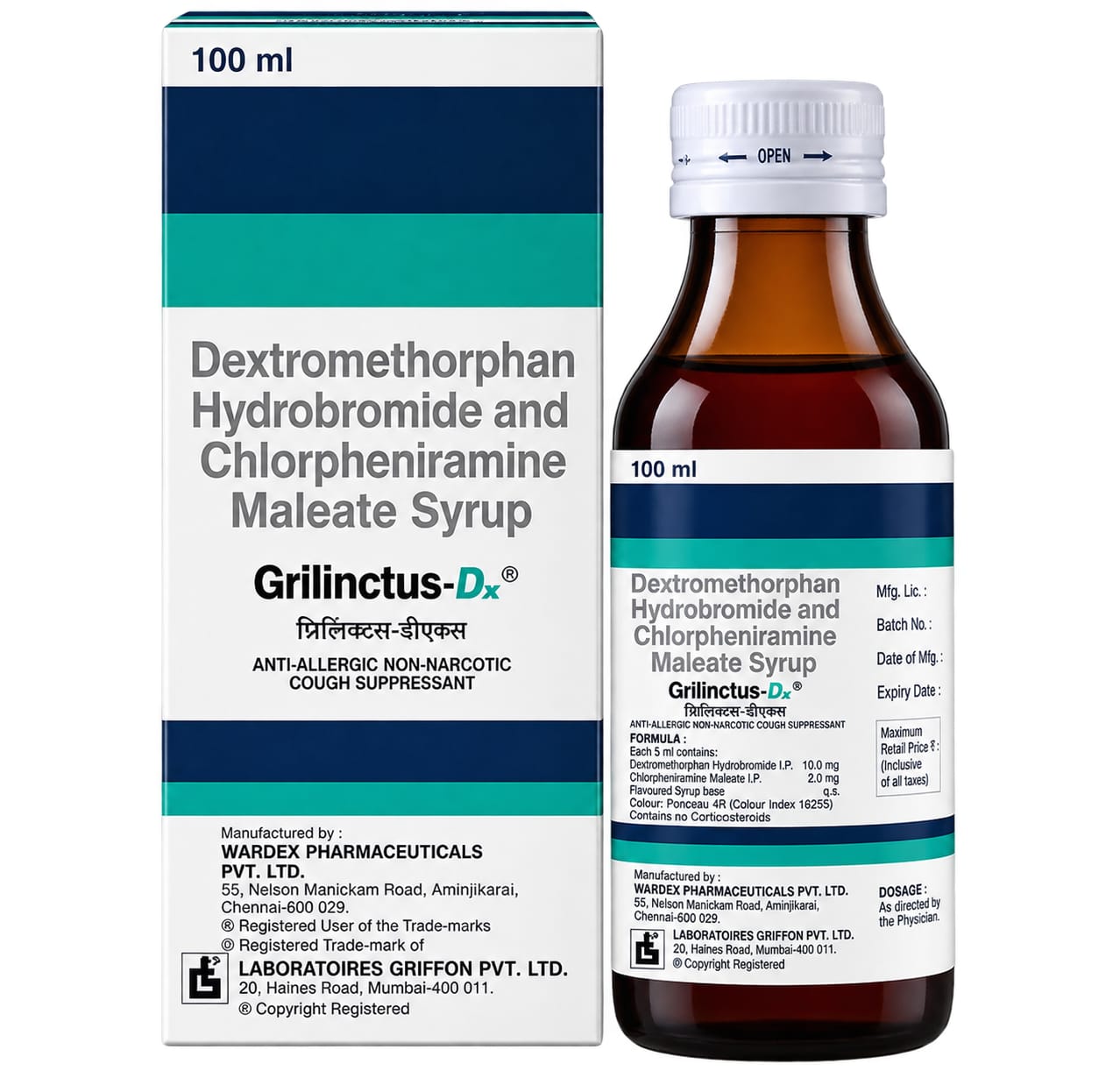
Grilinctus Syrup is a combination cough medicine that works as an antihistamine, cough suppressant, and decongestant. It is used to treat dry, allergic, and irritating cough, along with related allergy and cold symptoms. Different Grilinctus products (Grilinctus, Grilinctus-BM, Grilinctus New) contain different ingredient combinations, so it's important to check your specific product's composition. It should be used exactly as prescribed by your doctor.
What is Grilinctus Syrup
Grilinctus is a cough syrup used to treat dry, allergic, and irritating cough. Its generic composition typically includes Chlorpheniramine Maleate, Dextromethorphan, and Phenylephrine, Guaiphenesin, or Ammonium Chloride, though the exact formulation varies by product. It belongs to the drug classes antihistamine, cough suppressant, and decongestant. Different Grilinctus products, such as Grilinctus, Grilinctus-BM, and Grilinctus New, contain different combinations of these ingredients, so you should check your specific product's composition before use.
Grilinctus Syrup uses
- Symptomatic treatment of non-productive (dry) cough, especially dry, allergic, and irritating cough
- Relief of allergy symptoms, allergic rhinitis, hay fever, and common cold symptoms
- Relief of cough, nasal congestion, and throat irritation in children during colds or respiratory infections
- Management of productive cough and bronchospasm (in the Grilinctus-BM variant)
Benefits of Grilinctus Syrup
- Helps soothe coughing and ease breathing during colds or infections
- Loosens mucus and relieves nasal and chest congestion
- Can support better sleep and recovery when taken as prescribed
How Grilinctus Syrup works
This medicine is a combination product. One ingredient blocks histamine to reduce allergy symptoms like runny nose and itching. Another ingredient acts on the brain's cough center to reduce the urge to cough, especially dry cough. A decongestant ingredient narrows blood vessels in the nose to ease congestion. Depending on the specific product, other ingredients may loosen and thin mucus to make cough more productive.
Grilinctus Syrup dosage
Grilinctus Syrup can be taken with or without food. Measure your dose using the provided cup, and shake the bottle well before use. Ensure the bottle is always well-capped after use, and take it at the same time each day to keep a steady level of medicine in your body. Do not stop taking this medicine without checking with your doctor first, and do not take more than the amount your doctor recommends.
This medicine contains sugar, so if you have diabetes, check with your doctor before taking it. It is suitable for children 12 years and older; check with your doctor before giving it to children under 12. Older adults should use this medicine under medical supervision as they may be more sensitive to its effects.
| Age group | Dose |
|---|---|
| Under 6 years | Not recommended unless prescribed by a doctor |
| 6–12 years | 5 mL, 3 times daily |
| 12 years & older | 10 mL, 3 times daily |
| Adults | 10 mL, 3 times daily |
Available forms and strengths
- Syrup
- Tablet
Side effects of Grilinctus Syrup
Common
- Dry mouth, nose, and throat
- Drowsiness
- Loss of appetite
- Increased chest congestion
- Constipation
- Headache
- Nausea
- Vomiting
- Confusion
- Blurred vision
- Shakiness (tremors)
- Unusual excitement, nervousness, irritability
- Dizziness
- Rashes
- Stomach pain
- Indigestion
- Bloating
- Palpitations
- Sweating
- Increased heart rate
Serious
- Severe nausea or vomiting
- Slowed breathing
- Decreased uric acid levels
- Signs of allergic reaction such as skin rash, itching or swelling (especially of the face, tongue, or throat), severe dizziness, or breathing difficulty
Warnings and precautions
- This is a prescription-only medicine (Schedule G) and should not be used without medical supervision.
- Use with caution if you have glaucoma, as it may worsen eye pressure and vision problems.
- Use with caution if you have heart or blood vessel conditions, as it may increase the risk of heart failure. Your doctor may want to monitor your heart and kidney function.
- Use with caution if you have an overactive thyroid (hyperthyroidism); stopping the medicine suddenly may worsen the condition.
- Not recommended for children under six years of age, as safety and effectiveness are not well known for this age group.
- Do not use if you have high blood pressure, kidney failure, or liver disease without talking to your doctor first.
- Use with caution if you have diabetes, as this medicine may affect blood sugar levels.
- Use with caution if you have a seizure disorder, as it can trigger or worsen seizures.
- Use with caution if you have electrolyte imbalances, due to increased risk of low potassium levels.
- Use with caution during pregnancy and only after consulting a doctor, as safety has not been well studied. It is not recommended while breastfeeding unless advised by a doctor, as the medicine passes into breast milk.
- People with kidney problems should use this medicine with caution and consult their doctor first. People with liver issues should discuss this with their doctor before starting the medicine, as it may affect liver function.
- Alcohol may increase drowsiness caused by this medicine, so it's best to limit alcohol while taking it. This medicine can cause drowsiness, dizziness, blurred vision, or tiredness, which may affect your ability to drive or operate machinery safely.
Storage
- Store below 25°C
- Keep in a cool place, ideally at room temperature
- Protect from direct sunlight and keep the bottle tightly closed to prevent exposure to air
- Keep the syrup in a dry place, away from moisture
- Keep out of the reach and sight of children
- Use before the expiry date marked on the bottle
When to see a doctor
- Get medical help right away if you notice signs of an allergic reaction, such as skin rash, itching or swelling of the face, tongue, or throat, severe dizziness, or trouble breathing.
- If you suspect you have taken too much of this medicine, tell your doctor right away.
- If you take more than the prescribed amount, seek emergency medical treatment.
- If side effects do not improve or become serious, speak to your doctor right away.
Alternatives
- Grilinctus-BM Pediatric Syrup
- Grilinctus-BM Tablet
- Delsym (Dextromethorphan)
- Robitussin DM
Watch the video
FAQs
What is Grilinctus Syrup used for?
It is used for symptomatic treatment of dry, allergic, and irritating cough, as well as relief of allergy symptoms, allergic rhinitis, hay fever, common cold symptoms, nasal congestion, and throat irritation. The Grilinctus-BM variant is also used for productive cough and bronchospasm.
What is the dosage of Grilinctus Syrup for children?
For children aged 6–12 years, the dose is 5 mL three times daily. It is not recommended for children under 6 years unless prescribed by a doctor, and children 12 years and older can take 10 mL three times daily.
What are the common side effects of Grilinctus Syrup?
Common side effects include dry mouth, nose, and throat, drowsiness, loss of appetite, constipation, headache, nausea, vomiting, confusion, blurred vision, dizziness, rashes, stomach pain, indigestion, bloating, palpitations, sweating, and increased heart rate.
Can I drink alcohol while taking Grilinctus Syrup?
It's best to limit alcohol while taking Grilinctus Syrup, as alcohol may increase the drowsiness caused by this medicine.
Is Grilinctus Syrup safe during pregnancy?
Grilinctus Syrup should be used with caution during pregnancy and only after consulting a doctor, as its safety has not been well studied. It is also not recommended while breastfeeding unless advised by a doctor.
General information, not medical advice
Your prescriber and the leaflet in your pack know your situation. This page does not.
- Follow your prescriber and the leaflet
- Don't start, stop, or change a dose on your own
- Doses and warnings differ by country and product
Sources
Video
Related medicines
Chericof Syrup: Uses, Dosage, Side Effects, Precautions and Alternates
Antihistamine, Cough Suppressant, Decongestant
Chericof Syrup relieves cough, cold and allergy symptoms like runny nose, sneezing, watery eyes and congestion. Know its uses, dosage and side effects.
Tixylix Syrup: Uses, Dosage, Side Effects, Precautions and Alternates
Antihistamine, Cough suppressant, Decongestant
Tixylix Syrup relieves cough, congestion, sneezing, and runny nose from colds and allergies. Learn dosage, side effects, and safety precautions.