
Safety
General information, not medical advice
Your prescriber and the leaflet in your pack know your situation. This page does not.
- Follow your prescriber and the leaflet
- Don't start, stop, or change a dose on your own
- Doses and warnings differ by country and product
Ciclopirox Nail Lacquer: Uses, Dosage, Side Effects, Precautions and Alternates
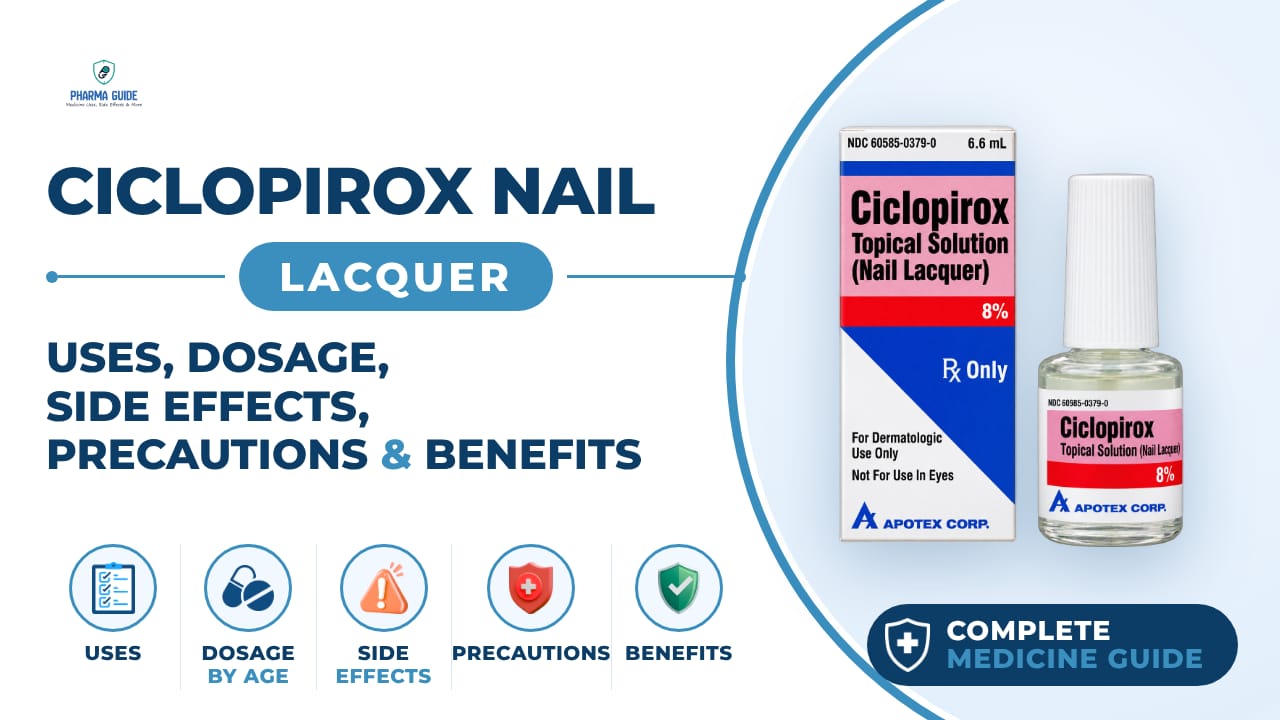
| Generic name | Ciclopirox |
|---|---|
| Drug class | Topical antifungal |
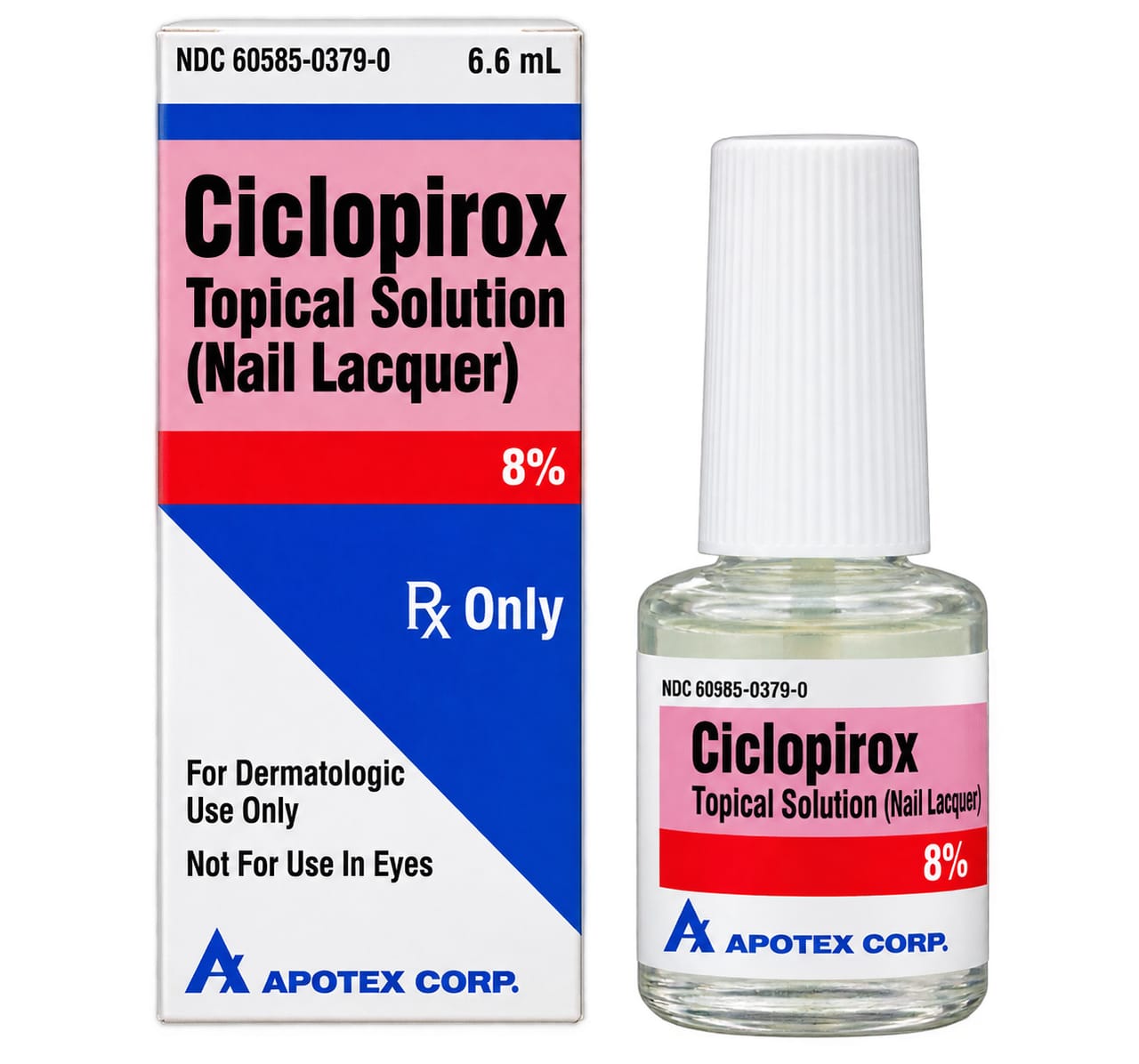
| Forms | Topical solution (nail lacquer), 8% |
Quick overview
Ciclopirox Nail Lacquer (ciclopirox) is a topical antifungal solution applied to the fingernails and toenails to treat mild to moderate fungal nail infections caused by Trichophyton rubrum. It is used as part of a complete treatment plan that also includes regular nail trimming and removal of infected nail material by a health professional. It works by blocking substances inside fungal cells that the fungus needs to survive. Treatment is typically applied once daily and may be continued for up to 48 weeks.
What is Ciclopirox Nail Lacquer
Ciclopirox nail lacquer is an antifungal solution applied directly to the fingernails or toenails. It is used along with regular nail care to treat fungal infections of the nails.
Ciclopirox Nail Lacquer uses
- Treats mild to moderate fungal infections of fingernails and toenails (onychomycosis) caused by Trichophyton rubrum, as part of a complete treatment plan that also includes regular nail trimming and removal of infected nail by a health professional
Benefits of Ciclopirox Nail Lacquer
- Can help clear up nail fungus infection or reduce the amount of nail affected when used correctly with regular nail care
- May improve the look and condition of the nail over time
How Ciclopirox Nail Lacquer works
Ciclopirox works by blocking certain substances inside the fungal cells that the fungus needs to survive, which stops the fungus from growing.
Ciclopirox Nail Lacquer dosage
Apply once a day, preferably at bedtime, to all affected nails using the brush applicator that comes with the bottle. Apply the lacquer evenly over the whole nail. If possible, also apply it to the underside of the nail and the skin just beneath it when that area is reachable. Let the lacquer dry for about 30 seconds before putting on socks or stockings. Wait at least 8 hours after applying before taking a bath, shower, or swimming.
Apply each day's dose directly over the previous day's coat without removing it daily. Once a week, remove all the built-up lacquer using alcohol, then trim away as much damaged nail as possible with scissors, nail clippers, or a nail file before starting the cycle again. Before starting treatment, and regularly during treatment, loose nail material should be filed or trimmed away. A health care professional should remove the unattached, infected part of the nail as often as once a month during treatment.
Do not use nail polish or other nail cosmetic products on nails being treated. Keep away from heat or open flame because the product can catch fire. Use only on the nails and the skin right around them; avoid contact with eyes, mouth, and other skin areas.
Treatment is typically used for up to 48 weeks, and it may take 6 months or longer before you notice any improvement. Continue using it every day as directed; do not stop without talking to your doctor, even if symptoms have not improved yet.
| Age group | Dose |
|---|---|
| Under 12 years | Not recommended |
| 12–17 years | 1 application, once/day |
| 18–60 years | 1 application, once/day |
| 60+ years | 1 application, once/day |
Available forms and strengths
- Topical solution (nail lacquer), 8%
Side effects of Ciclopirox Nail Lacquer
Common
- Nail redness
- Mild burning or irritation
- Itching around the nail
- Nail discoloration
- Mild dryness or peeling of surrounding skin
Serious
- Signs of increased irritation such as redness, itching, burning, blistering, swelling, or oozing at the application site
- Pain at the treated nail or surrounding skin
- Discoloration or change in shape of the nail
- Ingrown nail
- Signs of a serious allergic reaction such as hives, difficulty breathing, or swelling of the face, lips, tongue, or throat
Warnings and precautions
- This medicine is only for use on the nails and the skin right around them. Do not use it in or near the eyes, mouth, or vagina.
- This product can catch fire, so keep it away from heat, flames, and smoking.
- Using this medicine along with antifungal pills for nail fungus is not recommended, since it isn't known if it would make the pills work less well.
- Tell your health care professional if you have diabetes or numbness in your fingers or toes, because this affects how your nails should be trimmed and cared for during treatment.
- This medicine has not been well studied in people who are pregnant or nursing, have a weakened immune system, are HIV positive, have had an organ transplant, need medicine to control seizures, or have insulin-dependent diabetes or diabetic nerve damage.
- A completely clear nail is not guaranteed with this medicine; in studies, fewer than 12% of patients reached a completely clear or almost clear nail.
- There isn't enough research on using this medicine during pregnancy in humans. It should only be used during pregnancy if the possible benefit is worth the possible risk to the baby. Tell your doctor if you are pregnant or planning to become pregnant.
- It isn't known whether this medicine passes into breast milk, so caution is advised if you are breastfeeding. Tell your doctor if you are nursing.
- Avoid contact with eyes, mouth, and broken skin.
- Avoid using other nail products on the treated nail unless advised.
- There are no known direct interactions between this medicine and alcohol, though heavy drinking could weaken your immune system and make it harder to fight the infection. Alcohol is also used once a week to remove the built-up lacquer from the nail.
- Keep the nail clean and dry during treatment.
Storage
- Store at 68°F to 77°F (20°C to 25°C)
- Keep the bottle tightly closed after each use to prevent the solution from drying out
- Do not let solution get into the bottle threads, to prevent the cap from sticking
- Keep the bottle in its carton after each use to protect it from light
- Keep out of the reach of children
- Do not flush unneeded medication down the toilet; use a medicine take-back program if available
When to see a doctor
- Stop using the medicine and call your doctor right away if you notice increasing redness, itching, burning, blistering, swelling, or oozing where you applied it.
- Get emergency medical help right away if you have signs of a severe allergic reaction, such as hives, trouble breathing, or swelling of the face, lips, tongue, or throat.
- Call your doctor if you notice discoloration or other changes in your nails, or any unusual problems while using this medicine.
- If someone accidentally swallows this medicine, seek emergency medical help or contact a poison control center right away.
Alternatives
- Itraconazole
- Tavaborole
- Efinaconazole
Watch the video
FAQs
How often should Ciclopirox Nail Lacquer be applied?
It is applied once a day, preferably at bedtime, to all affected nails using the brush applicator, over the whole nail and underside when reachable.
How long does it take for Ciclopirox Nail Lacquer to work?
Treatment is typically used for up to 48 weeks, and it may take 6 months or longer before you notice any improvement.
Can I use nail polish while using Ciclopirox Nail Lacquer?
No, you should not use nail polish or other nail cosmetic products on nails being treated.
What are the common side effects of Ciclopirox Nail Lacquer?
Common side effects include nail redness, mild burning or irritation, itching around the nail, nail discoloration, and mild dryness or peeling of surrounding skin.
How effective is Ciclopirox Nail Lacquer at clearing nail fungus?
A completely clear nail is not guaranteed; in studies, fewer than 12% of patients reached a completely clear or almost clear nail.
General information, not medical advice
Your prescriber and the leaflet in your pack know your situation. This page does not.
- Follow your prescriber and the leaflet
- Don't start, stop, or change a dose on your own
- Doses and warnings differ by country and product
Sources
Video
Related medicines
Naftifine Cream: Uses, Dosage, Side Effects, Precautions and Alternates
Topical antifungal
Naftifine Cream is a prescription antifungal that treats athlete's foot, jock itch, and ringworm. Learn how it works, dosage tips, side effects, and warnings.

Loprox Cream: Uses, Dosage, Side Effects, Precautions and Alternates
Topical antifungal
Loprox Cream (ciclopirox) is a prescription antifungal used for athlete's foot, jock itch, ringworm, and tinea versicolor. Learn dosage, uses, and side effects.