
Safety
General information, not medical advice
Your prescriber and the leaflet in your pack know your situation. This page does not.
- Follow your prescriber and the leaflet
- Don't start, stop, or change a dose on your own
- Doses and warnings differ by country and product
Claritin Tablet: Uses, Dosage, Side Effects, Precautions and Alternates
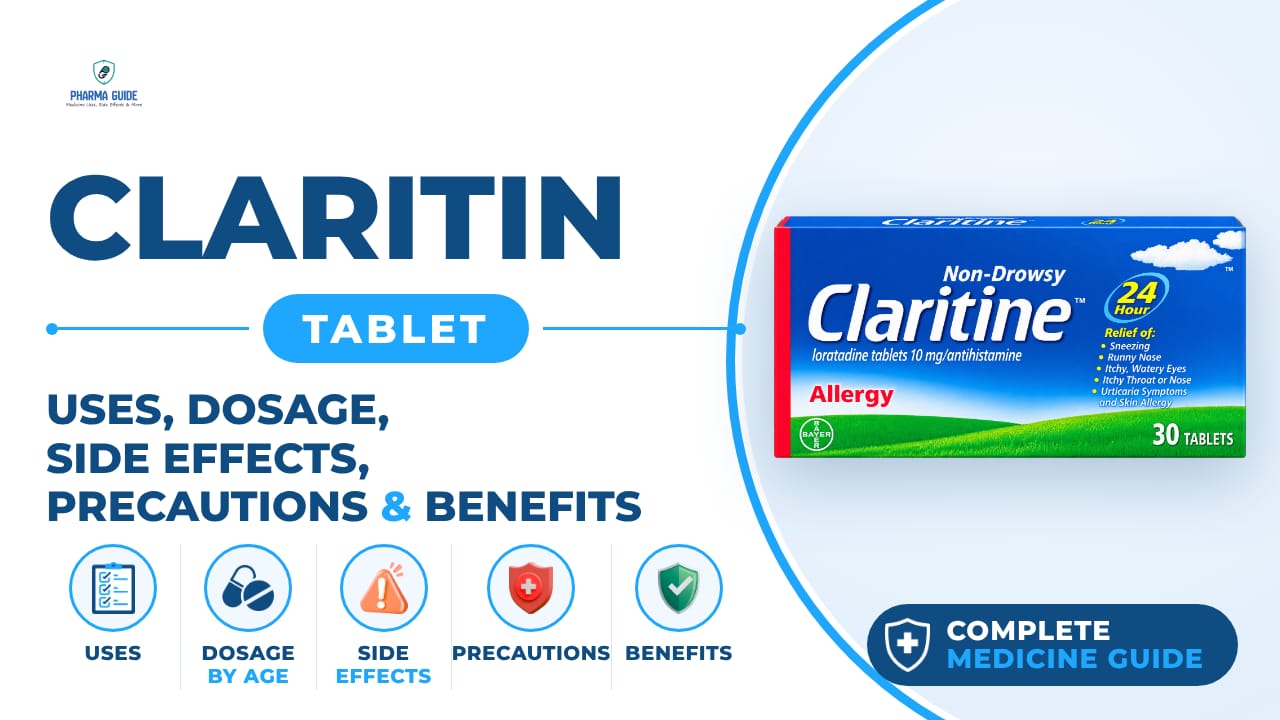
| Generic name | loratadine |
|---|---|
| Drug class | Antihistamine |
| Forms | oral capsule, oral syrup, oral tablet, oral tablet, chewable, orally disintegrating tablet, oral solution |
Quick overview
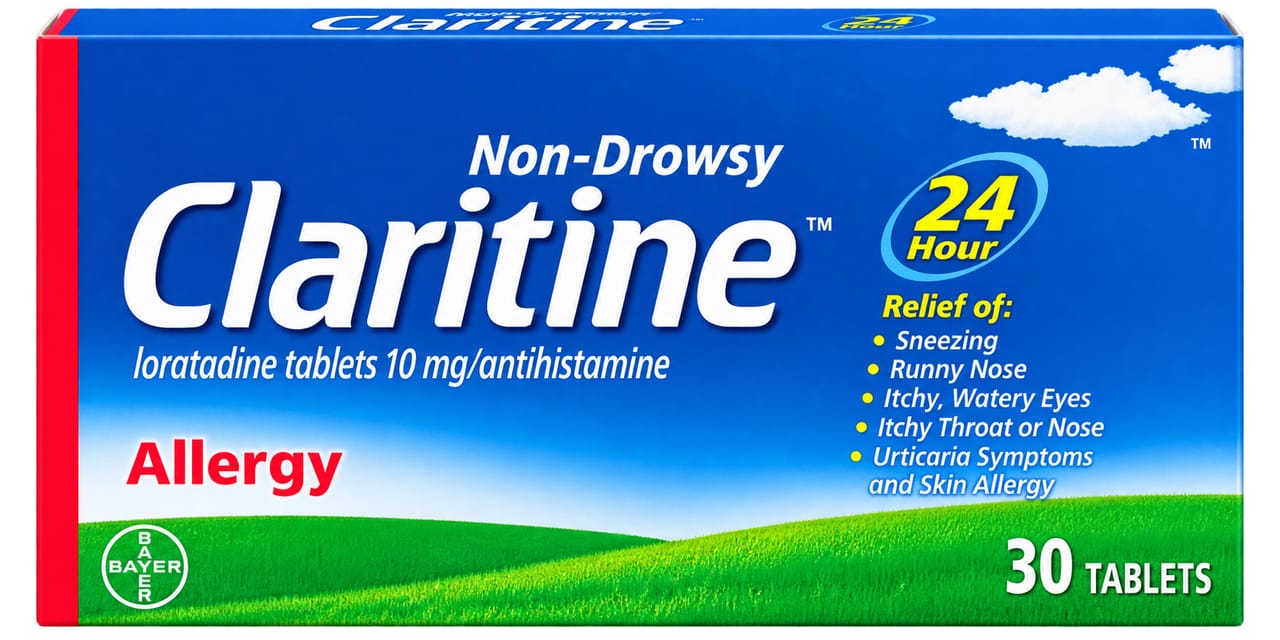
Claritin Tablet (loratadine) is an antihistamine used to relieve allergy symptoms such as sneezing, runny nose, and watery eyes, as well as itching and hives from allergic skin reactions. It works by blocking the natural chemical histamine in the body. Claritin is generally taken once daily and is available in several forms, including regular, chewable, and orally disintegrating tablets.
What is Claritin Tablet
Claritin is an antihistamine that reduces the effects of a natural chemical called histamine in the body. Histamine can cause sneezing, itching, watery eyes, and runny nose.
Claritin Tablet uses
- Sneezing, runny nose, and watery eyes from hay fever or other allergies
- Itching of the nose or throat
- Hives and skin rash
- Itching from chronic skin reactions
Benefits of Claritin Tablet
- Provides relief from allergy symptoms such as sneezing, runny nose, and itchy, watery eyes
- Relieves itching and hives caused by allergic skin conditions
- Does not usually cause drowsiness when taken as directed
How Claritin Tablet works
Claritin blocks the action of histamine, a chemical released by the immune system when the body reacts to something it is allergic to. This blocks the effects of histamine that cause sneezing, itching, and runny nose.
Claritin Tablet dosage
Use exactly as directed on the label or as prescribed by your doctor; do not use in larger or smaller amounts or for longer than recommended. Cold or allergy medicine is usually taken only for a short time until symptoms clear up, and this medicine is taken once per day.
Do not crush, chew, or break the regular tablet; swallow it whole. The chewable tablet must be chewed before swallowing. For the orally disintegrating tablet, keep it in its blister pack until ready to use, open the package and peel back the foil rather than pushing the tablet through, use dry hands to place it on the tongue, and let it dissolve without chewing; you may drink liquid afterward to help swallow it. The orally disintegrating tablet can be taken without water and should be taken on an empty stomach.
Measure liquid medicine with the dosing device provided, not a household spoon. Do not give this medicine to a child younger than 2 years old without medical advice. Call your doctor if symptoms do not improve or get worse. Do not use more than once in a 24-hour period and do not take two doses at one time.
| Age group | Dose |
|---|---|
| Under 2 years | Do not use without a doctor's advice |
| 2–5 years | Usually use the pediatric formulation rather than a 10 mg tablet; ask a doctor for the appropriate dose |
| 6–11 years | 10 mg once daily (1 tablet), if appropriate for the child |
| 12 years and older | 10 mg once daily (1 tablet) |
| Adults | 10 mg once daily (1 tablet) |
Available forms and strengths
- Oral capsule
- Oral syrup
- Oral tablet (10 mg)
- Oral tablet, chewable
- Orally disintegrating tablet
- Oral solution
Side effects of Claritin Tablet
Common
- Headache
- Feeling tired or drowsy
- Stomach pain, vomiting
- Dry mouth
- Feeling nervous or hyperactive
- Mild stomach upset or nausea
- Nervousness or nervous ticks in children
Serious
- Signs of an allergic reaction: hives, difficult breathing, swelling of face, lips, tongue, or throat
- Fast or uneven heart rate
- Severe headache
- A light-headed feeling, like you might pass out
- Hair loss
- Abnormal liver function
- Heart palpitations
- Convulsions and seizures (very rare)
Warnings and precautions
- Do not take Claritin if you are allergic to loratadine or to desloratadine (Clarinex).
- Some chewable forms of Claritin may contain phenylalanine, which could be harmful to people with phenylketonuria (PKU); talk to your doctor before using these forms.
- Do not give Claritin to a child younger than 2 years old; death can occur from misuse of cough and cold medicines in very young children.
- In children, it should generally be used short-term only unless a doctor supervises longer use.
- Stop taking Claritin 48 hours before any skin allergy testing procedures.
- Taking more than the directed amount may cause drowsiness.
- Ask a doctor before using this medicine if you are pregnant; loratadine is not recommended for use during pregnancy because safe use has not been established.
- Ask a doctor before using this medicine if you are breastfeeding; loratadine is not recommended during breastfeeding because safe use has not been established.
- Ask a doctor or pharmacist before taking Claritin if you have kidney disease.
- Ask a doctor or pharmacist before taking Claritin if you have liver disease, as a lower dose may be needed for people with severe liver impairment.
- Alcohol has not been found to interact with this medicine, and it did not increase the effects of alcohol on driving performance in studies.
- This medicine is generally non-drowsy and studies found it did not impair concentration or driving performance, but individual sensitivity varies, so be cautious with driving until you know how it affects you.
Storage
- Store at room temperature away from moisture and heat.
- Store between 15° and 30°C. Protect from exposure to excessive moisture.
- Store between 20° and 25°C. Use immediately upon opening tablet blister.
- Keep in a safe place out of reach of children.
When to see a doctor
- Get emergency medical help if you have signs of an allergic reaction: hives, difficulty breathing, or swelling of your face, lips, tongue, or throat.
- Stop using this medicine and call your doctor right away if you have a fast or uneven heart rate, a severe headache, or a light-headed feeling like you might pass out.
- If you think you have taken too much, seek emergency medical help or contact a poison control center right away.
- In case of overdose, get medical help right away even if there are no symptoms.
Alternatives
- Levocetirizine
- Desloratadine
- Fexofenadine
- Cetirizine (Zyrtec)
Watch the video
FAQs
What is Claritin Tablet used for?
Claritin is used to relieve allergy symptoms such as sneezing, runny nose, watery eyes, and itching of the nose or throat, as well as hives and itching from allergic skin reactions.
How often should Claritin be taken?
Claritin is usually taken once daily, with a typical dose of 10 mg for adults and children 6 years and older. It should not be used more than once in a 24-hour period.
Does Claritin cause drowsiness?
Claritin does not usually cause drowsiness when taken as directed, though taking more than the recommended amount may cause drowsiness.
Can children take Claritin Tablet?
Claritin should not be given to children younger than 2 years old without medical advice. Children 2 to 5 years usually use a pediatric formulation, while those 6 years and older can typically take the 10 mg tablet once daily if appropriate.
Is Claritin safe during pregnancy or breastfeeding?
Loratadine is not recommended during pregnancy or breastfeeding because safe use has not been established, so you should ask a doctor before using it in these situations.
General information, not medical advice
Your prescriber and the leaflet in your pack know your situation. This page does not.
- Follow your prescriber and the leaflet
- Don't start, stop, or change a dose on your own
- Doses and warnings differ by country and product
Sources
- Claritin Product Label
- U.S. Food and Drug Administration
- DailyMed
- MedlinePlus
- American Academy of Allergy, Asthma & Immunology
Video
Related medicines
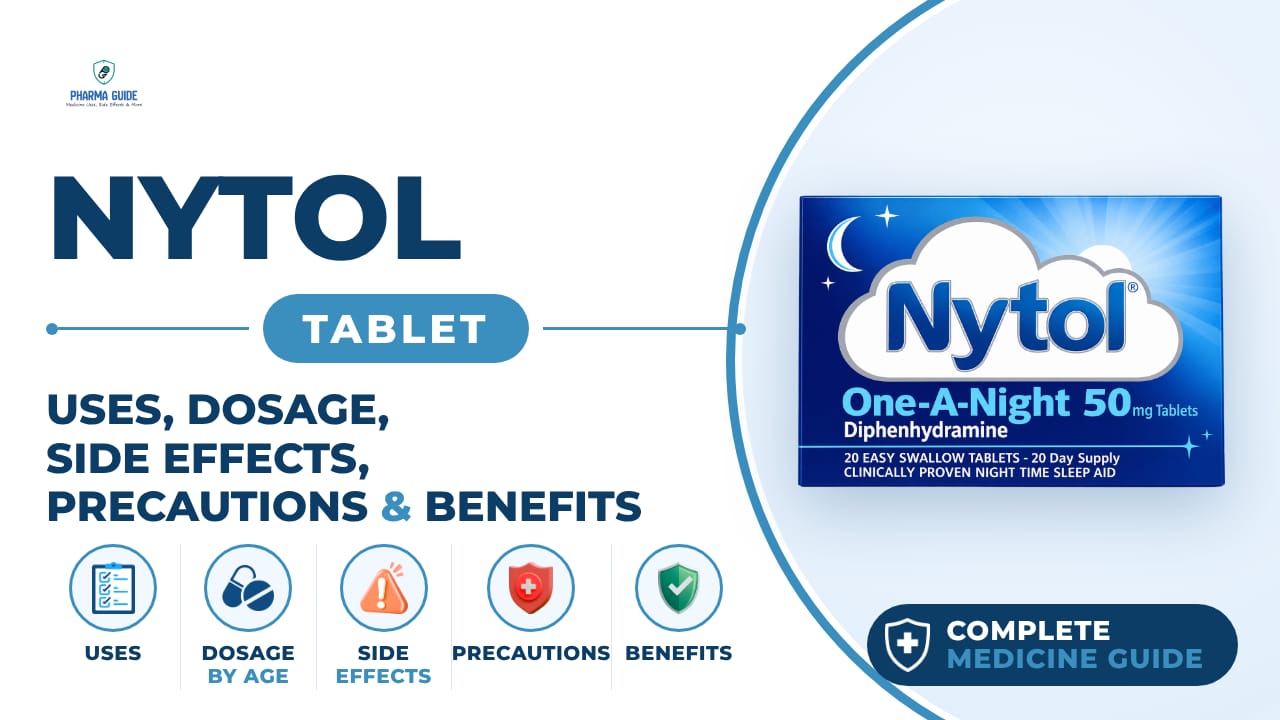
Nytol Tablet: Uses, Dosage, Side Effects, Precautions and Alternates
Antihistamine
Nytol Tablet contains diphenhydramine, used for short-term relief of occasional sleeplessness. Learn its dosage, benefits, side effects, and precautions.
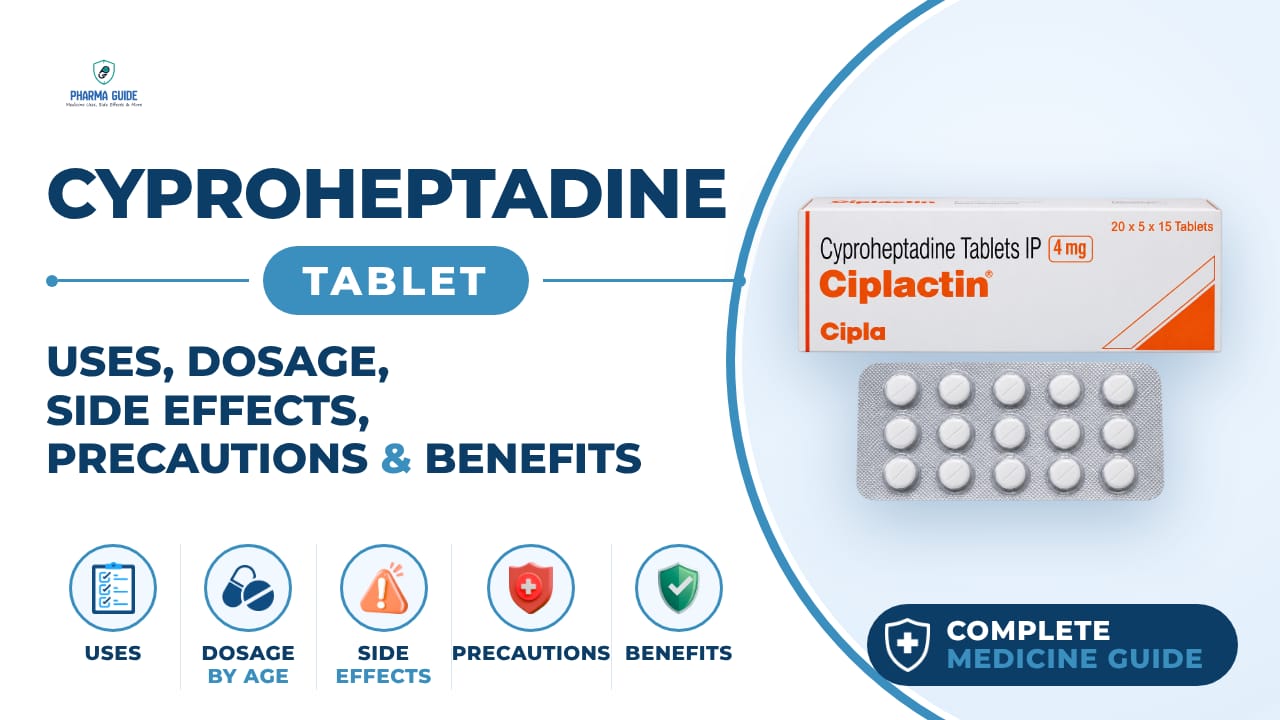
Cyproheptadine Tablet: Uses, Dosage, Side Effects, Precautions and Alternates
Antihistamine
Cyproheptadine Tablet is an antihistamine used for allergies, hives, and migraine headaches. Learn its uses, dosage, side effects, and precautions.