
Safety
General information, not medical advice
Your prescriber and the leaflet in your pack know your situation. This page does not.
- Follow your prescriber and the leaflet
- Don't start, stop, or change a dose on your own
- Doses and warnings differ by country and product
Clascoterone Cream: Uses, Dosage, Side Effects, Precautions and Alternates
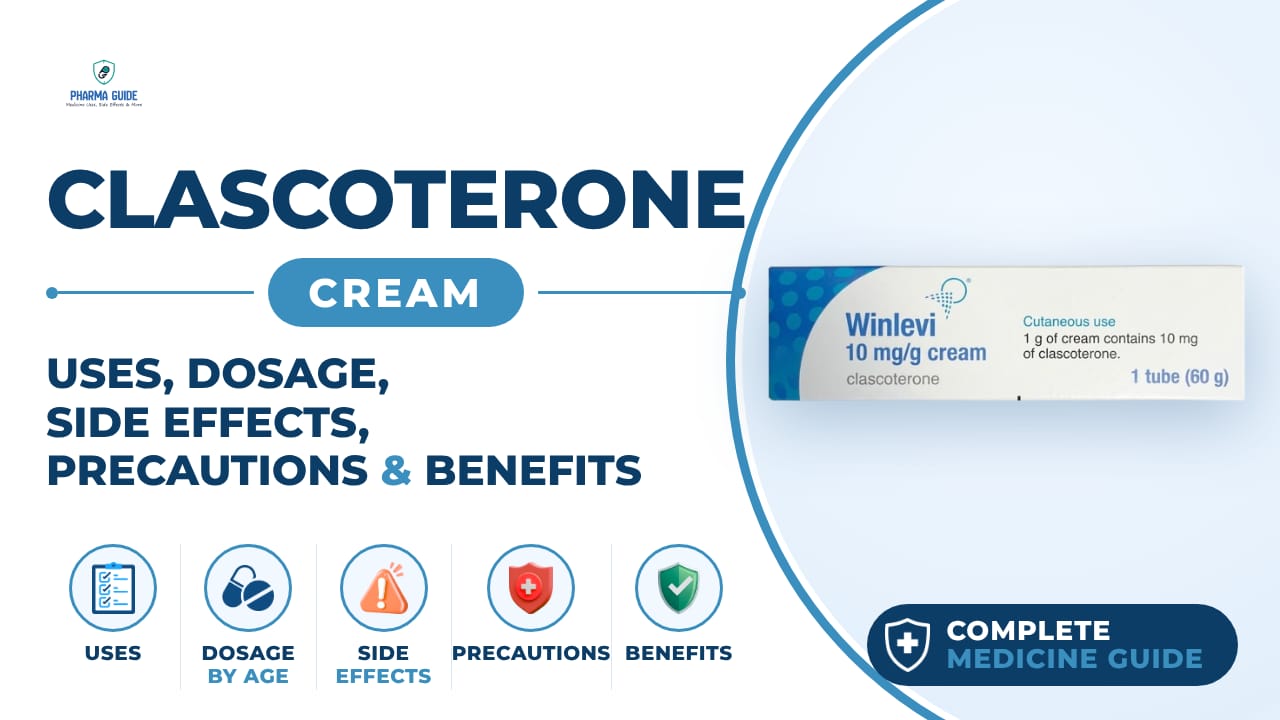
| Generic name | Clascoterone |
|---|---|
| Drug class | Topical acne agent (androgen receptor inhibitor) |
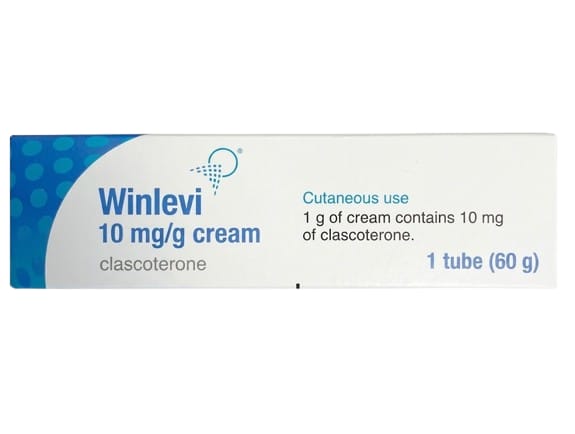
| Forms | Cream (1% / 10 mg per gram), in tubes of 10 g, 30 g, or 60 g |
Quick overview
Clascoterone Cream (Winlevi) is a topical acne medicine containing clascoterone, an androgen receptor inhibitor. It is used to treat mild to moderate acne vulgaris, including inflammatory pimples, on the face in people aged 12 years and older. It works by blocking male hormones (androgens) in the skin's oil glands, and very little of the medicine enters the bloodstream.
What is Clascoterone Cream
Winlevi is a cream containing the active substance clascoterone, which belongs to a group of medicines known as 'anti-acne preparations.' It is the first topical medicine of its kind that works by blocking the effects of androgens (male hormones) in the skin.
Clascoterone Cream uses
- Acne vulgaris
- Inflammatory acne pimples
- Mild to moderate acne
- Acne affecting the face
- Acne in adolescents aged 12 years and older
Benefits of Clascoterone Cream
- Reduces both inflammatory and non-inflammatory acne lesions compared to a non-medicated cream
- Has very low absorption into the bloodstream, so it mainly acts on the skin
- Does not require routine blood tests before or during use
- Lower rates of people stopping treatment compared with some topical retinoid acne treatments
How Clascoterone Cream works
The medicine works by blocking androgen receptors in the skin's oil-producing glands. This stops male hormones (androgens) from telling these glands to make too much oil, which helps reduce the pimples, blackheads, and whiteheads of acne.
Clascoterone Cream dosage
Apply to clean, dry skin. Apply a thin, even layer to the entire affected area, not just to individual spots, massaging gently. Use twice a day, once in the morning and once in the evening, waiting at least eight hours between applications. Avoid the eyes, eyelids, lips and nostrils when applying, and wash your hands after applying. Do not cover the treated area with a bandage or dressing.
In adolescents, apply to the face only; in adults, it can be used on the face, chest and/or back. Wait at least two hours before or after using other skin products (such as moisturizers, sunscreen, or other acne treatments) on the same area. Do not use more than the amount your doctor has prescribed.
If you miss an application, apply as soon as you remember but do not double up to make up for a missed dose. It may take several weeks of regular use to see improvement, and your doctor will check your progress after three months of treatment.
| Age group | Dose |
|---|---|
| Under 12 years | Not recommended |
| 12–17 years | 1% cream, twice/day |
| 18–64 years | 1% cream, twice/day |
| 65+ years | 1% cream, twice/day |
Available forms and strengths
- Cream (1% / 10 mg per gram), in tubes of 10 g, 30 g, or 60 g
Side effects of Clascoterone Cream
Common
- Pain, dryness, or redness at the application site
- Excessive hair growth at the application site
- Itching, stinging, or burning of treated skin
- Scaling or dryness of the skin
- Lower-than-normal levels of the stress hormone cortisol (usually found only on lab tests, without symptoms)
Serious
- Allergic reactions at the application site (hypersensitivity)
- Acne flare
- Contact dermatitis (itchy, blistered, dry and cracked skin)
- Headache
- Inflammation of hair follicles (folliculitis) at the application site
- Sore throat (oropharyngeal pain)
- Signs of adrenal gland suppression: feeling tired, weight loss, decreased appetite, low blood pressure, nausea, diarrhea, vomiting, stomach pain, low blood sugar
- High blood potassium: nausea, weakness, tingling, chest pain, irregular heartbeat, loss of movement
Warnings and precautions
- This medicine is not recommended for use in people aged 65 and older, as there isn't enough information on how it works in this age group.
- Do not apply this medicine to cuts, scrapes, eczema, sunburned skin, or areas affected by other inflammatory skin conditions like rosacea or redness/rash around the mouth.
- Do not cover the treated skin with bandages or dressings, since this raises the risk of side effects, including suppression of the adrenal glands.
- Do not use this medicine at the same time as photodynamic therapy; your doctor may tell you to stop this medicine before starting that treatment.
- Avoid using this medicine on skin recently treated with hair removal, chemical peels, dermabrasion, or laser resurfacing until the skin has healed.
- If acne comes back and gets worse within days to weeks after stopping treatment, this may be a reaction to stopping the medicine. Do not start treating the area again without talking to your doctor first.
- This medicine is only meant for adolescents 12 years and older; it should not be given to children under 12 because no benefit was seen in that age group.
- This medicine must not be used during pregnancy because it can harm an unborn baby.
- Women who could become pregnant must use effective birth control during treatment and for at least 10 days after stopping. Pregnancy status should be checked before starting treatment.
- It isn't known if this medicine passes into breast milk, so there could be a risk to the baby. Breastfeeding should be stopped during treatment.
- No specific studies have been done in people with kidney problems, but because very little of the medicine gets into the bloodstream, no special precautions or dose changes are expected to be needed.
- No specific studies have been done in people with liver problems, but because very little of the medicine gets into the bloodstream, no special precautions or dose changes are expected to be needed.
- Avoid using skin products that contain high amounts of alcohol on the treated area, as they may increase skin irritation.
- This medicine is not expected to affect your ability to drive or use machines.
Storage
- Store in a refrigerator (2°C–8°C) before opening
- Once opened, do not store above 25°C
- Do not freeze
- Keep out of the sight and reach of children
- Discard the unused product 1 month after first opening
- Do not throw away medicines via wastewater or household waste; ask your pharmacist how to dispose of medicines you no longer use
When to see a doctor
- Get emergency help right away if you notice signs of a serious allergic reaction, such as hives, difficulty breathing, or swelling of the face, lips, tongue, or throat.
- Contact your doctor right away if you develop unexplained symptoms that don't improve, such as feeling very tired, weight loss, decreased appetite, low blood pressure, nausea, diarrhea, vomiting, stomach pain, or low blood sugar — these could be signs that your adrenal glands are not working properly.
- Call your doctor if you have severe itching, burning, peeling, or redness of the treated skin.
- Call your doctor if you notice signs of high blood potassium, such as nausea, weakness, tingling, chest pain, irregular heartbeat, or loss of movement.
- If you think you may have become pregnant while using this medicine, stop using it and talk to your doctor right away.
- If someone accidentally swallows this medicine, seek emergency medical attention or contact your local poison control center right away.
Alternatives
- Azelaic Acid Cream
- Tretinoin Cream
- Adapalene Cream
Watch the video
FAQs
What is Clascoterone Cream used for?
It is used to treat mild to moderate acne vulgaris, including inflammatory pimples, on the face in people aged 12 years and older.
How does Clascoterone Cream work?
It works by blocking androgen receptors in the skin's oil-producing glands, stopping male hormones from triggering excess oil production, which helps reduce pimples, blackheads, and whiteheads.
How often should Clascoterone Cream be applied?
Apply a thin, even layer to the entire affected area twice a day, once in the morning and once in the evening, waiting at least eight hours between applications.
Can Clascoterone Cream be used during pregnancy?
No, this medicine must not be used during pregnancy because it can harm an unborn baby. Women who could become pregnant must use effective birth control during treatment and for at least 10 days after stopping.
What are the common side effects of Clascoterone Cream?
Common side effects include pain, dryness, or redness at the application site, excessive hair growth, itching, stinging, burning, scaling, and lower-than-normal cortisol levels usually found only on lab tests.
General information, not medical advice
Your prescriber and the leaflet in your pack know your situation. This page does not.
- Follow your prescriber and the leaflet
- Don't start, stop, or change a dose on your own
- Doses and warnings differ by country and product
Sources
Video
Related medicines
Winlevi Cream: Uses, Dosage, Side Effects, Precautions and Alternates
Topical acne agent (androgen receptor inhibitor)
Winlevi Cream (clascoterone) treats acne vulgaris by reducing oil and inflammation. Learn about dosage, side effects, warnings, and usage tips.

Injectafer Injection: Uses, Dosage, Side Effects, Precautions and Alternates
Iron products
Injectafer (ferric carboxymaltose) treats iron deficiency anemia and heart failure-related iron deficiency via IV. Learn uses, dosage, side effects, and