
Safety
General information, not medical advice
Your prescriber and the leaflet in your pack know your situation. This page does not.
- Follow your prescriber and the leaflet
- Don't start, stop, or change a dose on your own
- Doses and warnings differ by country and product
Clonotril Tablet: Uses, Dosage, Side Effects, Precautions and Alternates
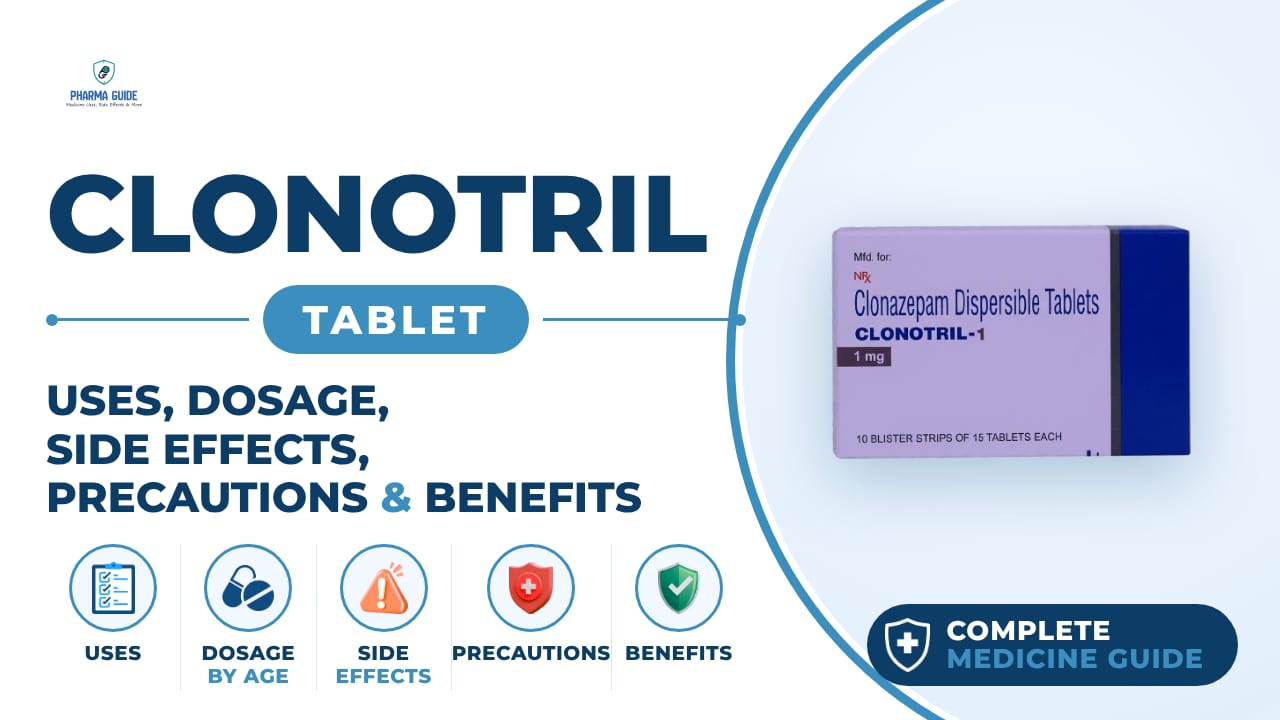
| Generic name | Clonazepam |
|---|---|
| Drug class | Benzodiazepine / sedative-hypnotic |
| Forms | Tablet |
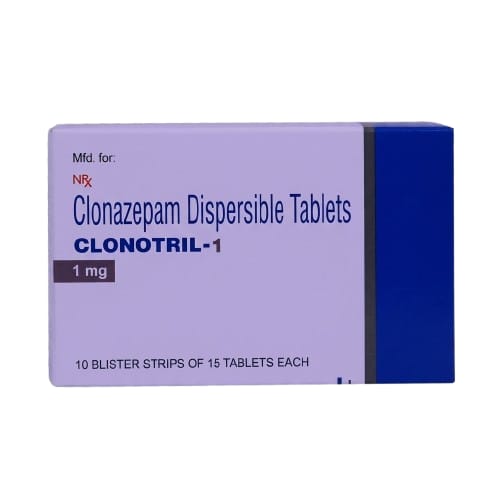
Quick overview
Clonotril Tablet contains clonazepam, a benzodiazepine sedative-hypnotic. It is used to treat anxiety, panic disorder, seizures, and sleep problems. It works by calming overactive brain activity to help control seizures and reduce anxiety and panic symptoms. It should be used exactly as prescribed, with careful attention to dosage, duration, and precautions around alcohol, pregnancy, and sudden stopping.
What is Clonotril Tablet
Clonotril is a tablet medicine that contains clonazepam, a benzodiazepine. It is used to treat anxiety, panic disorder, seizures, and sleep problems.
Clonotril Tablet uses
- Anxiety
- Panic attack and panic disorder
- Insomnia (sleep problems)
- Epilepsy and seizure disorders
- Muscle spasm
- Restless legs syndrome
- Burning mouth syndrome
Benefits of Clonotril Tablet
- Rapid relief of severe anxiety
- Short-term help with sleep
- Controls acute seizures
- Effective management of seizures and epilepsy
- Improved sleep quality and reduction in stress levels
How Clonotril Tablet works
Clonazepam calms down overactive brain activity by boosting the effect of a natural brain chemical (GABA) that relaxes nerve cells. This helps control seizures and reduces anxiety and panic symptoms.
Clonotril Tablet dosage
Clonotril can be taken with or without food. Swallow the tablet whole with a glass of water; do not chew, crush, or break it unless your doctor says to. Take it at bedtime, or as your doctor prescribes. Taking it at about the same time each day can help you remember your dose.
Follow the dose and duration written on your prescription; do not change the dose or stop early on your own. If you miss a dose, take it as soon as you remember, but if it's almost time for your next dose, skip the missed one — do not take two doses together.
Do not stop taking this medicine suddenly without talking to your doctor, as it may cause withdrawal symptoms. Older adults should use this medicine with extra caution because of a higher risk of drowsiness and muscle weakness.
| Age group | Dose |
|---|---|
| Under 10 years | 0.01–0.03 mg/day |
| 10–16 years | 1–1.5 mg/day |
| 18–60 years | 0.5 mg/day |
| 60+ years | 0.5 mg/day |
Available forms and strengths
- Tablet
Side effects of Clonotril Tablet
Common
- Drowsiness
- Dizziness
- Unsteadiness
- Poor concentration
- Memory lapses
- Dry mouth
- Fatigue
- Depression
- Nervousness
- Blurred vision
- Muscle pain
- Mental confusion
- Difficulty speaking
- Impaired coordination
Serious
- Difficulty breathing
- Severe confusion
- Allergic reaction (rash, swelling of face or lips, wheezing)
- Suicidal thoughts or behavioural changes
- Withdrawal symptoms such as aggressive behaviour or blurred vision if stopped suddenly
Warnings and precautions
- This medicine is not recommended during pregnancy because it may harm the developing baby. Tell your doctor right away if you are or might be pregnant.
- This medicine is not recommended while breastfeeding as it can pass into breast milk and may harm the baby.
- Use with caution if you have kidney disease; your doctor may need to adjust your dose or monitor your kidney function.
- This medicine is not recommended if you have active liver problems, since liver impairment can cause the drug to build up and cause harm.
- Do not drink alcohol while taking this medicine, as the combination can cause severe dizziness, drowsiness, and breathing difficulties.
- Do not drive or operate heavy machinery after taking this medicine, as it can make you feel sleepy or dizzy.
- This medicine can be habit-forming, especially with long-term use. If dependence occurs, your doctor may need to reduce the dose gradually rather than stop it suddenly.
- These medicines are meant for short-term use, usually two to four weeks, and are not meant as a long-term treatment for anxiety or sleep problems.
- Never stop taking this medicine suddenly, as it can cause severe withdrawal symptoms like anxiety, tremor, and seizures. Your doctor will reduce the dose slowly.
- Never combine this medicine with alcohol or opioid painkillers, as together they can dangerously slow or stop your breathing.
- Older people are much more likely to fall, become confused, or have memory problems while taking this medicine.
- This medicine should not be used by people with severe breathing problems, sleep apnoea, severe liver disease, or a history of drug dependence except under specialist supervision.
- This medicine should be used with caution in people with COPD, glaucoma, alcoholism, drug addiction, respiratory depression, liver disease, or obesity, as it may cause severe side effects.
- There is an increased risk of suicidal thoughts or behavioural changes with this medicine. Report any such changes to your doctor immediately.
Storage
- Store below 30°C in the original pack, away from direct sunlight and moisture.
- Keep out of the reach of children.
When to see a doctor
- Stop the medicine and get medical help right away if you notice a rash, swelling of the face or lips, wheezing, or difficulty breathing.
- If you think you have taken too much, go to the nearest emergency department immediately and take the medicine pack with you, as an overdose can cause deep unconsciousness and dangerously slow breathing.
- Tell your doctor immediately if you notice any behavioural changes or thoughts of suicide while taking this medicine.
Alternatives
- Rivotril
- Lonazep
- Clonapax
Watch the video
FAQs
What is Clonotril Tablet used for?
Clonotril is used to treat anxiety, panic attacks and panic disorder, insomnia, epilepsy and seizure disorders, muscle spasm, restless legs syndrome, and burning mouth syndrome.
How should Clonotril Tablet be taken?
It can be taken with or without food, usually at bedtime. Swallow the tablet whole with water without chewing or crushing it, and take it at the same time each day as prescribed by your doctor.
Can I stop taking Clonotril Tablet suddenly?
No, you should never stop taking Clonotril suddenly as it can cause severe withdrawal symptoms like anxiety, tremor, and seizures. Your doctor will reduce the dose gradually.
Can I drink alcohol while taking Clonotril Tablet?
No, alcohol should be avoided while taking Clonotril as the combination can cause severe dizziness, drowsiness, and breathing difficulties.
What are the common side effects of Clonotril Tablet?
Common side effects include drowsiness, dizziness, unsteadiness, poor concentration, memory lapses, dry mouth, fatigue, depression, nervousness, blurred vision, muscle pain, mental confusion, difficulty speaking, and impaired coordination.
General information, not medical advice
Your prescriber and the leaflet in your pack know your situation. This page does not.
- Follow your prescriber and the leaflet
- Don't start, stop, or change a dose on your own
- Doses and warnings differ by country and product
Sources
- US Food and Drug Administration (FDA), Package leaflet information for the user; Klonopin (clonazepam)
- KD Tripathi, Seventh Edition, Jaypee Brothers Medical Publishers, 2013
- April Hazard Vallerand, Cynthia A. Sanoski, Sixteenth Edition, F. A. Davis Company, 2019
- PingMeDoc clinical monograph library — compiled from Indian package inserts, the Indian Pharmacopoeia
- Central Drugs Standard Control Organisation (CDSCO), Ministry of Health & Family Welfare, Government of India
- National List of Essential Medicines (NLEM) 2022, Government of India
- Manufacturer's package insert / prescribing information for Clonotril 0.25 Tablet
- World Health Organization, ATC/DDD classification and Model Formulary
Video
Related medicines

Dalmane Capsule: Uses, Dosage, Side Effects, Precautions and Alternates
Benzodiazepine (sedative-hypnotic)
Dalmane Capsule (flurazepam) treats short-term insomnia by boosting GABA activity. Learn dosage, side effects, warnings, and safer alternatives here.
Triazolam Tablet: Uses, Dosage, Side Effects, Precautions and Alternates
Benzodiazepine (sedative/hypnotic)
Triazolam Tablet is a short-term insomnia medicine that calms brain activity to help you fall and stay asleep. Learn dosage, side effects, and warnings.