
Safety
General information, not medical advice
Your prescriber and the leaflet in your pack know your situation. This page does not.
- Follow your prescriber and the leaflet
- Don't start, stop, or change a dose on your own
- Doses and warnings differ by country and product
Triazolam Tablet: Uses, Dosage, Side Effects, Precautions and Alternates
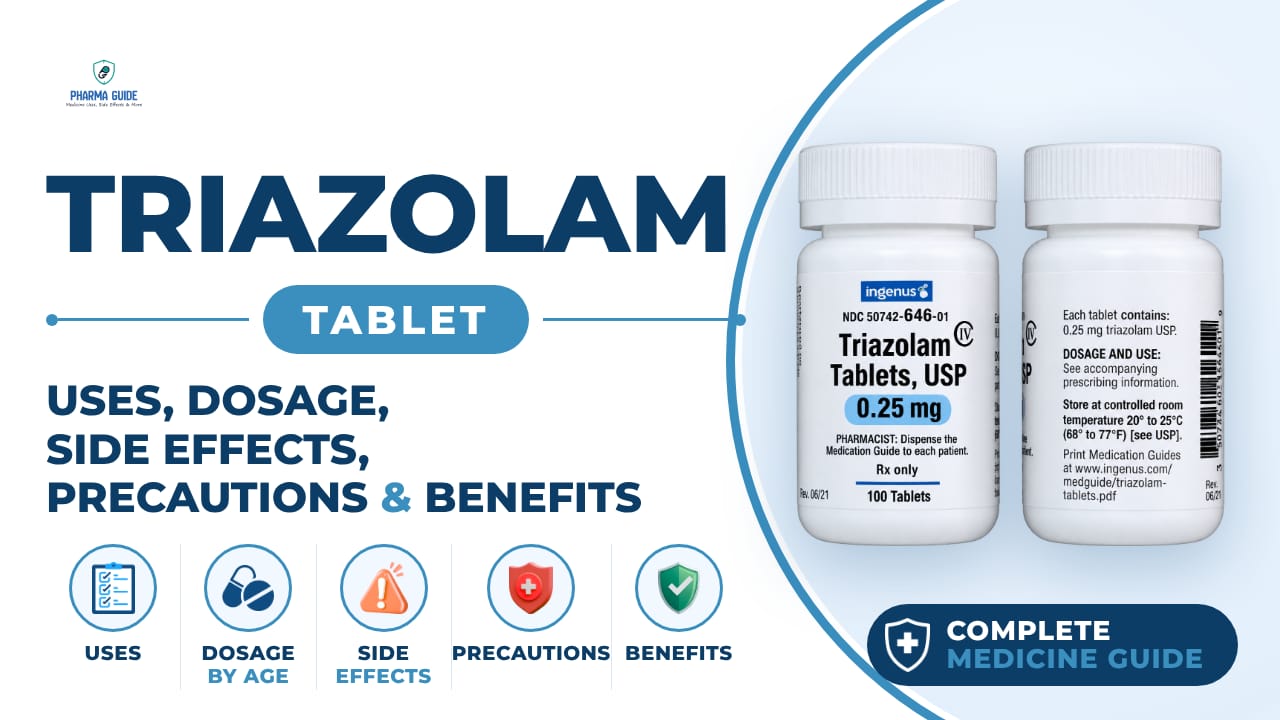
| Generic name | Triazolam |
|---|---|
| Drug class | Benzodiazepine (sedative/hypnotic) |
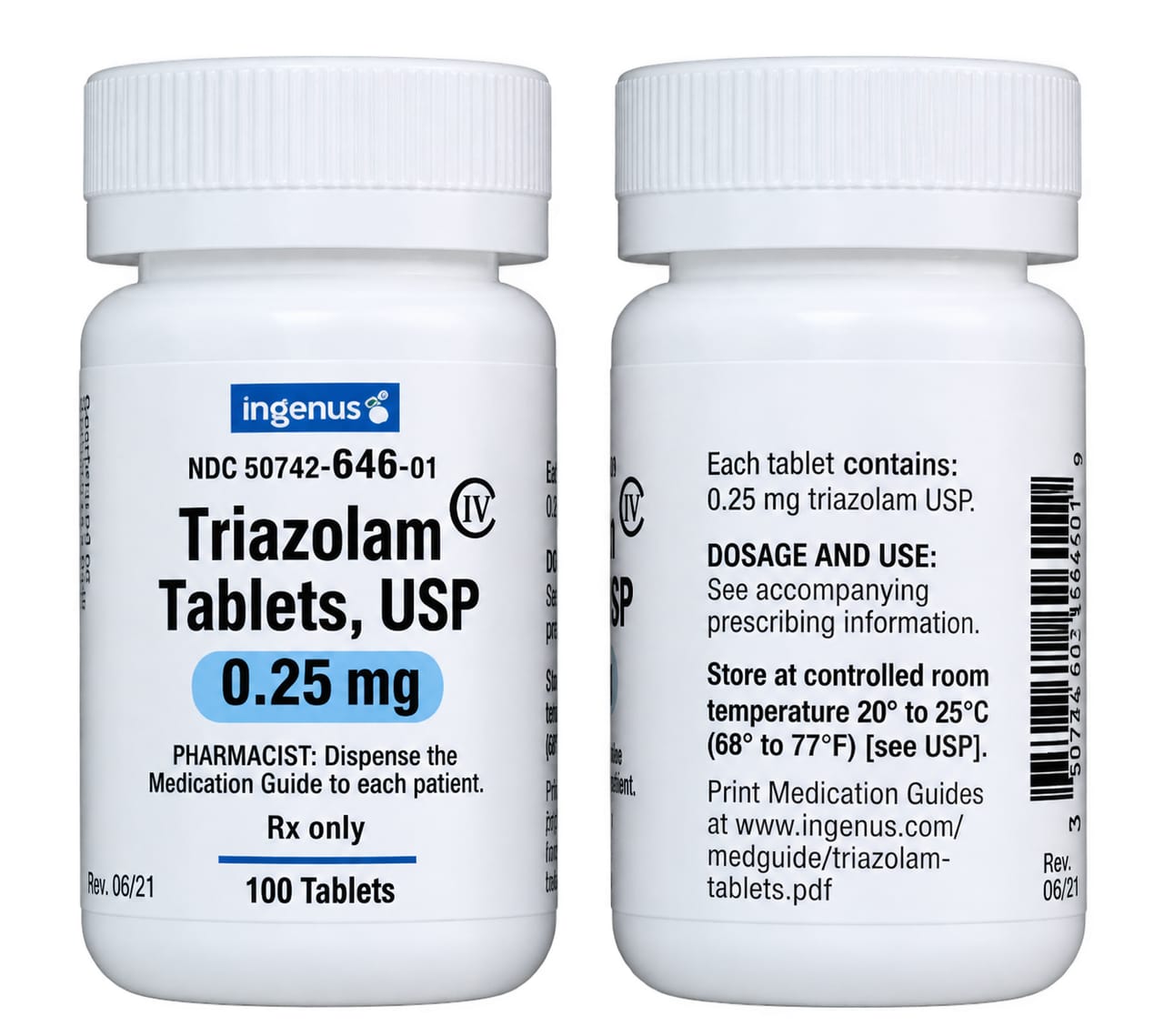
| Forms | Tablet (0.125 mg), Tablet (0.25 mg) |
Quick overview
Triazolam Tablet, known generically as triazolam, is a benzodiazepine used as a sedative/hypnotic for short-term treatment of insomnia. It is a controlled substance because it can be misused or lead to dependence. It is taken right before bed for a short period, usually 7 to 10 days, and should be used exactly as prescribed.
What is Triazolam Tablet
Triazolam is a prescription sleep medicine used for a short time to treat insomnia, a sleep problem where it's hard to fall asleep or stay asleep. It belongs to a group of medicines called benzodiazepines and is a controlled substance because it can be misused or lead to dependence.
Triazolam Tablet uses
- Treats short-term insomnia.
- Used for difficulty falling asleep at bedtime.
- Prescribed for temporary sleep disturbances.
- Used when insomnia significantly disrupts normal sleep routines.
- May be prescribed when non-medication measures have not provided enough relief.
Benefits of Triazolam Tablet
- Helps people fall asleep faster.
- May reduce difficulty falling asleep.
- May provide short-term relief from insomnia.
- May help when sleep problems disrupt daily life.
- May improve sleep quality.
How Triazolam Tablet works
Triazolam works by acting on receptors in the brain that calm nerve activity, which helps slow down brain activity so you can fall asleep and stay asleep.
Triazolam Tablet dosage
Take this medicine exactly as your doctor tells you to, right before you get into bed. Do not take it with food or shortly after a meal, since food may make it work less well. Only take it if you can stay in bed for a full 7 to 8 hours afterward, otherwise you may have memory problems. This medicine is usually only taken for 7 to 10 days and should not be used for more than 2 to 3 weeks without talking to your doctor. Do not eat grapefruit or drink grapefruit juice while taking this medicine. Older adults usually need a lower dose because they are more sensitive to side effects.
If you miss a dose and did not take it at bedtime, you may still take it only if you can stay in bed for 7 to 8 hours afterward. Do not stop taking this medicine suddenly without talking to your doctor, since stopping suddenly can cause serious withdrawal symptoms. Your doctor will likely lower your dose gradually if you need to stop.
| Age group | Dose |
|---|---|
| Under 18 years | Not recommended |
| 18–64 years | 0.25 mg, once/day |
| 65+ years | 0.125 mg, once/day |
Available forms and strengths
- Tablet (0.125 mg)
- Tablet (0.25 mg)
Side effects of Triazolam Tablet
Common
- Drowsiness
- Dizziness
- Lightheadedness
- Headache
- Problems with coordination
- Nervousness
- Tingling of the skin
- Nausea
- Vomiting
Serious
- Rash, hives, or itching
- Swelling of the eyes, face, lips, tongue, or throat
- Feeling that the throat is closing
- Difficulty breathing or swallowing
- Hoarseness
- Severe allergic reaction (can include trouble breathing, racing heart, fever, swollen lymph nodes)
- Memory problems or confusion
- Aggressiveness or unusually outgoing behavior
- Hallucinations (seeing or hearing things that are not there)
- New or worsening depression, including thoughts of suicide
- Doing activities like driving, eating, or talking on the phone while not fully awake, with no memory of it afterward
- Severe sedation, slowed or difficult breathing, or unresponsiveness, especially if combined with opioids, alcohol, or other sedating drugs
- Symptoms of withdrawal after stopping the medicine, including seizures, unusual movements, anxiety, ringing in the ears, or seeing/hearing things that are not there
Warnings and precautions
- Tell your doctor if you are pregnant, plan to become pregnant, or become pregnant while taking this medicine, since it may harm the baby, especially if taken late in pregnancy.
- Tell your doctor if you are breastfeeding, as this medicine may pass into breast milk and could cause sleepiness or feeding problems in a nursing infant.
- Tell your doctor if you have kidney disease, since this condition may need to be considered before you take this medicine.
- Tell your doctor if you have liver disease, as people with severe liver problems may have stronger effects from this medicine and may need a lower dose.
- Do not drink alcohol while taking this medicine, since combining it with alcohol can cause severe drowsiness, breathing problems, coma, or death.
- Do not drive a car or operate machinery until you know how this medicine affects you, since it can cause drowsiness and reduce alertness and coordination.
- Taking this medicine with opioid pain or cough medicines can cause severe sleepiness, slowed or stopped breathing, coma, or death. Tell your doctor about all opioid medicines you take.
- This medicine can be habit-forming. Do not take more than prescribed, more often, or for longer than your doctor tells you to.
- Stopping this medicine suddenly can cause serious withdrawal symptoms that may last for weeks or even more than a year. Do not stop or reduce your dose without talking to your doctor.
- Some people have gotten out of bed and done activities like driving, eating, or making phone calls while not fully awake, with no memory of it afterward. This is more likely if you drink alcohol or take other sedating medicines.
- Your mental health may change in unexpected ways while taking this medicine, including new aggression, hallucinations, confusion, or thoughts of suicide.
- Do not eat grapefruit or drink grapefruit juice while taking this medicine, as it can increase the levels of the drug in your body.
- This medicine should not be taken by people who are allergic to triazolam or other benzodiazepines, or who are taking certain antifungal medicines, certain HIV medicines, or the antidepressant nefazodone.
Storage
- Keep this medication in the container it came in, tightly closed, and out of reach of children
- Store it at room temperature and away from excess heat and moisture (not in the bathroom)
- Keep triazolam in a safe place so that no one else can take it accidentally or on purpose
- Keep track of how many tablets are left so you will know if any are missing
- Dispose of unneeded medications in a way so that pets, children, and other people cannot take them
- Do not flush this medication down the toilet
- Use a medicine take-back program; talk to your pharmacist about take-back programs in your community
When to see a doctor
- Get emergency help right away if you have slowed or shallow breathing, your breathing stops, or you feel extremely sleepy and can't be woken, especially if you've also taken opioids, alcohol, or other sedating drugs.
- Call your doctor or go to the emergency room right away if you have sudden confusion, feel paranoid, have thoughts of suicide, have seizures, or have trouble breathing.
- Call your doctor or get emergency help right away if you have unusual movements, ringing in your ears, anxiety, memory problems, difficulty concentrating, sleep problems, seizures, shaking, muscle twitching, depression, burning or tingling feelings, hallucinations, thoughts of harming yourself or others, overexcitement, or feeling out of touch with reality.
- Get medical help right away if you have signs of a severe allergic reaction, such as rash, hives, itching, swelling of the eyes, face, lips, tongue, or throat, feeling that the throat is closing, or difficulty breathing or swallowing.
- Call your doctor right away if you find out that you have been driving, eating, making phone calls, or doing other activities while not fully awake and have no memory of it.
- If you think someone has taken too much of this medicine, get medical help right away or contact a poison control center; if the person has collapsed, had a seizure, has trouble breathing, or can't be woken, call emergency services immediately.
- Call your doctor if your sleep problems do not improve within 7 to 10 days, get worse, or if you notice changes in your thoughts or behavior.
Alternatives
- Eszopiclone
- Zolpidem
- Temazepam
Watch the video
FAQs
What is Triazolam Tablet used for?
Triazolam is a prescription benzodiazepine used for short-term treatment of insomnia, helping people who have difficulty falling asleep.
How long can you take Triazolam Tablet?
It is usually taken for only 7 to 10 days and should not be used for more than 2 to 3 weeks without talking to your doctor.
What is the dosage of Triazolam Tablet?
Adults 18-64 years typically take 0.25 mg once daily, while adults 65 and older usually take a lower dose of 0.125 mg once daily, taken right before bed.
Can you drink alcohol while taking Triazolam Tablet?
No, alcohol should be avoided while taking this medicine since combining it with alcohol can cause severe drowsiness, breathing problems, coma, or death.
What are the common side effects of Triazolam Tablet?
Common side effects include drowsiness, dizziness, lightheadedness, headache, coordination problems, nervousness, tingling of the skin, nausea, and vomiting.
General information, not medical advice
Your prescriber and the leaflet in your pack know your situation. This page does not.
- Follow your prescriber and the leaflet
- Don't start, stop, or change a dose on your own
- Doses and warnings differ by country and product
Sources
Video
Related medicines
Clonotril Tablet: Uses, Dosage, Side Effects, Precautions and Alternates
Benzodiazepine / sedative-hypnotic
Clonotril Tablet (clonazepam) treats anxiety, panic disorder, seizures and insomnia. Learn uses, dosage, side effects, and safety precautions here.
Dalmane Capsule: Uses, Dosage, Side Effects, Precautions and Alternates
Benzodiazepine (sedative-hypnotic)
Dalmane Capsule (flurazepam) treats short-term insomnia by boosting GABA activity. Learn dosage, side effects, warnings, and safer alternatives here.