
Safety
General information, not medical advice
Your prescriber and the leaflet in your pack know your situation. This page does not.
- Follow your prescriber and the leaflet
- Don't start, stop, or change a dose on your own
- Doses and warnings differ by country and product
Contac Cold Capsule: Uses, Dosage, Side Effects, Precautions and Alternates
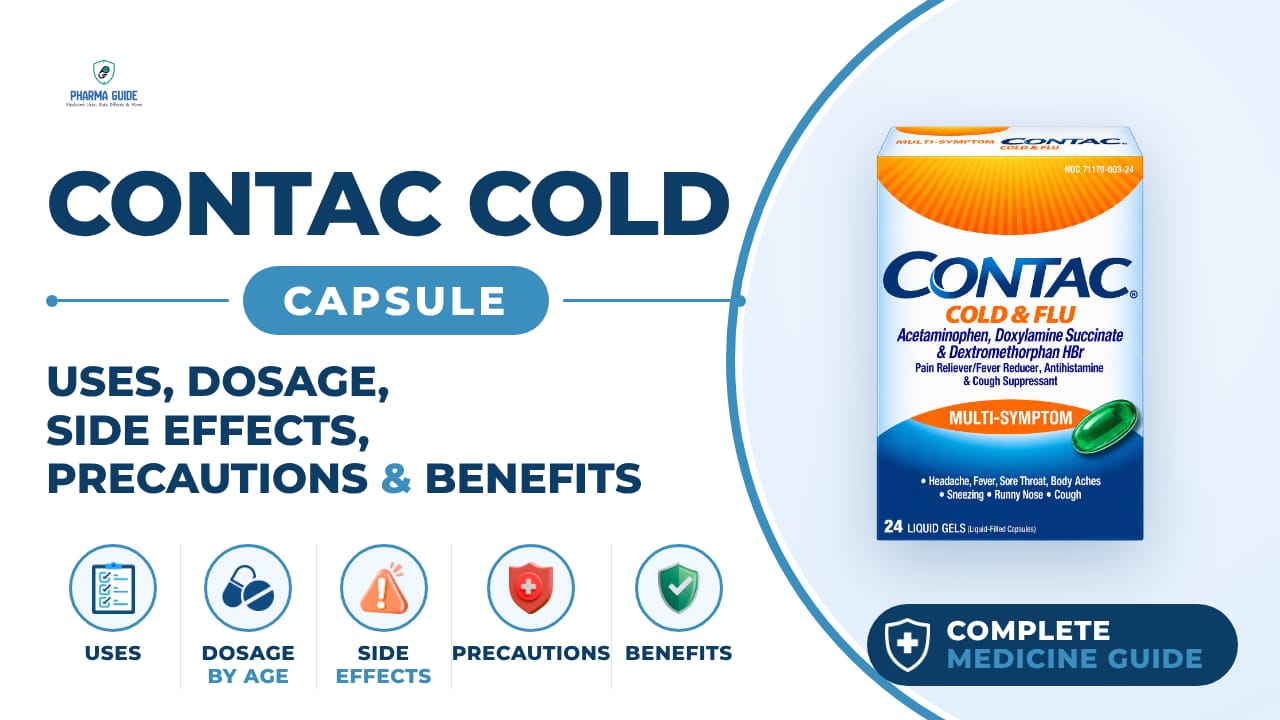
| Generic name | Acetaminophen, Dextromethorphan HBr, and Doxylamine Succinate (also sold as pseudoephedrine under the Contac Cold name) |
|---|---|
| Drug class | Decongestants |
| Forms | Oral tablet, Oral kit, Effervescent oral tablet, Oral liquid, Liquid-filled capsule (liquid gel) |
Quick overview
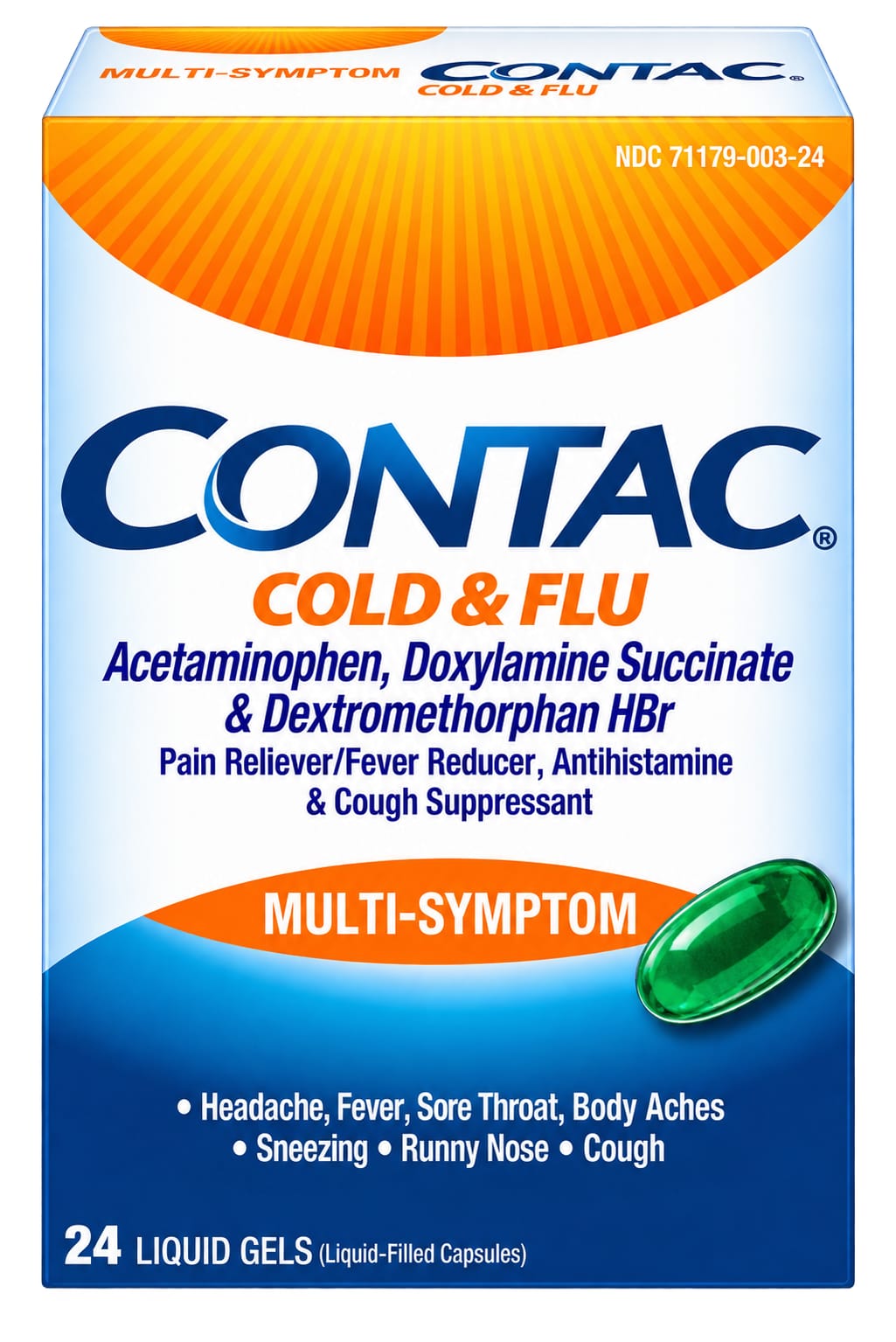
Contac Cold Capsule is an over-the-counter combination medicine containing acetaminophen, dextromethorphan HBr, and doxylamine succinate; some versions use pseudoephedrine instead. It belongs to the decongestant drug class and is used to relieve nasal congestion, headache, minor aches and pains, stuffy nose, watery eyes, and runny nose. It combines a pain reliever/fever reducer, a cough suppressant, and an antihistamine in one product. It should be used exactly as directed, with attention to dosing limits and precautions around acetaminophen, alcohol, and other medications.
What is Contac Cold Capsule
Contac Cold is an over-the-counter combination medicine that contains a pain reliever/fever reducer, a cough suppressant, and an antihistamine. Some versions are decongestant-only products containing pseudoephedrine.
Contac Cold Capsule uses
- Nasal congestion
- Headache
- Minor aches and pains
- Stuffy nose
- Relieves watery eyes
- Relieves runny nose
Benefits of Contac Cold Capsule
- Relieves common cold and flu symptoms such as congestion, headache, sore throat, cough, and fever
- Combines antihistamine and decongestant effects
- Targets several nasal cold and allergy symptoms
- May reduce congestion and nasal discharge
- Provides oral symptom relief
Contac Cold Capsule dosage
Take by mouth as directed by your doctor or as directed on the label. Read the label carefully before using, and ask your doctor about anything you don't understand. Take with a full glass of water. Do not crush, chew, or break an extended-release tablet; swallow it whole. Shake the oral liquid well before measuring a dose, and use a proper dosing device, not a household spoon.
Do not give this medicine to a child younger than 4 years old; always ask a doctor before giving cold or cough medicine to a child. Call your doctor if symptoms do not improve after 7 days of treatment or if you have a fever. Do not take with any other product containing acetaminophen. Avoid alcoholic drinks while using this product.
Take this medication with or without food; if stomach upset occurs, taking it with food or milk may help. Drink plenty of fluids while using this medication unless your doctor tells you otherwise. If using a chewable form, chew it thoroughly before swallowing.
| Age group | Dose |
|---|---|
| Under 14 years | No labeled dose for this formulation |
| 15–17 years | 1 capsule per dose, 3 times daily after meals |
| 18–39 years | 1 capsule per dose, 3 times daily after meals |
| 40–64 years | 1 capsule per dose, 3 times daily after meals |
Available forms and strengths
- Oral tablet
- Oral kit
- Effervescent oral tablet
- Oral liquid
- Liquid-filled capsule (liquid gel)
Side effects of Contac Cold Capsule
Common
- Dizziness
- Drowsiness
- Mild headache
- Blurred vision
- Dry mouth, nose, or throat
- Constipation
- Feeling nervous
- Sleep problems (insomnia)
- Confusion
- Upset stomach
- Nausea
Serious
- Signs of an allergic reaction: hives, difficult breathing, swelling of face, lips, tongue, or throat
- Mental or mood changes such as confusion or hallucinations
- Shaking
- Trouble urinating
- Fast, slow, or irregular heartbeat
- Seizure
- Severe dizziness
- Trouble breathing
- Severe skin reactions: skin reddening, blisters, rash
Warnings and precautions
- Do not use if you have taken a monoamine oxidase inhibitor (MAOI) in the past 14 days, as this can cause a dangerous drug interaction.
- Do not use with any other drug that also contains acetaminophen.
- Ask a doctor before use if you have liver disease, glaucoma, a cough with a lot of mucus, breathing problems such as asthma or chronic bronchitis, or trouble urinating due to an enlarged prostate.
- Marked drowsiness and excitability (especially in children) may occur while using this product.
- Do not give this medicine to children under 4 years old; death has occurred from misuse of cough and cold medicines in very young children.
- There isn't enough information about the safety of using this medicine during pregnancy. It should be used only when clearly needed, and you should discuss the risks and benefits with your doctor.
- This medicine may pass into breast milk and could affect a nursing baby. Ask your doctor before breastfeeding.
- Tell your doctor if you have kidney problems before using this medicine.
- This product contains acetaminophen, and severe liver damage may occur if you take more than the maximum daily amount, combine it with other acetaminophen-containing drugs, or drink alcohol heavily while using it. Tell your doctor if you have liver disease.
- Avoid alcoholic drinks while taking this medicine, since alcohol can increase drowsiness and may also increase liver damage risk.
- This medicine may make you dizzy, drowsy, or blur your vision, so be careful when driving or operating machinery.
Storage
- Store at room temperature away from direct light and moisture
- Do not store in the bathroom or the freezer
- Keep all medicines away from children and pets
- Do not flush this medicine down the toilet or pour it into a drain unless instructed to do so
- Properly discard this product when expired or no longer needed; consult your pharmacist for details
When to see a doctor
- Get emergency medical help if you have signs of an allergic reaction such as hives, difficulty breathing, or swelling of the face, lips, tongue, or throat.
- Stop using the medicine and call your doctor right away if you have dizziness, nervousness, or sleep problems (insomnia).
- If a skin reaction occurs, stop use and seek medical help right away.
- Stop use and ask a doctor if pain or cough gets worse or lasts more than 7 days, fever gets worse or lasts more than 3 days, redness or swelling appears, new symptoms occur, or cough returns with rash or headache.
- If sore throat is severe, lasts more than 2 days, or comes with fever, headache, rash, nausea, or vomiting, see a doctor promptly.
- In case of overdose, get medical help right away or contact a poison control center, even if you feel fine.
Alternatives
- Cetirizine
- Loratadine
- Fexofenadine
Watch the video
FAQs
What is Contac Cold Capsule used for?
It is used to relieve nasal congestion, headache, minor aches and pains, stuffy nose, watery eyes, and runny nose.
What is the dosage for Contac Cold Capsule?
For ages 15 to 64, the typical dose is 1 capsule taken 3 times daily after meals. It should not be given to children under 4, and there is no labeled dose for children under 14.
Can I drink alcohol while taking Contac Cold Capsule?
No, you should avoid alcoholic drinks while using this product since alcohol can increase drowsiness and may increase the risk of liver damage due to the acetaminophen content.
What are the common side effects of Contac Cold Capsule?
Common side effects include dizziness, drowsiness, mild headache, blurred vision, dry mouth, nose, or throat, constipation, nervousness, insomnia, confusion, upset stomach, and nausea.
When should I see a doctor while taking Contac Cold Capsule?
Stop use and see a doctor if pain or cough lasts more than 7 days, fever lasts more than 3 days, new symptoms occur, a severe sore throat develops, or if you experience signs of an allergic reaction or a skin reaction.
General information, not medical advice
Your prescriber and the leaflet in your pack know your situation. This page does not.
- Follow your prescriber and the leaflet
- Don't start, stop, or change a dose on your own
- Doses and warnings differ by country and product
Sources
Video
Related medicines
Sudafed PE Tablet: Uses, Dosage, Side Effects, Precautions and Alternates
Decongestants
Sudafed PE Tablet (phenylephrine) relieves nasal and sinus congestion from colds or allergies. Learn uses, dosage, side effects, and warnings.

Injectafer Injection: Uses, Dosage, Side Effects, Precautions and Alternates
Iron products
Injectafer (ferric carboxymaltose) treats iron deficiency anemia and heart failure-related iron deficiency via IV. Learn uses, dosage, side effects, and