
Safety
General information, not medical advice
Your prescriber and the leaflet in your pack know your situation. This page does not.
- Follow your prescriber and the leaflet
- Don't start, stop, or change a dose on your own
- Doses and warnings differ by country and product
Cromolyn Sodium Nasal Spray: Uses, Dosage, Side Effects, Precautions and Alternates
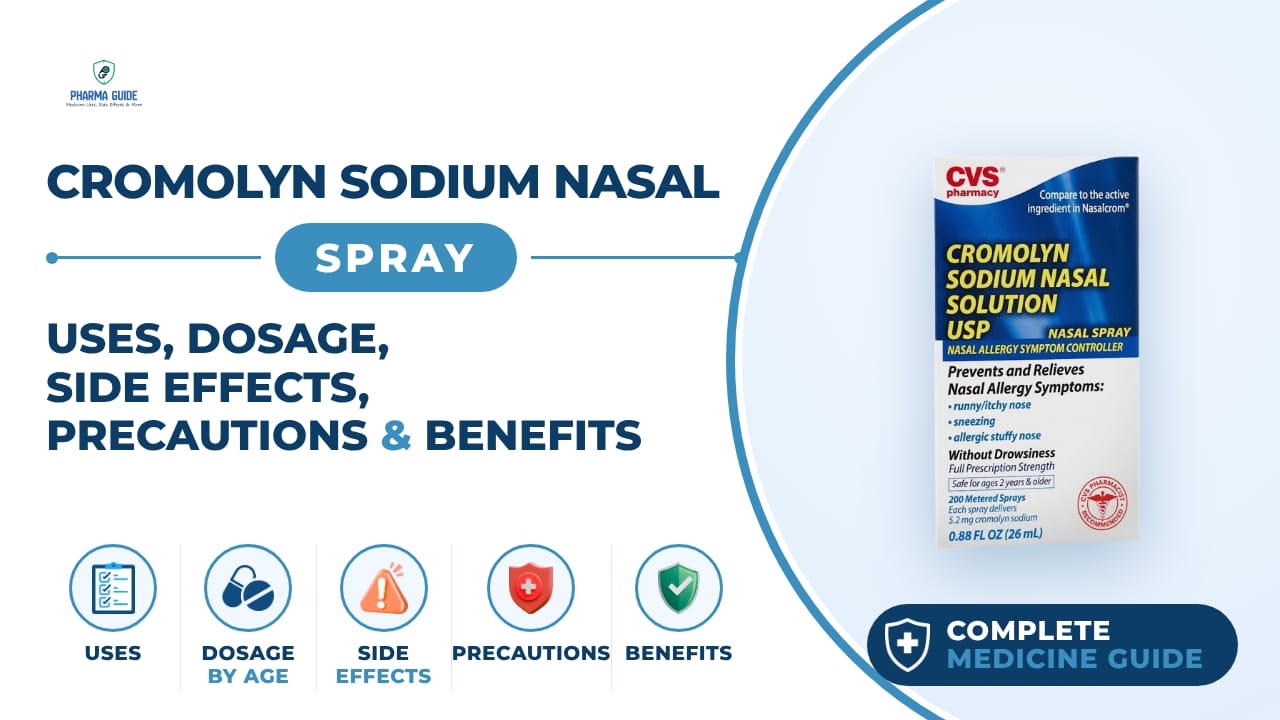
| Generic name | cromolyn sodium |
|---|---|
| Drug class | intranasal mast cell stabilizer |
| Forms | Nasal spray, Oral solution, Ophthalmic solution (eye drops), Inhalation solution (nebulizer) |
Quick overview
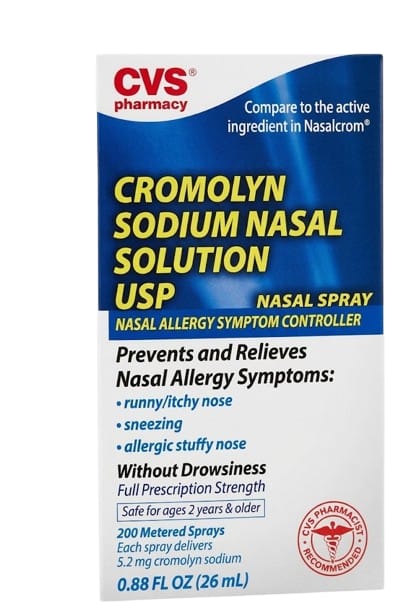
Cromolyn Sodium Nasal Spray (cromolyn sodium) is an intranasal mast cell stabilizer sold over the counter under names such as NasalCrom. It helps prevent and treat stuffy nose, sneezing, runny nose, and other symptoms caused by allergies like hay fever. It works by stabilizing mast cells in the nose to stop the release of substances like histamine. It is typically used several times a day and works best when started before contact with allergy triggers.
What is Cromolyn Sodium Nasal Spray
Cromolyn Sodium Nasal Spray is a nasal spray medicine that helps prevent and treat stuffy nose, sneezing, runny nose, and other symptoms caused by allergies like hay fever. It is sold over the counter under names such as NasalCrom.
Cromolyn Sodium Nasal Spray uses
- Prevent and treat stuffy nose, sneezing, runny nose, and other symptoms caused by allergies (allergic rhinitis/hay fever)
- Prevent nasal allergy symptoms when used before contact with allergy triggers such as pollen, dust, or pets
Benefits of Cromolyn Sodium Nasal Spray
- Reduces nasal allergy symptoms such as runny, stuffy, or itchy nose and sneezing
- Can be used ahead of time to help prevent allergy symptoms before they start
- Available without a prescription
How Cromolyn Sodium Nasal Spray works
The nasal spray works by stabilizing cells in the nose called mast cells, stopping them from releasing substances like histamine that cause swelling and allergy symptoms when you come into contact with things like pollen, dust, or pets.
Cromolyn Sodium Nasal Spray dosage
This spray is usually used several times a day to prevent allergy symptoms. It works best when used before you come into contact with things that trigger your allergies. If you have seasonal allergies, keep using it until the allergy season is over. Follow the directions on the package or your prescription label carefully, and use it exactly as directed — not more, less, or more often than told. It may take up to 4 weeks to notice the full effect; tell your doctor if symptoms have not improved after that time.
Before first use, read the instructions that come with the spray and have your doctor, pharmacist, or respiratory therapist show you the correct technique. Before spraying, blow your nose and clear it as much as you can. Insert the applicator into one nostril, sniff while squeezing the sprayer once, and do not let go of your grip until you take the sprayer out of your nose to avoid getting mucus inside it. Repeat the same steps for the other nostril.
To help prevent symptoms, some product information suggests starting use up to a week before being around allergy triggers. Do not share your bottle of nasal cromolyn with others, as this may spread germs.
If you miss a dose, use it as soon as you remember, but if it's almost time for the next dose, skip the missed one — do not double up.
| Age group | Dose |
|---|---|
| Under 18 years | Not recommended |
| 18–64 years | 5.2 mg, 4 times/day |
| 65+ years | 5.2 mg, 4 times/day |
Available forms and strengths
- Nasal spray
- Oral solution
- Ophthalmic solution (eye drops)
- Inhalation solution (nebulizer)
Side effects of Cromolyn Sodium Nasal Spray
Common
- Itching or burning nasal passages
- Sneezing
- Headache
- Stomach pain
- Stinging feeling right after spraying it into your nose
Serious
- Wheezing
- Increased difficulty breathing
- Breathing problems, wheezing, or chest tightness
- Swelling of the face, lips, mouth, tongue, or throat
- Trouble swallowing or throat tightness
- Itching, skin rash, or pale red bumps on the skin (hives) or mouth
- Racing heart
- Fever or general ill feeling
- Swollen lymph nodes
- Nausea or vomiting
- Dizziness, feeling lightheaded, or fainting
- Stomach cramps
- Joint pain
Warnings and precautions
- Use this nasal spray only for allergy symptoms — it should not be used to treat the common cold, asthma, or a sinus infection. If your symptoms get worse, you notice new symptoms, or your symptoms don't improve after two weeks, stop using the spray and talk to your health care provider. Don't use it for more than 12 weeks unless your doctor tells you to.
- People who are allergic to cromolyn or any ingredient in the product should not use it. Tell your doctor before use if you have a fever, nasal discharge that isn't clear, sinus pain or pressure, or wheezing.
- It is not known if or how this nasal spray could affect pregnancy or harm a baby. Tell your doctor if you are pregnant, plan to become pregnant, or become pregnant while using it.
- It is not known if this medicine passes into breast milk. Tell your doctor if you are breastfeeding or plan to breastfeed.
- Tell your doctor if you have or have ever had kidney disease before using this medicine.
- Tell your doctor if you have or have ever had liver disease before using this medicine.
- It isn't known whether drinking alcohol affects this nasal spray.
Storage
- Keep this medication in the container it came in, tightly closed, and out of reach of children.
- Store it at room temperature and away from excess heat and moisture (not in the bathroom).
- Keep all medication out of sight and reach of children as many containers are not child-resistant. Always lock safety caps. Place the medication in a safe location – one that is up and away and out of their sight and reach.
- Dispose of unneeded medications in a way so that pets, children, and other people cannot take them. Do not flush this medication down the toilet. Use a medicine take-back program. Talk to your pharmacist about take-back programs in your community.
- Nasal cromolyn should be stored at room temperature, between 68 F and 77 F (20 C and 25 C). Store in a cool, dry place that is protected from light.
When to see a doctor
- Stop using the nasal spray and get help right away if you have signs of a serious allergic reaction, such as breathing problems, wheezing, chest tightness, swelling of the face, lips, mouth, tongue, or throat, trouble swallowing, throat tightness, hives, racing heart, fever, swollen lymph nodes, nausea or vomiting, dizziness or fainting, stomach cramps, or joint pain.
- Call your doctor right away if you have wheezing or increased difficulty breathing.
- If you or someone else has used too much of this nasal spray, get medical help right away or contact your local poison control center.
Alternatives
- Nasacort
- Nasonex
- Omnaris
Watch the video
FAQs
What is Cromolyn Sodium Nasal Spray used for?
It is used to prevent and treat stuffy nose, sneezing, runny nose, and other symptoms caused by allergies like hay fever, and works best when started before contact with allergy triggers.
How does Cromolyn Sodium Nasal Spray work?
It works by stabilizing mast cells in the nose, stopping them from releasing substances like histamine that cause swelling and allergy symptoms when you come into contact with triggers like pollen, dust, or pets.
How long does it take for Cromolyn Sodium Nasal Spray to work?
It may take up to 4 weeks to notice the full effect; you should tell your doctor if symptoms have not improved after that time.
What is the dosage for Cromolyn Sodium Nasal Spray?
For adults 18 and older, the typical dose is 5.2 mg, 4 times a day. It is not recommended for those under 18 years old.
What are the side effects of Cromolyn Sodium Nasal Spray?
Common side effects include itching or burning nasal passages, sneezing, headache, stomach pain, and a stinging feeling right after spraying. Serious side effects can include wheezing, breathing problems, and swelling of the face, lips, mouth, tongue, or throat.
General information, not medical advice
Your prescriber and the leaflet in your pack know your situation. This page does not.
- Follow your prescriber and the leaflet
- Don't start, stop, or change a dose on your own
- Doses and warnings differ by country and product
Sources
Video
Related medicines
NasalCrom Nasal Spray: Uses, Dosage, Side Effects, Precautions and Alternates
intranasal mast cell stabilizer
NasalCrom Nasal Spray uses cromolyn sodium to prevent and relieve hay fever symptoms like runny, stuffy, itchy nose and sneezing. Learn dosage, side effects,

Injectafer Injection: Uses, Dosage, Side Effects, Precautions and Alternates
Iron products
Injectafer (ferric carboxymaltose) treats iron deficiency anemia and heart failure-related iron deficiency via IV. Learn uses, dosage, side effects, and