
Safety
General information, not medical advice
Your prescriber and the leaflet in your pack know your situation. This page does not.
- Follow your prescriber and the leaflet
- Don't start, stop, or change a dose on your own
- Doses and warnings differ by country and product
Daraprim Tablet: Uses, Dosage, Side Effects, Precautions and Alternates
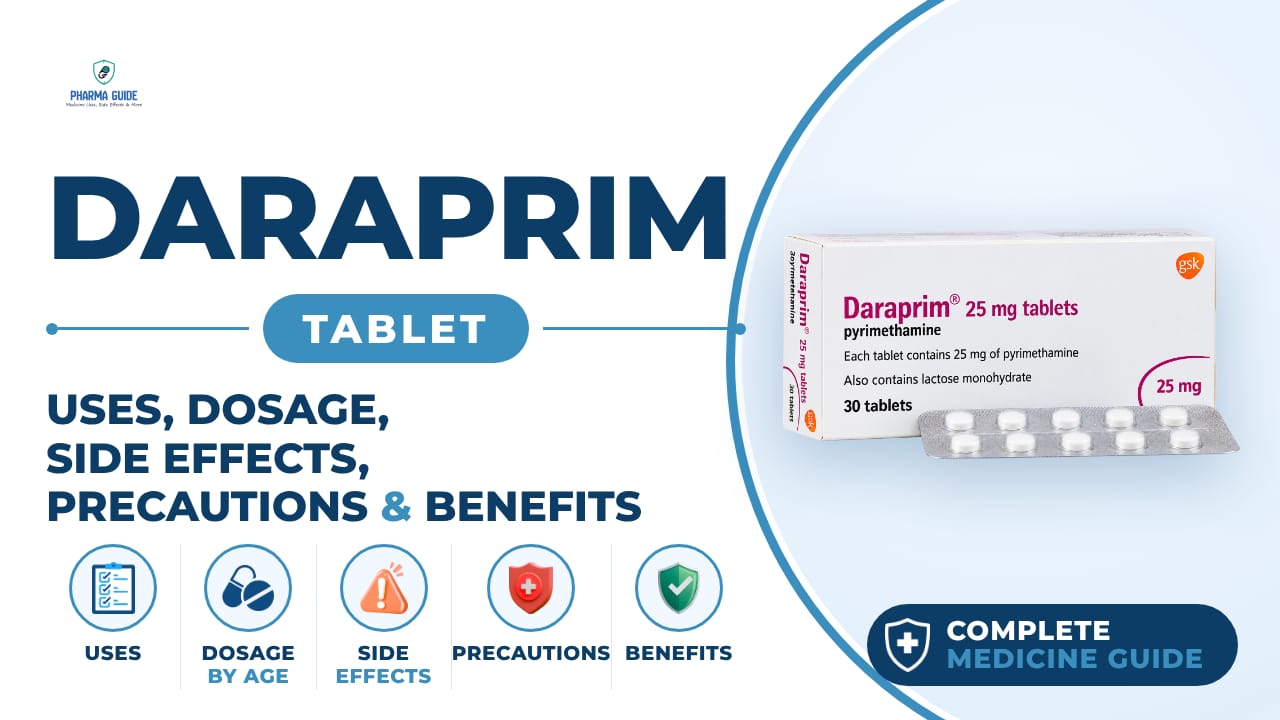
| Generic name | Pyrimethamine |
|---|---|
| Drug class | Antimalarial |
| Forms | Tablet |
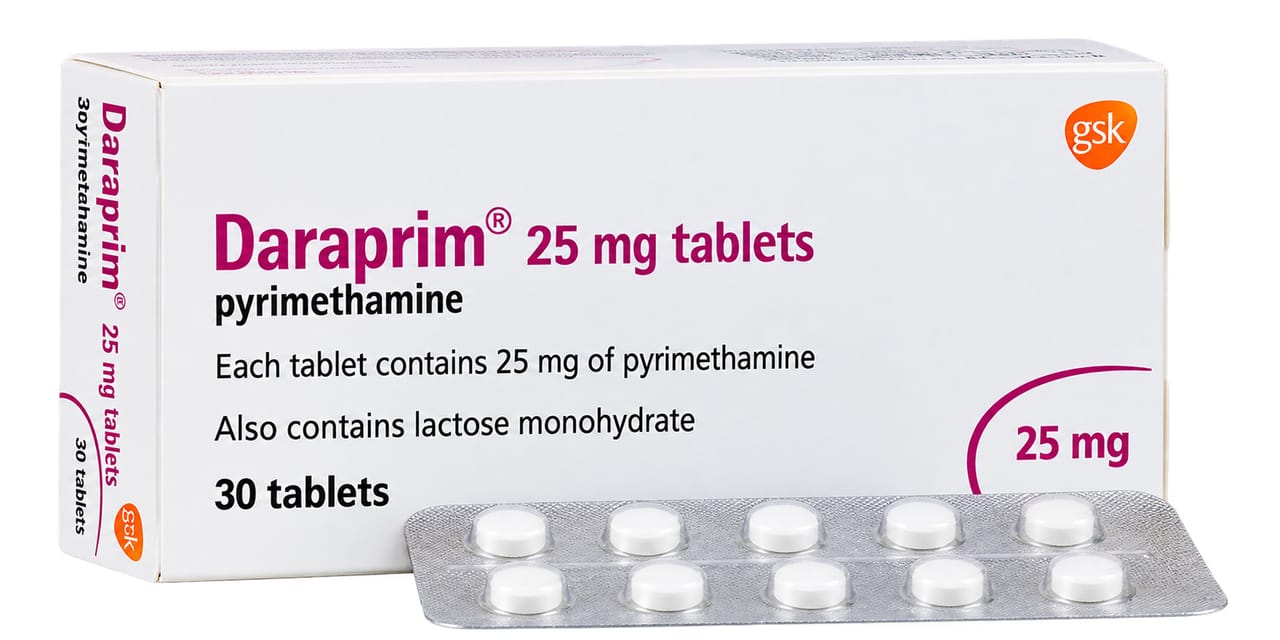
Quick overview
Daraprim Tablet (pyrimethamine) is an antiparasite medicine belonging to the antimalarial drug class. It helps prevent parasites from growing and reproducing in the body and is used to treat or prevent certain types of malaria and to treat toxoplasmosis, an infection caused by the Toxoplasma parasite. It is often used together with another medicine, such as a faster-acting antimalarial or a sulfonamide, and is available as an oral tablet.
What is Daraprim Tablet
Daraprim is an antiparasite medicine that helps prevent parasites from growing and reproducing in the body. It is used to treat or prevent certain types of malaria and to treat toxoplasmosis, an infection caused by the Toxoplasma parasite.
Daraprim Tablet uses
- Treatment and prevention of certain types of malaria, usually combined with a faster-acting antimalarial such as chloroquine or quinine
- Treatment of toxoplasmosis, used together with a sulfonamide medicine
- Treats toxoplasmosis
- Acts against Toxoplasma gondii
Benefits of Daraprim Tablet
- Helps control and clear malaria parasites when used with another fast-acting antimalarial
- Works together with a sulfonamide to treat toxoplasmosis infection
- Provides targeted antiparasitic activity
- Can treat serious toxoplasmosis when used in an appropriate combination regimen
- Available as an oral tablet
How Daraprim Tablet works
Daraprim blocks an enzyme that parasites need to grow, and it affects the parasite's enzyme much more than the human version, which is why it mainly harms the parasite.
Daraprim Tablet dosage
Follow all directions on your prescription label; your doctor may occasionally change your dose. Do not take this medicine in larger or smaller amounts or for longer than recommended. Your dose may need to be cut in half after you have been taking Daraprim for a few weeks (sooner in children). Take with food if Daraprim upsets your stomach or affects your appetite. Daraprim is often given together with other medications; use all medications exactly as your doctor directs. You may need frequent blood tests while using this medicine. If you miss a dose, take it as soon as you remember, but skip it if it is almost time for your next dose - do not double up.
| Age group | Dose |
|---|---|
| Infants and young children | 1 mg/kg/day, divided into 2 equal doses; after 2–4 days, the dose may be reduced by half |
| Children 4–17 years | For toxoplasmosis: 1 mg/kg/day divided into 2 doses initially; specialist-directed |
| 18–64 years | 50–75 mg once daily |
Available forms and strengths
- Tablet
Side effects of Daraprim Tablet
Common
- Vomiting
- Loss of appetite
- Nausea
- Colic
- Diarrhea
Serious
- Signs of an allergic reaction such as hives, difficulty breathing, or swelling of the face, lips, tongue, or throat
- Sore throat or swelling in the tongue
- Pale skin, easy bruising, or purple spots under the skin
- Any skin rash, no matter how mild
- Blood in the urine
- Fever, cold, or flu symptoms
- New or worsening cough, fever, or trouble breathing
- Irregular heartbeats
- Signs of folate deficiency such as unusual tiredness, mood changes, feeling sick, mouth sores, stomach discomfort, or loss of appetite
- Severe skin reaction with fever, sore throat, facial or tongue swelling, eye burning, skin pain, followed by a spreading red or purple rash with blistering and peeling
Warnings and precautions
- Keep this medicine out of the reach of children, since accidental swallowing by a child has caused death.
- Do not use this medicine if you have megaloblastic anemia caused by folate deficiency.
- Do not take more than the recommended dose.
- Taking folic or folinic acid supplements alongside this medicine is strongly recommended to lower the risk of bone marrow problems.
- An overdose of this medicine can be fatal, especially in children.
- Using this medicine during pregnancy could harm the unborn baby, so effective birth control is advised while taking it.
- In some cases it is still used in pregnancy to treat toxoplasmosis, but the decision should weigh the risks and benefits with a doctor, and folic acid is recommended alongside treatment.
- This medicine passes into breast milk and may cause side effects in a nursing baby, so tell your doctor if you are breastfeeding.
- This medicine should be used with caution in people with kidney disease.
- This medicine should be used with caution in people with liver disease.
- People with alcoholism may be more prone to folate deficiency, so tell your doctor if this applies to you before taking this medicine.
Storage
- Store at room temperature away from moisture, heat, and light.
- Store between 15 to 30 degrees C and keep dry.
When to see a doctor
- Get emergency help right away if you have signs of an allergic reaction like hives, trouble breathing, or swelling of your face, lips, tongue, or throat.
- Stop using the medicine and call your doctor right away if you notice a sore throat, tongue swelling, pale skin, easy bruising, purple skin spots, any skin rash, blood in urine, fever or flu symptoms, new or worsening cough, trouble breathing, irregular heartbeat, or signs of folate deficiency such as tiredness, mood changes, mouth sores, or loss of appetite.
- Get medical help immediately for a severe skin reaction with fever, sore throat, facial or tongue swelling, eye burning, skin pain, followed by a spreading rash with blistering and peeling.
- Seek emergency medical attention if an overdose is suspected, since it can be fatal, especially in a child.
- At the first appearance of a skin rash, stop taking this medicine and seek medical attention immediately.
Alternatives
- Sulfadiazine-based combination therapy
- Trimethoprim-sulfamethoxazole
- Atovaquone
Watch the video
FAQs
What is Daraprim Tablet used for?
Daraprim is used to treat or prevent certain types of malaria and to treat toxoplasmosis, an infection caused by the Toxoplasma parasite. It is often combined with another medicine, such as a faster-acting antimalarial or a sulfonamide.
How does Daraprim Tablet work?
Daraprim blocks an enzyme that parasites need to grow, affecting the parasite's enzyme much more than the human version, which is why it mainly harms the parasite.
What are the common side effects of Daraprim Tablet?
Common side effects include vomiting, loss of appetite, nausea, colic, and diarrhea.
Why is folic or folinic acid recommended with Daraprim Tablet?
Taking folic or folinic acid supplements alongside Daraprim is strongly recommended to lower the risk of bone marrow problems.
Is Daraprim Tablet safe during pregnancy?
Using Daraprim during pregnancy could harm the unborn baby, so effective birth control is advised. In some cases it is still used in pregnancy to treat toxoplasmosis, but the decision should weigh risks and benefits with a doctor, along with folic acid supplementation.
General information, not medical advice
Your prescriber and the leaflet in your pack know your situation. This page does not.
- Follow your prescriber and the leaflet
- Don't start, stop, or change a dose on your own
- Doses and warnings differ by country and product
Sources
Video
Related medicines
Primaquine Tablet: Uses, Dosage, Side Effects, Precautions and Alternates
Antimalarial
Primaquine Tablet treats P. vivax and P. ovale malaria and prevents relapse. Learn uses, dosage, side effects, and important safety warnings.
Artemether + Lumefantrine Tablet: Uses, Dosage, Side Effects, Precautions and Alternates
Antimalarial
Artemether + Lumefantrine tablets treat certain malaria infections by killing parasites at different life stages. Learn dosage, side effects, and precautions.