
Safety
General information, not medical advice
Your prescriber and the leaflet in your pack know your situation. This page does not.
- Follow your prescriber and the leaflet
- Don't start, stop, or change a dose on your own
- Doses and warnings differ by country and product
Dasatinib Tablet: Uses, Dosage, Side Effects, Precautions and Alternates
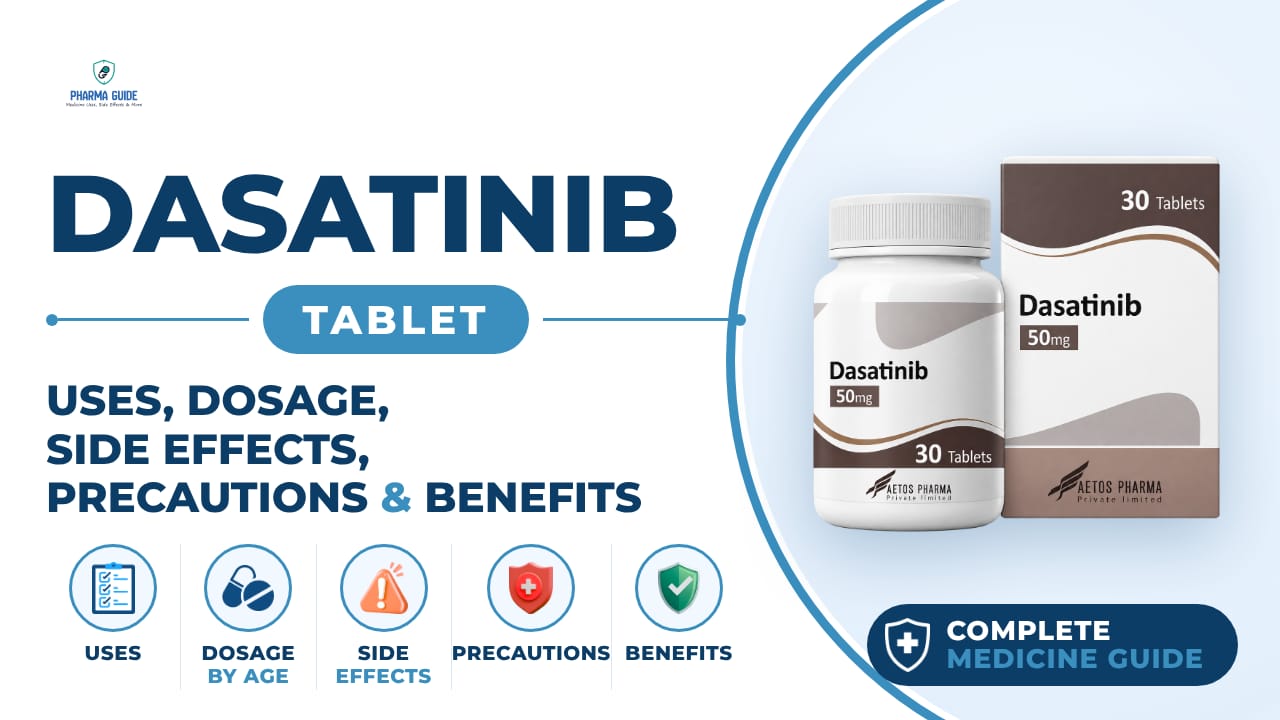
| Generic name | Dasatinib |
|---|---|
| Drug class | Kinase inhibitor |
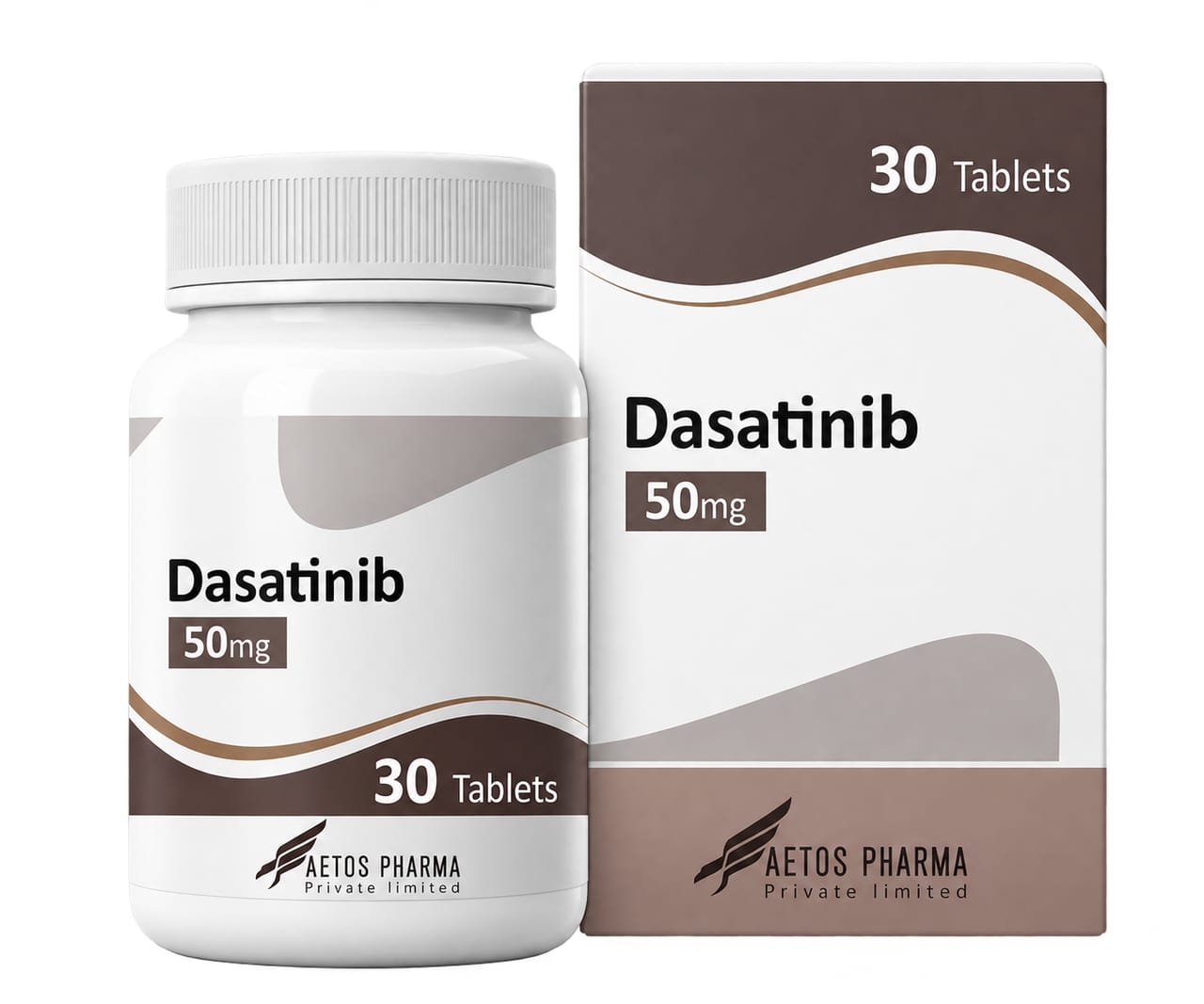
| Forms | Tablet (20 mg, 50 mg, 70 mg, 80 mg, 100 mg, 140 mg) |
Quick overview
Dasatinib Tablet, known generically as Dasatinib, is a prescription kinase inhibitor used to treat certain types of Philadelphia chromosome-positive leukemia in adults and children. It works by blocking proteins in leukemia cells that drive their uncontrolled growth, helping the body resume normal blood cell production. It can cause serious side effects, including drops in blood cell counts, bleeding, and heart or lung problems, and requires careful monitoring by a doctor.
What is Dasatinib Tablet
Dasatinib is a prescription cancer medicine that blocks certain proteins in leukemia cells so they stop growing and die, allowing normal blood cell production to recover.
Dasatinib Tablet uses
- Newly diagnosed Philadelphia chromosome-positive (Ph+) chronic myeloid leukemia (CML) in chronic phase, in adults and children
- Chronic, accelerated, or myeloid or lymphoid blast phase Ph+ CML with resistance or intolerance to prior therapy including imatinib
- Philadelphia chromosome-positive acute lymphoblastic leukemia (Ph+ ALL) with resistance or intolerance to prior therapy, in adults
Benefits of Dasatinib Tablet
- Can reduce or eliminate leukemia cells in the bone marrow
- Helps normal red blood cell, white blood cell, and platelet production resume
- Shown to increase rates of complete cytogenetic response and major molecular response compared with imatinib in newly diagnosed chronic phase CML
How Dasatinib Tablet works
Dasatinib blocks certain proteins inside leukemia cells that are responsible for their uncontrolled growth. By blocking these proteins, it kills the leukemia cells in the bone marrow, which allows the body to resume normal production of red blood cells, white blood cells, and platelets.
Dasatinib Tablet dosage
Take your dose at the same time every day, consistently either in the morning or in the evening. It can be taken with or without a meal, as instructed by your doctor. Swallow tablets whole with a glass of water; do not break, cut, chew, or crush them. If a child cannot swallow tablets whole, talk with your healthcare provider.
Do not take with grapefruit or grapefruit juice. Do not stop taking or lower the dose without first checking with your doctor. If you miss a dose, take your next scheduled dose at its regular time; do not double up on doses. If using antacids, take them at least 2 hours before or 2 hours after your dose.
| Age group | Dose |
|---|---|
| 1–17 years, 10 to <20 kg | 40 mg once daily |
| 1–17 years, 20 to <30 kg | 60 mg once daily |
| 18–64 years | 100 mg once daily |
Available forms and strengths
- Tablet: 20 mg, 50 mg, 70 mg, 80 mg, 100 mg, 140 mg
Side effects of Dasatinib Tablet
Common
- Headache
- Dizziness
- Numbness or tingling in arms, legs, fingers or toes
- Altered taste
- Diarrhea, nausea, vomiting
- Shortness of breath, cough, fluid around the lungs, pneumonia, chest pain
- Infection, fever
- Abdominal pain, bloating, flatulence, constipation, indigestion
- High blood pressure
- Mouth ulcers
- Skin rash, dermatitis, dry skin, itching or peeling skin, flushing
- Hair loss
- Blurry or diminished vision, dry eye
- Fatigue
- Swelling of the liver, abdomen, hands, lower legs, feet or face
- Back pain, bone pain, joint pain, muscle aches or spasm, muscle weakness
- Weight decrease, appetite changes
- Gout
- Conjunctivitis
- Tinnitus (ringing in the ears)
Serious
- Changes in heart beat, such as beating faster
- Bleeding from the gastrointestinal tract, eye, nose, or gums; serious bruising or heavy menstrual bleeding
- Infections such as urinary tract or eye infection
- Difficulty breathing or coughing
- Fever
- Painful rash with blisters
- Swelling, weight gain, shortness of breath, or chest pain
- Swelling around the eyes
- Skin infections such as folliculitis or herpes
- Shortness of breath and fatigue together
- Dark colored urine or yellowing of the skin and eyes
- Reduced red blood cells, white blood cells, or platelets
Warnings and precautions
- This medicine can cause severe drops in red blood cells, white blood cells, and platelets, which may lead to serious bleeding or infection.
- Serious and sometimes fatal bleeding can occur, especially in the brain or digestive tract.
- Fluid can build up around the lungs, heart, or in the body, which may be severe.
- This medicine can cause heart problems; patients should be monitored for heart-related signs and symptoms.
- There is a risk of high blood pressure in the lung's blood vessels (pulmonary arterial hypertension), which can occur even after more than a year of treatment and may or may not reverse after stopping the medicine.
- This medicine may affect the heart's electrical rhythm (QT prolongation), which can be dangerous, especially with certain other conditions or medicines.
- Severe skin reactions, including Stevens-Johnson syndrome, have occurred and the medicine should be permanently stopped if this happens.
- Rapid breakdown of cancer cells (tumor lysis syndrome) can occur and cause serious kidney and heart problems.
- This medicine can harm an unborn baby.
- In children, this medicine may affect bone growth and development.
- This medicine can cause liver damage, so liver function should be checked before and during treatment.
- Do not take this medicine if you are pregnant or planning to become pregnant, since it can harm an unborn baby. Effective contraception should be used during treatment and for 30 days after the last dose.
- Women taking this medicine should not breastfeed during treatment or for 2 weeks after the last dose.
- Significant kidney disease should be reviewed by the treating oncology team.
- Tell your doctor if you have liver problems, as this medicine can cause liver toxicity, and your liver function will need to be monitored.
- Be careful driving or using machinery until you know how this medicine affects you, since it can cause dizziness or light-headedness.
Storage
- Keep tablets in their container until it is time to take them
- Keep in a cool, dry place where the temperature stays below 30°C
- Keep where young children cannot reach it
- A locked cupboard at least one-and-a-half metres above the ground is a good place to store medicines
- Do not store in the bathroom or near a sink
- Do not leave it in the car or on window sills, as heat and dampness can destroy some medicines
- If your doctor tells you to stop taking it, or it has expired, ask your pharmacist what to do with leftover tablets
- Wear latex or nitrile gloves when handling tablets that have accidentally been crushed or broken
- Women who are pregnant should not handle crushed or broken tablets
When to see a doctor
- Get medical help right away if you notice changes in your heartbeat, such as it beating faster.
- Seek urgent care for any signs of bleeding, such as from the gut, eyes, nose, or gums, serious bruising, or heavy menstrual bleeding.
- Get medical help right away for signs of infection such as urinary tract infection, eye infection, difficulty breathing, coughing, or fever.
- Seek medical help right away for a painful rash with blisters.
- Tell your doctor immediately if you or your child experience bleeding or easy bruising, no matter how mild.
- Notify your doctor immediately if you or your child develop a fever during treatment.
- Tell your doctor immediately if you experience shortness of breath and fatigue together.
- Call your healthcare provider right away if you have swelling all over your body, weight gain, shortness of breath (especially with low activity or at rest), dry cough, or chest pain when breathing deeply.
- Get medical help right away if you have chest pain, shortness of breath, a feeling that your heart is beating too fast or abnormally, short-term vision changes, or slurred speech.
- Call your healthcare provider or get emergency help right away for nausea, shortness of breath, vomiting, muscle cramps, weakness, seizures, or swelling, which could be signs of tumor lysis syndrome.
- Get medical help right away if your child develops bone pain, which may signal a growth or development problem.
- Seek immediate medical attention if you notice signs of liver problems, such as stomach pain, yellowing of skin or eyes, bruising, bleeding, loss of appetite, or dark urine.
- If you think you have taken too much of this medicine, you may need urgent medical attention; contact your doctor or go to the nearest hospital emergency department right away.
Alternatives
- Imatinib
- Nilotinib
- Bosutinib
Watch the video
FAQs
What is Dasatinib Tablet used for?
It is used to treat newly diagnosed Philadelphia chromosome-positive chronic myeloid leukemia in chronic phase, Ph+ CML resistant or intolerant to prior therapy including imatinib, and Ph+ acute lymphoblastic leukemia resistant or intolerant to prior therapy in adults.
How does Dasatinib Tablet work?
It blocks certain proteins inside leukemia cells that drive their uncontrolled growth, killing the leukemia cells in the bone marrow and allowing the body to resume normal production of red blood cells, white blood cells, and platelets.
How should I take Dasatinib Tablet?
Take your dose at the same time every day, with or without a meal, swallowing tablets whole with water without breaking, cutting, chewing, or crushing them. Avoid grapefruit or grapefruit juice, and if you miss a dose, take the next scheduled dose without doubling up.
What are the serious side effects of Dasatinib Tablet?
Serious side effects include severe drops in blood cell counts, serious bleeding, fluid buildup around the lungs or heart, heart rhythm changes, pulmonary arterial hypertension, severe skin reactions, tumor lysis syndrome, and liver damage.
Can Dasatinib Tablet be used during pregnancy?
No, it should not be taken during pregnancy as it can harm an unborn baby. Effective contraception should be used during treatment and for 30 days after the last dose, and breastfeeding should be avoided during treatment and for 2 weeks after the last dose.
General information, not medical advice
Your prescriber and the leaflet in your pack know your situation. This page does not.
- Follow your prescriber and the leaflet
- Don't start, stop, or change a dose on your own
- Doses and warnings differ by country and product
Sources
Video
Related medicines
Imbruvica Capsule: Uses, Dosage, Side Effects, Precautions and Alternates
kinase inhibitor
Imbruvica Capsule (ibrutinib) treats certain blood cancers and chronic GVHD by blocking BTK. Learn about uses, dosage, side effects, and precautions.
Xalkori Capsule: Uses, Dosage, Side Effects, Precautions and Alternates
kinase inhibitor
Xalkori Capsule (crizotinib) treats ALK/ROS1-positive lung cancer, ALCL, and IMT. Learn about dosage, side effects, warnings, and precautions before use.