
Safety
General information, not medical advice
Your prescriber and the leaflet in your pack know your situation. This page does not.
- Follow your prescriber and the leaflet
- Don't start, stop, or change a dose on your own
- Doses and warnings differ by country and product
Imbruvica Capsule: Uses, Dosage, Side Effects, Precautions and Alternates
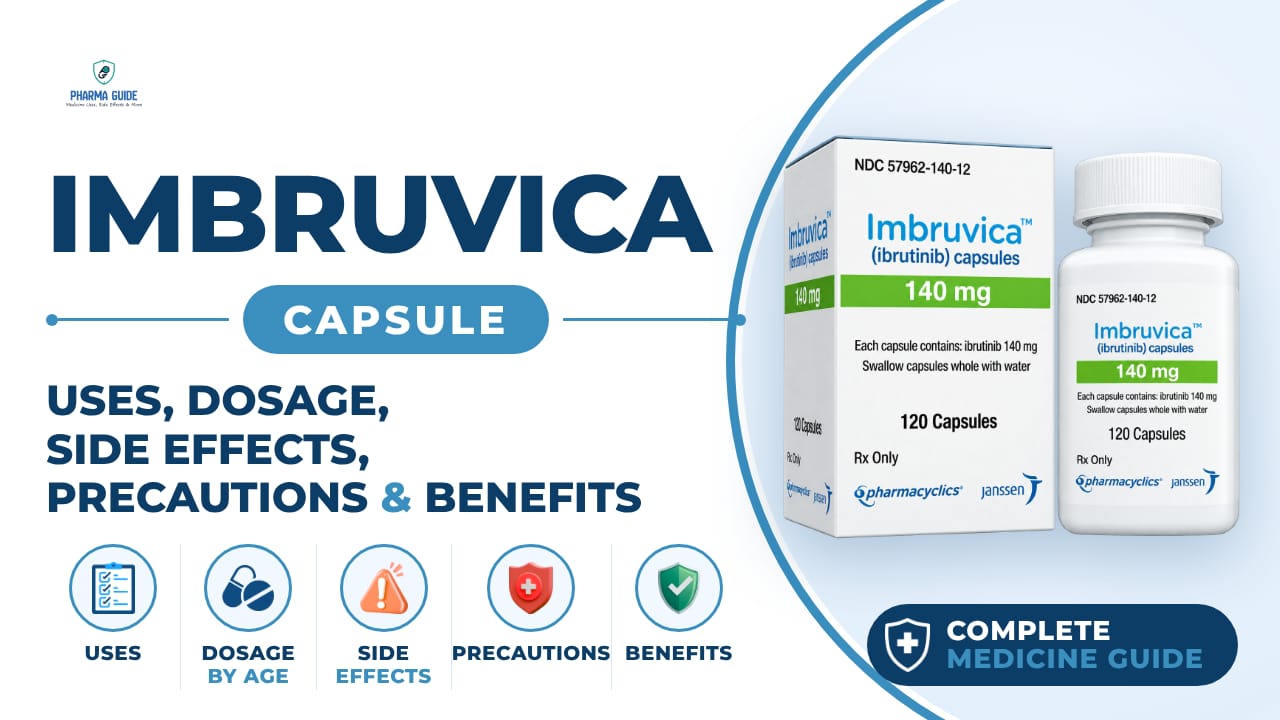
| Generic name | ibrutinib |
|---|---|
| Drug class | kinase inhibitor |
| Forms | capsule, tablet, oral liquid suspension |
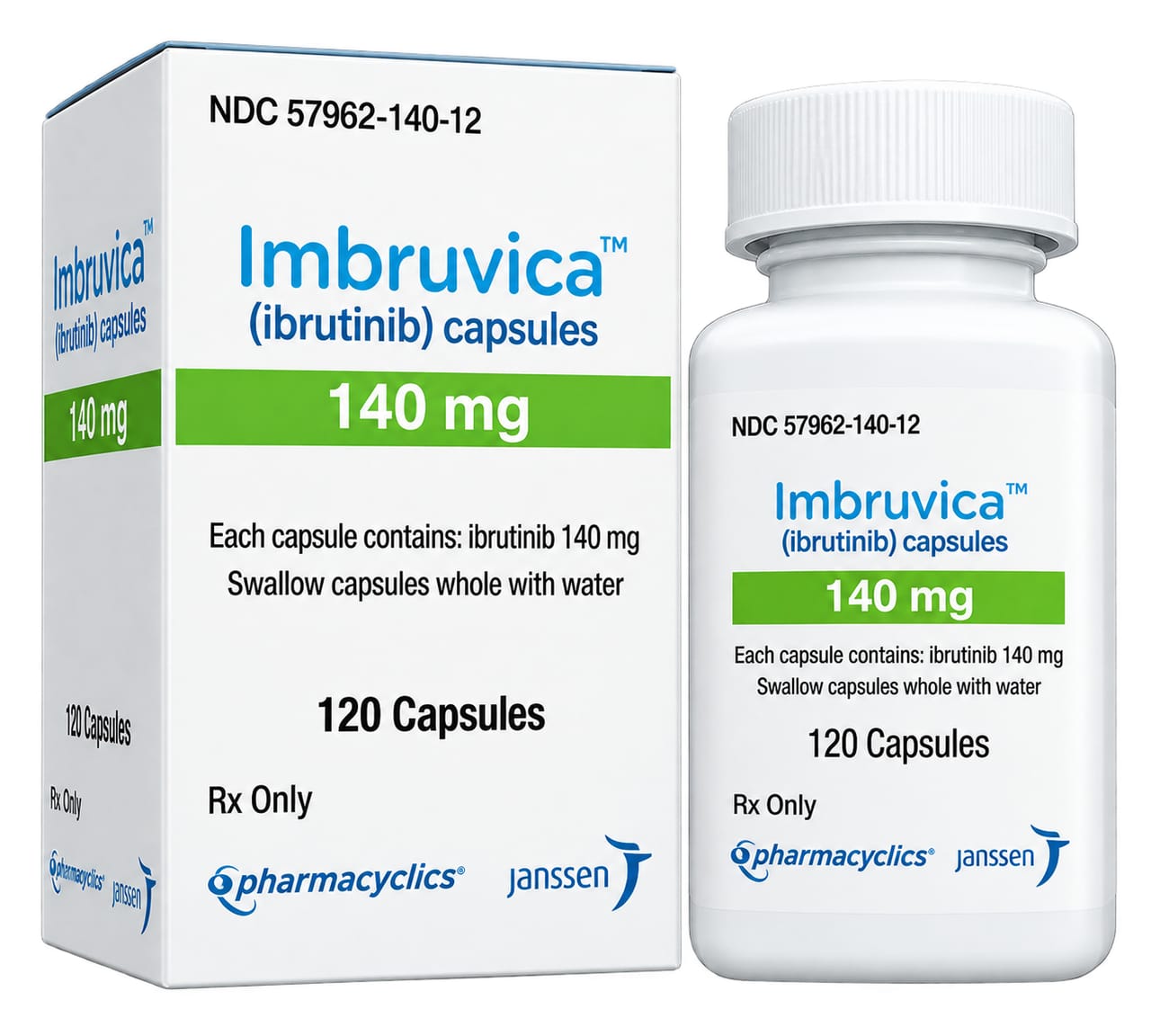
Quick overview
Imbruvica Capsule contains the active ingredient ibrutinib, a kinase inhibitor used to treat certain blood cancers and chronic graft-versus-host disease. It works by blocking Bruton's tyrosine kinase (BTK) to help stop cancer cells from growing and spreading, and to control overactive immune cells. It is taken once daily by mouth, exactly as prescribed, and requires certain precautions such as avoiding grapefruit and monitoring for bleeding or heart-related effects.
What is Imbruvica Capsule
Imbruvica is a prescription cancer medicine that contains the active ingredient ibrutinib. It works by blocking a protein called Bruton's tyrosine kinase to help stop cancer cells from growing and spreading.
Imbruvica Capsule uses
- Mantle Cell Lymphoma (MCL) in adults
- Chronic Lymphocytic Leukaemia (CLL), including Small Lymphocytic Lymphoma (SLL), in adults
- Waldenström's macroglobulinemia (WM) in adults
- Chronic graft-versus-host disease (cGVHD) in adults and children ages 1 year and older who have already tried at least one other treatment that did not work
Benefits of Imbruvica Capsule
- Cancer Treatment: Helps treat certain blood cancers.
- CLL/SLL Support: Used for eligible patients with chronic lymphocytic leukemia/small lymphocytic lymphoma.
- BTK Inhibition: Blocks BTK signaling needed for the growth and survival of certain B cells.
- Immune-Cell Control: Reduces abnormal B-cell signaling and proliferation.
How Imbruvica Capsule works
Imbruvica blocks a protein called Bruton's tyrosine kinase (BTK). This protein normally helps cells, including cancer cells, grow and multiply. By blocking BTK, the medicine helps stop cancer cells from growing, and in graft-versus-host disease it also stops overactive immune cells from multiplying.
Imbruvica Capsule dosage
Swallow capsules or tablets whole with a glass of water; do not open, break, or chew them. It can be taken with or without food, but always with a full glass of water. Try to take it at the same time every day.
Do not take it with grapefruit, Seville oranges, or their juices, or supplements containing them, as these can raise the amount of medicine in your blood. Keep taking it until your doctor tells you to stop; do not change your dose or stop without medical advice.
If you miss a dose and it is more than a set number of hours until your next one, take the missed dose as soon as you remember, then continue your normal schedule; if it is almost time for the next dose, skip the missed one and do not double up.
If you have trouble swallowing pills, ask your doctor about the liquid suspension form instead.
| Age group | Dose |
|---|---|
| 12–17 Years | Dose is individualized according to indication and body weight |
| Adults (18–64 Years) | 420 mg or 560 mg once daily, depending on the cancer being treated |
| Older Adults (65+ Years) | Adult regimen; individualized according to health condition and treatment response |
Available forms and strengths
- Capsule
- Tablet
- Oral liquid suspension
Side effects of Imbruvica Capsule
Common
- Diarrhoea
- Feeling very tired
- Nausea
- Headache
- Swollen hands, ankles or feet
- Being short of breath
- Dizziness
- Fainting
- Constipation
- Infected nose, sinuses or throat (cold)
- Fever
- Vomiting
- Decreased appetite
- Bleeding
- Bruises
- Skin rash
- Muscle and joint pain
- Muscle spasms
- Indigestion (dyspepsia)
- Mouth sores
- Urinary tract infections
Serious
- Serious bleeding, such as in the stomach, intestine, brain, or eye
- Interstitial lung disease (lung inflammation)
- Haemophagocytic lymphohistiocytosis (excessive activation of white blood cells)
- Stroke or mini-stroke
- Irregular heartbeat, high blood pressure, or heart failure
- Rupture of the spleen
- Low red blood cells (anaemia), low neutrophils (neutropenia), or low platelets (thrombocytopenia)
- Liver problems, including jaundice
- New cancers, including skin cancer
- Acute kidney injury
- Severe allergic reaction
- Tumor lysis syndrome
Warnings and precautions
- Do not use Imbruvica if you are allergic to ibrutinib or any of its ingredients.
- Do not use products containing St John's Wort while taking Imbruvica, as it can make the medicine not work properly.
- Tell your doctor if you have had unusual bruising or bleeding, or take medicines or supplements that raise your bleeding risk.
- Tell your doctor if you have a history of high blood pressure, irregular heartbeat, or severe heart failure, or if you feel lightheaded, dizzy, short of breath, have chest discomfort, swollen legs, or faint.
- Tell your doctor if you have or have had Hepatitis B infection.
- Tell your doctor if you have recently had surgery or are planning surgery, as your doctor may ask you to pause treatment for a short time.
- Do not take Imbruvica with grapefruit or Seville oranges, including the juice or supplements containing them, as this can raise the amount of medicine in your blood.
- Treatment may affect the heart, especially if you already have heart disease, high blood pressure, or diabetes; effects may be severe and could cause death, including sudden death.
- Do not father a child while taking Imbruvica and for 3 months after stopping treatment.
- Do not change your dose or stop taking Imbruvica unless your doctor tells you to.
- Do not use Imbruvica if you are pregnant, think you may be pregnant, or are planning a pregnancy. Check with your doctor if you are pregnant or intend to become pregnant.
- Do not breastfeed while taking Imbruvica. Talk to your doctor if you are breastfeeding or intend to breastfeed.
- Tell your doctor if you have kidney problems before using this medicine.
- Tell your doctor if you have liver problems before using this medicine. Your doctor will monitor your liver function with blood tests.
- There is no information on how alcohol affects Imbruvica. Tell your doctor if you drink alcohol.
- Imbruvica may cause tiredness or dizziness, which could affect your ability to drive or use tools or machinery. Be careful until you know how it affects you.
Storage
- Store below 30°C. Keep capsules or tablets in the original container.
- Do not store it or any medicines in the bathroom or near a sink.
- Store it in a cool dry place away from moisture, heat or sunlight; for example, do not store it in the car or on window sills.
- Keep it where young children cannot reach it.
- If you no longer need to use this medicine or it is out of date, take it to any pharmacy for safe disposal.
- Do not use this medicine after the expiry date.
When to see a doctor
- Call your doctor straight away or go to the Emergency Department if you have signs of serious bleeding, such as blood in your stools or urine, or bleeding that won't stop.
- Contact your doctor if you have difficulty breathing or a persistent cough, which could be signs of lung inflammation.
- Contact your doctor immediately if you have fever, swollen glands, bruising, or skin rash together, as these could be signs of a rare but serious blood condition.
- Tell your doctor right away if you notice breathlessness, difficulty breathing when lying down, swelling of the feet, ankles, or legs, or unusual weakness or tiredness, as these may be signs of heart failure.
- Tell your doctor or healthcare professional right away if you have heart problems such as chest discomfort, shortness of breath, or palpitations.
- Tell your doctor immediately if you develop left upper belly pain, pain below the rib cage, or pain at the tip of your left shoulder, as these could be signs of a ruptured spleen.
- Call your doctor immediately if you notice yellowing of the skin or eyes (jaundice), which could be a sign of liver problems.
- Call your doctor straight away if you have diarrhoea that lasts more than a week.
- If you think you have taken too much Imbruvica, get urgent medical attention right away, even if you feel fine, by contacting your doctor or going to the nearest hospital emergency department.
Alternatives
- Aflibercept
- Ramucirumab
- Ziv-aflibercept
Watch the video
FAQs
What is Imbruvica Capsule used for?
Imbruvica is used to treat Mantle Cell Lymphoma, Chronic Lymphocytic Leukaemia/Small Lymphocytic Lymphoma, Waldenström's macroglobulinemia in adults, and chronic graft-versus-host disease in adults and children aged 1 year and older who have already tried at least one other treatment that did not work.
How does Imbruvica Capsule work?
Imbruvica contains ibrutinib, which blocks a protein called Bruton's tyrosine kinase (BTK). This protein normally helps cells, including cancer cells, grow and multiply. By blocking BTK, the medicine helps stop cancer cells from growing, and in graft-versus-host disease it also stops overactive immune cells from multiplying.
How should I take Imbruvica Capsule?
Swallow the capsules or tablets whole with a full glass of water; do not open, break, or chew them. It can be taken with or without food, and should be taken at the same time every day. Do not take it with grapefruit, Seville oranges, or their juices or supplements.
What are the common side effects of Imbruvica Capsule?
Common side effects include diarrhoea, tiredness, nausea, headache, swelling of the hands, ankles or feet, shortness of breath, dizziness, fainting, constipation, fever, vomiting, decreased appetite, bleeding, bruises, skin rash, and muscle and joint pain.
What should I avoid while taking Imbruvica Capsule?
Avoid grapefruit, Seville oranges, and their juices or supplements, as these can raise the amount of medicine in your blood. Also avoid products containing St John's Wort, as it can make the medicine not work properly.
General information, not medical advice
Your prescriber and the leaflet in your pack know your situation. This page does not.
- Follow your prescriber and the leaflet
- Don't start, stop, or change a dose on your own
- Doses and warnings differ by country and product
Sources
Video
Related medicines

Xalkori Capsule: Uses, Dosage, Side Effects, Precautions and Alternates
kinase inhibitor
Xalkori Capsule (crizotinib) treats ALK/ROS1-positive lung cancer, ALCL, and IMT. Learn about dosage, side effects, warnings, and precautions before use.

Dasatinib Tablet: Uses, Dosage, Side Effects, Precautions and Alternates
Kinase inhibitor
Dasatinib Tablet treats Ph+ leukemia by blocking cancer cell growth. Learn about dosage, uses, side effects, warnings, and when to see a doctor.