
Safety
General information, not medical advice
Your prescriber and the leaflet in your pack know your situation. This page does not.
- Follow your prescriber and the leaflet
- Don't start, stop, or change a dose on your own
- Doses and warnings differ by country and product
Degarelix Injection: Uses, Dosage, Side Effects, Precautions and Alternates
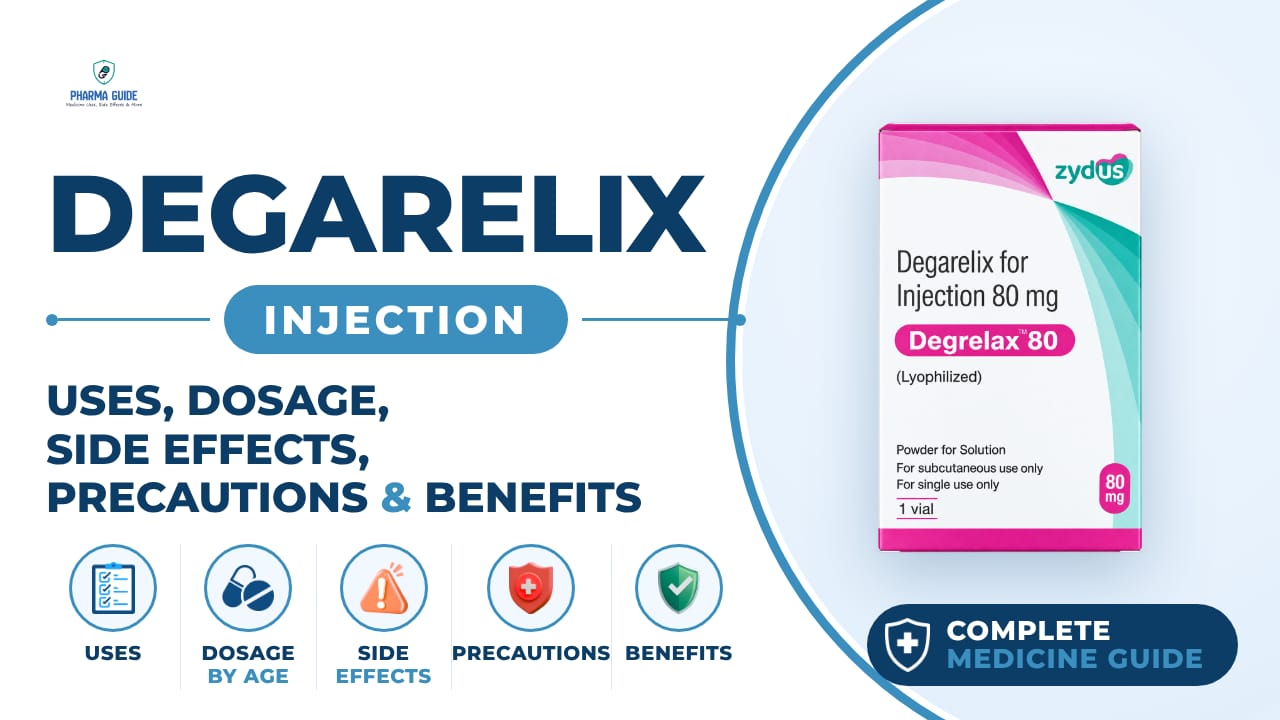
| Generic name | Degarelix |
|---|---|
| Drug class | Gonadotropin-releasing hormone (GnRH) receptor antagonist |
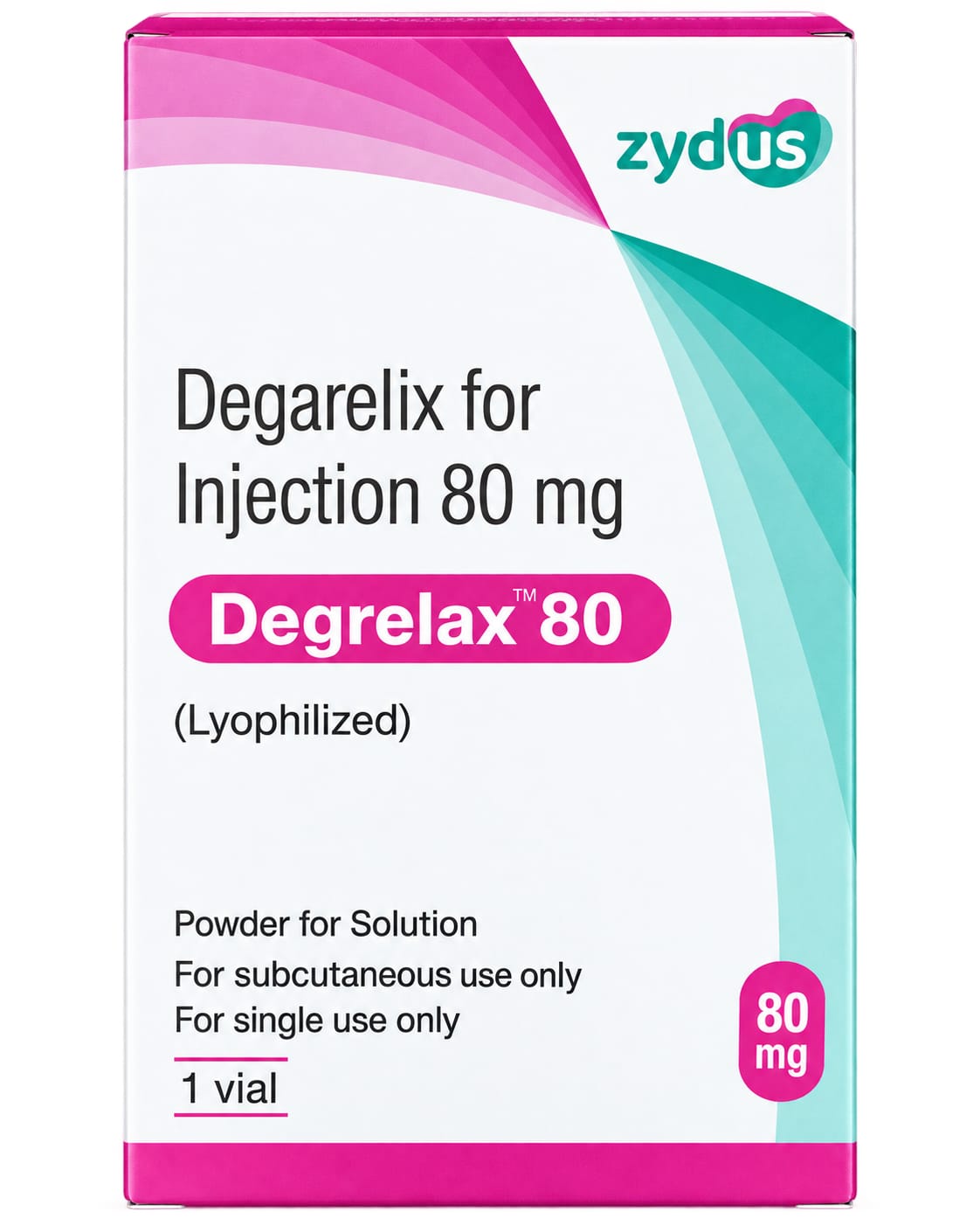
| Forms | Powder for injection, 120 mg per vial, Powder for injection, 80 mg per vial |
Quick overview
Degarelix Injection is a man-made protein that lowers testosterone and other hormone levels in the body. It belongs to the GnRH receptor antagonist drug class and is given as an injection under the skin to treat advanced prostate cancer. By reducing testosterone, it helps slow the growth of hormone-sensitive prostate cancer cells.
What is Degarelix Injection
Degarelix is a man-made protein that lowers certain hormone levels in the body, including testosterone. It is given as an injection under the skin to treat advanced prostate cancer.
Degarelix Injection uses
- Treatment of advanced prostate cancer
Benefits of Degarelix Injection
- Lowers testosterone levels
- Treats advanced prostate cancer
- Produces rapid testosterone suppression
- Avoids the initial testosterone surge associated with some GnRH agonists
- Helps control hormone-sensitive prostate cancer
How Degarelix Injection works
Degarelix blocks GnRH receptors in the pituitary gland, which reduces the release of hormones that signal the body to make testosterone. Since prostate cancer cells often need testosterone to grow, lowering testosterone can slow or stop the cancer's growth.
Degarelix Injection dosage
This medicine is given by a doctor or nurse as an injection under the skin of the stomach area, not into a vein. The injection site is always in the abdominal area but changes location with each new dose. The first treatment is given as two separate injections on the same visit; later doses are given as a single injection. Injections are usually given once every 28 days.
Make sure the injection site is not under pressure from a belt, waistband, or tight clothing. Keep all scheduled appointments for your injections. If you miss or think you missed a monthly injection appointment, call your doctor right away for instructions. This medicine is intended only for use in adult men and is not meant for use in children or women. You will need regular blood tests to check how your body is responding to treatment.
| Age group | Dose |
|---|---|
| Under 18 years | Safety and effectiveness have not been established |
| 18–64 years | 240 mg subcutaneously as the initial dose, given as two 120 mg injections; then 80 mg subcutaneously every 28 days |
Available forms and strengths
- Powder for injection, 120 mg per vial
- Powder for injection, 80 mg per vial
Side effects of Degarelix Injection
Common
- Hot flashes
- Injection site pain, redness, swelling, hardness, or itching
- Weight gain
- Increases in liver enzyme levels (transaminases and GGT)
- Tiredness/fatigue
- High blood pressure
- Back and joint pain
- Chills
- Urinary tract infection
- Decreased sex drive and trouble with erectile function
- Excessive sweating or night sweats
- Nausea
- Constipation
- Diarrhea
- Weakness
- Dizziness
- Headache
- Difficulty falling or staying asleep
- Enlargement of the breasts
Serious
- Signs of allergic reaction: hives, rash, difficulty breathing or swallowing, swelling of the face, throat, tongue, lips, eyes, hands, feet, ankles, or lower legs, hoarseness
- Fast, irregular, or pounding heartbeat or fluttering feeling in the chest
- Shortness of breath
- Sudden dizziness like you might pass out, or fainting
- Severe headache, blurred vision, pounding in the neck or ears
- Painful, frequent, or difficult urination; fever; or chills
- Decreased bone density, which can make bones weaker and more likely to break
Warnings and precautions
- Long-term hormone therapy like this medicine can affect the heart's electrical rhythm (prolong the QT interval). Your doctor should weigh the risks and benefits, especially if you have heart rhythm problems, electrolyte imbalances, or heart failure, or take certain heart rhythm medicines.
- This medicine can lower bone density over time, which may make bones weaker and more likely to break.
- This medicine is not for use in women, especially those who are or may become pregnant.
- This medicine may reduce fertility in both men and women.
- This medicine should not be given to women who are or may become pregnant, as it can harm an unborn baby.
- It is not known if this medicine passes into breast milk. You and your healthcare provider should decide whether you will take this medicine or breastfeed, not both, without discussing it with your provider.
- This medicine should be used with caution in people with reduced kidney function, since data in patients with moderate or severe kidney impairment is limited.
- No dose change is needed for mild or moderate liver impairment, but caution is needed in people with severe liver problems, since they have not been studied.
- No major direct interaction is established, but excessive alcohol may worsen fatigue and bone-loss risk.
- Fatigue or dizziness may affect driving.
Storage
- Store at 25°C (77°F); excursions permitted to 15-30°C (59-86°F).
- As with all prescription drugs, this medicine should be kept out of the reach of children.
- Caution should be exercised in handling and preparing the solution; always wear impervious gloves when handling this medicine.
- If the solution contacts the skin, immediately wash the skin thoroughly with soap and water. If it contacts mucous membranes, flush immediately and thoroughly with water.
When to see a doctor
- Get emergency help right away if you notice signs of a serious allergic reaction, such as hives, difficulty breathing, or swelling of the face, lips, tongue, or throat.
- Call your doctor right away if you have a fast or pounding heartbeat, fluttering in your chest, shortness of breath, sudden dizziness like you might pass out, or a severe headache with blurred vision or pounding in the neck or ears.
- Seek emergency medical help if an overdose is suspected, including calling your local poison control center for guidance.
- If the person has collapsed, had a seizure, has trouble breathing, or cannot be woken up, call emergency services right away.
Alternatives
- Leuprolide
- Goserelin
- Triptorelin
Watch the video
FAQs
What is Degarelix Injection used for?
Degarelix Injection is used to treat advanced prostate cancer by lowering testosterone and other hormone levels in the body.
How is Degarelix Injection given?
It is given by a doctor or nurse as an injection under the skin of the abdominal area, with the injection site changing location each dose. The first treatment involves two separate injections, followed by a single injection every 28 days.
How does Degarelix Injection work?
Degarelix blocks GnRH receptors in the pituitary gland, reducing the release of hormones that signal the body to make testosterone, which can slow or stop the growth of hormone-sensitive prostate cancer cells.
What are the common side effects of Degarelix Injection?
Common side effects include hot flashes, injection site reactions, weight gain, fatigue, high blood pressure, back and joint pain, decreased sex drive, nausea, and enlargement of the breasts, among others.
Can women use Degarelix Injection?
No, this medicine is not for use in women, especially those who are or may become pregnant, as it can harm an unborn baby.
General information, not medical advice
Your prescriber and the leaflet in your pack know your situation. This page does not.
- Follow your prescriber and the leaflet
- Don't start, stop, or change a dose on your own
- Doses and warnings differ by country and product
Sources
Video
Related medicines
Elagolix Tablet: Uses, Dosage, Side Effects, Precautions and Alternates
Gonadotropin-releasing hormone (GnRH) receptor antagonist
Elagolix Tablet treats moderate to severe endometriosis pain by lowering estrogen. Learn about dosage, side effects, warnings, and alternatives here.

Injectafer Injection: Uses, Dosage, Side Effects, Precautions and Alternates
Iron products
Injectafer (ferric carboxymaltose) treats iron deficiency anemia and heart failure-related iron deficiency via IV. Learn uses, dosage, side effects, and