
Safety
General information, not medical advice
Your prescriber and the leaflet in your pack know your situation. This page does not.
- Follow your prescriber and the leaflet
- Don't start, stop, or change a dose on your own
- Doses and warnings differ by country and product
Dexmethylphenidate Tablet: Uses, Dosage, Side Effects, Precautions and Alternates
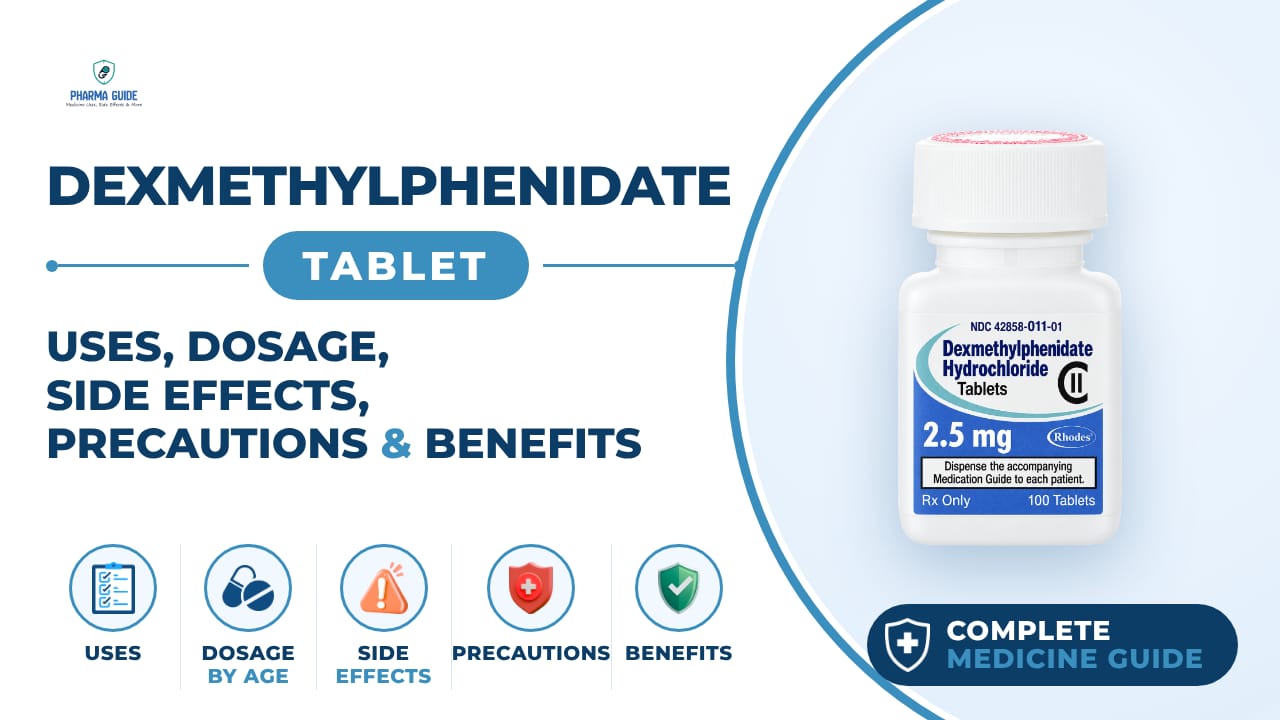
| Generic name | dexmethylphenidate hydrochloride |
|---|---|
| Drug class | CNS stimulants |
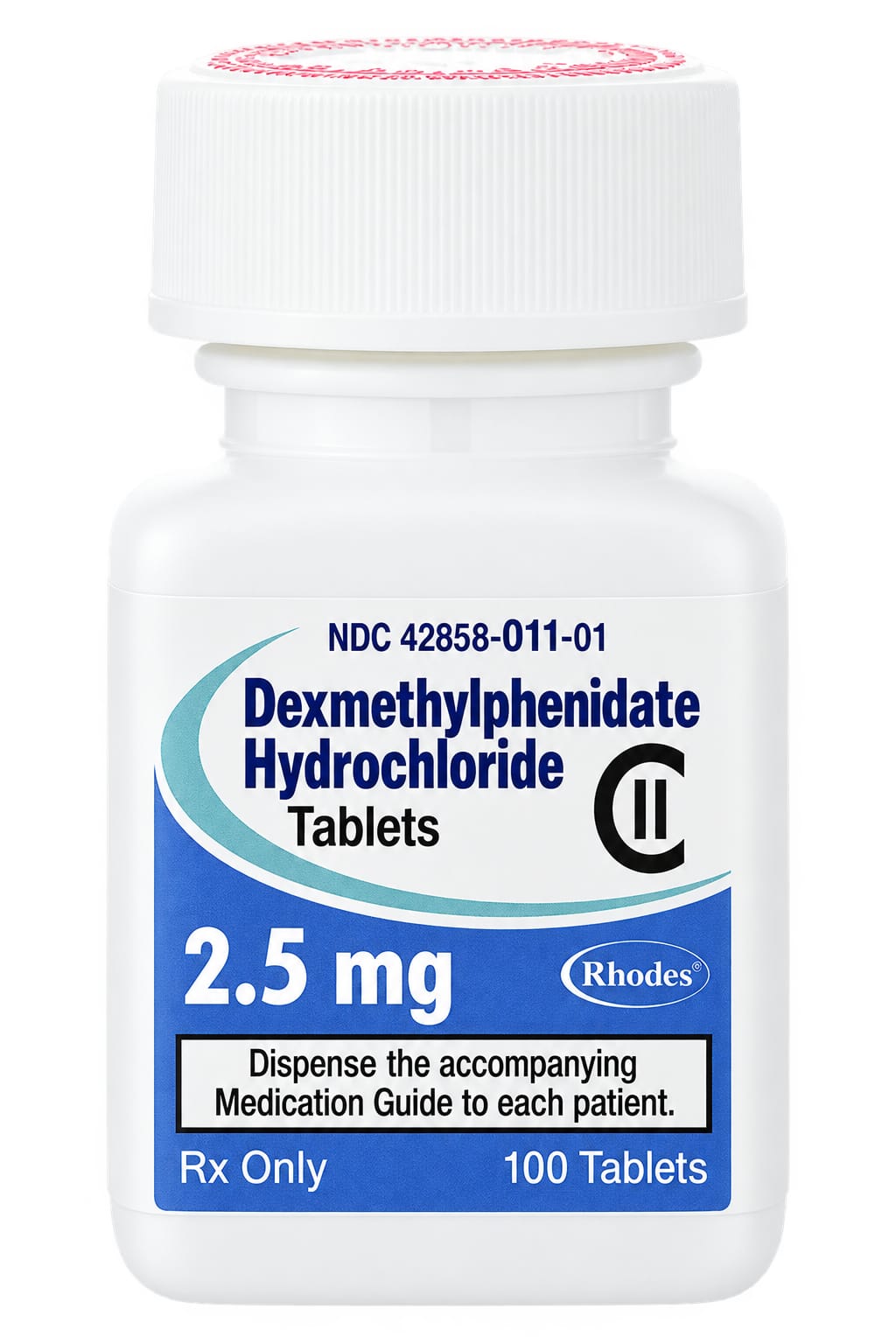
| Forms | Extended-release capsules (5 mg, 10 mg, 15 mg, 20 mg, 25 mg, 30 mg, 35 mg, 40 mg), Oral tablets (2.5 mg, 5 mg, 10 mg) |
Quick overview
Dexmethylphenidate Tablet (dexmethylphenidate hydrochloride) is a central nervous system (CNS) stimulant medicine used to treat Attention Deficit Hyperactivity Disorder (ADHD). It is a controlled substance because it can be misused or lead to dependence. It is available as extended-release capsules and regular oral tablets in various strengths, and dosing is individualized based on age and prior treatment.
What is Dexmethylphenidate Tablet
Dexmethylphenidate is a central nervous system (CNS) stimulant medicine used to treat Attention Deficit Hyperactivity Disorder (ADHD). It is a controlled substance because it can be misused or lead to dependence.
Dexmethylphenidate Tablet uses
- Treatment of Attention Deficit Hyperactivity Disorder (ADHD)
Benefits of Dexmethylphenidate Tablet
- Improves attention and concentration
- Helps reduce hyperactivity
- Helps control impulsivity
- May improve task completion
- Used for treatment of ADHD
How Dexmethylphenidate Tablet works
The medicine may work by increasing the levels of two natural brain chemicals, norepinephrine and dopamine, which play a role in attention, focus, and impulse control. The exact way it works in ADHD is not fully known.
Dexmethylphenidate Tablet dosage
Take this medicine exactly as prescribed by your healthcare provider.
Take the extended-release capsule once each day in the morning, with or without food. Taking it with food may slow down how quickly it starts working. The regular (immediate-release) tablet is usually taken twice a day, at least 4 hours apart.
Swallow extended-release capsules whole with water or another liquid. Do not chew, crush, break, or divide the capsule or the beads inside it. If you or your child cannot swallow the capsule whole, open it and sprinkle the beads onto a spoonful of applesauce, then swallow right away without chewing. Do not store the applesauce mixture for later use.
Do not take less than one whole capsule's worth of medicine in a day.
If you miss a dose, take it as soon as you remember, but skip it if it is almost time for your next dose. Do not take two doses at once.
Tell your doctor if you have a planned surgery, since this medicine may need to be stopped before certain anesthesia.
| Age group | Dose |
|---|---|
| 6–12 years | 2.5 mg twice daily |
| 13–17 years | 2.5 mg twice daily |
| 18–64 years | 2.5 mg twice daily when new to methylphenidate; individualized by prescriber |
Available forms and strengths
- Extended-release capsules: 5 mg, 10 mg, 15 mg, 20 mg, 25 mg, 30 mg, 35 mg, 40 mg
- Oral tablets: 2.5 mg, 5 mg, 10 mg
Side effects of Dexmethylphenidate Tablet
Common
- Upset stomach or stomach pain (dyspepsia)
- Decreased or loss of appetite
- Headache
- Anxiety
- Dry mouth
- Throat pain (pharyngolaryngeal pain)
- Fever
- Nausea
Serious
- Severe allergic reactions (fever, hives, difficulty breathing, swelling of face, lips, tongue, or throat)
- Heart problems (chest pain, trouble breathing, feeling like you might pass out, fast or irregular heartbeat)
- Increased blood pressure and heart rate
- New or worsening mental/psychiatric problems (hallucinations, new thought or behavior problems, aggression, hostility, paranoia, mania)
- Serotonin syndrome (agitation, hallucinations, fever, sweating, shivering, fast heart rate, muscle stiffness, twitching, loss of coordination, nausea, vomiting, diarrhea)
- Painful or prolonged erection lasting 4 hours or longer (priapism)
- Circulation problems in fingers and toes, including Raynaud's phenomenon (numbness, pain, cold feeling, color changes, unexplained wounds)
- Slowed growth (height and weight) in children
- Increased eye pressure and glaucoma
- New or worsening tics or Tourette's syndrome
Warnings and precautions
- This medicine has a high potential for abuse and misuse, which can lead to a substance use disorder, including addiction. Misuse can result in overdose and death, especially at higher doses or when used in ways not approved, such as snorting or injection.
- Avoid using this medicine if you have known structural heart problems, cardiomyopathy, serious heart rhythm problems, coronary artery disease, or other serious heart disease, because sudden death has been reported in such patients taking stimulants.
- This medicine can raise blood pressure and heart rate, so these should be monitored regularly during treatment.
- This medicine may cause new psychotic symptoms (such as hallucinations or false beliefs) or manic symptoms, even in people with no prior history of these problems. It can also worsen existing bipolar disorder or psychosis.
- Painful and prolonged erections (priapism) have been reported with this type of medicine, sometimes requiring surgery. This can happen at any time during treatment, including after a dose increase or during withdrawal.
- This medicine may cause circulation problems in the fingers and toes, including Raynaud's phenomenon, which can lead to skin breakdown or ulcers in rare cases.
- This medicine may slow growth and cause weight loss in children, so height and weight should be checked regularly.
- People at risk for acute angle closure glaucoma, such as those who are farsighted, should be evaluated by an eye doctor before starting this medicine.
- This medicine can raise pressure inside the eye, which may worsen glaucoma.
- This medicine may cause new motor or verbal tics or worsen existing Tourette's syndrome, so your family history and personal history of tics should be assessed before starting treatment.
- This medicine should not be taken with, or within 14 days of stopping, an MAOI medicine, because of the risk of a dangerous rise in blood pressure (hypertensive crisis).
- This medicine may produce physical dependence and tolerance with prolonged use, even when taken exactly as prescribed, and stopping suddenly can cause withdrawal symptoms.
- It is not known if this medicine will harm an unborn baby. Tell your healthcare provider if you are pregnant or planning to become pregnant. There is a pregnancy registry that tracks outcomes for women exposed to ADHD medications during pregnancy.
- This medicine passes into breast milk. Talk to your healthcare provider about the best way to feed your baby if you are breastfeeding.
- There is no experience using this medicine in patients with kidney problems, but since the kidneys are not a major route of elimination, kidney impairment is expected to have little effect.
- There is no experience using this medicine in patients with liver problems.
- It is not known for certain how alcohol affects this medicine, but drinking alcohol may increase the risk of certain side effects.
Storage
- Store in a safe place and in a tightly closed container at room temperature between 68°F to 77°F (20°C to 25°C), with brief excursions allowed between 59°F and 86°F (15°C to 30°C).
- Protect from light and moisture.
- Keep this medicine and all medicines out of the reach of children.
- Store in a safe, preferably locked, place to protect it from theft or misuse.
- Dispose of unused or expired medicine through a medicine take-back program at a DEA-authorized collection site. If this is not available, mix the medicine with an undesirable substance such as dirt, cat litter, or used coffee grounds, place it in a sealed bag, and throw it away in the household trash.
When to see a doctor
- Get emergency help right away if you have signs of a severe allergic reaction, such as fever, hives, difficulty breathing, or swelling of the face, lips, tongue, or throat.
- Call your healthcare provider or go to the nearest hospital right away if you or your child has signs of heart problems, such as chest pain, shortness of breath, or fainting.
- Call your healthcare provider right away if you or your child have any new or worsening mental symptoms, especially seeing or hearing things that are not real, believing things that are not real, or feeling suspicious.
- Seek medical help right away if you or your child develops a painful or prolonged erection (priapism), since delayed treatment can cause lasting damage.
- Call your healthcare provider right away if you notice numbness, pain, skin color changes, or unexplained wounds on the fingers or toes.
- Call your healthcare provider right away if you or your child develop changes in vision, eye pain, swelling, or redness.
- Tell your healthcare provider if you or your child develop new or worsening tics or worsening Tourette's syndrome during treatment.
- Get emergency medical help or contact a poison control center right away if you or your child takes too much of this medicine, since overdose can be fatal.
- Seek medical attention right away if you have symptoms of serotonin syndrome, such as agitation, hallucinations, fever, sweating, shivering, fast heart rate, muscle stiffness, twitching, loss of coordination, nausea, vomiting, or diarrhea.
Alternatives
- Atomoxetine
- Guanfacine
- Methylphenidate
Watch the video
FAQs
What is Dexmethylphenidate Tablet used for?
It is a CNS stimulant used to treat Attention Deficit Hyperactivity Disorder (ADHD).
How does Dexmethylphenidate Tablet work?
It may work by increasing levels of norepinephrine and dopamine, brain chemicals involved in attention, focus, and impulse control, though its exact mechanism in ADHD is not fully known.
How should the extended-release capsule be taken?
Take it once daily in the morning, with or without food, swallowed whole. If unable to swallow it whole, open it and sprinkle the beads onto applesauce and swallow right away without chewing; do not crush, chew, or divide it.
What are common side effects of Dexmethylphenidate Tablet?
Common side effects include upset stomach, decreased appetite, headache, anxiety, dry mouth, throat pain, fever, and nausea.
Is Dexmethylphenidate Tablet a controlled substance?
Yes, it is a controlled substance because it has a high potential for abuse and misuse, which can lead to dependence.
General information, not medical advice
Your prescriber and the leaflet in your pack know your situation. This page does not.
- Follow your prescriber and the leaflet
- Don't start, stop, or change a dose on your own
- Doses and warnings differ by country and product
Sources
Video
Related medicines
Concerta Tablet: Uses, Dosage, Side Effects, Precautions and Alternates
CNS stimulants
Concerta Tablet is an extended-release stimulant for ADHD in children, teens, and adults. Learn uses, dosage, side effects, and precautions.
Amphetamine Sulfate Tablet: Uses, Dosage, Side Effects, Precautions and Alternates
CNS stimulants
Amphetamine Sulfate Tablet is a Schedule II CNS stimulant used for narcolepsy, ADHD, and short-term obesity treatment. Learn dosage, side effects, and