
Safety
General information, not medical advice
Your prescriber and the leaflet in your pack know your situation. This page does not.
- Follow your prescriber and the leaflet
- Don't start, stop, or change a dose on your own
- Doses and warnings differ by country and product
Diabose Tablet: Uses, Dosage, Side Effects, Precautions and Alternates
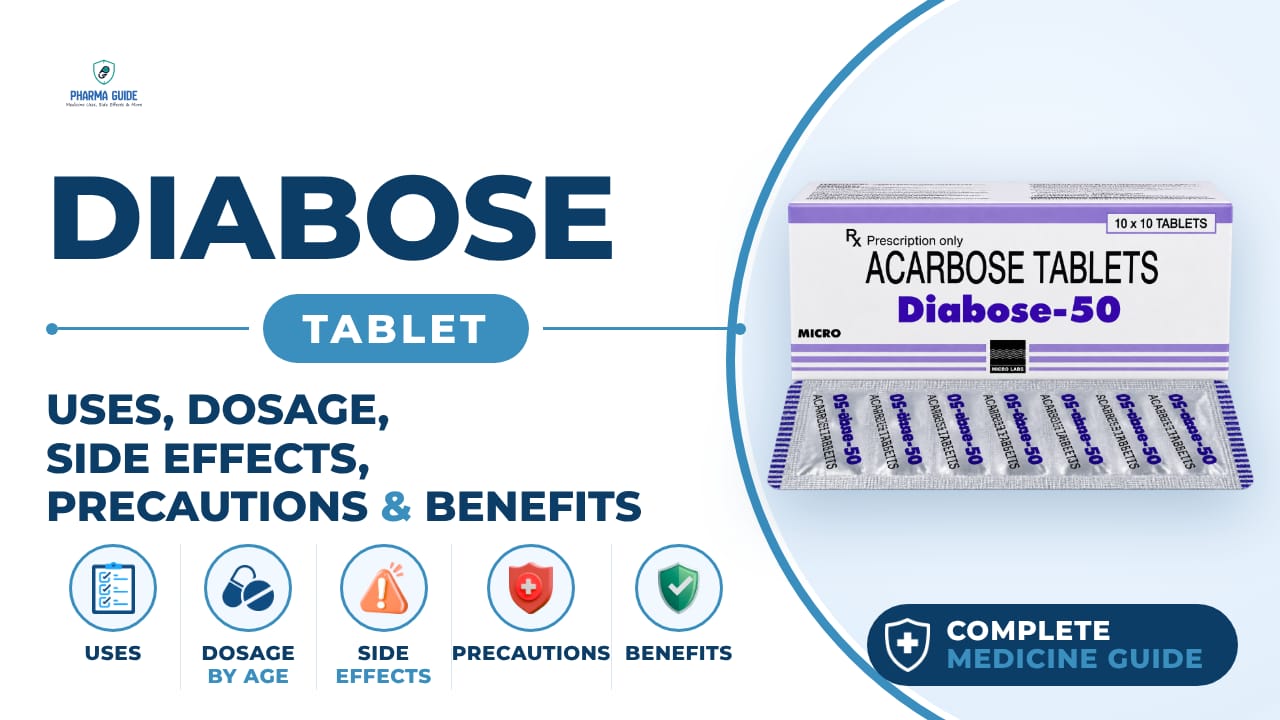
| Generic name | Acarbose |
|---|---|
| Drug class | Alpha-Glucosidase Inhibitor |
| Forms | Tablet |
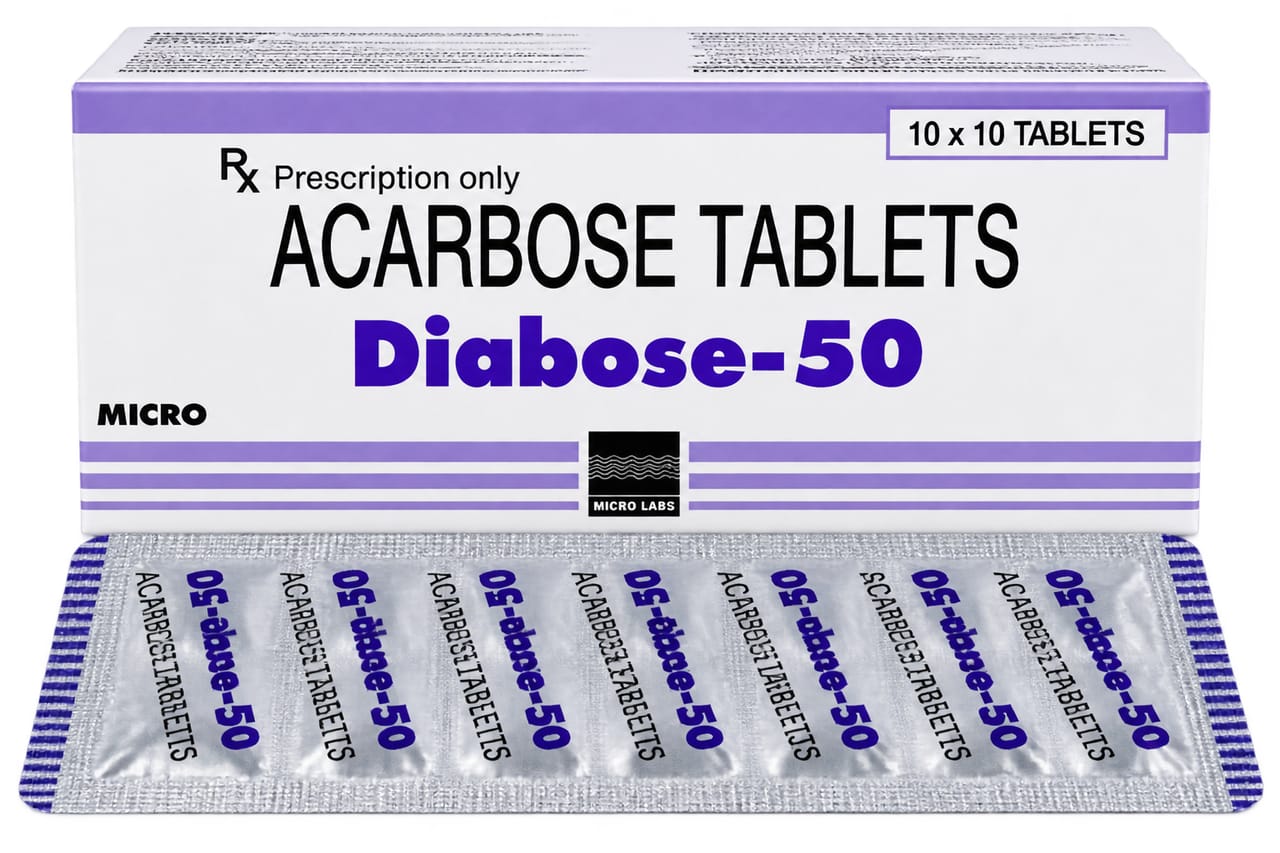
Quick overview
Diabose Tablet contains acarbose, a medicine from the alpha-glucosidase inhibitor class. It is used to help manage blood sugar levels in people with type 2 diabetes, usually alongside diet, exercise, and sometimes other diabetes medicines. It works by slowing carbohydrate digestion to reduce the rise in blood sugar after meals.
What is Diabose Tablet
Diabose is a medicine used to help manage blood sugar levels in people with type 2 diabetes. It contains acarbose and is usually used along with diet, exercise, and sometimes other diabetes medicines.
Diabose Tablet uses
- Manage blood sugar levels in type 2 diabetes
- Lower the rise in blood sugar after meals
- Used along with diet, exercise, or other diabetes medicines when needed
Benefits of Diabose Tablet
- Controls post-meal blood sugar by slowing carbohydrate digestion
- Supports type 2 diabetes management alongside diet and exercise
- Reduces risk of blood sugar spikes by delaying carbohydrate absorption
- May improve long-term glucose control (HbA1c) when combined with proper diabetes management
How Diabose Tablet works
Acarbose blocks enzymes in the intestine that break down carbohydrates into sugar. This slows down digestion and absorption of carbohydrates, so blood sugar rises more slowly and less sharply after meals.
Diabose Tablet dosage
Take Diabose Tablet with the first bite of each main meal. Swallow the tablet whole with a glass of water; do not chew or crush it. Do not take more than the dose your doctor recommends. Keep following your prescribed diet and exercise plan for best results. If you miss a dose, take it with your next meal; do not take two doses at once. This medicine is not meant for type 1 diabetes or diabetic ketoacidosis. If low blood sugar occurs while also taking other diabetes medicines, treat it with glucose rather than regular sugar, since this medicine slows the breakdown of ordinary sugar.
| Age group | Dose |
|---|---|
| Under 18 Years | Use only if prescribed by a healthcare professional |
| Adults (18–64 Years) | 25 mg three times daily with meals initially; may increase to 50–100 mg three times daily |
| Older Adults (65+ Years) | 25 mg three times daily initially; adjusted according to response and tolerance |
Available forms and strengths
- Tablet
Side effects of Diabose Tablet
Common
- Gas
- Bloating
- Stomach rumbling
- Diarrhoea (loose motions)
- Abdominal discomfort
- Stomach pain
- Nausea or vomiting
- Constipation
- Headache
- Dizziness
Serious
- Liver problems
- Skin reactions
- Swelling
- Intestinal blockages
- Low platelet count
- Yellow colored eyes or skin (jaundice)
- Anemia
- Increased liver enzymes
Warnings and precautions
- This medicine can cause low blood sugar (hypoglycemia), especially when taken together with other diabetes medicines. If this happens, treat it with glucose (dextrose) rather than ordinary sugar, since this medicine slows the breakdown of regular sugar.
- Do not use this medicine if you have stomach or bowel problems such as inflammatory bowel disease, bowel ulcers, or partial blockage of the intestine, as it can make gas buildup and these conditions worse.
- This medicine is not meant for type 1 diabetes or diabetic ketoacidosis and may worsen this condition.
- Avoid this medicine if you have kidney disease, liver cirrhosis, a stomach infection, or gastrointestinal bleeding unless your doctor says it is safe.
- This medicine is not usually recommended in pregnancy because there isn't enough safety information. Use only if your doctor says it is necessary; insulin is generally preferred for controlling blood sugar during pregnancy.
- There isn't enough research on using this medicine while breastfeeding, so it is generally not recommended unless your doctor advises otherwise.
- This medicine is removed from the body by the kidneys, so it should be used carefully if you have kidney problems, as it may build up in the body and increase side effects. It may need dose adjustment or should be avoided in severe kidney disease.
- This medicine should be used with extra caution if you have liver problems, since it can raise liver enzyme levels and may increase the risk of liver damage. Your doctor may want to check your liver function regularly.
- Drinking alcohol while taking this medicine is not recommended, as it may increase the risk of your blood sugar levels going too high or too low.
- This medicine usually does not affect your ability to drive or operate machinery, but be cautious if you are also taking other diabetes medicines that can cause low blood sugar.
Storage
- Keep in a dry place, safe from moisture
- Store at 20°C to 25°C
- Shield from direct sunlight and heat sources
- Keep out of children's reach
- Check the expiry date and use before this date
- Store below 30°C
When to see a doctor
- Get medical help right away if you notice signs of an allergic reaction, such as a skin rash, itching or swelling of the face, tongue, or throat, severe dizziness, or trouble breathing.
- Contact your doctor promptly if you notice yellowing of your eyes or skin, which can be a sign of liver problems.
- If you think you have taken too much of this medicine, get emergency medical treatment right away.
- Speak with your doctor if side effects like gas, bloating, stomach pain, or diarrhea do not improve or get worse.
Alternatives
- Glucobay Tablet
- Glimepiride
- Empagliflozin
Watch the video
FAQs
What is Diabose Tablet used for?
Diabose Tablet is used to manage blood sugar levels in people with type 2 diabetes, usually alongside diet, exercise, and sometimes other diabetes medicines. It helps lower the rise in blood sugar after meals.
How should I take Diabose Tablet?
Take Diabose Tablet with the first bite of each main meal. Swallow the tablet whole with a glass of water; do not chew or crush it. Follow your prescribed diet and exercise plan, and do not take more than the recommended dose.
What should I do if I miss a dose of Diabose Tablet?
If you miss a dose, take it with your next meal. Do not take two doses at once.
What are the common side effects of Diabose Tablet?
Common side effects include gas, bloating, stomach rumbling, diarrhoea, abdominal discomfort, stomach pain, nausea or vomiting, constipation, headache, and dizziness.
What should I do if I have low blood sugar while taking Diabose Tablet?
If low blood sugar occurs, especially while also taking other diabetes medicines, treat it with glucose rather than regular sugar, since Diabose Tablet slows the breakdown of ordinary sugar.
General information, not medical advice
Your prescriber and the leaflet in your pack know your situation. This page does not.
- Follow your prescriber and the leaflet
- Don't start, stop, or change a dose on your own
- Doses and warnings differ by country and product
Sources
- US Food and Drug Administration (FDA) - Package leaflet information for the user; Precose® (acarbose tablets)
- KD Tripathi. Seventh Edition. New Delhi, India: Jaypee Brothers Medical Publishers; 2013: Page No 277
- American Diabetes Association – Standards of Care in Diabetes
- World Health Organization – Diabetes
- NICE Guideline – Type 2 Diabetes Management
- Mayo Clinic – Type 2 Diabetes
- MedlinePlus – Acarbose
- U.S. Food and Drug Administration. (2011). Acarbose Label - FDA
- McIver, L. A., Preuss, C. V., & Tripp, J. (2024). Acarbose. StatPearls NCBI Bookshelf
- Acarbose: Uses, interactions, mechanism of action - DrugBank Online
- Acarbose: MedlinePlus drug information
Video
Related medicines
Acarbose Tablet: Uses, Dosage, Side Effects, Precautions and Alternates
Alpha-glucosidase inhibitor
Acarbose Tablet treats type 2 diabetes by slowing carb digestion to reduce after-meal blood sugar spikes. Learn dosage, side effects, and precautions.
Glucobay Tablet: Uses, Dosage, Side Effects, Precautions and Alternates
Alpha-glucosidase inhibitor
Glucobay Tablet (acarbose) helps control blood sugar in type 2 diabetes by slowing carbohydrate digestion. Learn its uses, dosage, side effects and precautions.