
Safety
General information, not medical advice
Your prescriber and the leaflet in your pack know your situation. This page does not.
- Follow your prescriber and the leaflet
- Don't start, stop, or change a dose on your own
- Doses and warnings differ by country and product
Dulcolax Tablet: Uses, Dosage, Side Effects, Precautions and Alternates
| Generic name | Bisacodyl |
|---|---|
| Drug class | Laxatives |
| Forms | Tablet, Suppository, Rectal liquid |
Quick overview
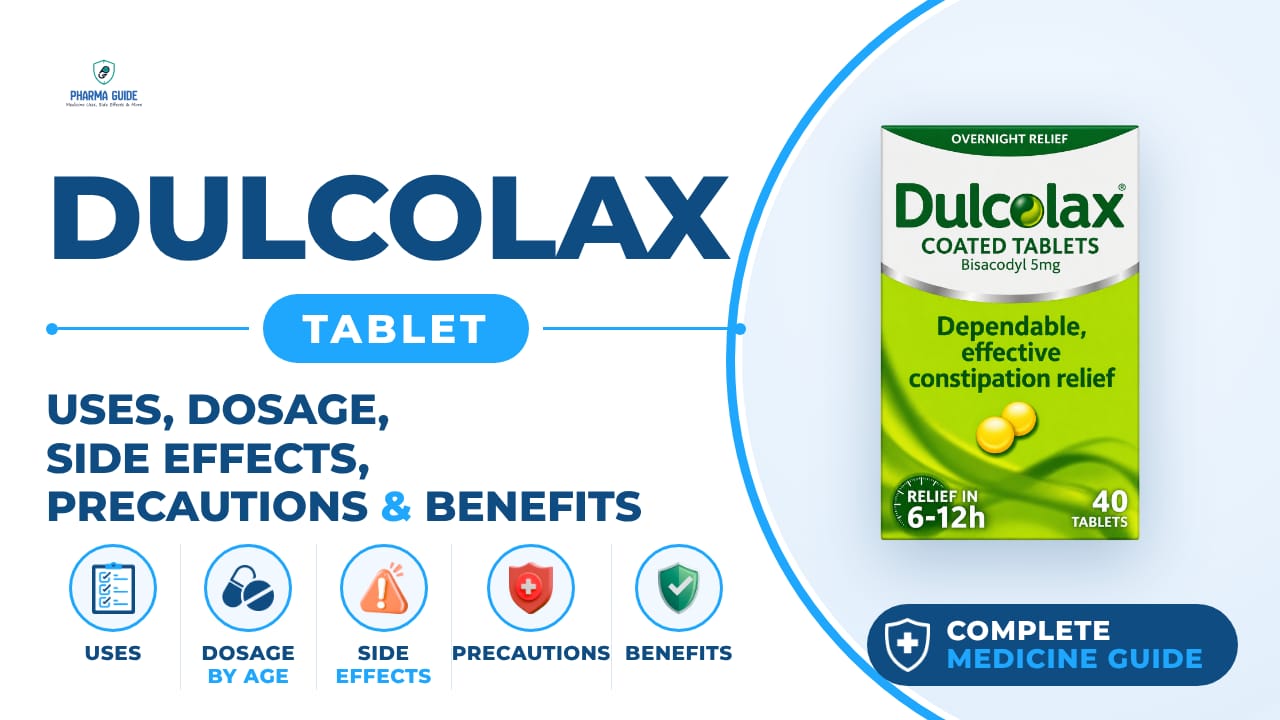
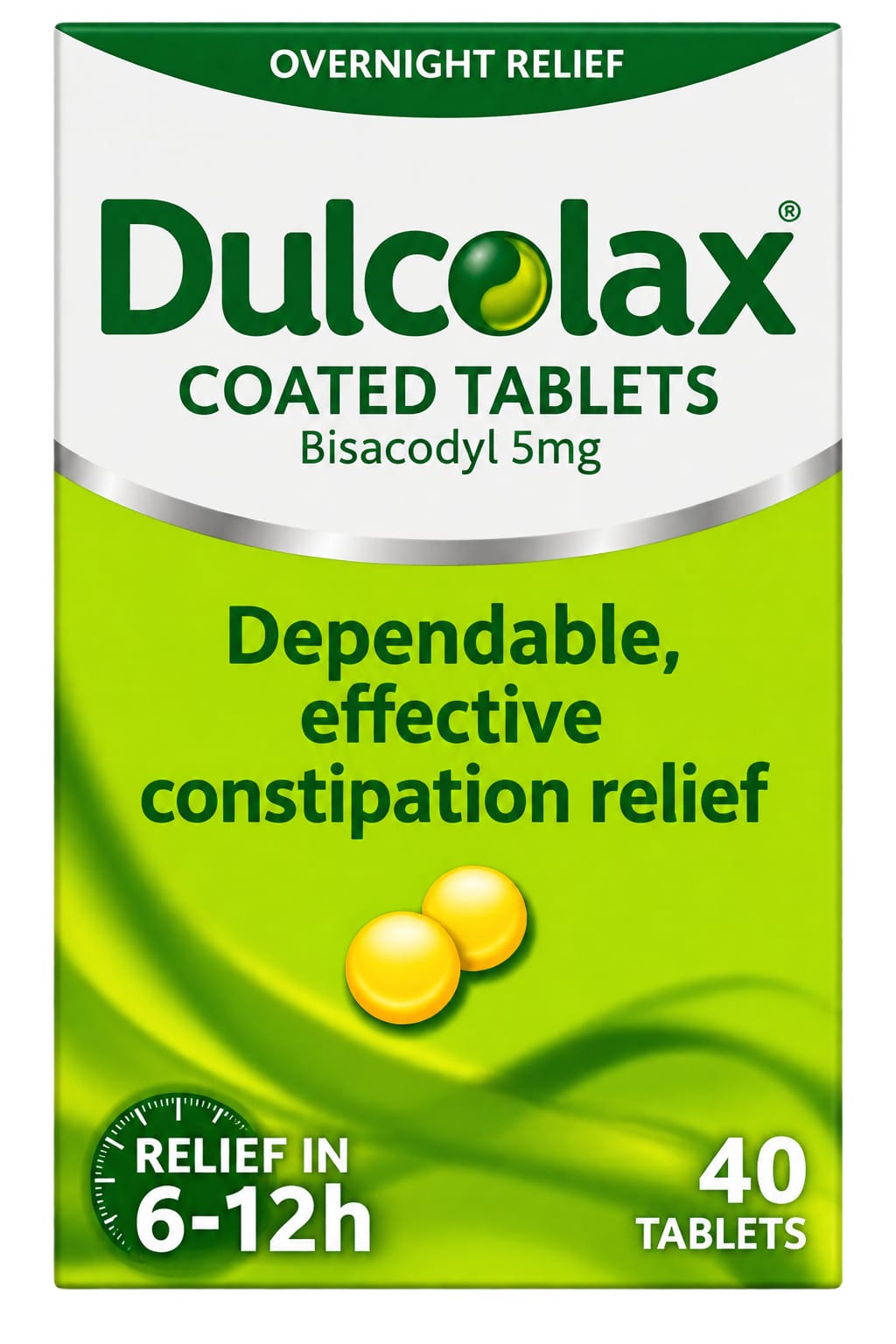
Dulcolax Tablet (bisacodyl) is a laxative used to treat constipation and to help empty the bowels before surgery, colonoscopy, x-rays, or other intestinal medical procedures. It works by stimulating the lining of the lower bowel and helping water build up to soften stools. It is generally meant for short-term use, with common doses ranging from 5 mg to 10 mg once daily depending on age.
What is Dulcolax Tablet
Dulcolax is a laxative that stimulates bowel movements. It is used to treat constipation or to empty the bowels before surgery, colonoscopy, x-rays, or other intestinal medical procedures.
Dulcolax Tablet uses
- Constipation
- Bowel preparation before surgery, colonoscopy, x-rays, or other intestinal medical procedures
- Evacuation of the bowel before a radiological examination or as an enema alternative (under medical supervision)
Benefits of Dulcolax Tablet
- Produces a bowel movement within 6 to 12 hours when taken by mouth
- Helps relieve short-term constipation
How Dulcolax Tablet works
Dulcolax works by acting on the lining of the lower bowel to stimulate movement and helps water build up in the bowel to produce soft, formed stools.
Dulcolax Tablet dosage
Swallow the tablet whole with a full glass of water; do not crush, chew, or break it. Take the tablet by mouth; the suppository form is for use in the rectum only, and should never be taken by mouth. Avoid taking other medicines within 2 hours before or after using Dulcolax. Avoid drinking milk or taking an antacid within 1 hour before taking Dulcolax by mouth, as they may affect how well it works. Do not take Dulcolax tablets together with medicines that lower stomach acidity, such as antacids or proton pump inhibitors. Tablets generally produce a bowel movement within 6 to 12 hours.
Do not give to a child younger than 2 years old without a doctor's advice; children under 6 years should not use it, and children 6 to 10 years should only take it as directed for short-term use. Older adults should not use the rectal form without a doctor's advice. Drink plenty of water and consider adding more fibre to your diet while taking this medicine. Avoid straining while passing a bowel motion after taking Dulcolax, as dizziness and fainting have been reported. Use only as needed and not for longer than recommended, since overuse can affect normal bowel function or cause dependence on laxatives.
| Age group | Dose |
|---|---|
| Under 2 years | Do not use unless prescribed by a doctor |
| 2–10 years | 5 mg once daily — medical advice recommended |
| 11 years & older | 5–10 mg once daily |
| Adults | 5–10 mg once daily |
Available forms and strengths
- Tablet
- Suppository
- Rectal liquid
Side effects of Dulcolax Tablet
Common
- Stomach pain or discomfort
- Feeling light-headed
- Rectal burning
- Abdominal cramps
- Nausea
- Vomiting
- Diarrhoea
- Anorectal discomfort
- Dizziness
- Fainting
Serious
- Rectal bleeding
- No bowel movement after using Dulcolax
- Allergic reaction: hives, difficult breathing, swelling of face, lips, tongue, or throat
- Colitis including ischaemic colitis
- Blood in the stool
- Dehydration
Warnings and precautions
- Do not use Dulcolax if you have stomach pain, nausea, or vomiting, or are allergic to bisacodyl.
- Do not use if you have acute abdominal conditions, acute inflammatory bowel disease, severe abdominal pain with nausea and vomiting, a bowel blockage, severe dehydration, or intolerance to galactose or fructose.
- Long-term or excessive use can cause an imbalance of body salts (including low potassium), muscle weakness, kidney problems, and fluid imbalance leading to dehydration.
- Do not use in children under 6 years old, and only under medical advice for children under 2.
- Older adults should not use the rectal form without a doctor's advice.
- This medicine is meant for short-term use only; using it every day should prompt a discussion with your doctor about the cause of constipation.
- It is not known whether bisacodyl will harm an unborn baby. Do not use this medicine without a doctor's advice if you are pregnant. Dulcolax does not pass into breast milk and can be used during breastfeeding.
- Long-term and excessive use may cause kidney problems, and in patients with kidney problems where dehydration may be harmful, Dulcolax should be stopped and only restarted under medical supervision.
- Interaction with alcohol is unknown. It is advisable to consult your doctor before consumption.
- Be careful driving or operating machinery until you know how Dulcolax affects you. Do not drive or operate machinery if you experience dizziness or fainting.
Storage
- Store Dulcolax oral or rectal medicine at room temperature away from moisture and heat.
- Keep Dulcolax in a cool dry place where the temperature stays below 30°C.
- Do not store Dulcolax or any other medicine in the bathroom or near a sink.
- Do not leave it on a window sill or in the car. Heat and damp can destroy some medicines.
- Keep it where children cannot reach it. A locked cupboard at least one-and-a-half metres above the ground is a good place to store medicines.
- If your doctor tells you to stop using this medicine or it has passed its expiry date, ask your pharmacist what to do with any that is left over.
When to see a doctor
- Get emergency medical help if you have signs of an allergic reaction: hives, difficulty breathing, or swelling of the face, lips, tongue, or throat.
- Stop using Dulcolax and call your doctor right away if you have rectal bleeding or no bowel movement after using it.
- Call your doctor if you do not have a bowel movement after using this medicine, or if you have constipation for longer than 7 days.
- Seek medical advice right away if you have taken more than the recommended or prescribed dose.
- Tell your doctor immediately or go to the emergency department if you notice rash, itching, hives, swelling of the face, lips, mouth, tongue, or other body parts, or shortness of breath, wheezing, or trouble breathing, as these can be signs of a life-threatening allergic reaction.
Alternatives
- MiraLAX (polyethylene glycol)
- Bo-Lax 5 mg Tablet
- Dulcoflex 5 mg Tablet
- Gudlax 5 mg Tablet
- Bylax 5 mg Tablet
- Evolex 5 mg Tablet
Watch the video
FAQs
How long does it take for Dulcolax Tablet to work?
Dulcolax tablets generally produce a bowel movement within 6 to 12 hours when taken by mouth.
What is the dosage of Dulcolax Tablet for adults?
Adults typically take 5–10 mg once daily, swallowed whole with a full glass of water without crushing, chewing, or breaking the tablet.
Can children take Dulcolax Tablet?
Dulcolax should not be given to children under 6 years old. Children 2 to 10 years may take 5 mg once daily with medical advice, and it should not be given to those under 2 without a doctor's advice.
What should be avoided while taking Dulcolax Tablet?
Avoid taking other medicines within 2 hours before or after Dulcolax, and avoid milk or antacids within 1 hour before taking it, as these may affect how well it works. It should not be taken with antacids or proton pump inhibitors.
What are the serious side effects of Dulcolax Tablet?
Serious side effects include rectal bleeding, no bowel movement after use, allergic reactions like hives or swelling of the face and throat, colitis including ischaemic colitis, blood in the stool, and dehydration.
General information, not medical advice
Your prescriber and the leaflet in your pack know your situation. This page does not.
- Follow your prescriber and the leaflet
- Don't start, stop, or change a dose on your own
- Doses and warnings differ by country and product
Sources
Video
Related medicines

Magnesium Citrate Tablet: Uses, Dosage, Side Effects, Precautions and Alternates
Laxatives
Magnesium Citrate Tablet is a laxative and mineral supplement that relieves occasional constipation and maintains magnesium levels. Learn uses, dosage, and

Metamucil Powder: Uses, Dosage, Side Effects, Precautions and Alternates
Laxatives
Metamucil Powder is a psyllium fiber laxative that eases constipation and supports digestion. Learn dosage, side effects, and warnings.