
Safety
General information, not medical advice
Your prescriber and the leaflet in your pack know your situation. This page does not.
- Follow your prescriber and the leaflet
- Don't start, stop, or change a dose on your own
- Doses and warnings differ by country and product
Magnesium Citrate Tablet: Uses, Dosage, Side Effects, Precautions and Alternates

| Generic name | Magnesium citrate |
|---|---|
| Drug class | Laxatives |
| Forms | oral capsule, oral liquid, oral tablet, chewable tablet |

Quick overview
Magnesium Citrate Tablet, generically known as magnesium citrate, belongs to the laxative drug class. It is used as a mineral supplement to help maintain adequate magnesium in the body and as a laxative to relieve occasional constipation. It works as an osmotic laxative by drawing water into the intestines to soften stool. It is available in several forms, including tablets, chewable tablets, capsules, and liquid.
What is Magnesium Citrate Tablet
Magnesium citrate is a mineral supplement and laxative. It is used to maintain adequate magnesium in the body and to treat occasional constipation.
Magnesium Citrate Tablet uses
- Used as a supplement to maintain adequate magnesium in the body
- Used as a laxative to treat occasional constipation
- Used to clean out the GI (gastrointestinal) tract
Benefits of Magnesium Citrate Tablet
- Helps prevent or correct magnesium deficiency.
- Supports normal muscle and nerve function.
- Helps maintain a healthy heart rhythm.
- Supports bone health and normal calcium metabolism.
- Contributes to normal energy production and metabolism.
- In higher laxative doses, magnesium citrate can help relieve occasional constipation by drawing water into the bowel.
How Magnesium Citrate Tablet works
Magnesium citrate works by pulling water into the intestines, which softens the stool and makes it easier to pass. This type of medicine is called an osmotic laxative.
Magnesium Citrate Tablet dosage
Use exactly as directed on the label or as prescribed by your doctor. Take with a full glass of liquid with each dose. Chew the chewable tablet well before swallowing. Do not allow a young child to use this medicine without help from an adult. Do not use for more than one week unless your doctor tells you to.
Taking more than the recommended dose will not make the medicine work better and may cause serious side effects. If used for constipation, call your doctor if symptoms do not improve after 7 days of treatment, or if the medicine produces no results. Avoid taking other medicines within 2 hours before or 2 hours after taking this medicine, since it can make it harder for your body to absorb other oral medicines.
| Age group | Dose |
|---|---|
| Under 4 years | Use only when specifically advised by a healthcare professional |
| 4–8 years | Dose should be individualized according to dietary need and product strength |
| 9–17 years | Use according to the age-appropriate product label; avoid excessive supplemental magnesium |
| 18–64 years | Common supplements provide about 100–350 mg elemental magnesium daily, usually in 1–2 divided doses |
| 65+ years | Usually the same adult range, but use cautiously with reduced kidney function |
Available forms and strengths
- Oral capsule
- Oral liquid
- Oral tablet
- Chewable tablet
Side effects of Magnesium Citrate Tablet
Common
- Loose stools, diarrhea, stomach cramps
- Upset stomach
- Dizziness
- Increased sweating
- Gas
- Mild abdominal pain
- Nausea
Serious
- Pain with bowel movements, rectal bleeding
- Watery diarrhea, nausea, vomiting, severe stomach pain
- Painful or difficult urination
- Flushing (warmth, redness, or tingly feeling)
- A light-headed feeling, like you might pass out
- Weak or shallow breathing, slow heartbeats
- Muscle weakness, increased thirst
- Signs of an allergic reaction: hives, difficult breathing, swelling of the face, lips, tongue, or throat
Warnings and precautions
- Ask a doctor or pharmacist before using this medicine if you have had a sudden change in bowel habits lasting longer than 2 weeks, stomach pain, nausea, vomiting, trouble swallowing, if you are on a low-magnesium, low-sodium, or low-potassium diet, or if you have kidney disease.
- This medicine is not meant for long-term use and should not be used for chronic constipation.
- Using this medicine regularly may cause the body to become dependent on it, making it harder to pass stools without laxatives.
- Do not use this drug for more than one week unless your doctor tells you to.
- Ask a doctor before using this medicine if you are pregnant.
- Ask a doctor before using this medicine if you are breastfeeding.
- Ask a doctor or pharmacist if this medicine is safe for you if you have kidney disease.
- No specific liver-related dose adjustment is usually required, but significant liver disease should be discussed with a healthcare professional.
- Drinking alcohol along with this medicine may make diarrhea and other intestinal side effects worse.
- This medicine is not expected to affect driving or operating machinery. If dizziness or weakness occurs, avoid driving until you feel well.
Storage
- Store at 20–25°C (68–77°F) or according to the specific product label.
- Keep in a cool, dry place away from excessive heat.
- Protect tablets from moisture and direct sunlight.
- Keep in the original, tightly closed container until use.
- Avoid storing in bathrooms or other hot and humid areas.
- Keep out of reach and sight of children.
When to see a doctor
- Get emergency medical help if you have signs of an allergic reaction such as hives, difficulty breathing, or swelling of your face, lips, tongue, or throat.
- Stop using this medicine and call your doctor right away if you have pain with bowel movements, rectal bleeding, watery diarrhea, severe stomach pain, painful or difficult urination, flushing, a light-headed feeling, weak or shallow breathing, slow heartbeats, or muscle weakness with increased thirst.
- If you think there has been an overdose, contact your local poison control center or get medical care right away and be ready to describe what was taken, how much, and when.
- If you have rectal bleeding or do not have a bowel movement after using this drug, talk with your doctor.
Alternatives
- Magnesium Sulfate
- Magnesium Hydroxide
- Magnesium Gluconate
- Magnesium Oxide
Watch the video
FAQs
What is Magnesium Citrate Tablet used for?
It is used as a mineral supplement to maintain adequate magnesium in the body, as a laxative to treat occasional constipation, and to clean out the GI tract.
How does Magnesium Citrate Tablet work?
It works as an osmotic laxative by pulling water into the intestines, which softens the stool and makes it easier to pass.
How long can I use Magnesium Citrate Tablet?
It is not meant for long-term use and should not be used for more than one week unless your doctor tells you to, since regular use may cause dependence on laxatives.
What are the common side effects of Magnesium Citrate Tablet?
Common side effects include loose stools, diarrhea, stomach cramps, upset stomach, dizziness, increased sweating, gas, mild abdominal pain, and nausea.
Can I take other medicines with Magnesium Citrate Tablet?
You should avoid taking other medicines within 2 hours before or 2 hours after taking this medicine, since it can make it harder for your body to absorb other oral medicines.
General information, not medical advice
Your prescriber and the leaflet in your pack know your situation. This page does not.
- Follow your prescriber and the leaflet
- Don't start, stop, or change a dose on your own
- Doses and warnings differ by country and product
Sources
Video
Related medicines
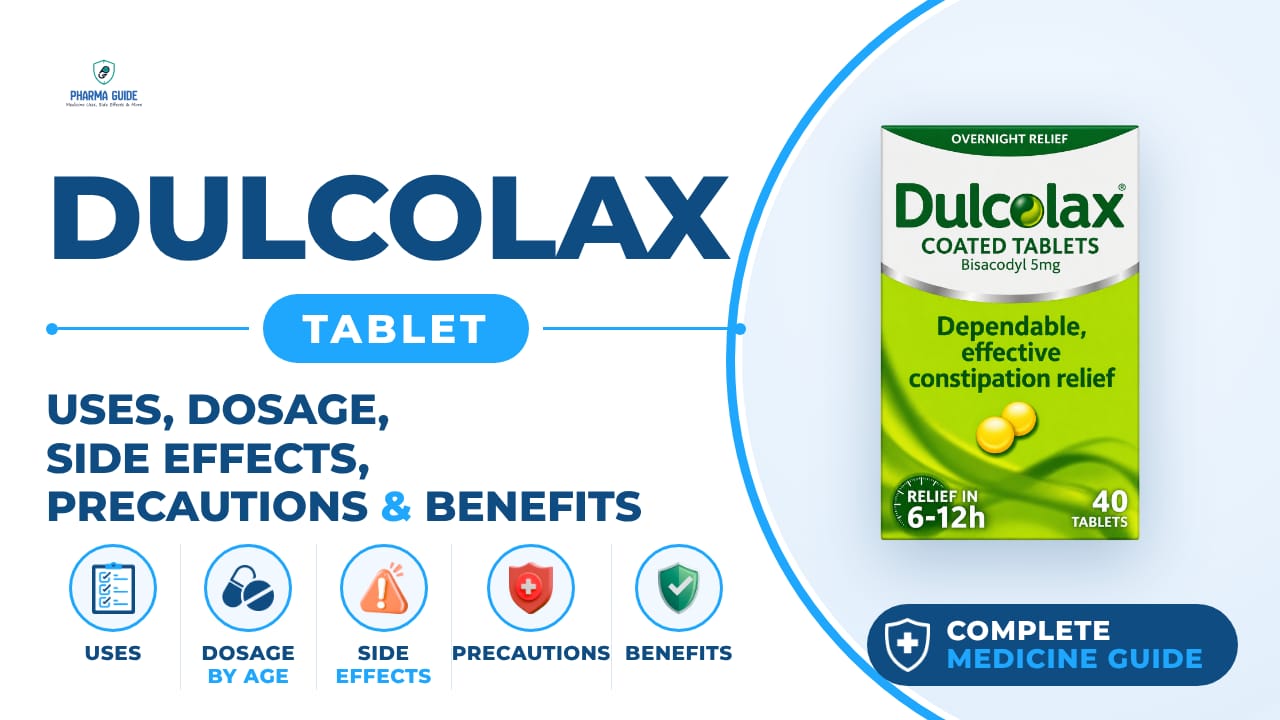
Dulcolax Tablet: Uses, Dosage, Side Effects, Precautions and Alternates
Laxatives
Dulcolax Tablet (bisacodyl) treats constipation and preps bowels before procedures. Learn dosage, how it works, side effects, and precautions.

Metamucil Powder: Uses, Dosage, Side Effects, Precautions and Alternates
Laxatives
Metamucil Powder is a psyllium fiber laxative that eases constipation and supports digestion. Learn dosage, side effects, and warnings.