
Safety
General information, not medical advice
Your prescriber and the leaflet in your pack know your situation. This page does not.
- Follow your prescriber and the leaflet
- Don't start, stop, or change a dose on your own
- Doses and warnings differ by country and product
Effexor Capsule: Uses, Dosage, Side Effects, Precautions and Alternates
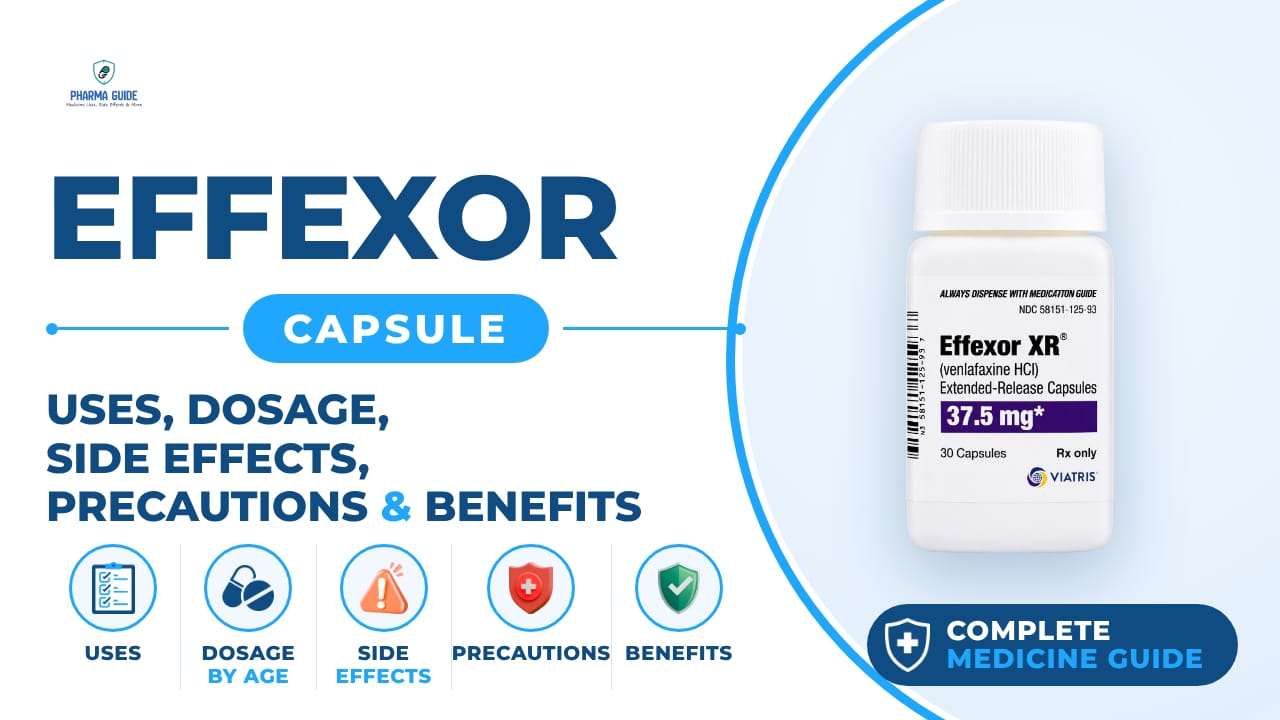
| Generic name | venlafaxine |
|---|---|
| Drug class | Serotonin-norepinephrine reuptake inhibitor (SNRI) |
| Forms | Tablet (immediate-release), Extended-release capsule |
Quick overview
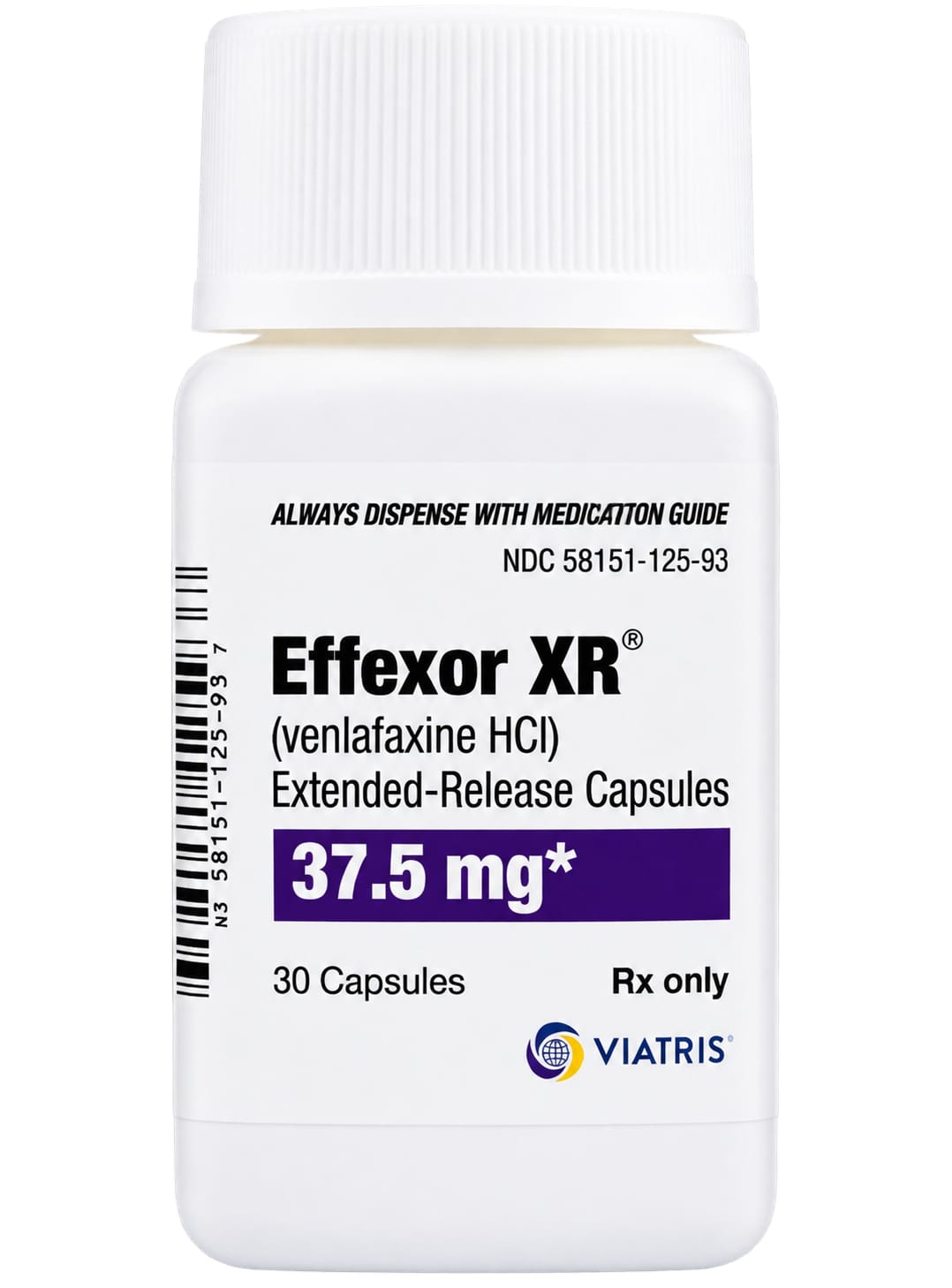
Effexor Capsule contains venlafaxine, a medicine belonging to the SNRI (serotonin-norepinephrine reuptake inhibitor) class. It is a brand-name prescription medicine used to treat depression and certain anxiety disorders in adults, including major depressive disorder, generalized anxiety disorder, social anxiety disorder, and panic disorder. It works by increasing levels of serotonin and norepinephrine in the brain. Effexor is not approved for use in children younger than 18 years old.
What is Effexor Capsule
Effexor is a brand-name prescription medicine that contains venlafaxine. It belongs to a group of medicines called SNRIs, which are used to treat depression and certain anxiety disorders in adults.
Effexor Capsule uses
- Major depressive disorder (depression)
- Generalized anxiety disorder (excessive, hard-to-control worry)
- Social anxiety disorder (extreme fear of social interaction or performing in front of others)
- Panic disorder (sudden, unexpected attacks of extreme fear)
Benefits of Effexor Capsule
- Can reduce feelings of sadness, hopelessness, and loss of interest linked to depression
- Can reduce excessive worry linked to generalized anxiety disorder
- Can reduce fear and avoidance linked to social anxiety disorder
- Can reduce the frequency of panic attacks in panic disorder
How Effexor Capsule works
Effexor increases the levels of serotonin and norepinephrine, two natural brain chemicals involved in mood, by slowing how quickly the body reabsorbs them. This keeps more of these chemicals active in the brain, which is thought to help improve mood, anxiety, and panic symptoms over time.
Effexor Capsule dosage
Take Effexor with food at the same time each day. Swallow the extended-release capsule whole; do not crush, split, or chew it. If you cannot swallow the capsule whole, you may open it and sprinkle the contents on a spoonful of applesauce, then swallow the mixture right away without chewing, and drink a glass of water afterward. Your doctor may start you on a low dose and slowly raise it over time. It may take several weeks before you notice the full benefit of this medicine. Do not stop taking Effexor suddenly without talking to your doctor, since stopping abruptly can cause withdrawal symptoms. Your blood pressure will need to be checked regularly while you take this medicine. Effexor is not approved for use in children younger than 18 years old.
| Age group | Dose |
|---|---|
| Under 18 Years | Use only if prescribed by a specialist |
| Adults (18–64 Years) | Initial dose: 37.5–75 mg/day; adjusted based on condition (usual range 75–225 mg/day) |
| Older Adults (65+ Years) | Lower starting dose may be required; adjusted based on response and health condition |
Available forms and strengths
- Tablet (immediate-release)
- Extended-release capsule
Side effects of Effexor Capsule
Common
- Headache
- Dizziness
- Drowsiness or sleepiness
- Tiredness or weakness
- Ringing in the ears
- Feeling anxious, nervous, or jittery
- Sleep problems or unusual dreams
- Tremors
- Fast heartbeats
- Blurred vision
- Nausea, vomiting, diarrhea, or constipation
- Changes in weight or appetite
- Dry mouth, yawning
- Increased sweating or night sweats
- Sexual problems, including decreased sex drive, erectile dysfunction, or trouble having an orgasm
Serious
- Signs of an allergic reaction: hives, difficulty breathing, swelling of the face, lips, tongue, or throat
- New or worsening depression, anxiety, panic attacks, agitation, irritability, aggression, restlessness, or thoughts of suicide or self-harm
- Blurred vision, eye pain or redness, or seeing halos around lights (possible glaucoma)
- Cough, chest tightness, or trouble breathing
- Seizures
- Unusual bleeding such as nosebleeds, bleeding gums, abnormal vaginal bleeding, or bleeding that will not stop
- Low blood sodium: headache, confusion, trouble thinking, weakness, or feeling unsteady
- Severe nervous system reaction: very stiff muscles, high fever, sweating, confusion, fast or uneven heartbeat, tremors, feeling like you might pass out
- Serotonin syndrome: agitation, hallucinations, fever, sweating, shivering, fast heart rate, muscle stiffness, twitching, loss of coordination, nausea, vomiting, or diarrhea
- High blood pressure
Warnings and precautions
Effexor carries a boxed warning, the FDA's most serious type of warning, for increased risk of suicidal thoughts and behavior in children, teens, and young adults under 24, especially in the first months of treatment or after a dose change. Do not use Effexor if you have uncontrolled narrow-angle glaucoma. Do not take Effexor within 7 days before or 14 days after using an MAO inhibitor, since this combination can cause a dangerous interaction. Do not stop taking Effexor suddenly without talking to your doctor, as this can cause severe and long-lasting withdrawal symptoms, including agitation, confusion, tingling or electric-shock feelings, aggression, violent behavior, blurred vision, increased blood pressure, or suicidal thoughts. Effexor should not be given to anyone younger than 18 without a doctor's advice, and it is not approved for use in children. Effexor should be used cautiously in people with bipolar disorder, since antidepressants may trigger episodes of mania or hypomania.
Taking Effexor during pregnancy could harm the baby, and taking it in the month before delivery may increase the risk of severe bleeding after childbirth. Do not start or stop this medicine during pregnancy without talking to your doctor first. Ask your doctor whether it is safe to breastfeed while taking Effexor.
Tell your doctor if you have kidney disease or liver disease, as these may affect whether Effexor is safe for you.
Do not drink alcohol while taking Effexor, since it can make side effects like drowsiness and difficulty concentrating worse. Avoid driving or doing anything that requires alertness until you know how Effexor affects you, since it can slow your reactions.
Storage
- Store at room temperature away from moisture and heat.
- Keep the medication in the container it came in, tightly closed, and out of the reach and sight of children.
- Do not store in the bathroom.
- Dispose of unneeded medication through a medicine take-back program; do not flush it down the toilet unless instructed to do so.
When to see a doctor
- Get emergency medical help right away if you notice signs of an allergic reaction, such as hives, difficulty breathing, or swelling of the face, lips, tongue, or throat.
- Tell your doctor right away about new or sudden mood or behavior changes, including worsening depression or anxiety, panic attacks, trouble sleeping, feeling impulsive, irritable, agitated, aggressive, restless, or having thoughts of suicide or self-harm.
- Seek medical attention right away if you have symptoms of serotonin syndrome, such as agitation, hallucinations, fever, sweating, shivering, fast heart rate, muscle stiffness, twitching, loss of coordination, nausea, vomiting, or diarrhea.
- Call your doctor right away if you have blurred vision, eye pain or redness, or see halos around lights, a seizure, unusual bleeding, symptoms of low blood sodium, or signs of a severe nervous system reaction.
- If you think you have taken too much Effexor, seek emergency medical attention or contact your local poison control center right away.
Alternatives
- Sertraline
- Escitalopram
- Citalopram
Watch the video
FAQs
What is Effexor Capsule used for?
Effexor is used to treat major depressive disorder, generalized anxiety disorder, social anxiety disorder, and panic disorder in adults.
How should Effexor Capsule be taken?
Take it with food at the same time each day, swallowing the extended-release capsule whole. If you cannot swallow it whole, open it and sprinkle the contents on applesauce, then swallow immediately without chewing and drink water afterward.
Can I stop taking Effexor suddenly?
No, you should not stop taking Effexor suddenly without talking to your doctor, as this can cause severe and long-lasting withdrawal symptoms like agitation, confusion, tingling or electric-shock feelings, and increased blood pressure.
What are common side effects of Effexor Capsule?
Common side effects include headache, dizziness, drowsiness, tiredness, nausea, dry mouth, increased sweating, sleep problems, and sexual problems.
What are alternatives to Effexor Capsule?
Alternatives mentioned include sertraline, escitalopram, and citalopram.
General information, not medical advice
Your prescriber and the leaflet in your pack know your situation. This page does not.
- Follow your prescriber and the leaflet
- Don't start, stop, or change a dose on your own
- Doses and warnings differ by country and product
Sources
Video
Related medicines
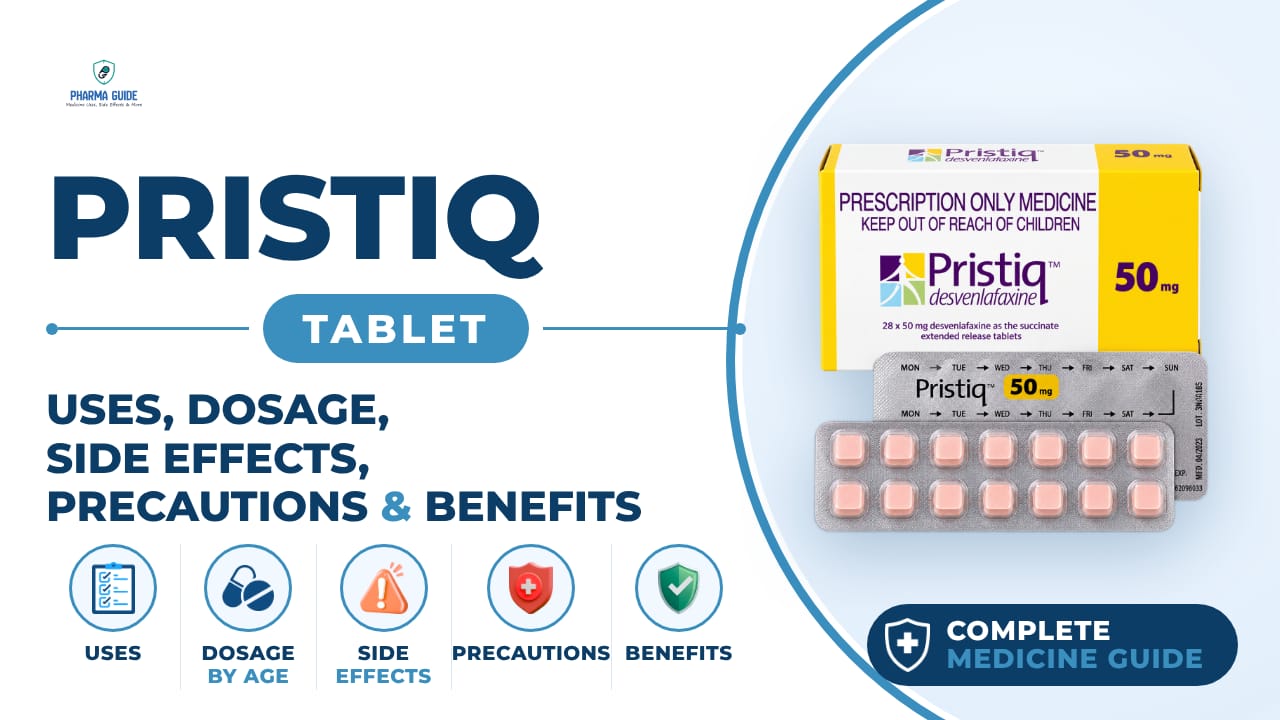
Pristiq Tablet: Uses, Dosage, Side Effects, Precautions and Alternates
Serotonin-norepinephrine reuptake inhibitor (SNRI)
Pristiq Tablet (desvenlafaxine) is an SNRI used to treat major depressive disorder in adults. Learn its dosage, side effects, and warnings.
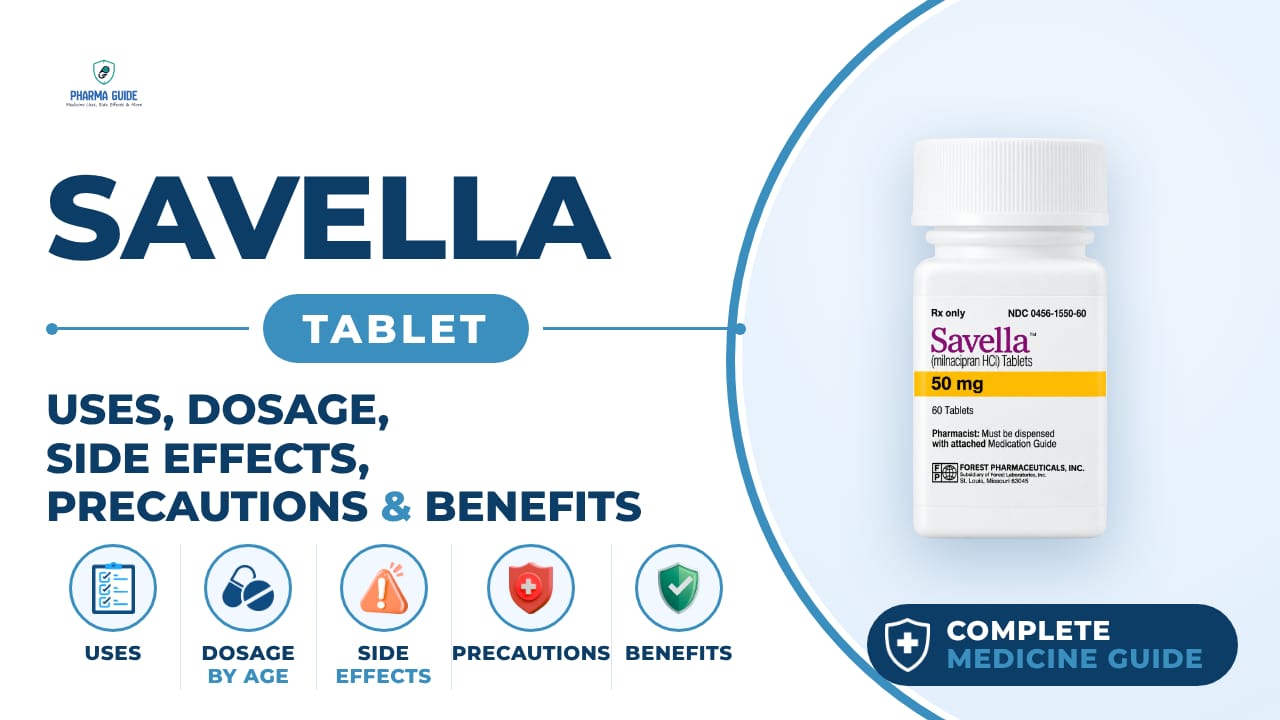
Savella Tablet: Uses, Dosage, Side Effects, Precautions and Alternates
Serotonin-norepinephrine reuptake inhibitor (SNRI)
Savella Tablet (milnacipran) is an SNRI used to treat chronic fibromyalgia pain. Learn how it works, dosage, side effects, and safety precautions.