
Safety
General information, not medical advice
Your prescriber and the leaflet in your pack know your situation. This page does not.
- Follow your prescriber and the leaflet
- Don't start, stop, or change a dose on your own
- Doses and warnings differ by country and product
Savella Tablet: Uses, Dosage, Side Effects, Precautions and Alternates
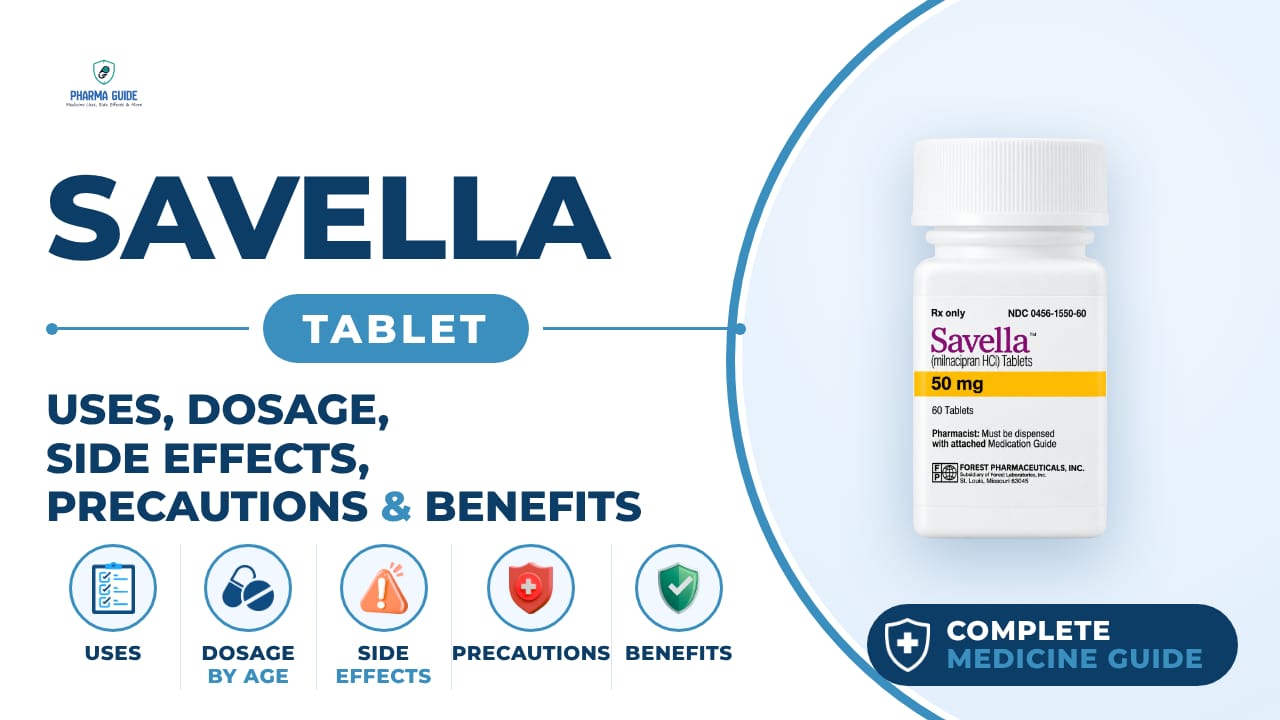
| Generic name | milnacipran |
|---|---|
| Drug class | Serotonin-norepinephrine reuptake inhibitor (SNRI) |
| Forms | Tablet (film-coated) |
Quick overview
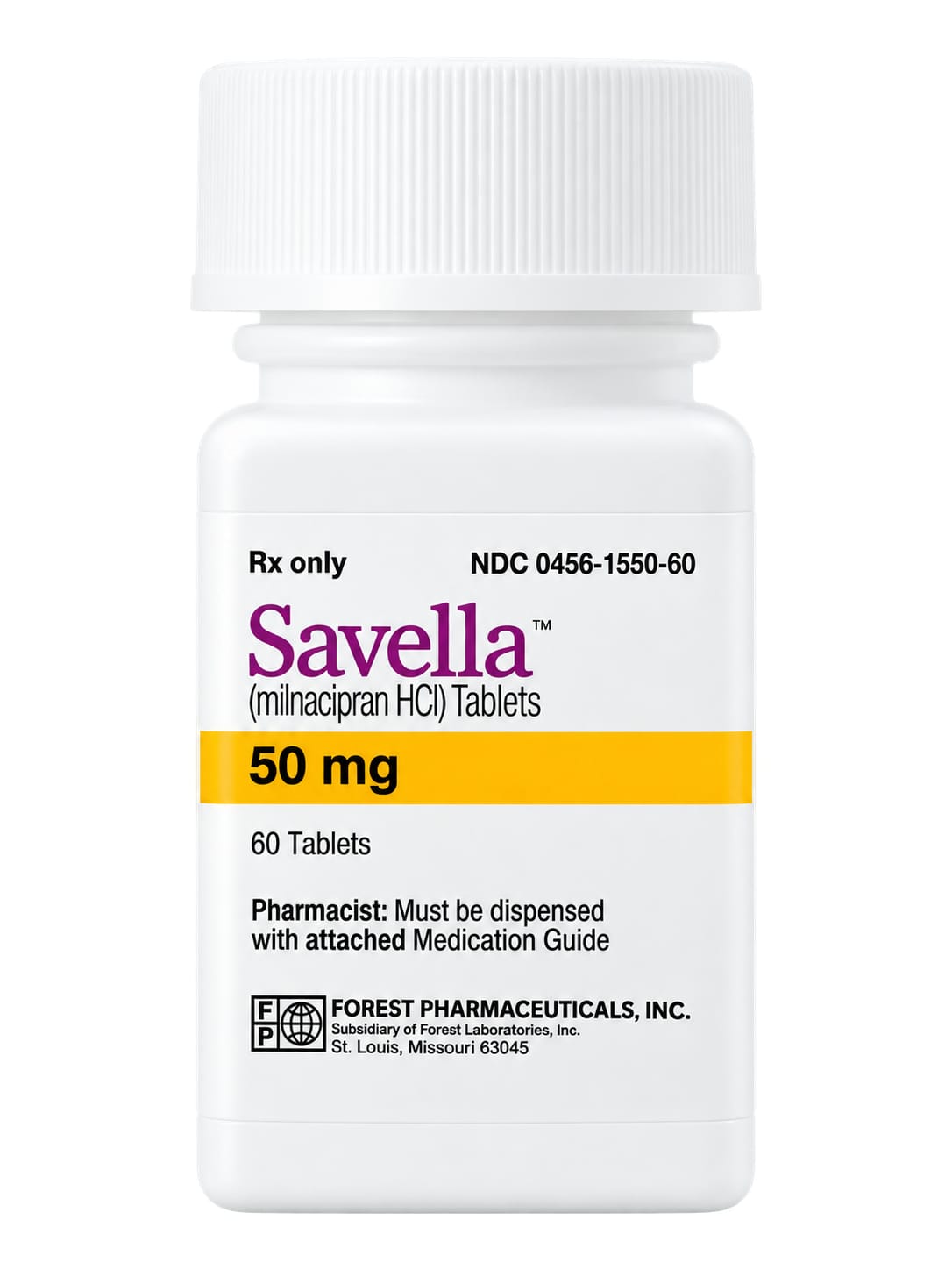
Savella Tablet (milnacipran) is a prescription serotonin-norepinephrine reuptake inhibitor (SNRI) used to treat the long-term pain caused by fibromyalgia. It is not used to treat depression, though it works in a way similar to some antidepressants. Savella works by helping restore the balance of serotonin and norepinephrine, chemicals thought to be linked to fibromyalgia pain. It comes as a film-coated tablet and is usually taken twice a day as directed by a doctor.
What is Savella Tablet
Savella is a prescription medicine that affects certain brain chemicals called neurotransmitters. It is not an antidepressant used to treat depression, but it works in a similar way to some antidepressants.
Savella Tablet uses
- Treats the long-term pain caused by fibromyalgia, a condition that causes chronic pain in the muscles and joints
Benefits of Savella Tablet
- Helps manage chronic pain caused by fibromyalgia
How Savella Tablet works
Savella works by helping restore the balance of two natural brain chemicals, serotonin and norepinephrine, which are thought to be linked to fibromyalgia pain.
Savella Tablet dosage
Take exactly as prescribed and follow all directions on your prescription label and medication guide. Savella can be taken with or without food, but taking it with food may help you tolerate it better and may help with nausea. It is usually taken two times a day. Your doctor may start you at a low dose and slowly increase it to reduce the risk of side effects. Do not increase your dose or take it more often than prescribed.
Do not stop taking this medicine suddenly without asking your doctor, since stopping abruptly can cause withdrawal symptoms such as mood swings, headache, tiredness, sleep changes, or brief electric-shock-like feelings. Savella is not approved for use in anyone younger than 18 years old. Your blood pressure and heart rate will need to be checked regularly while taking this medicine.
Use exactly as prescribed by your doctor or pharmacist.
Available forms and strengths
- Tablet (film-coated)
Side effects of Savella Tablet
Common
- Nausea, vomiting, constipation
- Dry mouth
- Increased blood pressure
- Fast or pounding heartbeats
- Increased sweating, flushing (warmth, redness, or tingly feeling)
- Headache, dizziness
- Trouble sleeping
- Erectile dysfunction
- Changes in sexual function
Serious
- Allergic reaction: hives, difficulty breathing, swelling of face, lips, tongue, or throat
- Little or no urination
- Blurred vision, tunnel vision, eye pain or swelling, or seeing halos around lights
- Seizures
- Light-headed feeling like you might pass out
- Liver problems: stomach pain (upper right side), itching, dark urine, jaundice (yellowing of skin or eyes)
- Low sodium level: headache, confusion, severe weakness, vomiting, problems with thinking or memory, feeling unsteady
- Manic episodes: racing thoughts, increased energy, unusual risk-taking behavior, extreme happiness, being irritable or talkative
- Serotonin syndrome: agitation, hallucinations, fever, sweating, shivering, fast heart rate, muscle stiffness, twitching, loss of coordination, nausea, vomiting, or diarrhea
- Thoughts of suicide or self-harm, especially in people younger than 24
Warnings and precautions
- Do not use this medicine if you have taken a type of antidepressant called an MAO inhibitor in the past 14 days. You must also wait at least 5 days after stopping this medicine before starting an MAOI.
- You may have thoughts of suicide when you first start taking this medicine, especially if you are younger than 24. Your doctor will need to check on you regularly for at least the first 12 weeks of treatment.
- This medicine is not approved for anyone younger than 18 years old.
- Do not stop taking this medicine without first talking to your doctor, since stopping suddenly can cause unpleasant withdrawal symptoms.
- Ask your doctor before taking a pain reliever called an NSAID (such as aspirin, ibuprofen, naproxen, celecoxib, diclofenac, indomethacin, or meloxicam), since combining it with this medicine may cause easy bruising or bleeding.
- Combining this medicine with other drugs that increase serotonin levels can cause a serious condition called serotonin syndrome.
- Taking this medicine during pregnancy may cause serious lung problems or other complications in the baby.
- Tell your doctor right away if you become pregnant, and do not start or stop taking it during pregnancy without medical advice.
- It may not be safe to breastfeed while using this medicine. Ask your doctor about the risks.
- Tell your doctor if you have kidney disease before taking this medicine, since the dose may need to be lowered for people with reduced kidney function.
- Tell your doctor if you have ever had liver disease. This medicine can cause liver problems, and should not be used by people with liver disease.
- Avoid drinking alcohol while taking this medicine, as it may increase the risk of liver damage.
- This medicine may impair your thinking or reactions, so be careful if you drive or do anything that requires you to stay alert until you know how it affects you.
Storage
- Store at room temperature away from moisture and heat
- Store at room temperature away from light and moisture
- Do not store in the bathroom
- Keep all medications away from children and pets
- Do not flush medications down the toilet or pour them into a drain unless instructed to do so
- Properly discard this product when it is expired or no longer needed; consult your pharmacist or local waste disposal company
When to see a doctor
- Get emergency help right away if you have signs of an allergic reaction, such as hives, trouble breathing, or swelling of the face, lips, tongue, or throat.
- Tell your doctor right away about any new or worsening mood changes, anxiety, panic attacks, trouble sleeping, feeling impulsive, irritable, agitated, hostile, aggressive, restless, more depressed, or having thoughts of suicide or self-harm.
- Call your doctor right away if you have little or no urination, vision changes, a seizure, a light-headed feeling like you might faint, or signs of liver problems such as stomach pain, itching, dark urine, or yellowing of the skin or eyes.
- Seek medical attention right away if you have symptoms of serotonin syndrome, such as agitation, hallucinations, fever, sweating, shivering, fast heart rate, muscle stiffness, twitching, loss of coordination, nausea, vomiting, or diarrhea.
- Go to the nearest emergency room if heart palpitations last longer than a few minutes or come with shortness of breath or chest pain.
- If you think you have taken too much, seek emergency medical attention. Overdose symptoms can include extreme drowsiness, slow heart rate, weak pulse, fainting, and slow or stopped breathing.
Alternatives
- Amitriptyline
- Gabapentin
- Pregabalin
- Duloxetine
Watch the video
FAQs
What is Savella Tablet used for?
Savella is used to treat the long-term pain caused by fibromyalgia, a condition that causes chronic pain in the muscles and joints.
Is Savella Tablet an antidepressant?
No, Savella is not used to treat depression, though it works in a way similar to some antidepressants by affecting brain chemicals.
How does Savella Tablet work?
Savella works by helping restore the balance of serotonin and norepinephrine, two natural brain chemicals thought to be linked to fibromyalgia pain.
How is Savella Tablet taken?
Savella is usually taken two times a day, with or without food, exactly as prescribed. Taking it with food may help with tolerability and nausea.
Can I stop taking Savella Tablet suddenly?
No, you should not stop taking Savella suddenly without talking to your doctor, since abrupt stopping can cause withdrawal symptoms such as mood swings, headache, tiredness, sleep changes, or brief electric-shock-like feelings.
General information, not medical advice
Your prescriber and the leaflet in your pack know your situation. This page does not.
- Follow your prescriber and the leaflet
- Don't start, stop, or change a dose on your own
- Doses and warnings differ by country and product
Sources
Video
Related medicines
Pristiq Tablet: Uses, Dosage, Side Effects, Precautions and Alternates
Serotonin-norepinephrine reuptake inhibitor (SNRI)
Pristiq Tablet (desvenlafaxine) is an SNRI used to treat major depressive disorder in adults. Learn its dosage, side effects, and warnings.
Fetzima Capsule: Uses, Dosage, Side Effects, Precautions and Alternates
Serotonin-norepinephrine reuptake inhibitor (SNRI)
Fetzima Capsule (levomilnacipran) is an SNRI antidepressant for adult major depressive disorder. Learn dosage, side effects, warnings, and alternatives.