
Safety
General information, not medical advice
Your prescriber and the leaflet in your pack know your situation. This page does not.
- Follow your prescriber and the leaflet
- Don't start, stop, or change a dose on your own
- Doses and warnings differ by country and product
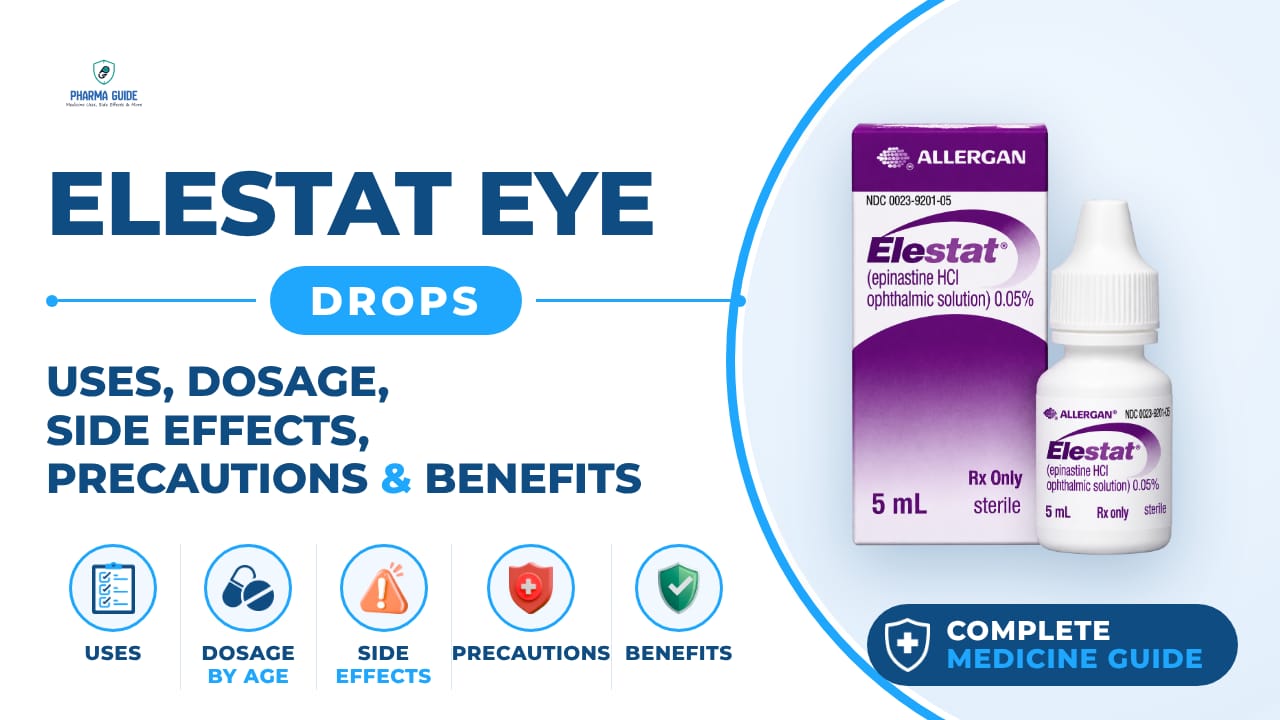
Elestat Eye Drops: Uses, Dosage, Side Effects, Precautions and Alternates
| Generic name | epinastine ophthalmic |
|---|---|
| Drug class | Ophthalmic antihistamines and decongestants |
| Forms | Ophthalmic solution (eye drops) |
Quick overview
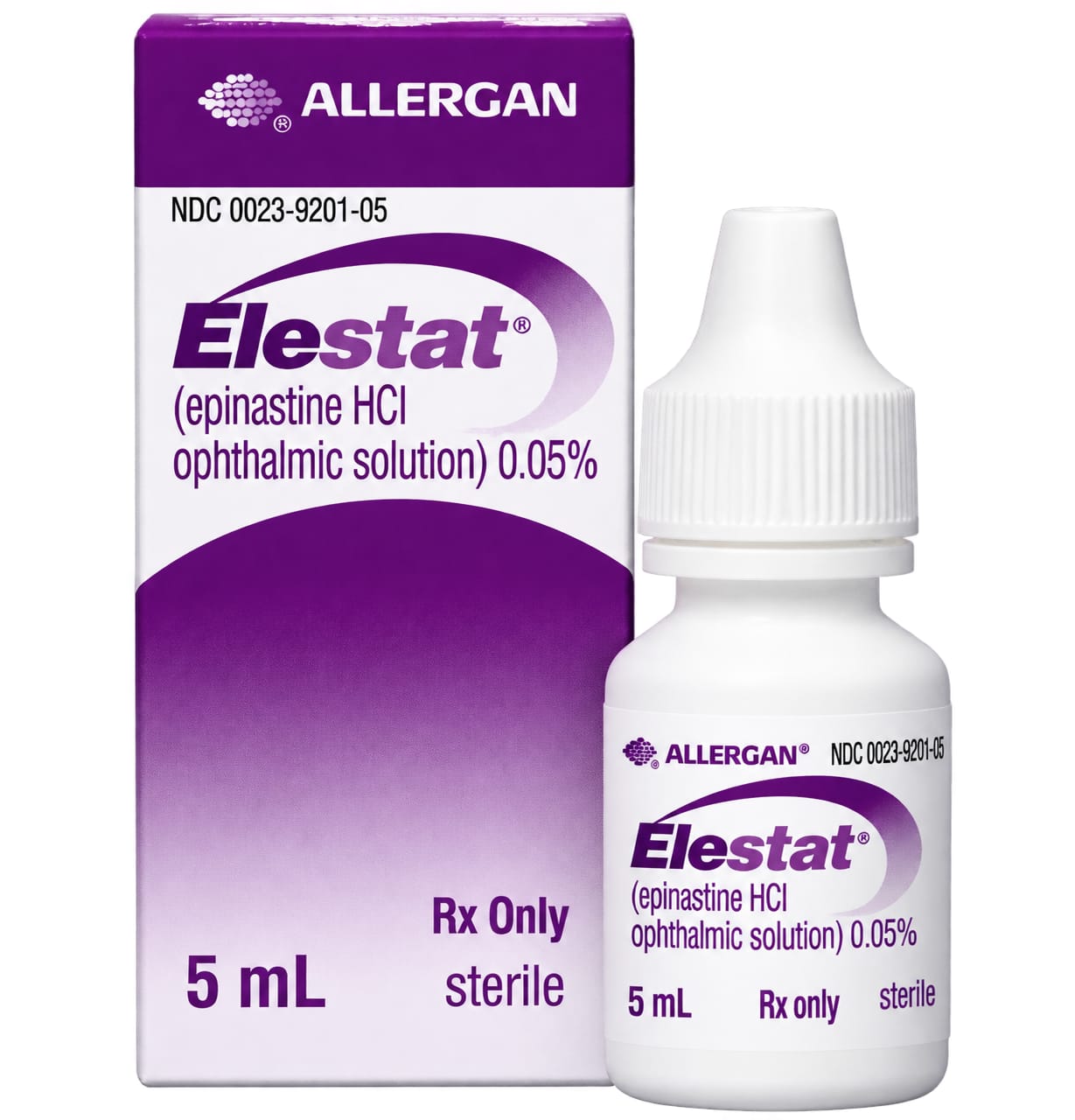
Elestat Eye Drops contain epinastine, an ophthalmic antihistamine that helps prevent eye itching caused by allergic conjunctivitis. The drops work by blocking histamine's effects in the eye and are typically used twice daily. They are for eye use only and should not be used to relieve irritation caused by contact lenses.
What is Elestat Eye Drops
Elestat eye drops contain epinastine, an antihistamine that reduces the effects of a natural chemical called histamine in the body. Histamine can cause sneezing, itching, watery eyes, and a runny nose.
Elestat Eye Drops uses
- Prevents itching of the eyes caused by allergies (allergic conjunctivitis)
Benefits of Elestat Eye Drops
- Reduces eye itching caused by allergies
- Works quickly, with effects starting within minutes after exposure to the allergen
- Effects last long enough that using it twice a day is enough
How Elestat Eye Drops works
Epinastine blocks a receptor that histamine attaches to in the eye, and it also stops histamine from being released from certain cells. This reduces the itching and irritation caused by allergies.
Elestat Eye Drops dosage
Use the eye drops exactly as your doctor prescribes, not in larger or smaller amounts or for longer than recommended. Wash your hands before using the eye drops.
Tilt your head back slightly and pull down your lower eyelid to make a small pocket, hold the dropper above the eye with the tip pointing down, look up and away, then squeeze out a drop and close your eye. Gently press a finger to the inside corner of the eye near the nose for about a minute to keep the drop from draining into the tear duct.
If you need more than one drop in the same eye, wait about 5 minutes before putting in the next one. Wait at least 10 minutes before using any other eye drops your doctor has prescribed.
Do not let the dropper tip touch your eye, hands, or any other surface, to avoid contaminating the drops. Do not use the drops if the liquid has changed color or has particles in it; contact your doctor for a new prescription.
Do not wear contact lenses while using this medicine; remove lenses before using the drops and wait at least 10 to 15 minutes before putting lenses back in. Do not use this medicine to treat eye irritation from contact lenses.
This medicine is usually used only for a short time, until the allergy season ends, but treatment should continue through the whole period of allergen exposure even if symptoms go away.
If you miss a dose, use it as soon as you remember, but skip it if it is almost time for your next dose; do not use extra medicine to make up for a missed dose.
| Age group | Dose |
|---|---|
| Under 2 years | Safety and effectiveness not established |
| 2–17 years | 1 drop in each affected eye twice daily |
| 18–64 years | 1 drop in each affected eye twice daily |
| 65+ years | 1 drop in each affected eye twice daily |
Available forms and strengths
- Ophthalmic solution (eye drops)
Side effects of Elestat Eye Drops
Common
- Mild burning, itching, or eye irritation
- Watery eyes (increased tearing)
- Headache
- Cold symptoms such as stuffy nose, sneezing, sore throat
- Folliculosis and redness of the eye (hyperemia)
Serious
- Swelling, redness, severe discomfort, crusting or drainage around the eyelids
- Severe burning, stinging, or other irritation after using the eye drops
- Signs of an allergic reaction: hives, difficulty breathing, swelling of the face, lips, tongue, or throat
- Sudden vision loss, blurred vision, tunnel vision, eye pain or swelling, or seeing halos around lights
- Fast, irregular, or pounding heartbeat, fluttering in the chest, shortness of breath, sudden dizziness, lightheadedness, or passing out
- Severe headache, confusion, slurred speech, arm or leg weakness, trouble walking, loss of coordination, feeling unsteady, very stiff muscles, high fever, profuse sweating, or tremors
Warnings and precautions
- It is not known whether Elestat could harm an unborn baby. This medicine should only be used during pregnancy if your doctor decides the benefit is worth the possible risk. Tell your doctor if you are pregnant or plan to become pregnant.
- It is not known if this medicine passes into human breast milk. Talk to your doctor before breastfeeding while using this medicine.
- For ophthalmic use only; do not swallow or inject. Do not use Elestat for contact-lens-related eye irritation. Remove contact lenses before using the drops. If the product contains benzalkonium chloride, wait at least 10 minutes before reinserting lenses.
- Do not let the dropper tip touch the eye, eyelids, fingers, or other surfaces, as contamination can cause eye infection. Keep the bottle tightly closed when not in use.
- Do not wear contact lenses if the eye is red or irritated. Use only as directed for allergic conjunctivitis; persistent or worsening eye symptoms should be evaluated by an eye specialist.
- Common eye-related effects can include burning, itching, redness, and folliculosis. Safety and effectiveness in children under 2 years have not been established.
- Do not let the tip of the dropper touch your eyes, hands, or any other surface. If it becomes contaminated, it could cause an eye infection that may lead to vision loss or serious eye damage.
- Do not use this medicine to treat eye irritation caused by contact lenses.
- This medicine should not be given to a child younger than 2 years old without medical advice, since safety in younger children hasn't been established.
- Do not use this medicine while wearing contact lenses, since a preservative in the drops can discolor soft contact lenses. Wait at least 15 minutes after using the drops before putting your contacts back in.
- Do not use other eye medicines during treatment with this medicine unless your doctor tells you to.
- This medicine is for use in the eyes only. It should never be injected or taken by mouth.
Storage
- Store at room temperature away from moisture and heat
- Do not freeze
- Keep the bottle tightly closed when not in use
- Keep out of the reach of children
When to see a doctor
- Get emergency medical help right away if you have signs of an allergic reaction such as hives, difficulty breathing, or swelling of your face, lips, tongue, or throat.
- Stop using the drops and call your doctor right away if you have swelling, redness, severe discomfort, crusting or drainage around your eyelids, or severe burning, stinging, or other irritation after using the drops.
- Get medical help right away for serious eye symptoms like sudden vision loss, blurred vision, tunnel vision, eye pain or swelling, or seeing halos around lights.
- Get medical help right away for serious heart symptoms such as a fast, irregular, or pounding heartbeat, fluttering in your chest, shortness of breath, or sudden dizziness or fainting.
- Get medical help right away for a severe headache, confusion, slurred speech, arm or leg weakness, trouble walking, loss of coordination, feeling unsteady, very stiff muscles, high fever, heavy sweating, or tremors.
- If the eye drop liquid has changed color or has particles in it, do not use it, and contact your doctor for a new prescription.
- If someone accidentally swallows this medicine, seek emergency medical attention or contact your local poison control center.
Alternatives
- Alaway / Zaditor
- Azelastine ophthalmic drops
- Bepotastine ophthalmic drops
Watch the video
FAQs
What is Elestat Eye Drops used for?
Elestat Eye Drops are used to prevent itching of the eyes caused by allergies (allergic conjunctivitis).
How often should Elestat Eye Drops be used?
The usual dose is 1 drop in each affected eye twice daily for ages 2 years and older.
Can I wear contact lenses while using Elestat Eye Drops?
No, you should remove contact lenses before using the drops and wait at least 10 to 15 minutes before putting them back in. This medicine should not be used to treat eye irritation caused by contact lenses.
What should I do if I miss a dose of Elestat Eye Drops?
Use the missed dose as soon as you remember, but skip it if it is almost time for your next dose. Do not use extra medicine to make up for a missed dose.
What are the common side effects of Elestat Eye Drops?
Common side effects include mild burning, itching, or eye irritation, watery eyes, headache, cold symptoms like stuffy nose or sore throat, and folliculosis or redness of the eye.
General information, not medical advice
Your prescriber and the leaflet in your pack know your situation. This page does not.
- Follow your prescriber and the leaflet
- Don't start, stop, or change a dose on your own
- Doses and warnings differ by country and product
Sources
Video
Related medicines
Pataday Eye Drops: Uses, Dosage, Side Effects, Precautions and Alternates
Ophthalmic antihistamines and decongestants
Pataday Eye Drops relieve itchy, red allergy eyes by blocking histamine. Learn uses, dosage, side effects, warnings, and when to see a doctor.
Lastacaft Eye Drops: Uses, Dosage, Side Effects, Precautions and Alternates
Ophthalmic antihistamines and decongestants
Lastacaft Eye Drops (alcaftadine) relieve itchy, allergic eyes by blocking histamine. Learn uses, once-daily dosage, side effects, and precautions.