
Safety
General information, not medical advice
Your prescriber and the leaflet in your pack know your situation. This page does not.
- Follow your prescriber and the leaflet
- Don't start, stop, or change a dose on your own
- Doses and warnings differ by country and product
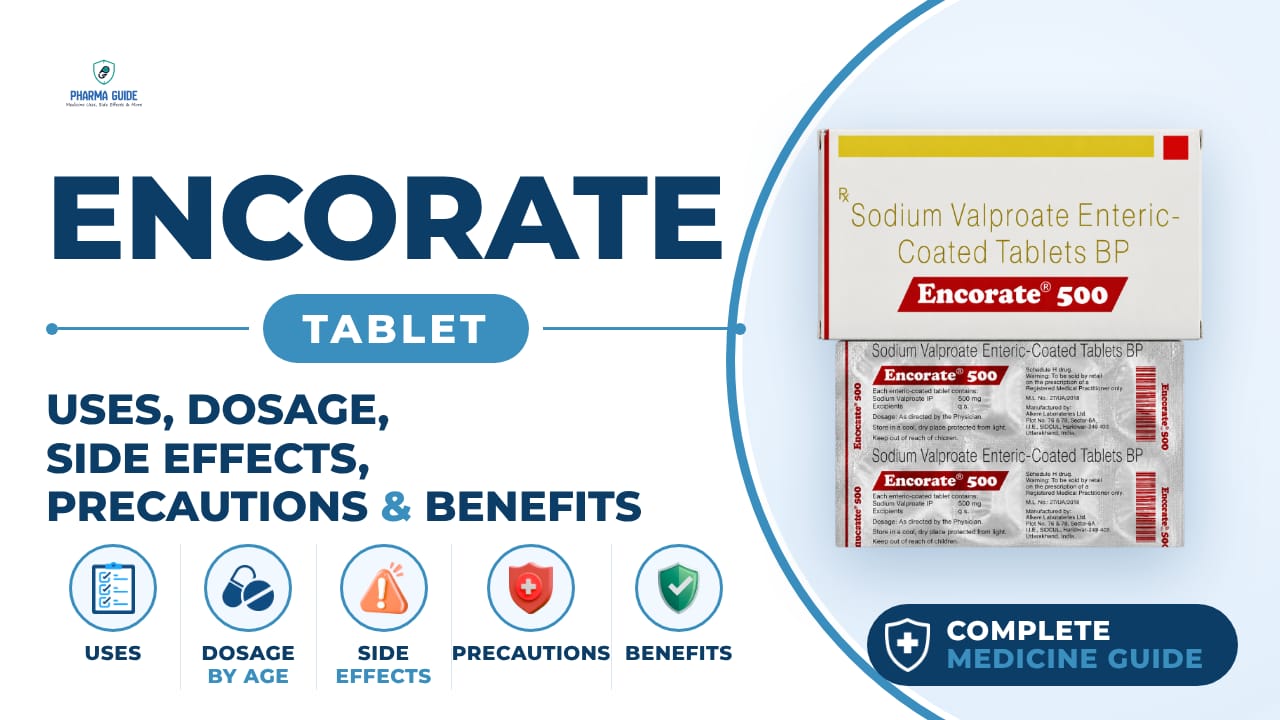
Encorate Tablet: Uses, Dosage, Side Effects, Precautions and Alternates
| Generic name | Sodium Valproate |
|---|---|
| Drug class | Anticonvulsant |
| Forms | Tablet, Injection, Syrup, Oral solution |
Quick overview
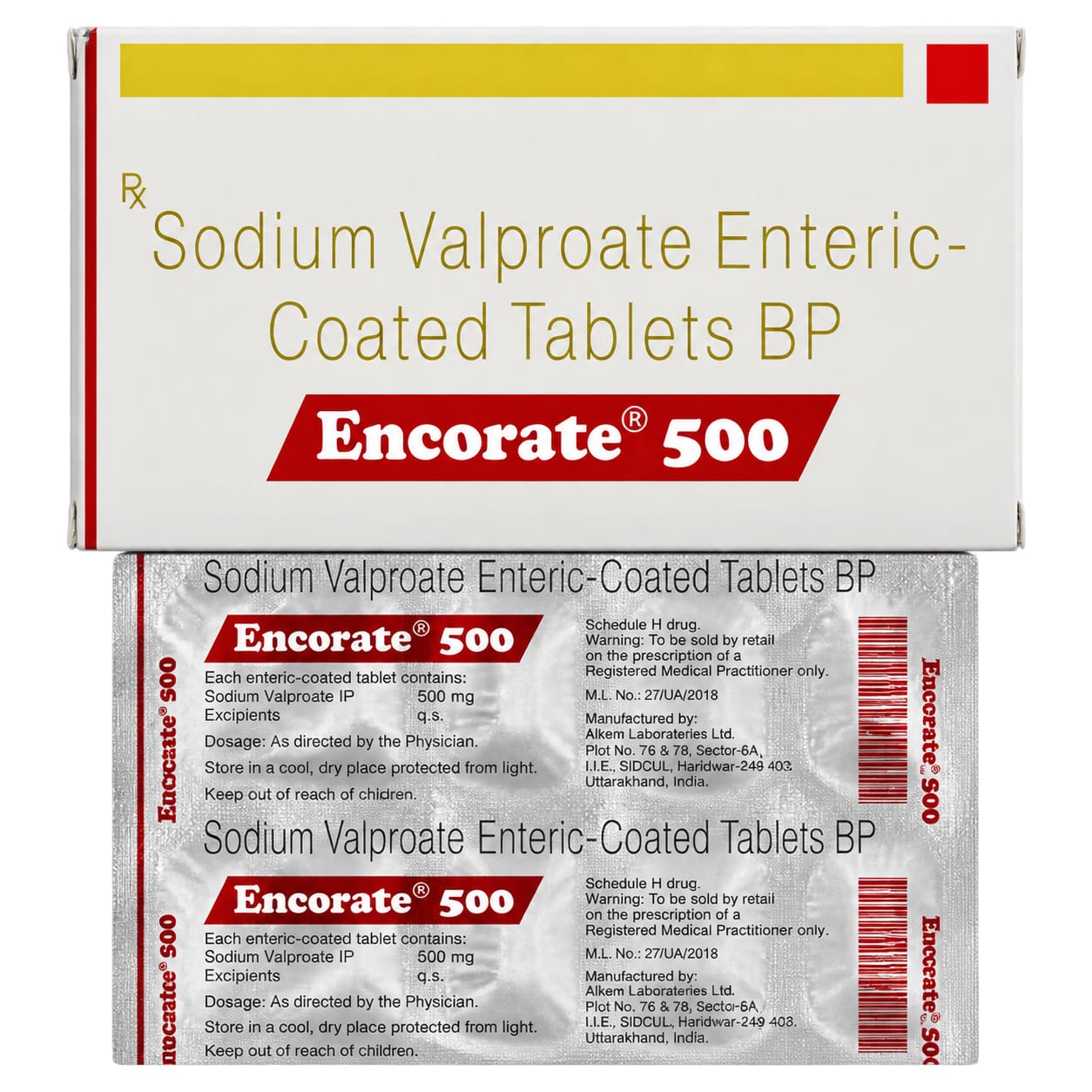
Encorate Tablet contains sodium valproate, an anticonvulsant medicine. It is used to treat epilepsy, manage bipolar disorder, and prevent migraine attacks. It works by calming overactive nerve activity in the brain and should be used exactly as prescribed by a doctor.
What is Encorate Tablet
Encorate Tablet is a prescription medicine that contains sodium valproate, an anticonvulsant (antiepileptic) medicine used to treat seizures, bipolar disorder, and to prevent migraines.
Encorate Tablet uses
- Epilepsy (controls and prevents seizures)
- Bipolar disorder (stabilizes mood and reduces episodes of mania and depression)
- Migraine prevention (reduces frequency of migraine attacks)
Benefits of Encorate Tablet
- Controls seizures
- Stabilizes mood
- Prevents migraines
- Well-tolerated
- Effective for various types of epilepsy
How Encorate Tablet works
This medicine calms down overactive nerve activity in the brain by increasing a calming brain chemical called GABA. This helps control seizures, stabilize mood, and reduce migraine attacks.
Encorate Tablet dosage
Take exactly as prescribed by your doctor; do not change the dose or stop early on your own. Swallow the tablet whole with water; do not chew, crush, or break it. Take it with food to help reduce stomach upset. Try to take it at the same time every day to keep steady levels in the body. Do not stop taking this medicine suddenly without your doctor's advice, as this can bring back seizures or mood swings.
Blood tests may be needed during treatment to check liver function and blood counts. Children may need careful dose adjustment and monitoring by a doctor. Older adults may be more sensitive to side effects and need careful dosing.
| Age group | Dose |
|---|---|
| Children (2–12 Years) | 10–15 mg/kg/day initially, increased gradually as required |
| Adolescents (12–17 Years) | 250–500 mg/day (adjusted as needed) |
| Adults (18–64 Years) | 500 mg/day initially (adjusted according to condition) |
| Older Adults (65+ Years) | 250–500 mg/day (adjusted based on response) |
Available forms and strengths
- Tablet
- Injection
- Syrup
- Oral solution
Side effects of Encorate Tablet
Common
- Loss of appetite
- Nausea
- Vomiting
- Sleepiness
- Hair loss
- Weight gain
- Tremor
- Dizziness
- Diarrhoea
- Stomach pain
- Headache
- Upper abdominal pain
- Skin rashes
- Unsteadiness while walking
Serious
- Liver function abnormal / liver inflammation or injury
- Pancreatitis (inflammation of the pancreas)
- Severe allergic skin reactions
- Changes in blood cell counts, increased bruising or bleeding
- Confusion or mood changes, suicidal thoughts
- Rash, swelling of the face or lips, wheezing or difficulty breathing
Warnings and precautions
- Use with caution if you have liver disease, pancreatitis, or urea cycle disorders, and get regular liver function checks.
- Do not take this medicine if you are allergic to it. It should not be used in pregnancy for epilepsy unless there is no alternative, and it is not recommended for women who could become pregnant unless a pregnancy-prevention plan is followed. It is also unsuitable for people with significant liver disease.
- This medicine should not be used if you have urea cycle disorders, as it can cause serious complications related to ammonia build-up. Avoid this medicine if you have a history of pancreatitis, since it may cause it to come back. This medicine should not be used with certain antibiotics (like meropenem or imipenem), which can make it much less effective and increase the risk of seizures returning. Do not stop this medicine suddenly without medical advice, as it can cause seizures to return or worsen your condition.
- This medicine is generally unsafe in pregnancy because it can harm the developing baby. It should only be used in pregnancy if there is no suitable alternative, and a pregnancy-prevention plan should be discussed with your doctor.
- Use with caution while breastfeeding. Talk to your doctor about the risks and benefits, and watch the baby for unusual bruising, bleeding, jaundice, or other signs of liver problems.
- This medicine is probably safe in people with kidney disease, and dose adjustment usually isn't needed, but check with your doctor.
- Use with caution if you have liver disease; your dose may need to be adjusted. It is not recommended for people with severe liver disease.
- Alcohol can increase drowsiness and sleepiness when combined with this medicine, so it is best avoided.
- Do not drive or use machinery while taking this medicine, as it can cause drowsiness, dizziness, or unsteadiness.
Storage
- Store in a cool, dry place away from light and moisture.
- Keep out of reach of children.
- Store below 30° C
- Keep the tablets in their original packaging
- Do not use the medication after the expiry date shown on the pack
When to see a doctor
- Stop the medicine and get help right away if you notice a rash, swelling of the face or lips, wheezing, or difficulty breathing.
- Get medical help immediately if you take too much of this medicine, since an overdose can cause deep unconsciousness, slowed breathing, and dangerous heart rhythm problems. Take the pack with you to the emergency department.
- Contact your doctor if you notice signs of liver problems such as unusual tiredness, yellowing of the skin or eyes, dark urine, pale stools, stomach pain, nausea, or vomiting.
- Seek help for signs of pancreatitis such as severe stomach pain with nausea, vomiting, fever, and a fast heartbeat.
- Report any new or worsening low mood, or thoughts of self-harm, to your doctor right away.
- Seek help for signs of a blood disorder such as unexplained bruising or bleeding, pale skin, or small red spots under the skin.
- Get medical attention for signs of a severe allergic reaction such as rash, itching or swelling of the face, tongue, or throat, or difficulty breathing.
Alternatives
- Divalproex Sodium
- Levetiracetam
- Oxcarbazepine
Watch the video
FAQs
What is Encorate Tablet used for?
It is used to treat epilepsy, manage bipolar disorder, and prevent migraine attacks.
How does Encorate Tablet work?
It calms overactive nerve activity in the brain by increasing a calming brain chemical called GABA, helping control seizures, stabilize mood, and reduce migraines.
Can I stop taking Encorate Tablet suddenly?
No, you should not stop taking it suddenly without your doctor's advice, as this can bring back seizures or mood swings.
Is Encorate Tablet safe during pregnancy?
It is generally unsafe in pregnancy as it can harm the developing baby, and should only be used if there is no suitable alternative along with a pregnancy-prevention plan.
What are the serious side effects of Encorate Tablet?
Serious side effects include liver injury, pancreatitis, severe allergic skin reactions, changes in blood cell counts, and confusion or mood changes including suicidal thoughts.
General information, not medical advice
Your prescriber and the leaflet in your pack know your situation. This page does not.
- Follow your prescriber and the leaflet
- Don't start, stop, or change a dose on your own
- Doses and warnings differ by country and product
Sources
- Indian Pharmacopoeia
- CDSCO, manufacturer labeling
- Central Drugs Standard Control Organisation (CDSCO), Ministry of Health & Family Welfare, Government of India, approved drug and schedule listings.
- National List of Essential Medicines (NLEM) 2022, Government of India.
- Manufacturer's package insert / prescribing information for Encorate 200 Tablet.
- World Health Organization, ATC/DDD classification and Model Formulary for the active ingredient.
- https://www.ncbi.nlm.nih.gov/books/NBK559112/
- https://www.mayoclinic.org/drugs-supplements/valproic-acid-oral-route/description/drg-20072931
- https://medlineplus.gov/druginfo/meds/a682412.html
- https://www.nhs.uk/medicines/sodium-valproate/
- https://www.medicinesforchildren.org.uk/medicines/sodium-valproate-for-preventing-seizures/
- https://pubchem.ncbi.nlm.nih.gov/compound/Sodium-Valproate
- https://go.drugbank.com/drugs/DB00313
- Sodium Valproate 500mg Gastro-Resistant Tablets - Summary of Product Characteristics (SmPC)
- Rahman, M., Awosika, A. O., & Nguyen, H. (2024). Valproic acid. StatPearls - NCBI Bookshelf.
- Muthaffar, O. Y., et al. (2021). Valproic acid for children below 2 years of age with epilepsy. Neurosciences (Riyadh, Saudi Arabia)
- National Center for Biotechnology Information (2024). PubChem Compound Summary for CID 16760703, Valproate Sodium.
- KD Tripathi. Antiepileptic Drugs. Essentials of medical pharmacology. Eighth Edition. 2019.
- H. M. Emrich, D. v. Zerssen, W. Kissling, H. J. Moller and A. Windorfer. Effect of sodium valproate on mania. 1980.
- R. M. Pinder, R. N. Brogden, T. M. Speight and G. S. Avery. Sodium Valproate: A Review of its Pharmacological Properties and Therapeutic Efficacy in Epilepsy. 2012.
- Sanofi-aventis S.A. Electronic Medicines Compendium (EMC). 2022.
- Aspire Pharma Ltd. Electronic Medicines Compendium (EMC). 2021.
Video
Related medicines
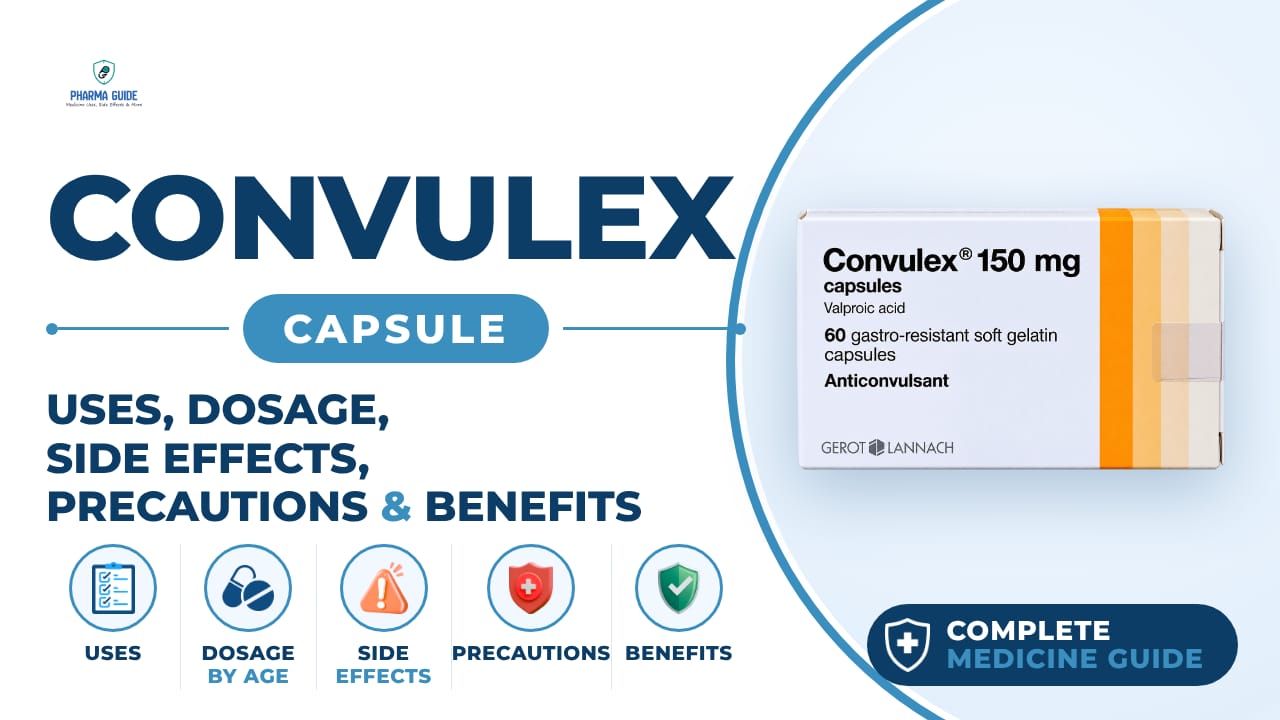
Convulex Capsule: Uses, Dosage, Side Effects, Precautions and Alternates
Anticonvulsant
Convulex Capsule (valproic acid) treats epilepsy and bipolar disorder by boosting GABA activity. Learn about dosage, side effects, warnings, and precautions.
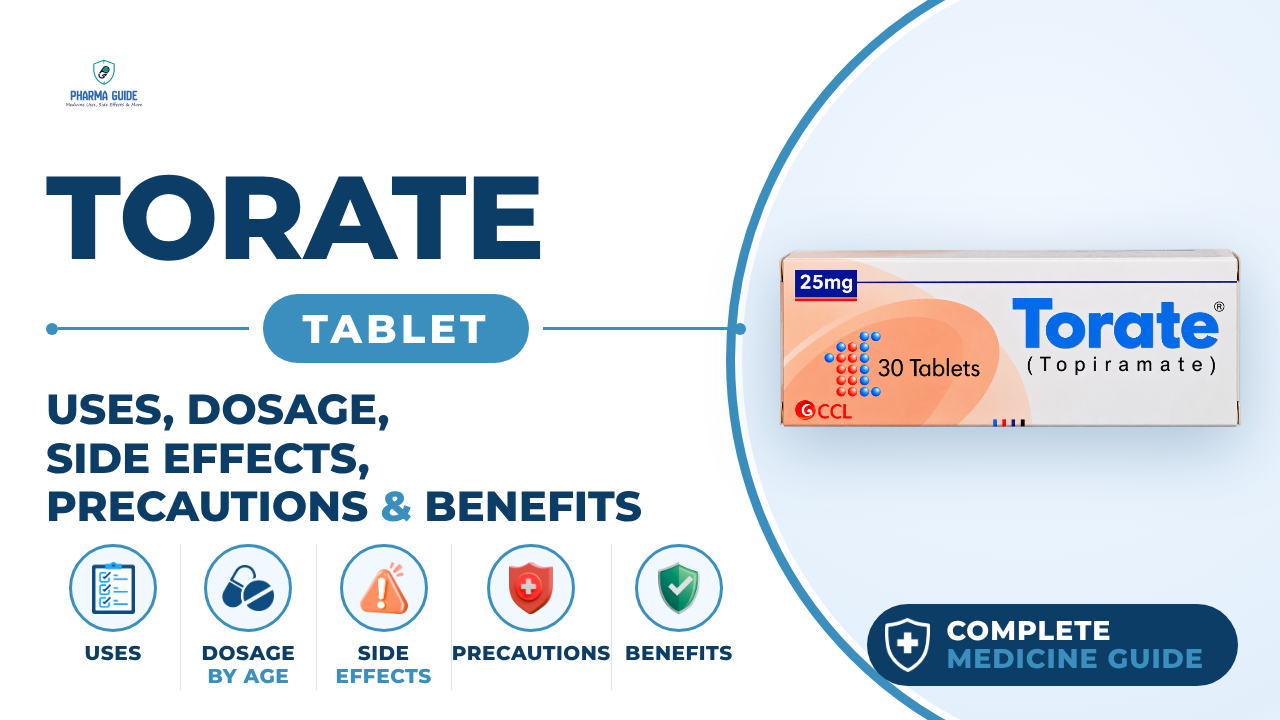
Torate Tablet: Uses, Dosage, Side Effects, Precautions and Alternates
Anticonvulsant
Torate Tablet (Topiramate) treats seizures and prevents migraines. Learn about its uses, dosage, side effects, warnings, and precautions before use.