
Safety
General information, not medical advice
Your prescriber and the leaflet in your pack know your situation. This page does not.
- Follow your prescriber and the leaflet
- Don't start, stop, or change a dose on your own
- Doses and warnings differ by country and product
Endometrin Vaginal Tablet: Uses, Dosage, Side Effects, Precautions and Alternates
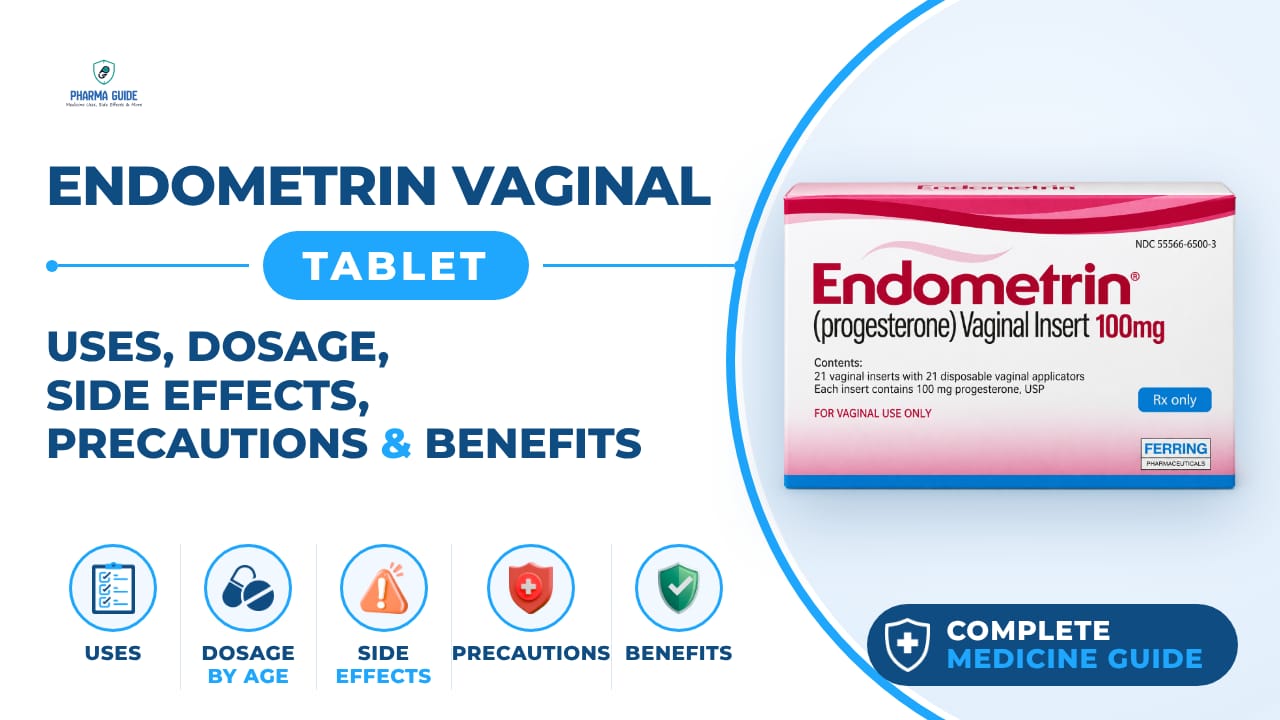
| Generic name | Progesterone vaginal |
|---|---|
| Drug class | Progestogens |
| Forms | Vaginal tablet (pessary/vaginal insert) |
Quick overview
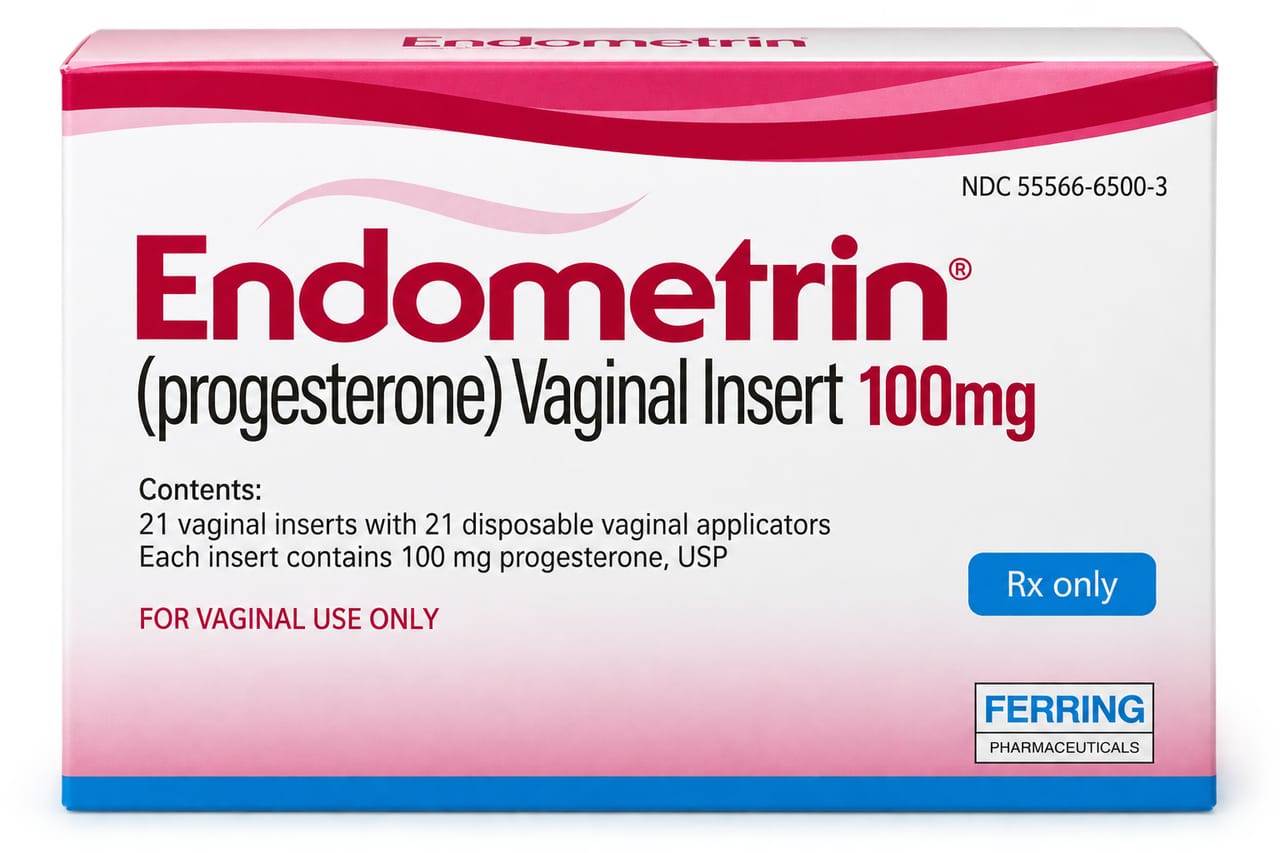
Endometrin Vaginal Tablet contains progesterone, a natural female hormone, and belongs to the progestogens drug class. It is used as part of fertility treatment, such as IVF, to help women who lack sufficient natural progesterone become pregnant and maintain early pregnancy. It is inserted into the vagina using a special applicator and is typically started the day after egg retrieval.
What is Endometrin Vaginal Tablet
Endometrin is a vaginal tablet (pessary) that contains progesterone, a natural female hormone. It is used to help women become pregnant and stay pregnant during fertility treatment.
Endometrin Vaginal Tablet uses
- Used in fertility treatment as part of Assisted Reproductive Technology (ART), such as IVF, for women unable to get pregnant due to a lack of natural progesterone
- Supports embryo implantation and helps maintain early pregnancy in infertile women less than 35 years of age
Benefits of Endometrin Vaginal Tablet
- Provides progesterone support during fertility treatment
- Helps prepare and maintain the uterine lining (endometrium) for embryo implantation
- Supports the luteal phase after ovulation or egg retrieval
- Helps support an early pregnancy in women undergoing assisted reproductive technology (ART)
- Delivers progesterone directly through the vaginal route, providing targeted hormonal support
How Endometrin Vaginal Tablet works
Progesterone changes the lining of the uterus so it is ready to receive a fertilized egg, and this helps the uterus stay receptive for implantation. Once an embryo attaches, progesterone helps keep the pregnancy going.
Endometrin Vaginal Tablet dosage
Use exactly as prescribed and follow all directions on your prescription label; do not use in larger or smaller amounts or for longer than recommended. This medicine is for vaginal use only — do not swallow it. Insert the tablet into the vagina using only the applicator provided in the pack. Use a disposable applicator only once and then throw it away. Wash your hands thoroughly with soap and water before use.
Remove one tablet from the blister pack and place it securely in the space at the end of the applicator. You can insert the applicator while standing, sitting, or lying on your back with your knees bent; gently insert the thin end well into the vagina, then push the plunger to release the tablet. If using a reusable applicator, rinse it in warm running water, dry with a soft tissue, and keep it for next time.
If this medicine makes you dizzy or drowsy, consider using it at bedtime. Do not use another vaginal medicine within 6 hours before or after using this medicine, and avoid vaginal yeast treatments unless your doctor tells you to. Use it regularly at the same time each day for the best effect.
This medicine is normally started the day after egg retrieval and may continue for up to 10 weeks. This medicine has not been studied for effectiveness in women 35 years of age and older, and is not intended for use in women 65 and older.
| Age group | Dose |
|---|---|
| Under 18 years | Safety and effectiveness not established |
| Adult women – Assisted reproductive technology (ART) | 100 mg vaginally 2 or 3 times daily, depending on the fertility protocol |
| Treatment start | Commonly begins the day after oocyte retrieval |
| Treatment duration | Continued for up to 10 weeks total, or as directed by the fertility specialist |
| 65+ years | Not routinely indicated; safety and effectiveness not established |
Available forms and strengths
- Vaginal tablet (pessary/vaginal insert)
Side effects of Endometrin Vaginal Tablet
Common
- Dizziness, confusion, drowsiness, tiredness
- Headache, mood changes, feeling nervous or irritable
- Stomach pain, nausea, diarrhea, constipation
- Bloating, swelling in hands or feet
- Breast pain, swelling, or tenderness
- Cramps, pelvic pain
- Vaginal itching, burning, or discharge
- Insomnia (difficulty sleeping)
- Vaginal fungal infections such as thrush
- Vomiting
Serious
- Unusual vaginal bleeding
- Pain or burning when urinating
- Symptoms of depression such as sleep problems, weakness, mood changes
- A breast lump
- Sudden vision problems, severe headache, or pain behind the eyes
- Heart attack symptoms — chest pain or pressure, pain spreading to the jaw or shoulder, nausea, sweating
- Liver problems — nausea, upper stomach pain, itching, tiredness, loss of appetite, dark urine, clay-colored stools, yellowing of the skin or eyes
- Signs of a stroke — sudden numbness or weakness (especially on one side), sudden severe headache, slurred speech, problems with speech or balance
- Signs of a blood clot in the lung — chest pain, sudden cough, wheezing, rapid breathing, coughing up blood
- Signs of a blood clot in a leg — pain, swelling, warmth, or redness
- Signs of an allergic reaction — hives, difficulty breathing, swelling of the face, lips, tongue, or throat
Warnings and precautions
- Do not use this medicine if you are pregnant unless it is part of your fertility treatment. Tell your doctor right away if you become pregnant during treatment. During fertility treatment, it should generally only be used during the first three months of pregnancy unless your doctor says otherwise.
- This medicine can pass into breast milk and may affect a nursing baby, so talk to your doctor about breastfeeding while using it.
- Tell your doctor if you have kidney disease before using this medicine, so they can make sure it is safe for you.
- Do not use this medicine if you have liver disease, including certain serious liver conditions.
- This medicine can affect your thinking or reactions and may cause dizziness or drowsiness in some people, so be careful when driving or using machines until you know how it affects you.
- Do not use this medicine if you have a history of stroke or blood clot, circulation problems, liver disease, breast or uterine cancer, abnormal vaginal bleeding, or if you have recently had a tubal pregnancy or an incomplete abortion.
- Using this medicine can raise your risk of blood clots, stroke, heart attack, or breast cancer. Talk to your doctor about this risk.
- Serious, life-threatening blood clot problems in the heart, lungs, brain, or elsewhere in the body can occur during treatment. The medicine should be stopped if any of these are suspected.
- Women with a history of depression should be watched closely, and stopping the medicine may need to be considered if symptoms get worse.
- Do not use this medicine together with other vaginal products, such as antifungal treatments, because this may change how the medicine is absorbed.
- Do not stop using this medicine suddenly or lower the dose without checking with your doctor, as this may cause increased anxiety, mood changes, or increased risk of seizures.
- Following your dosing schedule closely is very important for the medicine to work, so try not to miss doses.
Storage
- Store at 20–25°C (68–77°F) at controlled room temperature
- Keep in a cool, dry place away from excessive heat and humidity
- Keep each vaginal insert in its original packaging until ready to use
- Protect from moisture and direct sunlight
- Do not freeze and avoid storing in bathrooms or other humid areas
- Keep out of reach and sight of children and pets
When to see a doctor
- Get emergency help right away if you have signs of an allergic reaction, such as hives, trouble breathing, or swelling of the face, lips, tongue, or throat
- Call your doctor right away if you have pain in your calves or chest, sudden shortness of breath, coughing up blood, severe headache or vomiting, dizziness, fainting, changes in vision or speech, weakness or numbness in an arm or leg, or worsening depression — these can be signs of a blood clot or other serious problem
- Call your doctor if you have irregular or unusual vaginal bleeding
- Call your doctor if you miss more than one dose
- If you think you have used too much of this medicine, seek urgent medical attention even if you feel fine, by contacting your doctor, going to the nearest hospital emergency department, or calling your local poison control center
Alternatives
- Cyclogest
- Progesterone in Oil Injection
- Progesterone Vaginal Suppositories
- Prometrium
- Crinone
Watch the video
FAQs
What is Endometrin Vaginal Tablet used for?
It is used as part of fertility treatment, such as IVF, to help women who lack sufficient natural progesterone become pregnant and maintain early pregnancy by supporting embryo implantation and the uterine lining.
When should Endometrin Vaginal Tablet be started?
It is typically started the day after egg retrieval and may continue for up to 10 weeks.
How is Endometrin Vaginal Tablet used?
It is inserted into the vagina using a special applicator provided in the pack, with a disposable applicator used only once. It should not be swallowed and should be used regularly at the same time each day.
What is the dosage of Endometrin Vaginal Tablet?
For adult women undergoing assisted reproductive technology, the dose is typically 100 mg vaginally 2 or 3 times daily, depending on the fertility protocol, as directed by the fertility specialist.
What are the serious side effects of Endometrin Vaginal Tablet?
Serious side effects include unusual vaginal bleeding, signs of blood clots, stroke, heart attack, liver problems, depression symptoms, a breast lump, and allergic reactions.
General information, not medical advice
Your prescriber and the leaflet in your pack know your situation. This page does not.
- Follow your prescriber and the leaflet
- Don't start, stop, or change a dose on your own
- Doses and warnings differ by country and product
Sources
- Drugs.com – Endometrin (https://www.drugs.com/endometrin.html)
- Australian Commission on Safety and Quality in Health Care – Endometrin Medicine Finder (https://www.safetyandquality.gov.au/medicine-finder/endometrin)
- Endometrin.com and FDA Prescribing Information (https://www.endometrin.com/)
Video
Related medicines

Norgestrel Tablet: Uses, Dosage, Side Effects, Precautions and Alternates
Progestogens
Norgestrel Tablet is a progestin-only birth control pill (Opill, Ovrette) taken daily. Learn how it works, dosage, side effects, and warnings.
Prometrium Capsule: Uses, Dosage, Side Effects, Precautions and Alternates
Progestogens
Prometrium Capsule contains progesterone, used to induce periods, protect the uterine lining during estrogen therapy, and treat secondary amenorrhea in women.