
Safety
General information, not medical advice
Your prescriber and the leaflet in your pack know your situation. This page does not.
- Follow your prescriber and the leaflet
- Don't start, stop, or change a dose on your own
- Doses and warnings differ by country and product
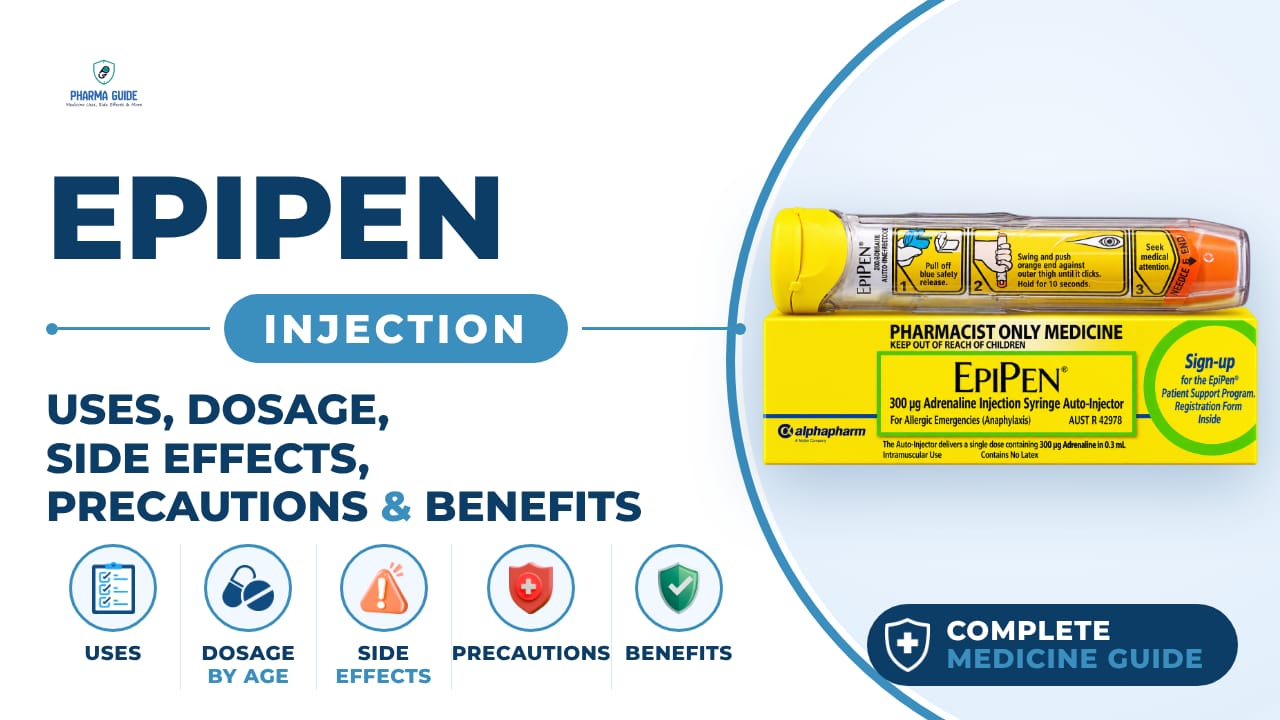
EpiPen Injection: Uses, Dosage, Side Effects, Precautions and Alternates
| Generic name | epinephrine |
|---|---|
| Drug class | non-selective alpha and beta-adrenergic receptor agonist |
| Forms | Single-dose pre-filled auto-injector (injection) |
Quick overview
EpiPen Injection contains epinephrine, a non-selective alpha and beta-adrenergic receptor agonist delivered through a single-dose auto-injector. It is used for the emergency treatment of severe allergic reactions (anaphylaxis) caused by insect stings or bites, foods, drugs, allergen immunotherapy, diagnostic testing substances, and other allergens, as well as idiopathic or exercise-induced anaphylaxis. EpiPen works quickly to help reverse dangerous drops in blood pressure and ease breathing difficulties. It must always be followed by emergency medical care, even if symptoms improve after use.
What is EpiPen Injection
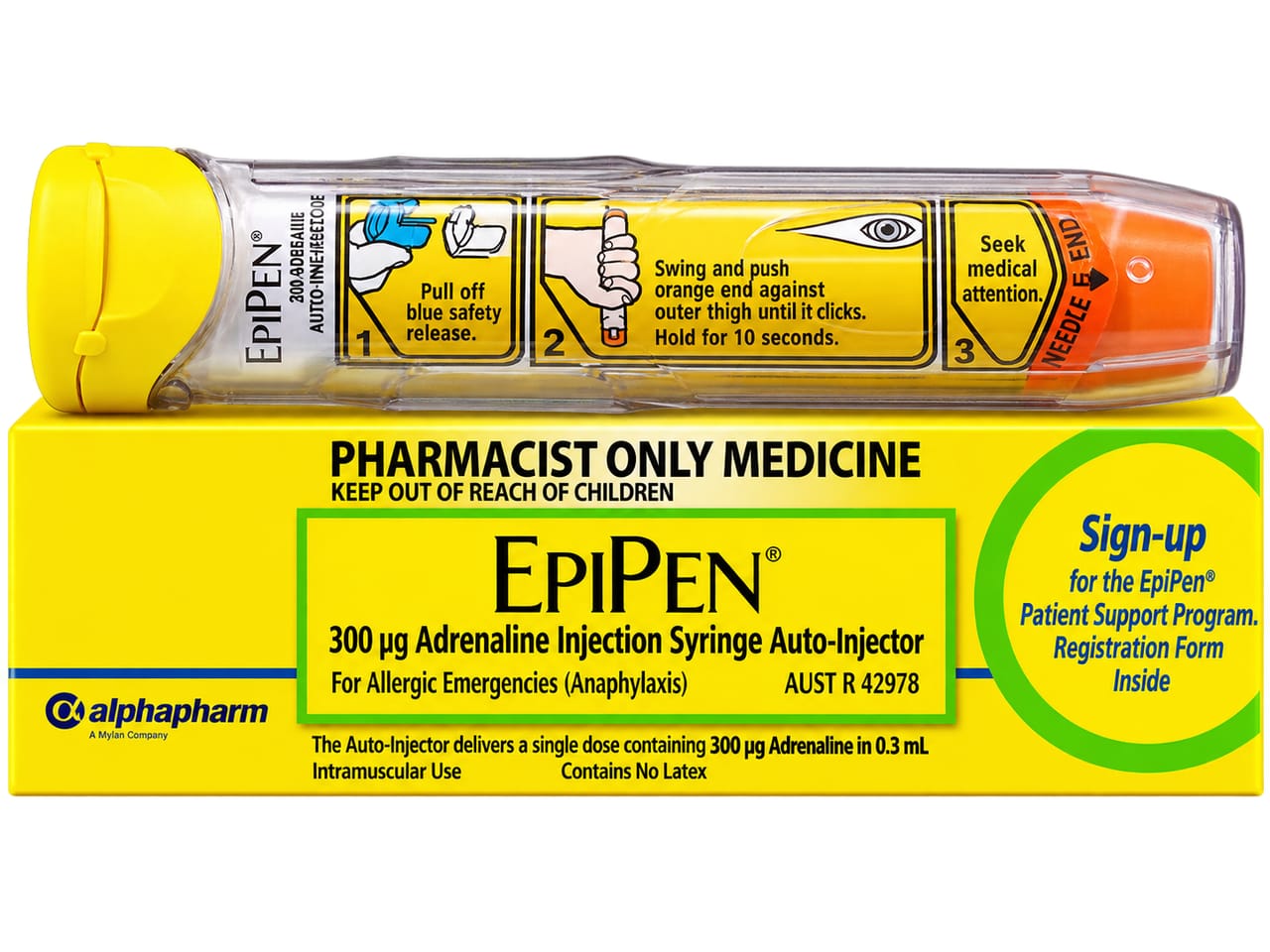
EpiPen is a single-dose auto-injector that delivers epinephrine, a medicine used to treat severe allergic reactions (anaphylaxis) that can be life threatening and happen within minutes.
EpiPen Injection uses
- Emergency treatment of severe allergic reactions (anaphylaxis) caused by insect stings or bites, foods, drugs, allergen immunotherapy, diagnostic testing substances, and other allergens
- Treatment of idiopathic anaphylaxis or exercise-induced anaphylaxis
Benefits of EpiPen Injection
- First-line emergency treatment for anaphylaxis
- Helps improve breathing
- Raises dangerously low blood pressure
- Reduces severe airway swelling
- Can rapidly reverse life-threatening allergic-reaction symptoms
How EpiPen Injection works
Epinephrine acts on receptors throughout the body. It tightens blood vessels to help reverse the dangerous drop in blood pressure seen in severe allergic reactions, and it relaxes the muscles around the airways to ease breathing trouble, wheezing, and shortness of breath.
EpiPen Injection dosage
Inject into the middle of the outer thigh (upper leg); it can be given through clothing if needed. Do not inject into a vein, the buttocks, fingers, toes, hands, or feet. Hold the auto-injector firmly against the outer thigh for at least 3 full seconds so the full dose is delivered.
When giving an injection to a young child, hold the child's leg firmly in place and limit movement before and during the injection to prevent injury. Each auto-injector is for one single use only and cannot be reused.
Always carry two auto-injectors, since one dose may not be enough to treat a serious reaction. A second dose may be given if symptoms continue or come back, or if the first device was activated by accident before the dose was given. Get emergency medical help right away after using the auto-injector, even if symptoms seem to improve. If more than two doses are needed, any further doses must be given by a healthcare provider.
Check the liquid in the viewing window regularly; it should be clear and colorless. Remove and throw away the blue safety top right after use, since it can be a choking hazard for children.
| Age group | Dose |
|---|---|
| Children 7.5–15 kg | 0.1 mg IM auto-injector, where available |
| Children 15–30 kg | 0.15 mg IM auto-injector |
| Over 30 kg / adolescents / adults | 0.3 mg IM auto-injector |
Available forms and strengths
- Single-dose pre-filled auto-injector (injection)
- 0.1 mg
- 0.15 mg
- 0.3 mg
Side effects of EpiPen Injection
Common
- Anxiety or nervousness
- Restlessness
- Tremor (shakiness)
- Weakness
- Dizziness
- Sweating
- Palpitations (pounding or irregular heartbeat)
- Paleness of the skin
- Nausea and vomiting
- Headache
- Breathing difficulties
Serious
- Dangerous rise in blood pressure that can lead to bleeding in the brain, especially in elderly patients
- Irregular heart rhythms (arrhythmias), including rare fatal ventricular fibrillation
- Angina (chest pain) in people with coronary artery disease
- Stress cardiomyopathy (a temporary heart condition) with symptoms like fatigue, shortness of breath, dizziness, and swelling in the legs or ankles
- Serious skin and soft tissue infections at the injection site, including rare cases of necrotizing fasciitis and gas gangrene
- Loss of blood flow if accidentally injected into fingers, hands, or feet
- Lacerations, bent needles, or embedded needles from injection in children who move during the shot
Warnings and precautions
- EpiPen is only for emergency treatment and does not replace the need for immediate medical care. Always seek medical or hospital care after using it, and more than two doses in a row should only be given under a doctor's direct supervision.
- Never inject into a vein, the buttocks, or into fingers, hands, or feet. Injecting into the buttock may not treat the allergic reaction properly and has been linked to serious gas gangrene infections. Injecting into fingers, hands, or feet can cut off blood flow to that area.
- Rare but serious skin and soft tissue infections, including flesh-eating infections, have happened at the injection site. Seek medical care if you notice ongoing redness, warmth, swelling, or tenderness where you injected.
- Use with caution if you have heart disease, since epinephrine can worsen chest pain (angina) or cause dangerous heart rhythm problems.
- Overdose can cause extremely high blood pressure, bleeding in the brain, fluid in the lungs, and dangerous heart rhythm changes.
- When giving an injection to a young child who may kick or move, hold their leg firmly in place before and during the injection to avoid injuries like cuts or bent needles.
- Epinephrine is the preferred treatment for anaphylaxis during pregnancy and should be used the same way as in people who are not pregnant. Tell your healthcare provider if you are pregnant or planning to become pregnant.
- It is not known whether epinephrine passes into breast milk, but it should still be used the same way in breastfeeding and non-breastfeeding patients if needed for anaphylaxis.
- No routine dose adjustment is needed for kidney or liver function in anaphylaxis; epinephrine is used when urgently needed.
- Alcohol should not delay or replace epinephrine treatment.
- After anaphylaxis or epinephrine use, do not drive yourself; seek emergency medical care.
Storage
- Store at room temperature between 68°F to 77°F (20°C to 25°C)
- Do not refrigerate
- Keep the protective case in the outer carton to protect from light, since epinephrine is light sensitive
- Do not expose to extreme cold or heat; for example, do not store in a vehicle's glove box or trunk
- Keep out of the sight and reach of young children
- Replace the auto-injector if the solution is discolored (pinkish or brown), cloudy, or has particles in it
- Keep the auto-injectors in their protective cases to prevent damage; the case is not waterproof
- Throw away expired, unwanted, or unused auto-injectors in an FDA-cleared sharps disposal container; do not throw them away in household trash
- If no sharps container is available, a heavy-duty plastic household container with a tight-fitting, puncture-resistant lid can be used
- After use, take the used auto-injector to a healthcare provider for proper disposal
When to see a doctor
- Always get emergency medical help right away after using EpiPen, even if you feel better.
- If you accidentally inject EpiPen into your finger, hand, foot, or anywhere other than the outer thigh, go to the nearest emergency room right away and tell the staff exactly where you were injected.
- Call your healthcare provider right away if you notice redness that doesn't go away, swelling, tenderness, or warmth at the injection site, as this could be a sign of a serious infection.
- If you experience signs of an irregular heartbeat such as chest pain, dizziness, fainting, or sudden weakness, get medical help right away.
Alternatives
- Auvi-Q
- Adrenaclick
- Symjepi
Watch the video
FAQs
What is EpiPen Injection used for?
It is used for emergency treatment of severe allergic reactions (anaphylaxis) caused by insect stings or bites, foods, drugs, allergen immunotherapy, diagnostic testing substances, other allergens, and idiopathic or exercise-induced anaphylaxis.
How do I give an EpiPen injection?
Inject into the middle of the outer thigh, even through clothing if needed, holding the auto-injector firmly in place for at least 3 full seconds. Never inject into a vein, the buttocks, fingers, toes, hands, or feet.
Do I still need medical care after using EpiPen?
Yes, always get emergency medical help right away after using EpiPen, even if symptoms seem to improve.
Can a second dose of EpiPen be given?
A second dose may be given if symptoms continue or come back, or if the first device was activated by accident before the dose was given. Any doses beyond two must be given by a healthcare provider.
How should EpiPen be stored?
Store at room temperature between 68°F to 77°F (20°C to 25°C), avoid refrigeration, keep it in its protective case away from light, and never store it in extreme heat or cold such as a vehicle's glove box or trunk.
General information, not medical advice
Your prescriber and the leaflet in your pack know your situation. This page does not.
- Follow your prescriber and the leaflet
- Don't start, stop, or change a dose on your own
- Doses and warnings differ by country and product
Sources
- EPIPEN prescribing information and Patient Information/Instructions for Use, Asclemed USA, Inc./Enovachem Pharmaceuticals, Revised 8/2023
- epipen.com Important Safety Information, Viatris Inc.
- Medical News Today, 'EpiPen side effects: What you should know', medically reviewed by Paul Hetrick, PharmD, written by Ashley Wong, PharmD, August 1, 2024
Video
Related medicines
Auvi-Q Injection: Uses, Dosage, Side Effects, Precautions and Alternates
non-selective alpha and beta-adrenergic receptor agonist
Auvi-Q Injection is an epinephrine auto-injector for emergency anaphylaxis treatment, giving voice-guided prompts. Learn dosage, side effects, and safety

Injectafer Injection: Uses, Dosage, Side Effects, Precautions and Alternates
Iron products
Injectafer (ferric carboxymaltose) treats iron deficiency anemia and heart failure-related iron deficiency via IV. Learn uses, dosage, side effects, and