
Safety
General information, not medical advice
Your prescriber and the leaflet in your pack know your situation. This page does not.
- Follow your prescriber and the leaflet
- Don't start, stop, or change a dose on your own
- Doses and warnings differ by country and product
Escitalopram Tablet: Uses, Dosage, Side Effects, Precautions and Alternates
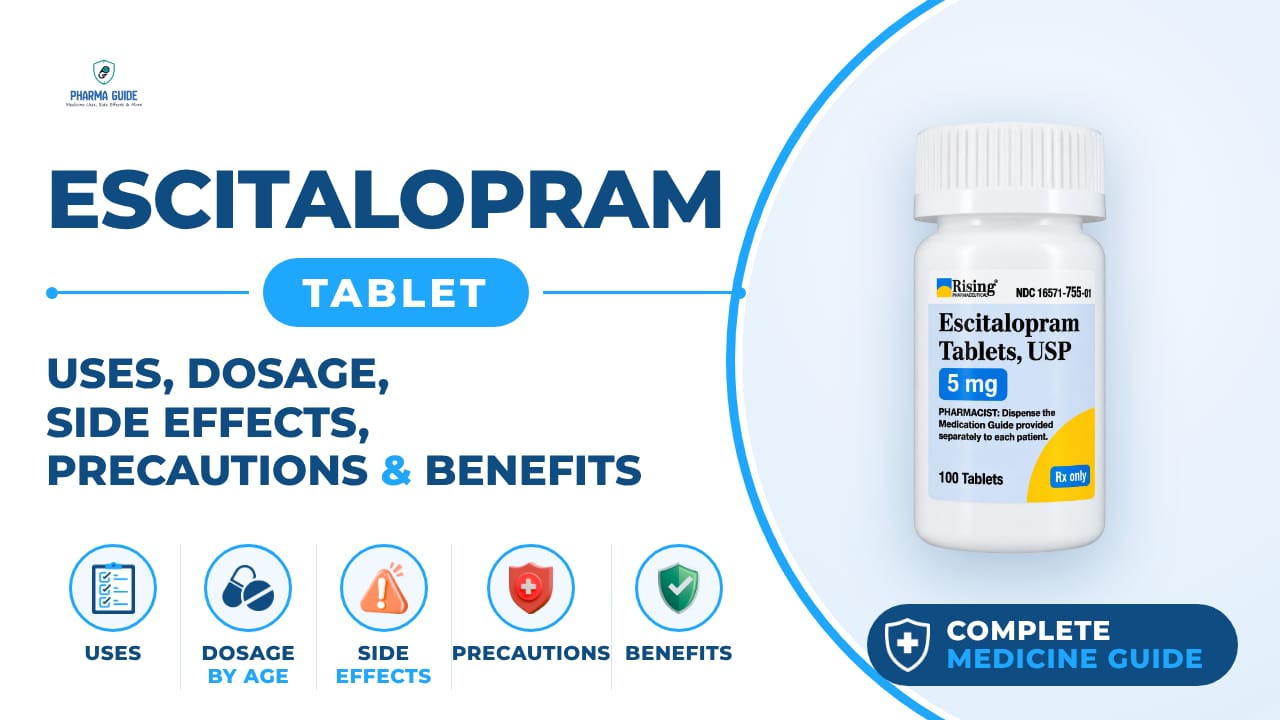
| Generic name | Escitalopram |
|---|---|
| Drug class | Selective serotonin reuptake inhibitor (SSRI) |
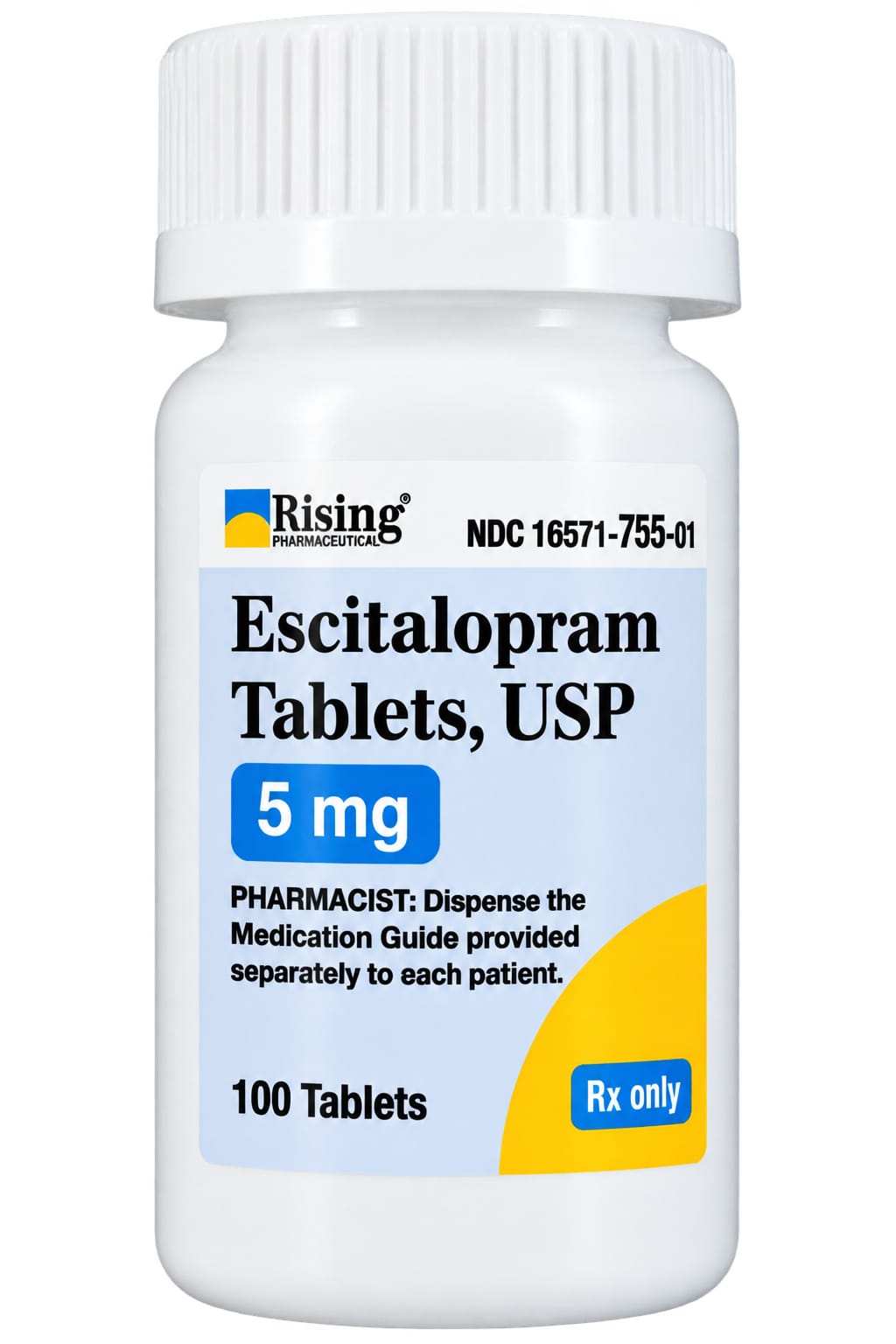
| Forms | Oral tablet (5 mg, 10 mg, 15 mg, 20 mg), Oral disintegrating tablet (10 mg, 20 mg), Oral solution/liquid (5 mg/5 mL) |
Quick overview
Escitalopram Tablet is a prescription antidepressant belonging to the selective serotonin reuptake inhibitor (SSRI) class. It is used to treat major depressive disorder, generalized anxiety disorder, obsessive-compulsive disorder, social anxiety disorder, and panic disorder. It works by increasing serotonin levels in the brain to help balance mood. It is available as a generic drug and under brand names such as Lexapro and Cipralex.
What is Escitalopram Tablet
Escitalopram is a prescription antidepressant that belongs to a group of medicines called selective serotonin reuptake inhibitors (SSRIs). It is also sold as the brand-name drug Lexapro (or Cipralex in Canada) and is available as a generic drug. It comes as a tablet and as an oral liquid.
Escitalopram Tablet uses
- Treats major depressive disorder (depression) in adults and children 12 years and older
- Treats generalized anxiety disorder (GAD) in adults
- Treats obsessive-compulsive disorder (OCD) in adults
- Treats social anxiety disorder and panic disorder
Benefits of Escitalopram Tablet
- Improves low mood, sleep, appetite, energy level, and interest in daily activities when treating depression
- Reduces anxiety, fear, unwanted thoughts, and panic attacks in frequency and severity
- May reduce the urge to perform repetitive tasks such as hand-washing, counting, or checking
How Escitalopram Tablet works
Escitalopram increases the level of serotonin, a natural brain chemical that helps maintain mood balance and affects sleep, appetite, and other body functions.
Escitalopram Tablet dosage
Take it once a day, with or without food, at around the same time every day, in the morning or evening. Swallow tablets with water; do not chew them because they taste bitter. The 10 mg and 20 mg tablets can be split into equal halves, but the 5 mg tablet should not be cut or crushed. If using the oral disintegrating tablet, place it on the tongue where it dissolves and can be swallowed without water. If using liquid, measure the dose carefully with a dosing syringe or medicine dose-measuring device, not a kitchen spoon.
Continue taking it even if you feel well; it may take several weeks, sometimes up to two months, before you feel the full benefit. Do not stop taking it suddenly without talking to your doctor; your doctor will lower your dose gradually to avoid withdrawal symptoms. If you miss a dose, take it as soon as you remember, but if it is almost time for your next dose, skip the missed one; never take two doses at once.
| Age group | Dose |
|---|---|
| Under 7 years | Not established / not recommended |
| 7–11 years | GAD: 10 mg once daily; may increase to 20 mg once daily under specialist supervision |
| 12–17 years | MDD: 10 mg once daily; may increase to 20 mg once daily. GAD: 10 mg once daily; may increase to 20 mg once daily |
| 18–64 years | 10 mg once daily; may increase to 20 mg once daily if needed |
| 65+ years | 10 mg once daily; maximum generally 10 mg/day |
Available forms and strengths
- Oral tablet (5 mg, 10 mg, 15 mg, 20 mg)
- Oral disintegrating tablet (10 mg, 20 mg)
- Oral solution/liquid (5 mg/5 mL)
Side effects of Escitalopram Tablet
Common
- Nausea
- Sleepiness/drowsiness
- Weakness/fatigue
- Dizziness
- Anxiousness
- Difficulty sleeping (insomnia)
- Sexual problems (decreased sex drive, difficulty with orgasm, erectile dysfunction)
- Sweating
- Shaking/tremor
- Urinary tract infection
- Loss of appetite or increased appetite
- Dry mouth
- Constipation
- Diarrhea
- Yawning
- Increased thirst (in children)
- Nosebleeds (in children)
- Heavy menstrual periods (in children)
Serious
- Severe allergic reaction (difficulty breathing, swelling of face/tongue/eyes/mouth, rash, hives, or blisters)
- Seizures or convulsions
- Suicidal thoughts and behaviors
- Serotonin syndrome (agitation, hallucinations, coma, coordination problems, muscle twitching, racing heartbeat, high or low blood pressure, sweating, fever, nausea, vomiting, diarrhea, muscle rigidity)
- Low sodium levels in the blood (headache, confusion, difficulty concentrating, memory problems, weakness, unsteadiness, seizures)
- Manic episodes (increased energy, severe difficulty sleeping, racing thoughts, reckless behavior, excessive happiness or irritability)
- Changes in appetite or weight
- Visual problems (eye pain, blurred or double vision, swelling or redness around the eyes)
- Abnormal bleeding or bruising
- QT interval prolongation (abnormal heart rhythm)
- Angle-closure glaucoma
Warnings and precautions
This drug carries a boxed warning, the FDA's most serious type of warning, because it can increase the risk of suicidal thoughts and behavior, especially in children, teenagers, and young adults, particularly in the first few months of treatment or after a dose change.
- Do not stop taking this medicine suddenly, as this can cause withdrawal symptoms such as irritability, anxiety, confusion, headache, sweating, shaking, and electric shock-like sensations.
- Do not take this medicine with, or within 14 days of stopping, a monoamine oxidase inhibitor (MAOI), as this can cause a dangerous reaction.
- This medicine should not be taken with pimozide or with citalopram.
- This medicine can cause a serious condition called serotonin syndrome, especially when combined with other drugs that increase serotonin levels.
- This medicine can affect the heart's electrical activity, causing a condition called QT interval prolongation, which can lead to dangerous heart rhythm problems.
- This medicine may increase the risk of bleeding, especially when combined with blood thinners, aspirin, or NSAIDs.
- This medicine may trigger a manic episode in people with bipolar disorder.
- This medicine may dilate the pupils and could trigger an angle-closure glaucoma attack in people with narrow eye angles.
- Talk to your doctor if you are pregnant or planning to become pregnant. Escitalopram should only be used during pregnancy if the benefits outweigh the risks, especially in the third trimester, as it can cause complications in newborns.
- Escitalopram can pass into breast milk and may cause side effects in a breastfed baby. Talk to your doctor about whether to continue breastfeeding or stop the medication.
- People with severe kidney impairment should use this medicine with caution, as its effects have not been fully studied in this group.
- People with liver problems may need a lower dose because the drug stays in the body longer.
- Drinking alcohol while taking escitalopram can increase your risk of sleepiness or dizziness. Ask your doctor how much alcohol, if any, is safe for you during treatment.
- This medicine may make you drowsy and affect your judgment, thinking, and movements. Do not drive or operate machinery until you know how it affects you.
Storage
- Store at room temperature between 59ºF and 86°F (15ºC and 30°C)
- Keep away from high temperatures
- Do not store in moist or damp areas, such as bathrooms
- Keep this medication in the container it came in, tightly closed, and out of reach of children
- Dispose of unneeded medications in a way so that pets, children, and other people cannot take them; do not flush this medication down the toilet; use a medicine take-back program
When to see a doctor
- Get emergency medical help right away if you have signs of a severe allergic reaction, such as difficulty breathing, swelling of the face, tongue, eyes, or mouth, or a rash with hives or blisters.
- Call your doctor or seek emergency care right away if you have thoughts of harming yourself or others, or notice sudden changes in mood or behavior.
- Seek emergency medical care right away if you notice symptoms of serotonin syndrome, such as agitation, hallucinations, confusion, muscle rigidity, tremors, or seizures.
- Call your doctor immediately if you notice signs of low sodium levels, such as headache, confusion, weakness, or unsteadiness.
- Get immediate medical attention if you have eye pain, changes in vision, or swelling or redness in or around the eye.
- If you think you have taken too much escitalopram, contact a healthcare professional, hospital emergency department, or your regional poison control center immediately, even if you have no symptoms.
Alternatives
- Fluoxetine
- Citalopram
- Venlafaxine
Watch the video
FAQs
What is Escitalopram Tablet used for?
It is used to treat major depressive disorder, generalized anxiety disorder, obsessive-compulsive disorder, social anxiety disorder, and panic disorder.
How does Escitalopram Tablet work?
It works by increasing serotonin, a natural brain chemical that helps maintain mood balance and affects sleep, appetite, and other body functions.
How long does it take for Escitalopram Tablet to work?
It may take several weeks, sometimes up to two months, before you feel the full benefit, so you should continue taking it even if you feel well.
Can I stop taking Escitalopram Tablet suddenly?
No, you should not stop suddenly without talking to your doctor, as this can cause withdrawal symptoms such as irritability, anxiety, confusion, headache, sweating, shaking, and electric shock-like sensations.
What are the common side effects of Escitalopram Tablet?
Common side effects include nausea, drowsiness, fatigue, dizziness, anxiousness, insomnia, sexual problems, sweating, tremor, dry mouth, constipation, and diarrhea.
General information, not medical advice
Your prescriber and the leaflet in your pack know your situation. This page does not.
- Follow your prescriber and the leaflet
- Don't start, stop, or change a dose on your own
- Doses and warnings differ by country and product
Sources
- https://www.medicalnewstoday.com/articles/escitalopram-oral-tablet#side-effects
- https://medlineplus.gov/druginfo/meds/a603005.html
- https://www.drugs.com/escitalopram.html
- Escitalopram Tablets Product Monograph, Pro doc Ltée, Health Canada, May 24, 2024
Video
Related medicines
Sertraline Capsule: Uses, Dosage, Side Effects, Precautions and Alternates
Selective serotonin reuptake inhibitor (SSRI)
Sertraline Capsule (SSRI) treats depression, OCD, panic disorder, PTSD, social anxiety, and PMDD. Learn dosage, side effects, and warnings before use.
Celexa Tablet: Uses, Dosage, Side Effects, Precautions and Alternates
selective serotonin reuptake inhibitor (SSRI)
Celexa Tablet (citalopram) treats major depressive disorder in adults by boosting serotonin. Learn about uses, dosage forms, side effects, and warnings.