
Safety
General information, not medical advice
Your prescriber and the leaflet in your pack know your situation. This page does not.
- Follow your prescriber and the leaflet
- Don't start, stop, or change a dose on your own
- Doses and warnings differ by country and product
Espra Tablet: Uses, Dosage, Side Effects, Precautions and Alternates
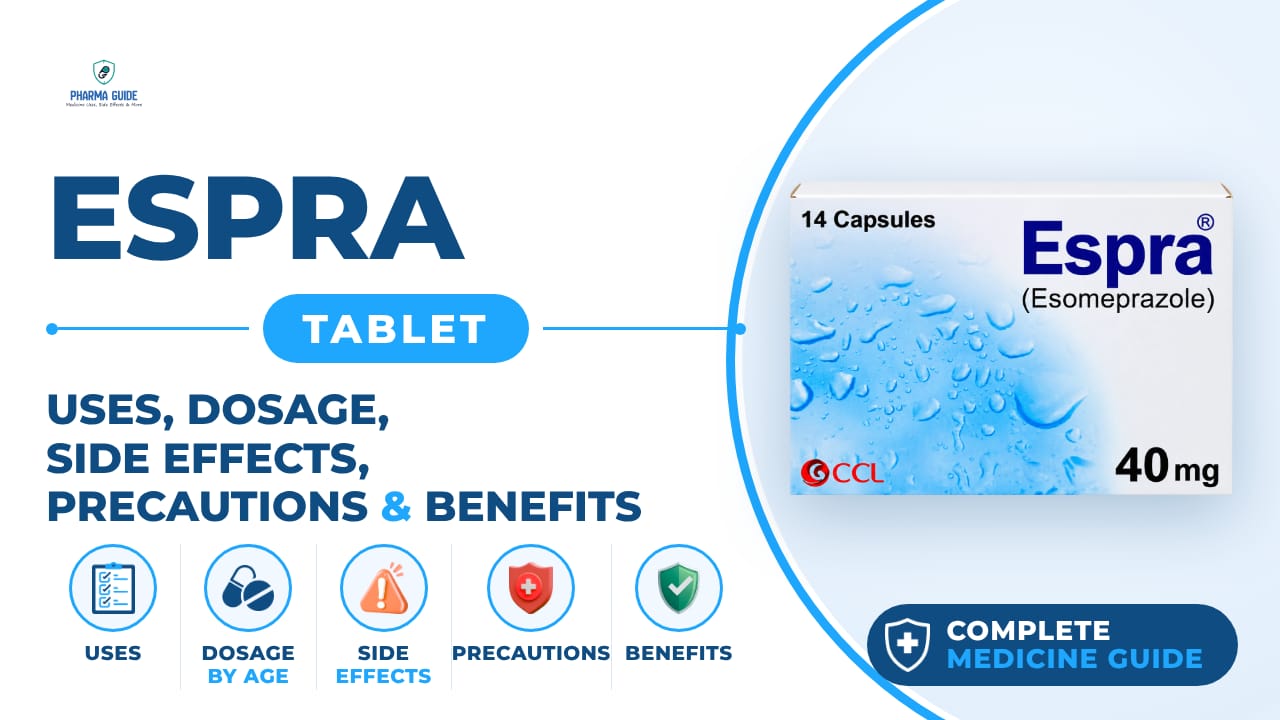
| Generic name | Esomeprazole |
|---|---|
| Drug class | Proton Pump Inhibitor |
| Forms | Tablet, Capsule |
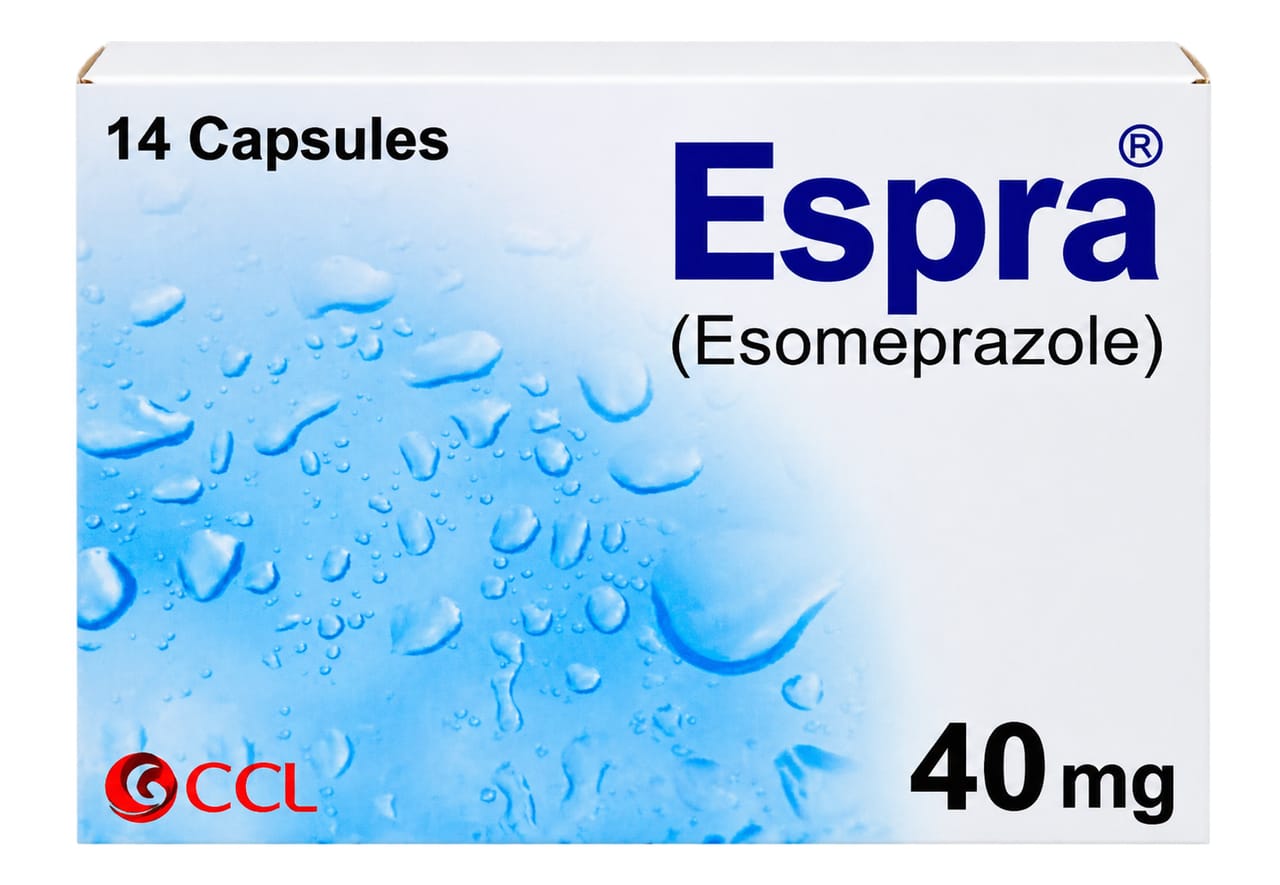
Quick overview
Espra Tablet contains esomeprazole, a proton pump inhibitor that reduces the amount of acid made by the stomach. It is used to treat conditions caused by excess stomach acid, such as acid reflux, peptic ulcers, and esophagitis. It works by blocking the enzyme responsible for acid production in the stomach. Espra should be used exactly as prescribed, with dosing that varies by age group.
What is Espra Tablet
Espra is a proton pump inhibitor medicine that reduces the amount of acid made by the stomach. It is used to treat conditions caused by excess stomach acid.
Espra Tablet uses
- Acid reflux and GERD (gastroesophageal reflux disease) - relieves heartburn and acid regurgitation
- Peptic ulcers - supports healing of stomach and food-pipe ulcers
- Zollinger-Ellison syndrome - controls excess acid production
- Esophagitis (swelling of the food pipe)
- Helicobacter pylori infection
- Stress ulcers and acidity caused by painkillers
Benefits of Espra Tablet
- Depression Support: Helps improve symptoms of depression.
- Anxiety Relief: Helps manage generalized anxiety symptoms.
- Mood Regulation: Helps balance serotonin activity in the brain.
- Panic Disorder Support: May help reduce panic symptoms when prescribed.
- Stress Symptom Control: Can help manage excessive worry and emotional symptoms.
- Long-Term Management: Supports ongoing treatment of certain mood and anxiety disorders under medical supervision.
How Espra Tablet works
Espra contains esomeprazole, which blocks an enzyme in the stomach called the proton pump. This enzyme is responsible for making stomach acid. By blocking it, the medicine reduces the amount of acid produced, which relieves symptoms and helps the stomach and food-pipe lining heal.
Espra Tablet dosage
Swallow the tablet whole with a glass of water; do not crush, break, or chew it. Take it on an empty stomach, at least an hour before a meal, ideally in the morning. Take it at the same time every day to keep a steady level of the medicine in your body. Do not stop taking it without talking to your doctor, as symptoms may come back. Complete the full course as advised by your doctor to allow proper healing.
| Age group | Dose |
|---|---|
| Under 18 Years | Use only if prescribed by a specialist |
| Adults (18–64 Years) | 10 mg once daily; may be increased to 20 mg once daily as prescribed |
| Older Adults (65+ Years) | 5–10 mg once daily; adjusted based on response and medical condition |
Available forms and strengths
- Tablet
- Capsule
Side effects of Espra Tablet
Common
- Stomach pain
- Constipation
- Diarrhoea
- Nausea and vomiting
- Headache
- Dry mouth
- Excessive gas in stomach
- Decreased appetite
- Dizziness
- Fatigue
- Swelling of extremities (peripheral edema)
- Skin rash
Serious
- Difficulty in breathing
- Swelling of face, lips, eyelids, tongue, hands and feet
- Irregular heartbeat
- Unexplained weight loss
- Difficulty swallowing
- Vomiting blood
Warnings and precautions
- This medicine is not generally recommended during pregnancy because there isn't enough research on its safety. Talk to your doctor before taking it if you are pregnant.
- It isn't known if this medicine passes into breast milk. If you are breastfeeding, discuss the risks and benefits with your doctor before using it.
- If you have a history of kidney problems, talk to your doctor before starting this medicine.
- This medicine should be used carefully if you have liver problems, since it is broken down mainly by the liver and your dose may need adjusting. Discuss your liver health with your doctor first.
- It's best to avoid alcohol while taking this medicine, since alcohol can increase stomach acid and worsen your condition.
- This medicine may cause dizziness or sleepiness. Avoid driving or operating machinery if you feel this way.
- Long-term use of this medicine can lower magnesium levels in the blood, which may cause dizziness, irregular heartbeat, shivering, muscle pain or seizures.
- This medicine may cause or worsen lupus erythematosus, an autoimmune disease. Tell your doctor right away if you notice tiredness, painful joints, rashes, or skin lesions.
- Long-term treatment may reduce vitamin B12 absorption in the body, and supplements may be needed.
- Long-term use may cause swelling in the stomach lining (atrophic gastritis), so use this medicine only for as long as your doctor recommends.
- Elderly patients may be more prone to hip, wrist, and spine fractures with long-term use.
- This medicine is not for long-term use without a doctor's supervision, as this may increase the risk of certain side effects.
Storage
- Keep at room temperature in a cool, dry place
- Store away from direct sunlight, heat, and moisture
- Keep out of reach of children to avoid accidental ingestion
- Always check the expiration date on the packet before using
- Store below 30°C
- Do not throw away unused capsules in household garbage or flush them down the toilet; consult your pharmacist or local waste disposal service for safe disposal
When to see a doctor
- Get medical help right away if you notice signs of an allergic reaction such as skin rash, itching, swelling of the face, lips, tongue or throat, or difficulty breathing.
- Tell your doctor right away if you have unexplained weight loss, trouble swallowing, or vomit blood.
- If you think you've taken too much of this medicine, get emergency medical help right away.
- If you experience dizziness, blurred vision, rapid heartbeat, nausea, or confusion after taking too much, seek medical advice promptly.
Alternatives
- Sertraline
- Fluoxetine
- Citalopram
Watch the video
FAQs
What is Espra Tablet used for?
Espra Tablet is used to treat conditions caused by excess stomach acid, including acid reflux and GERD, peptic ulcers, Zollinger-Ellison syndrome, esophagitis, Helicobacter pylori infection, and stress ulcers caused by painkillers.
How does Espra Tablet work?
Espra contains esomeprazole, which blocks the proton pump enzyme in the stomach responsible for making acid, reducing acid production and relieving symptoms while helping the stomach and food-pipe lining heal.
What is the dosage of Espra Tablet for adults?
Adults aged 18-64 years typically take 10 mg once daily, which may be increased to 20 mg once daily as prescribed by a doctor.
What are the common side effects of Espra Tablet?
Common side effects include stomach pain, constipation, diarrhoea, nausea and vomiting, headache, dry mouth, excessive gas, decreased appetite, dizziness, fatigue, swelling of extremities, and skin rash.
Can Espra Tablet be taken during pregnancy?
Espra is not generally recommended during pregnancy because there isn't enough research on its safety, so you should talk to your doctor before taking it if you are pregnant.
General information, not medical advice
Your prescriber and the leaflet in your pack know your situation. This page does not.
- Follow your prescriber and the leaflet
- Don't start, stop, or change a dose on your own
- Doses and warnings differ by country and product
Sources
- U.S. Food and Drug Administration. (2021). Nexium (esomeprazole) label.
- MedlinePlus. (2023, Nov 15). Esomeprazole.
- National Center for Biotechnology Information (2024). PubChem Compound Summary for CID 9568614, Esomeprazole.
- Johnson, T. J., & Hedge, D. D. (2002). Esomeprazole: A clinical review. American Journal of Health-system Pharmacy, 59(14), 1333–1339.
- Spencer, C. M., & Faulds, D. (2000). Esomeprazole. Drugs, 60(2), 321–329.
- Scott, L. J., Dunn, C. J., Mallarkey, G., & Sharpe, M. (2002). Esomeprazole. Drugs, 62(10), 1503–1538.
- Vachhani, R., Olds, G., & Velanovich, V. (2009). Esomeprazole: a proton pump inhibitor. Expert Review of Gastroenterology & Hepatology, 3(1), 15–27.
- Medicines.org.uk. 2021. Esomeprazole 20 mg Gastro-resistant Tablets - Summary of Product Characteristics (SmPC).
- Dailymed.nlm.nih.gov. 2021. DailyMed - ESOMEPRAZOLE- esomeprazole magnesium tablet.
- Astrazeneca.ca. 2021. Nexium consumer information leaflet.
Video
Related medicines
Aciphex Tablet: Uses, Dosage, Side Effects, Precautions and Alternates
Proton Pump Inhibitor
Aciphex Tablet (rabeprazole) is a PPI that reduces stomach acid to treat GERD, heartburn, and duodenal ulcers. Learn dosage, uses, side effects, and
Nexium Tablet: Uses, Dosage, Side Effects, Precautions and Alternates
Proton pump inhibitor
Nexium Tablet (esomeprazole) reduces stomach acid to treat GERD, heartburn, and ulcers. Learn about its uses, dosage, side effects, and precautions.