
Safety
General information, not medical advice
Your prescriber and the leaflet in your pack know your situation. This page does not.
- Follow your prescriber and the leaflet
- Don't start, stop, or change a dose on your own
- Doses and warnings differ by country and product
Nexium Tablet: Uses, Dosage, Side Effects, Precautions and Alternates
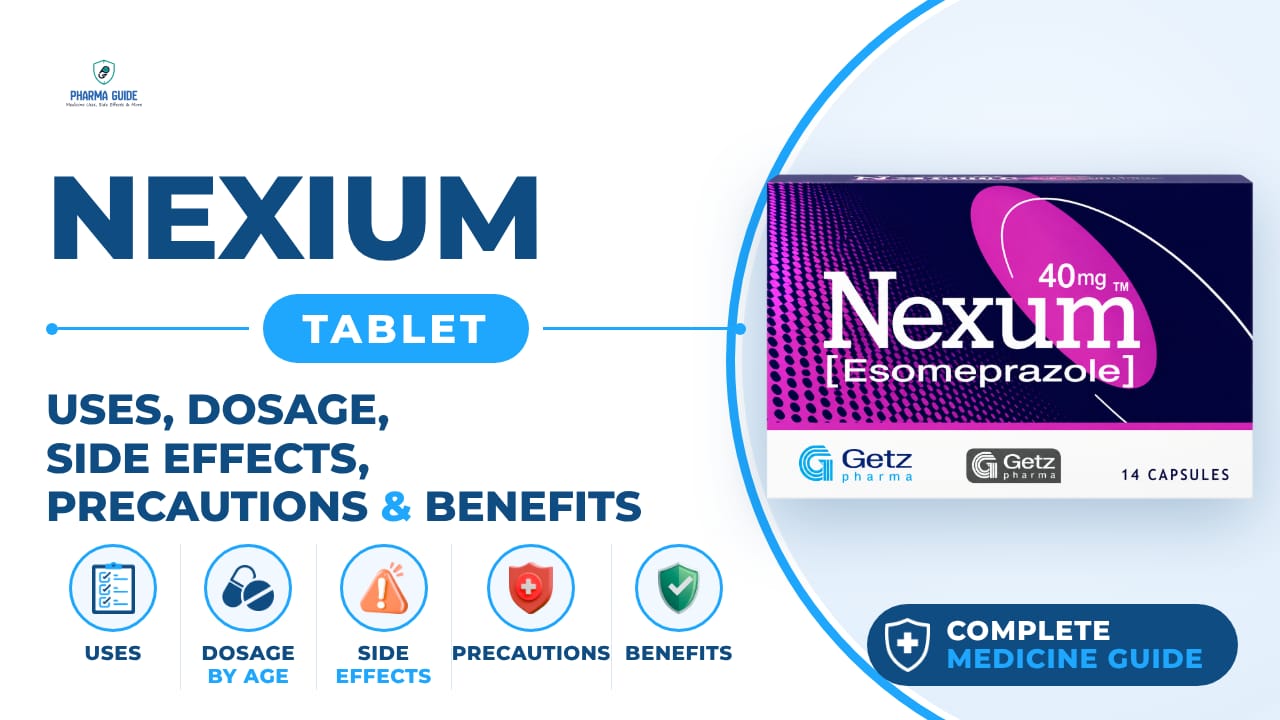
| Generic name | esomeprazole magnesium |
|---|---|
| Drug class | Proton pump inhibitor |
| Forms | Tablet, Delayed-release capsule, Granules for oral suspension (sachet), Injection (Nexium I.V.) |
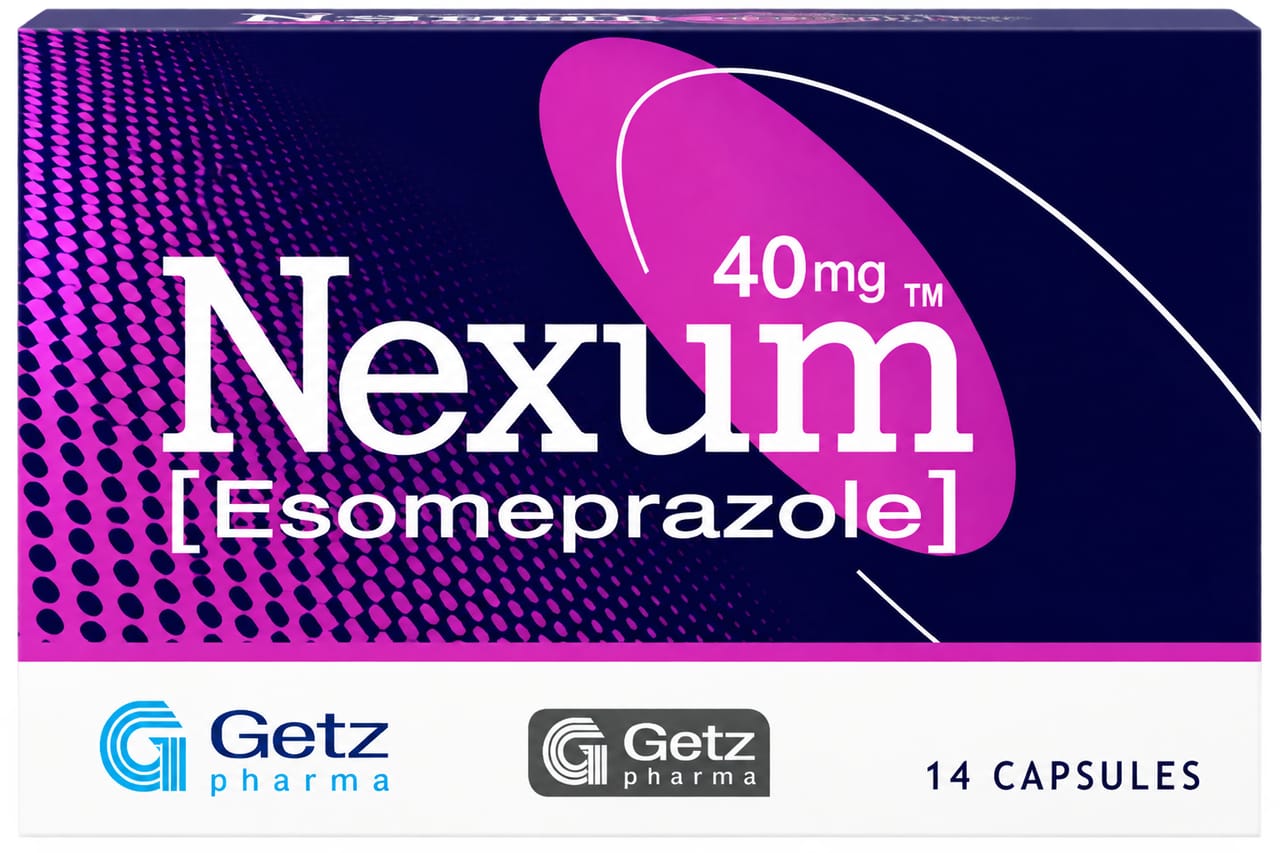
Quick overview
Nexium Tablet contains esomeprazole magnesium, a proton pump inhibitor that decreases the amount of acid produced in the stomach. It is used to treat conditions caused by too much stomach acid, such as GERD, erosive esophagitis, and peptic ulcer disease. Nexium is available in several forms and strengths and should be taken exactly as directed by a doctor or pharmacist.
What is Nexium Tablet
Nexium is a proton pump inhibitor that decreases the amount of acid produced in the stomach. It is used to treat conditions caused by too much stomach acid.
Nexium Tablet uses
- Gastroesophageal reflux disease (GERD) and heartburn
- Erosive esophagitis (damage to the esophagus caused by stomach acid)
- Zollinger-Ellison syndrome and other conditions of excess stomach acid
- Prevention of gastric ulcers caused by H. pylori infection or NSAID use
- Peptic ulcer disease
- Dyspepsia (indigestion)
- Reflux oesophagitis
- Bleeding peptic ulcers (as follow-up treatment)
Benefits of Nexium Tablet
- Reduces stomach acid to relieve heartburn and acid regurgitation
- Helps heal damage to the esophagus caused by acid reflux
- Helps prevent stomach ulcers in people at risk
- Works together with antibiotics to help clear H. pylori infection and let ulcers heal
How Nexium Tablet works
Nexium reduces the amount of acid your stomach makes by blocking the acid pump in the cells that produce stomach acid. This does not stop food from being digested normally.
Nexium Tablet dosage
Take exactly as directed by your doctor or as shown on the label. Take with a full glass of water, at least one hour before a meal, though it can be taken with or without food. Swallow the capsule or tablet whole; do not crush or chew it.
If you have trouble swallowing, the capsule can be opened and the medicine sprinkled into a spoonful of applesauce and swallowed right away without chewing; do not save the mixture for later. Tablets can also be dispersed in half a glass of non-carbonated water, stirred until they break up, and drunk right away or within 30 minutes; do not chew the pellets. This medicine may also be given through a feeding tube by a healthcare provider following specific instructions.
Use for the full length of time your doctor recommends, even if you feel better quickly. Try to take it at the same time each day. Call your doctor if your symptoms do not improve or get worse while taking this medicine. Do not take a double dose if you miss one; just take the next dose as scheduled.
| Age group | Dose |
|---|---|
| Under 1 year | Doctor's advice required |
| 1–11 years | 10–20 mg once daily for certain acid-related conditions |
| 12–17 years | 20–40 mg once daily |
| Adults (18+) | 20–40 mg once daily |
Available forms and strengths
- Tablet
- Delayed-release capsule
- Granules for oral suspension (sachet)
- Injection (Nexium I.V.)
Side effects of Nexium Tablet
Common
- Headache
- Diarrhea
- Nausea
- Stomach pain
- Gas (flatulence)
- Constipation
- Dry mouth
Serious
- Kidney problems (urinating less than usual, blood in urine)
- Severe or watery/bloody diarrhea (sign of new infection)
- New or worsening symptoms of lupus (joint pain, skin rash on cheeks or arms that worsens in sunlight)
- Increased risk of broken bones (hip, wrist, spine) with long-term use
- Severe skin reactions (rash with blistering, peeling, or bleeding, possibly with fever, chills, or body aches)
- Seizures
- Low magnesium levels (dizziness, fast or irregular heart rate, tremors, jerking muscle movements, jitteriness, muscle cramps or spasms, cough or choking feeling)
- Fundic gland polyps (stomach growths) with long-term use
- Vitamin B-12 deficiency with use longer than 3 years
- Severe allergic reaction (hives, difficulty breathing, swelling of face, lips, tongue, or throat)
Warnings and precautions
- Nexium can cause kidney problems. Tell your doctor if you are urinating less than usual, or if you have blood in your urine.
- Diarrhea that is watery or bloody may be a sign of a new infection. Call your doctor if this happens.
- This medicine may cause new or worsening symptoms of lupus. Tell your doctor about joint pain or a skin rash on cheeks or arms that gets worse in sunlight.
- Long-term or more-than-once-daily use may increase the chance of a broken bone.
- Heartburn can feel like the early signs of a heart attack. Get emergency help if you have chest pain spreading to the jaw or shoulder along with anxiety or light-headedness.
- Patients should not take this medicine as a long-term preventive treatment.
- Treatment with proton pump inhibitors may slightly increase the risk of gastrointestinal infections.
- Ask your doctor before using Nexium if you are pregnant. It is preferable to avoid use during pregnancy as a precaution. Nexium should not be used while breastfeeding unless your doctor says so.
- Nexium can cause kidney problems. Tell your doctor if you have severe kidney problems or notice signs like urinating less than usual or blood in your urine.
- People with severe liver disease should talk to a doctor before using this medicine, as a dose adjustment may be needed.
- Nexium has a low chance of affecting your ability to drive or use machines, but dizziness and vision problems can occasionally occur. If affected, do not drive or use machines.
Storage
- Store at room temperature away from moisture and heat
- Do not store above 30°C
- Store in the original package to protect from moisture
- Keep in the blister pack or sachet until it is time to take it
- Keep out of the sight and reach of children
- Do not use after the expiry date
- Take unused or expired medicine to a pharmacy for safe disposal; do not throw it away via wastewater or household waste
When to see a doctor
- Get emergency medical help if you have signs of an allergic reaction: hives, difficulty breathing, or swelling of your face, lips, tongue, or throat.
- Stop taking this medicine and call your doctor right away if you have a skin rash with blistering, peeling, or bleeding, possibly with fever, chills, or body aches.
- Call your doctor at once if you have severe stomach pain, watery or bloody diarrhea, seizures, signs of kidney problems, signs of low magnesium, or new/worsening lupus symptoms.
- Seek urgent medical attention if you experience chest pain with light-headedness, sweating, dizziness, or shoulder pain with shortness of breath, as this could be a sign of a serious heart condition.
- Talk to your doctor immediately if you lose a lot of weight for no reason, have trouble or pain swallowing, vomit blood or food that looks like coffee grounds, or pass black stools.
- If your symptoms do not improve or get worse after taking this medicine for 14 days in a row, contact your doctor.
- Call your doctor immediately if you notice shortness of breath, wheezing, or difficulty breathing; swelling of the face, lips, tongue or other parts of the body; signs of liver inflammation; blood in urine; or changes in urine output.
Alternatives
- Protonix (pantoprazole)
- Prilosec (omeprazole)
- Dexilant
- Aciphex (rabeprazole)
- Prevacid (lansoprazole)
- Prilosec OTC
- Dexlansoprazole
- Rabeprazole
- Lansoprazole
Watch the video
FAQs
What is Nexium Tablet used for
Nexium is used to treat conditions caused by too much stomach acid, including GERD and heartburn, erosive esophagitis, Zollinger-Ellison syndrome, peptic ulcer disease, dyspepsia, and prevention of gastric ulcers caused by H. pylori infection or NSAID use.
How should I take Nexium Tablet
Take exactly as directed by your doctor, with a full glass of water, at least one hour before a meal, though it can be taken with or without food. Swallow the tablet or capsule whole without crushing or chewing it.
What are the common side effects of Nexium Tablet
Common side effects include headache, diarrhea, nausea, stomach pain, gas, constipation, and dry mouth.
Can Nexium Tablet be taken during pregnancy
You should ask your doctor before using Nexium if you are pregnant, as it is preferable to avoid use during pregnancy as a precaution. It should not be used while breastfeeding unless your doctor says so.
What should I do if I miss a dose of Nexium Tablet
Do not take a double dose if you miss one; just take the next dose as scheduled.
General information, not medical advice
Your prescriber and the leaflet in your pack know your situation. This page does not.
- Follow your prescriber and the leaflet
- Don't start, stop, or change a dose on your own
- Doses and warnings differ by country and product
Sources
Video
Related medicines
Aciphex Tablet: Uses, Dosage, Side Effects, Precautions and Alternates
Proton Pump Inhibitor
Aciphex Tablet (rabeprazole) is a PPI that reduces stomach acid to treat GERD, heartburn, and duodenal ulcers. Learn dosage, uses, side effects, and
Espra Tablet: Uses, Dosage, Side Effects, Precautions and Alternates
Proton Pump Inhibitor
Espra Tablet contains esomeprazole, a proton pump inhibitor used for acid reflux, peptic ulcers, and esophagitis. Learn dosage, side effects, and precautions.