
Safety
General information, not medical advice
Your prescriber and the leaflet in your pack know your situation. This page does not.
- Follow your prescriber and the leaflet
- Don't start, stop, or change a dose on your own
- Doses and warnings differ by country and product
Etova Tablet: Uses, Dosage, Side Effects, Precautions and Alternates
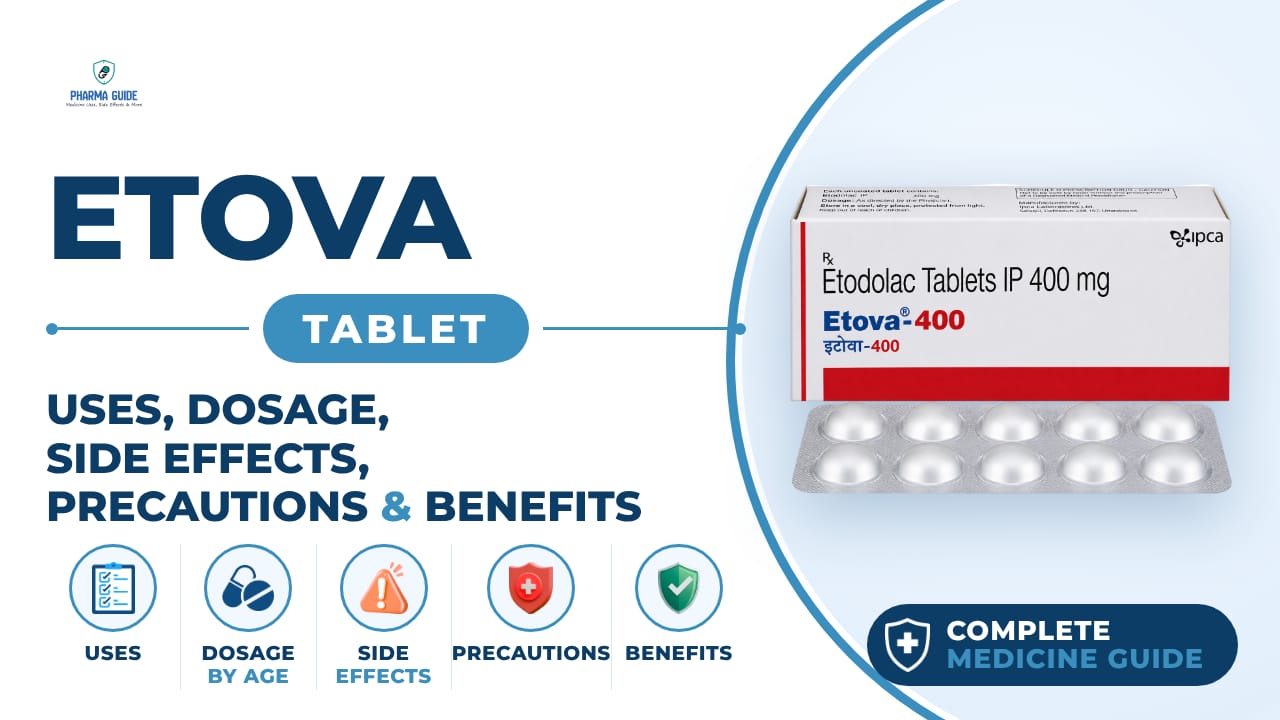
| Generic name | Etodolac |
|---|---|
| Drug class | Non-steroidal Anti-inflammatory Drug (NSAID) |
| Forms | Tablet, Gel, Injection |
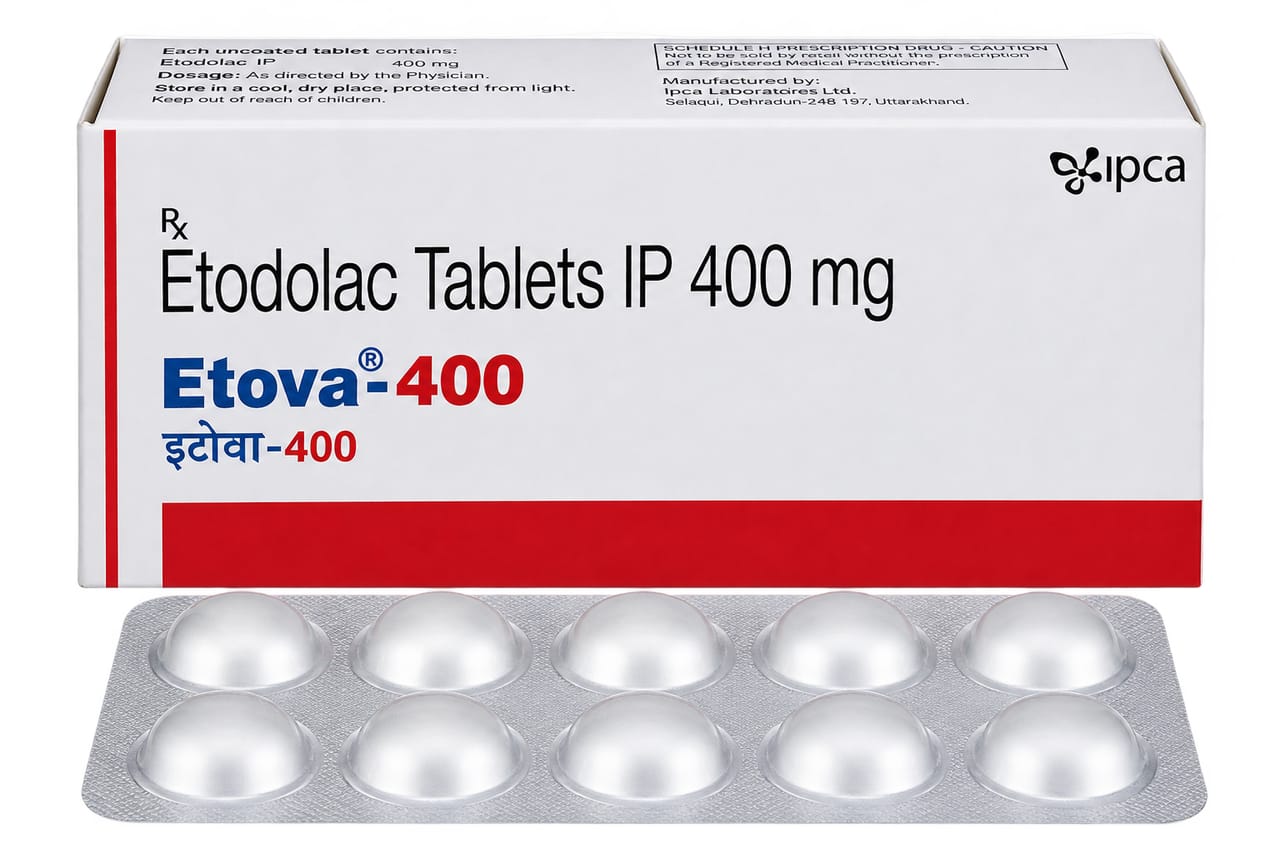
Quick overview
Etova Tablet contains Etodolac, a non-steroidal anti-inflammatory drug (NSAID). It is used to reduce pain and inflammation caused by conditions such as arthritis, joint pain, muscle pain, and other types of pain. It works by blocking the formation of prostaglandins, chemicals in the body responsible for pain and swelling.
What is Etova Tablet
Etova Tablet is a non-steroidal anti-inflammatory medicine used to reduce pain from various conditions such as arthritis. It contains Etodolac.
Etova Tablet uses
- Osteoarthritis
- Rheumatoid Arthritis
- Joint Pain
- Muscle Pain
- Ankylosing spondylitis
- Pain
- Leg Pain
- Body Pain
- Neck Pain
- Toothache
- Mild to moderate pain
Benefits of Etova Tablet
- Provides effective relief from pain, stiffness, and swelling in different types of arthritis
- Helps improve mobility and comfort by controlling inflammation at the affected site
- Improves joint mobility
- Suitable for chronic and acute pain
How Etova Tablet works
Etova works by blocking the formation of prostaglandins, chemicals in the body that cause pain and swelling, which helps reduce inflammation and relieve pain.
Etova Tablet dosage
Take the tablet with food, milk, or an antacid to avoid stomach irritation. Swallow the tablet whole with a glass of water; do not crush or chew it. Take it at around the same time every day. It is not recommended for use in children and adolescents less than 18 years of age as its safety and effectiveness is not yet established. It should be used with caution in elderly patients aged more than 65 years.
| Age group | Dose |
|---|---|
| Under 12 years | Not recommended |
| 12–18 years | 200 mg, 1–2 times daily |
| 18–60 years | 200–400 mg, 2 times daily |
| 60+ years | 200–400 mg, 1–2 times daily |
Available forms and strengths
- Tablet
- Gel
- Injection
Side effects of Etova Tablet
Common
- Stomach pain
- Nausea and vomiting
- Heartburn
- Loss of appetite
- Diarrhoea
- Constipation
- Indigestion, flatulence, bloating
- Blurred vision
- Headache
- Dizziness and drowsiness
- Skin rash, itching
- Ringing or buzzing in the ears
- Infrequent urination
- Joint pain
- Fatigue, nervousness, malaise
- Chills and fever
Serious
- Increased risk of cardiovascular events
- Stomach bleeding, ulcers, and perforation
- Allergic reaction causing difficulty breathing, swelling of the face or throat
- Liver problems including jaundice and liver failure
- Congestive heart failure
- Serious skin reactions such as Stevens-Johnson syndrome
Warnings and precautions
- Etova may cause serious skin allergies without warning, which can be fatal in rare cases. Stop the medicine and tell your doctor right away if you notice rash, hives, or fever.
- Do not use Etova if you have had an allergic reaction, stomach bleeding, or perforation after taking other NSAIDs like ibuprofen or aspirin, or if you have stomach ulcers, bleeding, or perforation.
- Do not use Etova for pain relief after heart bypass surgery.
- Long-term use of Etova may increase the risk of a heart attack in people with existing heart conditions or heart failure.
- Elderly patients should use Etova cautiously because they have a higher risk of side effects; kidney function and signs of bleeding should be monitored closely.
- Etova is not recommended during pregnancy because it may cause serious heart or kidney problems in the unborn baby. It should only be used if your doctor says it is necessary.
- Etova is not recommended for breastfeeding women. Your doctor may prefer a different medicine, especially for mothers nursing a newborn or premature baby.
- Etova is not recommended for people with kidney failure and should be used cautiously in those with existing kidney disease, with regular monitoring of kidney function.
- Etova is not recommended for people with liver failure. It should be used with caution in those with liver disease, as it may need a lower dose.
- Avoid drinking alcohol while taking Etova, as it raises the risk of stomach ulcers and bleeding.
- Do not drive or operate machinery after taking Etova, since it can cause dizziness and vision problems.
Storage
- Store at room temperature
- Keep out of reach of children
When to see a doctor
- Get medical help right away if you have an allergic reaction with difficulty breathing or swelling of the face or throat.
- Get medical help right away if you have chest pain, shortness of breath, weakness, or slurred speech, which could mean a heart or blood vessel problem.
- Get medical help right away for signs of stomach bleeding such as upper abdominal pain, indigestion, black stools, or vomiting blood.
- Get medical help right away for signs of liver problems such as nausea, fatigue, severe itching, yellowing of the skin or eyes, or flu-like symptoms.
- Get medical help right away for signs of heart failure such as shortness of breath, sudden weight gain, or swelling in the arms, legs, hands, or feet.
- Get medical help right away for serious skin reactions with fever, rash, swollen glands, or blisters.
- Get medical help right away if you have headache, neck stiffness, fever, confusion, or feeling unwell, which could be a sign of aseptic meningitis.
- If someone takes too much Etova, contact a doctor immediately or go to the nearest hospital.
Alternatives
- Etofree
- Etogesic
- Toldin
Watch the video
FAQs
What is Etova Tablet used for?
Etova Tablet is used to treat osteoarthritis, rheumatoid arthritis, ankylosing spondylitis, joint pain, muscle pain, leg pain, body pain, neck pain, toothache, and mild to moderate pain.
How does Etova Tablet work?
Etova works by blocking the formation of prostaglandins, chemicals in the body that cause pain and swelling, which helps reduce inflammation and relieve pain.
How should I take Etova Tablet?
Take the tablet with food, milk, or an antacid to avoid stomach irritation, and swallow it whole with water without crushing or chewing it. It should be taken at around the same time every day.
What are the common side effects of Etova Tablet?
Common side effects include stomach pain, nausea and vomiting, heartburn, loss of appetite, diarrhoea, constipation, indigestion, headache, dizziness, skin rash, and ringing in the ears.
Is Etova Tablet safe during pregnancy?
Etova is not recommended during pregnancy because it may cause serious heart or kidney problems in the unborn baby, and should only be used if your doctor says it is necessary.
General information, not medical advice
Your prescriber and the leaflet in your pack know your situation. This page does not.
- Follow your prescriber and the leaflet
- Don't start, stop, or change a dose on your own
- Doses and warnings differ by country and product
Sources
- US Food and Drug Administration (FDA) - Package leaflet information for the user; Lodine® (etodolac)
- KD Tripathi. Essentials of Medical Pharmacology, Seventh Edition. Jaypee Brothers Medical Publishers; 2013
- April Hazard Vallerand, Cynthia A. Sanoski. Sixteenth Edition. F. A. Davis Company; 2019
- Shravan Kumar Tirunagri, Sheena Derry, R Andrew Moore, Henry J McQuay. Single dose oral etodolac for acute postoperative pain in adults. Cochrane Library. July 2009
- Sun Pharmaceutical Industries Europe B.V. Electronic Medicines Compendium (EMC)
- Wyeth Pharmaceuticals Inc. U.S Food and Drug Administration (FDA)
- Taro Pharmaceutical Industries Ltd. Etodolac Prescribing Information
- Taro Pharmaceutical Industries Ltd. Etodolac. Dailymed
- AA Pharma Inc. Etodolac
Video
Related medicines
Aleve Arthritis Tablet: Uses, Dosage, Side Effects, Precautions and Alternates
Non-steroidal anti-inflammatory drug (NSAID)
Aleve Arthritis Tablet (naproxen sodium 220 mg) relieves pain, inflammation, and fever. Learn uses, dosage, side effects, warnings, and alternatives.
Anadin Ultra Capsule: Uses, Dosage, Side Effects, Precautions and Alternates
Non-steroidal anti-inflammatory drug (NSAID)
Anadin Ultra Capsule contains 200mg ibuprofen in a fast-dissolving liquid gel. Learn its uses, dosage, side effects and precautions before taking it.