
Safety
General information, not medical advice
Your prescriber and the leaflet in your pack know your situation. This page does not.
- Follow your prescriber and the leaflet
- Don't start, stop, or change a dose on your own
- Doses and warnings differ by country and product
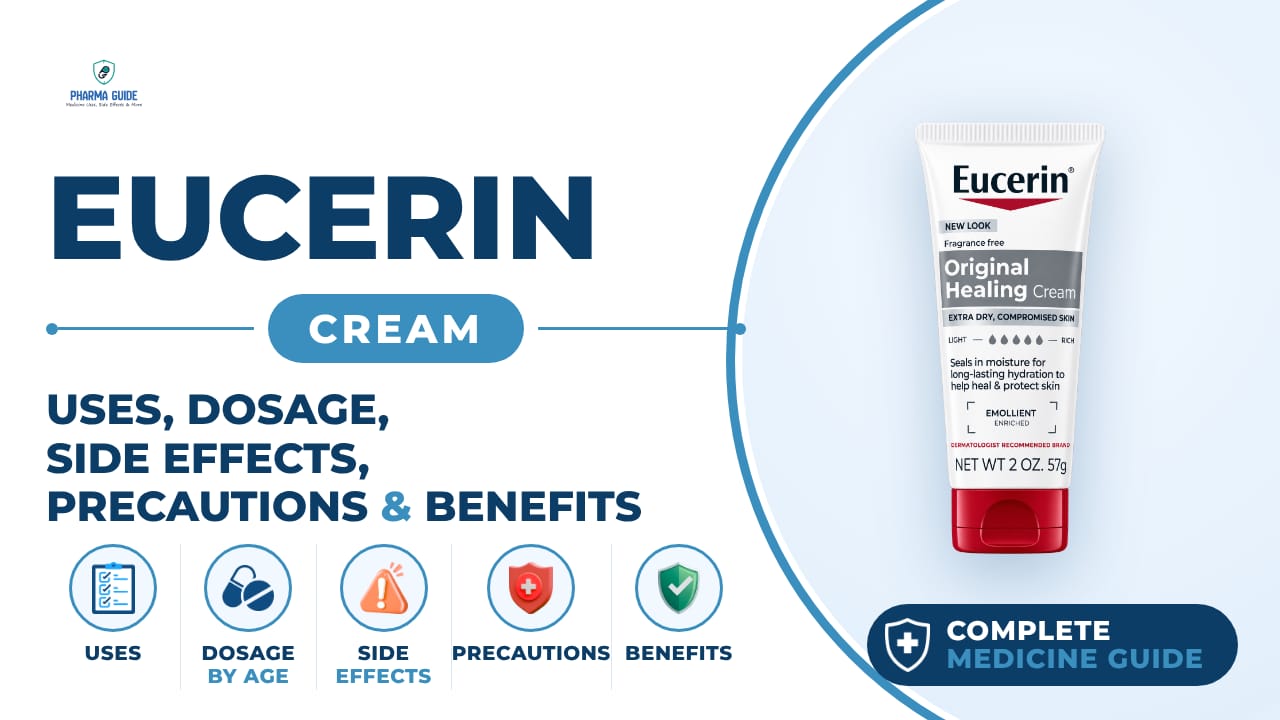
Eucerin Cream: Uses, Dosage, Side Effects, Precautions and Alternates
| Generic name | Emollients - topical |
|---|---|
| Drug class | topical emollients |
| Forms | topical cream |
Quick overview
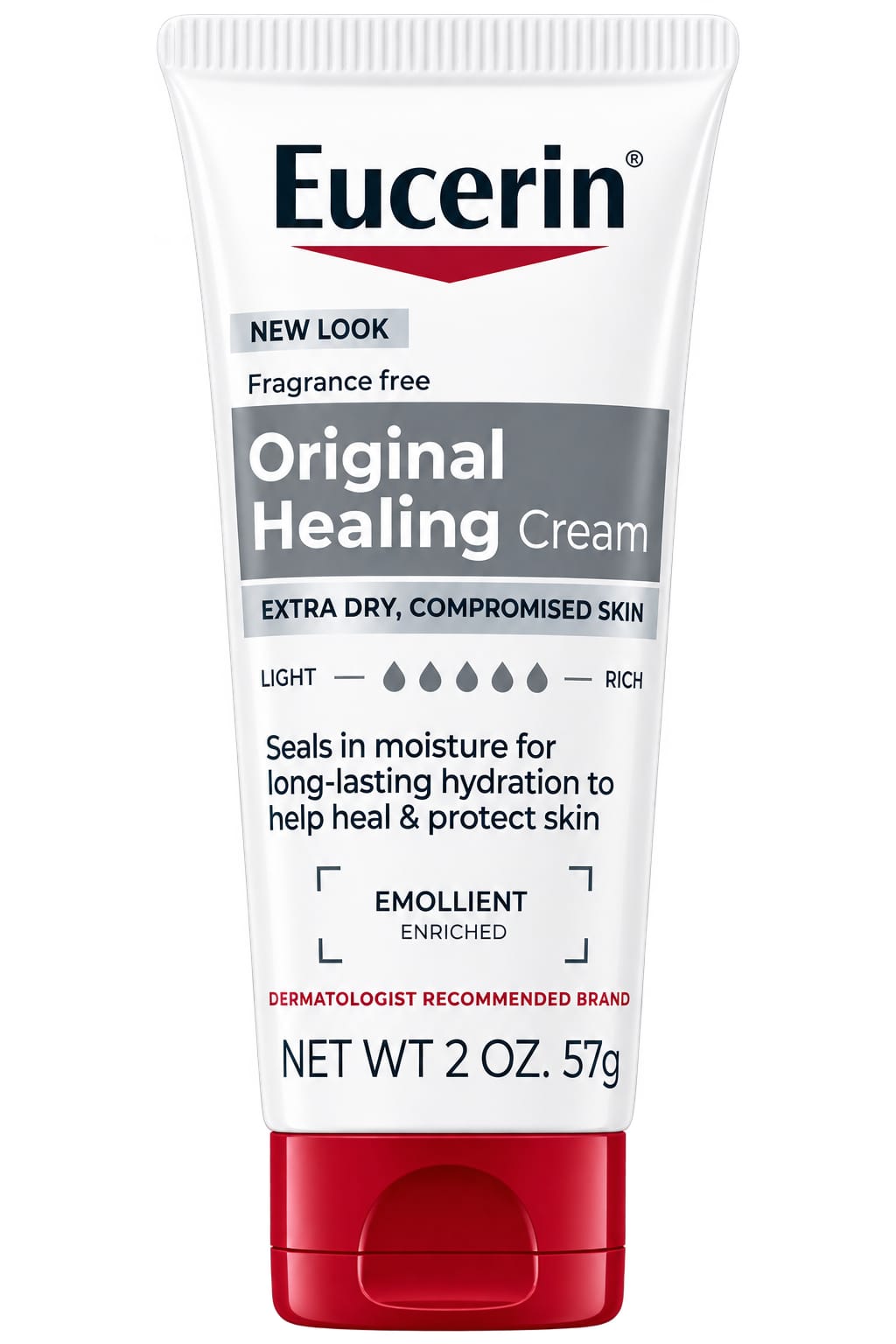
Eucerin Cream is a topical emollient and moisturizer used to hydrate, soften, and protect dry, rough, or compromised skin. It helps relieve dryness, soothe irritation from conditions like eczema and psoriasis, and support skin recovering from acne treatment, diaper rash, or radiation therapy. It is applied directly to the skin and is generally used once daily or as needed, following label or doctor instructions.
What is Eucerin Cream
Eucerin cream is a topical emollient and moisturizer used to hydrate, soften, and protect dry, rough, or compromised skin.
Eucerin Cream uses
- Dry and rough skin: traps and draws moisture into the skin to relieve scaling, flaking, and tightness
- Eczema and atopic dermatitis: calms irritation, reduces redness, and helps soothe flare-ups
- Psoriasis and hyperkeratosis: some formulas with urea soften hardened, thick, or scaly skin patches
- Acne treatment support: soothing or hydrating versions help repair the skin barrier when using drying acne medications
- Treats or prevents dry, rough, scaly, itchy skin and minor skin irritations such as diaper rash and skin burns from radiation therapy
Benefits of Eucerin Cream
- Relieves scaling, flaking, and tightness from dry skin
- Calms irritation and redness in eczema-prone skin
- Softens thickened or scaly skin patches
- Helps protect and soothe skin affected by other treatments
How Eucerin Cream works
Dry skin happens when the top layer of skin loses water. Eucerin forms an oily layer on the skin's surface that traps in water. Some ingredients draw water into the skin, and others help loosen the substance that holds dead skin cells together, so skin feels smoother and softer.
Eucerin Cream dosage
Apply to the skin only, ideally to damp skin right after bathing or showering. Some products need to be shaken before use, so check the label. Apply to affected areas as needed or as directed on the label or by your doctor; how often depends on the product and your skin condition. For dry hands, you may need to apply every time you wash your hands and throughout the day. If treating diaper rash, clean the diaper area well and let it dry before applying. If treating radiation skin burns, check with your radiation care team about whether the product can be applied before treatment.
Avoid contact with the eyes, inside the mouth or nose, and the vaginal or groin area unless directed otherwise. Check the label for areas to avoid, such as the face, broken or irritated skin, or recently shaved skin. Long, hot, or frequent bathing or washing can make dry skin worse. If you miss a dose on a regular schedule, apply it as soon as you remember, but do not use more or use it more often than directed.
| Age group | Dose |
|---|---|
| Under 2 years | No established age-specific amount; use under pediatric guidance, particularly for sensitive or damaged skin |
| 2–12 years | Apply a thin, even layer once daily or as needed, with caregiver guidance |
| 13–74 years | Apply to affected skin once daily or as needed |
| 75 years and older | Apply to affected skin once daily or as needed, with monitoring for skin irritation |
Available forms and strengths
- Topical cream
Side effects of Eucerin Cream
Common
- Mild burning, stinging, redness, or irritation at the application site
- Skin turning soft, soggy, or white from too much moisture being trapped from excessive use
Serious
- Signs of a skin infection
- Unusual skin changes such as turning white, soft, or soggy from too much wetness
Warnings and precautions
- Tell your doctor if you are pregnant before using this product.
- It is not known if this product passes into breast milk, so talk to your doctor before breastfeeding.
- No established renal-related restrictions for ordinary topical use. Patients with severe skin conditions and kidney disease should seek individualized medical advice.
- No routine hepatic-specific adjustment is necessary for normal topical moisturizing use.
- No significant interaction with alcoholic beverages is established.
- Eucerin Cream does not cause sedation and is not expected to affect driving ability.
- Before using this product, tell your doctor or pharmacist about any allergies you have, including to ingredients in the product.
- Check with your doctor or pharmacist before using this product if you have skin cuts, infections, or sores.
- Some ingredients like preservatives or fragrance may make your skin more sensitive to the sun, so check the label and take precautions such as using sunscreen and protective clothing.
- Some products may worsen acne; if your skin is prone to breakouts, look for products labeled non-comedogenic.
- Before having surgery, tell your doctor or dentist about all products you use, including this one.
- This product may be harmful if swallowed.
- For external use only.
Storage
- Refer to storage information printed on the package
- Keep all medications away from children and pets
- Do not flush medications down the toilet or pour them into a drain unless instructed to do so
- Properly discard this product when it is expired or no longer needed; consult your pharmacist or local waste disposal company for help
When to see a doctor
- Get emergency medical help right away if you have signs of a serious allergic reaction, such as hives, trouble breathing, or swelling of the face, lips, tongue, or throat.
- Stop using the product and call your doctor if you have severe burning, stinging, redness, or irritation where it was applied.
- Tell your doctor right away if you notice unusual skin changes, such as skin turning white, soft, or soggy, or signs of a skin infection.
- Get medical help right away if you notice symptoms of a serious allergic reaction, including rash, itching or swelling of the face, tongue, or throat, severe dizziness, or trouble breathing.
- If your condition lasts, gets worse, or you think you may have a serious medical problem, get medical help right away.
- If swallowed and someone has serious symptoms such as passing out or trouble breathing, get emergency help right away; otherwise call a poison control center right away.
- Stop use and ask a doctor if the condition worsens, or if symptoms last more than 7 days or clear up and come back within a few days.
Alternatives
- Vanicream Moisturizing Cream
- Cetaphil Moisturizing Cream
- CeraVe Moisturizing Cream
Watch the video
FAQs
What is Eucerin Cream used for?
It is used to hydrate, soften, and protect dry, rough, or compromised skin, including relieving dryness, soothing eczema and psoriasis flare-ups, supporting skin during acne treatment, and treating diaper rash or radiation-related skin burns.
How often should Eucerin Cream be applied?
It is generally applied once daily or as needed, ideally to damp skin right after bathing or showering, following the product label or a doctor's instructions.
What are the common side effects of Eucerin Cream?
Common side effects include mild burning, stinging, redness, or irritation at the application site, and skin becoming soft, soggy, or white from trapped moisture due to excessive use.
Can Eucerin Cream be used during pregnancy or breastfeeding?
You should tell your doctor if you are pregnant before using this product, and talk to your doctor before breastfeeding since it is not known if it passes into breast milk.
When should I stop using Eucerin Cream and see a doctor?
Stop use and call your doctor if you have severe burning, stinging, redness, or irritation, unusual skin changes, signs of infection, or if the condition worsens or lasts more than 7 days.
General information, not medical advice
Your prescriber and the leaflet in your pack know your situation. This page does not.
- Follow your prescriber and the leaflet
- Don't start, stop, or change a dose on your own
- Doses and warnings differ by country and product
Sources
Video
Related medicines
Carmol Cream: Uses, Dosage, Side Effects, Precautions and Alternates
Topical emollients
Carmol Cream contains urea to soften dry skin and remove dead skin buildup. Learn its uses, dosage, side effects, and precautions before use.
Eucerin Lotion: Uses, Dosage, Side Effects, Precautions and Alternates
topical emollients
Eucerin Lotion is a moisturizer that treats dry, rough, scaly, itchy skin and minor irritations like diaper rash, forming a protective barrier that locks in