
Safety
General information, not medical advice
Your prescriber and the leaflet in your pack know your situation. This page does not.
- Follow your prescriber and the leaflet
- Don't start, stop, or change a dose on your own
- Doses and warnings differ by country and product
Fexofenadine Tablet: Uses, Dosage, Side Effects, Precautions and Alternates
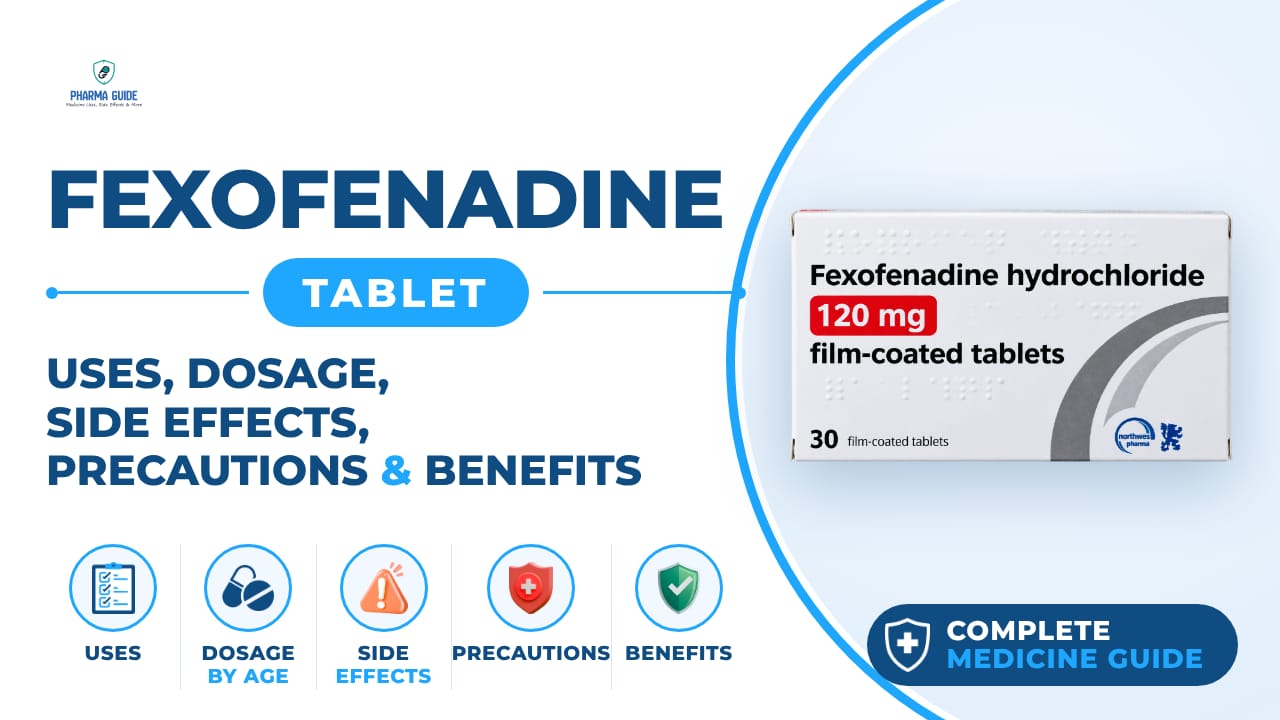
| Generic name | Fexofenadine hydrochloride |
|---|---|
| Drug class | Antihistamine |
| Forms | Oral tablet, Oral disintegrating tablet, Oral suspension (liquid) |
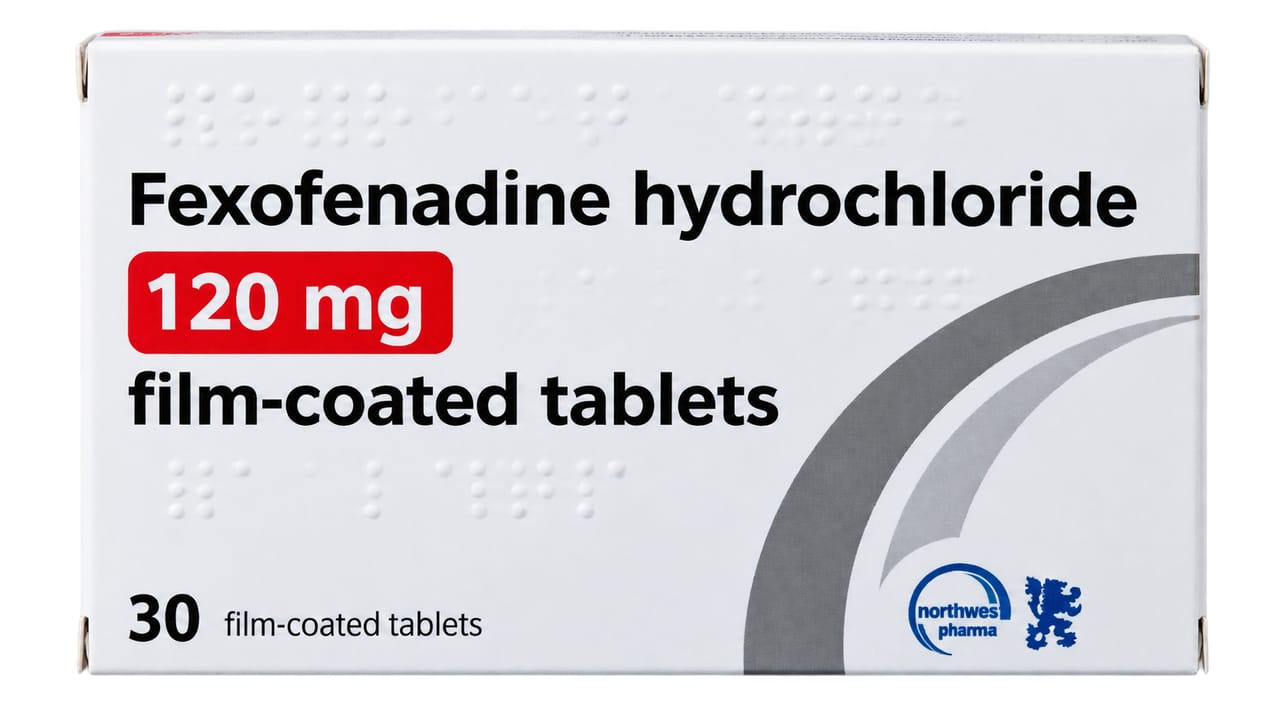
Quick overview
Fexofenadine Tablet (fexofenadine hydrochloride) is an antihistamine used to relieve allergy symptoms such as hay fever and to treat itching and hives from chronic idiopathic urticaria. It works by blocking histamine, a substance that causes allergy symptoms, and is less likely to cause drowsiness because it acts mainly outside the central nervous system. It is available in several forms, including tablets, disintegrating tablets, and oral suspension, with dosing that varies by age.
What is Fexofenadine Tablet
Fexofenadine is an antihistamine used to treat allergy symptoms such as hay fever and to relieve itching and hives from a condition called chronic idiopathic urticaria.
Fexofenadine Tablet uses
- Relief of symptoms associated with seasonal allergic rhinitis (hay fever) in adults and children 6 years and older, including sneezing, runny nose, itchy nose/palate/throat, and itchy/watery/red eyes
- Treatment of uncomplicated skin symptoms of chronic idiopathic urticaria (hives) in adults and children 6 years and older, reducing itching and the number of hives
Benefits of Fexofenadine Tablet
- Fexofenadine is much less likely to cause drowsiness compared with some older antihistamines because it works mainly outside the central nervous system
How Fexofenadine Tablet works
Fexofenadine blocks histamine, a substance your body makes that causes allergy symptoms like itching, sneezing, a runny nose, and watery eyes. By blocking histamine's effects, it helps reduce these symptoms. It works mainly on receptors outside the brain and spinal cord, which is why it is less likely to cause drowsiness.
Fexofenadine Tablet dosage
Take exactly as directed on the label or as prescribed by your doctor. Take this medicine only with water; do not take it with apple, orange, or grapefruit juice, as these can make it harder for your body to absorb the medicine. Take the disintegrating (melting) tablet on an empty stomach.
For disintegrating tablets: keep hands dry, gently peel back the foil (do not push the tablet through it), place the tablet on your tongue right away, do not chew or break it, let it dissolve, and you may drink water after it dissolves. Do not remove disintegrating tablets from the package until just before you plan to take them.
Avoid taking an antacid within 2 hours before or after taking this medicine; do not use it at the same time as antacids containing magnesium or aluminum, and wait at least 15 minutes if uncertain.
Ask a doctor before giving this medicine to children younger than 2 years old. Disintegrating tablets are not for use in children younger than 6 years old. The 12-hour and 24-hour forms are not for use in children younger than 12 years old. Do not give any over-the-counter cough and cold medicine to a child under 4 years of age.
If a dose is missed and you take this medicine on a schedule, skip the missed dose and go back to your regular schedule; do not take two doses at once. Call your doctor if your symptoms do not improve or get worse.
| Age group | Dose |
|---|---|
| Under 2 years | Doctor-directed dosing |
| 2–5 years | Usually oral suspension, not tablets |
| 6–11 years | 30 mg twice daily |
| 12–17 years | 60 mg twice daily or 180 mg once daily |
| Adults ≥18 years | 180 mg once daily |
Available forms and strengths
- Oral tablet
- Oral disintegrating tablet
- Oral suspension (liquid)
Side effects of Fexofenadine Tablet
Common
- Headache
- Back pain
- Cold symptoms such as stuffy nose, sinus pain, sore throat
- Vomiting
- Body aches or pain
- Chills
- Coughing
- Diarrhea
- Dizziness
- Ear congestion
- Earache
- Fever
- Joint pain
- Loss of voice
- Muscle aching or cramping
- Nasal congestion
- Nausea
- Painful menstrual bleeding
- Ringing or buzzing in ears
- Runny or stuffy nose
- Sleepiness or unusual drowsiness
- Sneezing
- Sore throat
- Stomach upset
- Unusual feeling of tiredness or weakness
- Viral infection (such as cold and flu)
- Nervousness
- Rash
- Sleeplessness
- Terrifying dreams
- Trouble sleeping
Serious
- Signs of an allergic reaction: hives, difficulty breathing, swelling of the face, lips, tongue, or throat
- Flu-like symptoms (fever, chills, unusual tiredness)
- New or worsening cough
- Pain
- Signs of an ear infection—fever, ear pain or full feeling, trouble hearing, drainage from the ear, fussiness in a child
- Chest tightness
- Feeling of warmth, redness of the face, neck, arms, and occasionally upper chest
- Large, hive-like swelling on face, eyelids, lips, tongue, throat, hands, legs, feet, or sex organs
- Shortness of breath, difficult or labored breathing
Warnings and precautions
- Ask a doctor before using this medicine if you are pregnant. There are no adequate and well-controlled studies in pregnant women, so it should be used only if the potential benefit justifies the potential risk to the unborn baby.
- Ask a doctor before using this medicine if you are breastfeeding. It is not known if fexofenadine passes into breast milk, so caution is recommended, though studies suggest minimal risk to the infant.
- Talk to your doctor before using this medicine if you have kidney disease. The medicine may build up in the body because it is removed more slowly, so your doctor may need to adjust your dose.
- Use with caution if you have kidney disease; a lower dose may be needed.
- Although fexofenadine is generally non-drowsy, drowsiness or dizziness can occur in some people. Be careful when driving until you know how it affects you.
- Avoid taking fexofenadine at the same time as aluminum- or magnesium-containing antacids; separate them by about 2 hours.
- Do not take this medicine with fruit juices such as apple, orange, or grapefruit juice, since these can reduce how well your body absorbs the medicine.
- Do not use this medicine at the same time as antacids containing magnesium or aluminum, and avoid taking an antacid within 2 hours before or after taking this medicine.
- This medicine may contain phenylalanine, which could be harmful if you have phenylketonuria (PKU).
- Do not give any over-the-counter cough and cold medicine to a baby or child under 4 years old, as it might cause serious or life-threatening side effects.
- Ask your doctor before combining this medicine with other drugs that make you drowsy, such as opioids, sleeping pills, muscle relaxers, or medicines for anxiety or seizures, since combining them can worsen drowsiness.
- Ask a doctor or pharmacist before using this medicine with certain other drugs, especially ketoconazole or erythromycin, as they can increase the amount of fexofenadine in your body.
Storage
- Store in its original package at room temperature, away from moisture and heat
- Do not allow liquid medicine to freeze
- Store the medicine in a closed container at room temperature, away from heat, moisture, and direct light
- Keep from freezing
- Keep out of the reach of children
- Do not keep outdated medicine or medicine no longer needed
- Ask your healthcare professional how you should dispose of any medicine you do not use
- Store in a tightly closed container in a cool, dry place, away from children
When to see a doctor
- Get emergency help right away if you have signs of an allergic reaction, such as hives, trouble breathing, or swelling of the face, lips, tongue, or throat.
- Stop taking this medicine and call your doctor right away if you have flu-like symptoms, a new or worsening cough, pain, or signs of an ear infection.
- If you think you have taken too much of this medicine, get emergency medical help or contact your local poison control center right away. Overdose can cause dry mouth, dizziness, or drowsiness.
- Check with your doctor right away if you have chest tightness, warmth or redness of the face, neck, or arms, large hive-like swelling on the face or other body parts, or shortness of breath.
Alternatives
- Allegra
- Allegra ODT
Watch the video
FAQs
What is Fexofenadine Tablet used for?
It is used to relieve seasonal allergic rhinitis symptoms like sneezing, runny nose, and itchy/watery eyes, and to treat itching and hives from chronic idiopathic urticaria in adults and children 6 years and older.
Does Fexofenadine cause drowsiness?
Fexofenadine is much less likely to cause drowsiness than some older antihistamines because it works mainly outside the central nervous system, though drowsiness or dizziness can still occur in some people.
Can I take Fexofenadine with fruit juice?
No, you should take it only with water. Apple, orange, or grapefruit juice can make it harder for your body to absorb the medicine.
What is the adult dosage of Fexofenadine Tablet?
Adults 18 years and older typically take 180 mg once daily, as directed by a doctor or the product label.
Can Fexofenadine be taken with antacids?
Avoid taking antacids containing magnesium or aluminum at the same time as Fexofenadine; separate doses by about 2 hours.
General information, not medical advice
Your prescriber and the leaflet in your pack know your situation. This page does not.
- Follow your prescriber and the leaflet
- Don't start, stop, or change a dose on your own
- Doses and warnings differ by country and product
Sources
Video
Related medicines
Nytol Tablet: Uses, Dosage, Side Effects, Precautions and Alternates
Antihistamine
Nytol Tablet contains diphenhydramine, used for short-term relief of occasional sleeplessness. Learn its dosage, benefits, side effects, and precautions.
Cyproheptadine Tablet: Uses, Dosage, Side Effects, Precautions and Alternates
Antihistamine
Cyproheptadine Tablet is an antihistamine used for allergies, hives, and migraine headaches. Learn its uses, dosage, side effects, and precautions.