
Safety
General information, not medical advice
Your prescriber and the leaflet in your pack know your situation. This page does not.
- Follow your prescriber and the leaflet
- Don't start, stop, or change a dose on your own
- Doses and warnings differ by country and product
Fluocinonide Cream: Uses, Dosage, Side Effects, Precautions and Alternates

| Generic name | Fluocinonide |
|---|---|
| Drug class | Corticosteroid |
| Forms | Ointment, Cream, Solution, Gel |
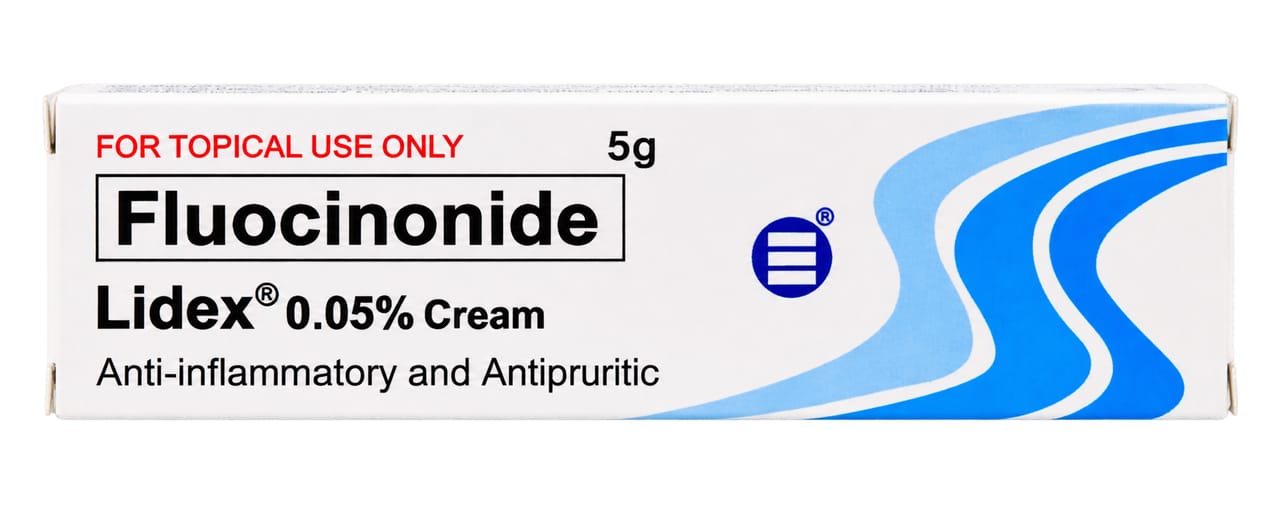
Quick overview
Fluocinonide Cream is a prescription corticosteroid medicine, generic name fluocinonide, applied to the skin. It is used to treat skin conditions that cause redness, itching, dryness, crusting, scaling, and inflammation, such as psoriasis and eczema. It works by activating natural substances in the skin to reduce swelling, redness, and itching. It is intended for patients 12 years of age or older, with use in younger children directed by a doctor.
What is Fluocinonide Cream
Fluocinonide cream is a prescription corticosteroid medicine used on the skin to treat certain skin conditions that cause redness, itching, dryness, crusting, scaling, and inflammation, such as psoriasis and eczema.
Fluocinonide Cream uses
- Treats itching, redness, dryness, crusting, scaling, inflammation, and discomfort of various skin conditions, including psoriasis and eczema
- Relieves inflammation and itching caused by corticosteroid-responsive skin conditions in patients 12 years of age or older
Benefits of Fluocinonide Cream
- Reduces swelling, redness, and itching of the skin
- Many people using this medication do not have serious side effects
How Fluocinonide Cream works
Fluocinonide is a corticosteroid that works by activating natural substances in the skin to reduce swelling, redness, and itching.
Fluocinonide Cream dosage
Apply a small amount to cover the affected area of skin with a thin film and rub it in gently. Wash your hands immediately after applying, unless you are treating your hands. Wash and dry your hands and clean and dry the affected area before applying. Do not apply to other areas of the body, and do not use to treat other skin conditions unless your doctor tells you to. Avoid use on the face, groin, underarms, and skin creases unless your doctor directs otherwise. Do not bandage, wrap, or cover the treated area unless your doctor tells you to. If treating a child's diaper area, do not use tight-fitting diapers or plastic pants. Do not apply other skin products on the treated area without talking to your doctor first. Do not use for longer than 2 weeks in a row unless your doctor tells you to.
Your skin condition should improve during the first 2 weeks of treatment; call your doctor if it does not improve or gets worse. Do not stop treatment suddenly without talking to your doctor. If you miss a dose, apply it as soon as you remember, but skip it if it is almost time for your next dose — do not double up.
| Age group | Dose |
|---|---|
| Under 12 years | Doctor-directed only; use the smallest amount necessary |
| 12–17 years | Apply a thin film 2–4 times daily to affected areas |
| 18–64 years | Apply a thin film 2–4 times daily |
| 65+ years | Apply a thin film 2–4 times daily; no routine age-based adjustment |
Available forms and strengths
- Ointment
- Cream
- Solution
- Gel
Side effects of Fluocinonide Cream
Common
- Burning, itching, irritation, redness, or drying/cracking of skin
- Acne
- Change in skin color
- Bruising or shiny skin
- Tiny red bumps or rash around the mouth
- Small white or red bumps on the skin
- Stretch marks
- Skin thinning or discoloration
- Extreme or unwanted hair growth
- Small red bumps on the skin (folliculitis)
- Headache
- Dizziness
- Dry skin
- Rash
- Skin peeling
- Skin tightness
Serious
- Severe skin rash
- Redness, swelling, oozing pus, or other signs of skin infection where the medicine was applied
- Changes in the way fat is spread around the body
- Sudden weight gain
- Unusual tiredness
- Muscle weakness
- Depression and irritability
- Slowed growth and delayed weight gain in children
- Signs of adrenal gland problems such as worsening tiredness, nausea or vomiting, dizziness or fainting, muscle weakness, irritability and depression, loss of appetite, or weight loss
- Signs of too much cortisol (Cushing's syndrome) such as weight gain around the upper back and midsection, slow healing of cuts or infections, roundness of the face, or new/worsening high blood pressure
- Weight loss
- Headache with swelling of ankles or feet
- Increased thirst or urination
- Vision problems
- Signs of a serious allergic reaction: rash, itching or swelling especially of the face, tongue, or throat, severe dizziness, or trouble breathing
Warnings and precautions
- This medication should be used during pregnancy only if the potential benefit justifies the potential risk to the unborn baby. Talk to your doctor if you are pregnant or plan to become pregnant.
- It is not known if this medicine passes into breast milk when applied to the skin. Talk to your doctor about the best way to feed your baby if you are breastfeeding.
- For external use only. Avoid contact with the eyes. Do not apply to the face, underarms, or groin unless specifically directed by a doctor. Do not use for rosacea or perioral dermatitis. Avoid applying to large areas or using for prolonged periods.
- Tell your doctor if you have liver disease before using this medicine, as it may affect how your body responds to the drug.
- Do not cover treated skin with tight bandages or occlusive dressings unless prescribed. Prolonged or excessive use may cause skin thinning, stretch marks, discoloration, and other local skin changes. Excessive absorption may cause HPA-axis suppression, Cushing's syndrome, increased blood glucose, or glucose in the urine.
- Children may absorb proportionally more corticosteroid and have a greater risk of systemic effects.
- If a skin infection develops, appropriate antibacterial or antifungal treatment may be needed; discontinue the corticosteroid if the infection does not improve promptly. Stop using it and seek medical advice if severe irritation, allergic reaction, or worsening of the skin condition occurs.
- For the labeled 0.05% cream, treatment should generally not exceed 2 weeks, and use should not exceed 60 g per week.
- Do not use for longer than 2 weeks in a row or use more than 60 grams per week unless your doctor tells you to, because of the risk of the drug being absorbed into the body and suppressing your adrenal gland function.
- Do not use on the face, groin, or underarms unless your doctor tells you to.
- This medicine should not be used if you have a skin infection or sore in the area to be treated, as it can make skin infections worse.
- Children may be more likely than adults to have the medicine absorbed into their body, which raises the risk of side effects like slowed growth and adrenal gland problems.
- Using this medicine for a long time or over large areas of skin can make it harder for your body to handle physical stress, such as surgery or serious illness. Tell your doctor or dentist you are using this medicine before any surgery.
Storage
- Keep this medication in the container it came in, tightly closed, and out of reach of children
- Store it at room temperature and away from excess heat and moisture (not in the bathroom)
- Do not freeze it
- Dispose of unneeded medications in a way so that pets, children, and other people cannot take them
- Do not flush this medication down the toilet
- Use a medicine take-back program; talk to your pharmacist about take-back programs in your community
When to see a doctor
- Call your doctor right away if you notice signs of a skin infection, such as redness, swelling, or oozing pus, where you applied the medicine, or if the treated area gets worse.
- Call your doctor immediately if you notice severe skin rash, changes in the way fat is spread around your body, sudden weight gain, unusual tiredness, muscle weakness, or depression and irritability.
- Get medical help right away if you notice signs of a serious allergic reaction, such as rash, itching or swelling of the face, tongue, or throat, severe dizziness, or trouble breathing.
- If someone swallows this medicine, contact your local poison control center right away, or call emergency services if the person has collapsed or is not breathing.
Alternatives
- Betamethasone valerate 0.1%
- Fluticasone propionate 0.05%
- Hydrocortisone butyrate 0.1%
Watch the video
FAQs
What is Fluocinonide Cream used for?
It is a prescription corticosteroid used to treat skin conditions causing redness, itching, dryness, crusting, scaling, and inflammation, such as psoriasis and eczema.
How should I apply Fluocinonide Cream?
Apply a small amount to cover the affected area with a thin film and rub it in gently, washing your hands before and after unless treating your hands. Avoid the face, groin, underarms, and skin creases unless your doctor directs otherwise, and do not bandage the area unless told to.
How long can I use Fluocinonide Cream?
Do not use it for longer than 2 weeks in a row, and for the 0.05% cream, do not use more than 60 grams per week, unless your doctor tells you otherwise, due to the risk of adrenal gland suppression.
What are the serious side effects of Fluocinonide Cream?
Serious side effects include severe skin rash, signs of skin infection, changes in fat distribution, sudden weight gain, unusual tiredness, muscle weakness, depression, signs of adrenal gland problems, Cushing's syndrome, and signs of a serious allergic reaction.
Can children use Fluocinonide Cream?
It is intended for patients 12 years of age or older; use in younger children should be directed by a doctor, as children may absorb more corticosteroid and have a greater risk of systemic effects.
General information, not medical advice
Your prescriber and the leaflet in your pack know your situation. This page does not.
- Follow your prescriber and the leaflet
- Don't start, stop, or change a dose on your own
- Doses and warnings differ by country and product
Sources
Video
Related medicines
Fludrocortisone Tablet: Uses, Dosage, Side Effects, Precautions and Alternates
corticosteroid
Fludrocortisone Tablet helps treat Addison's disease and salt-losing adrenogenital syndrome by helping the body retain sodium and water. Learn uses, dosage,
Anusol-HC Suppository: Uses, Dosage, Side Effects, Precautions and Alternates
Corticosteroid
Anusol-HC Suppository is a short-term steroid treatment for hemorrhoid itching, swelling, and irritation. Learn uses, dosage, side effects, and warnings.