
Safety
General information, not medical advice
Your prescriber and the leaflet in your pack know your situation. This page does not.
- Follow your prescriber and the leaflet
- Don't start, stop, or change a dose on your own
- Doses and warnings differ by country and product
Fluticasone Inhaler: Uses, Dosage, Side Effects, Precautions and Alternates
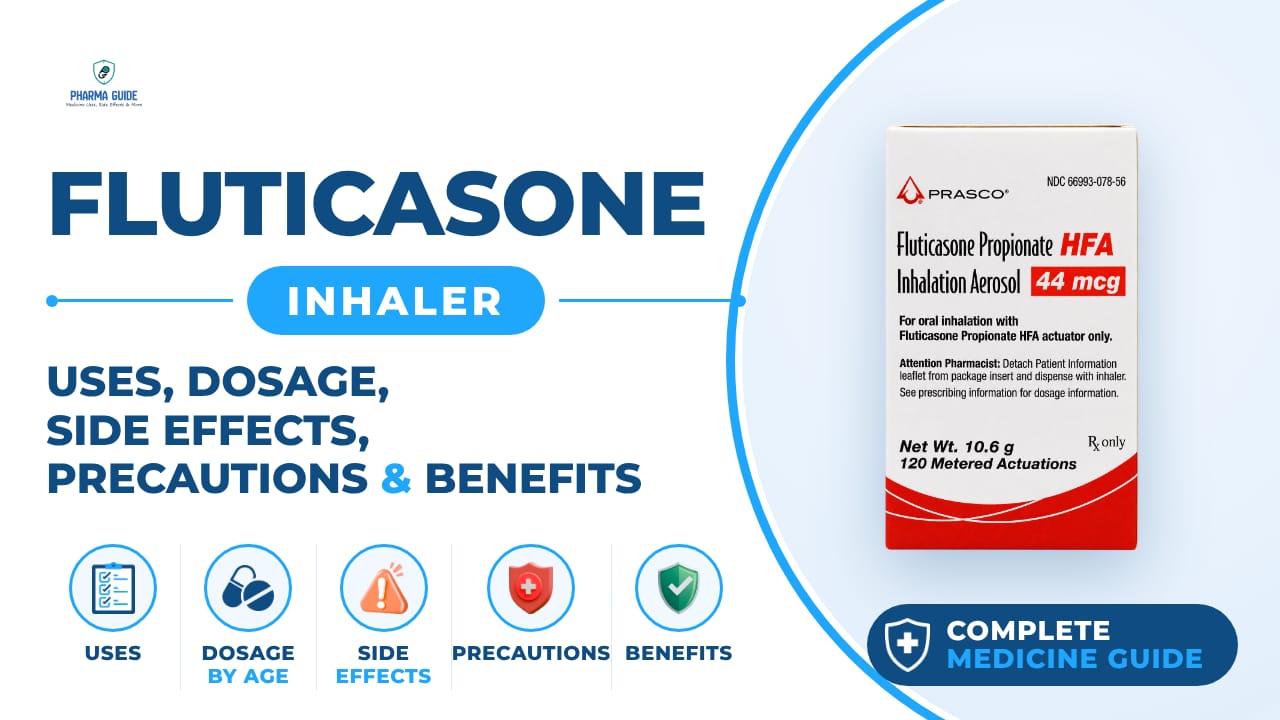
| Generic name | Fluticasone |
|---|---|
| Drug class | Corticosteroid (inhaled corticosteroid) |
| Forms | Aerosol inhaler (metered-dose inhaler), Powder inhaler (dry powder device) |
Quick overview
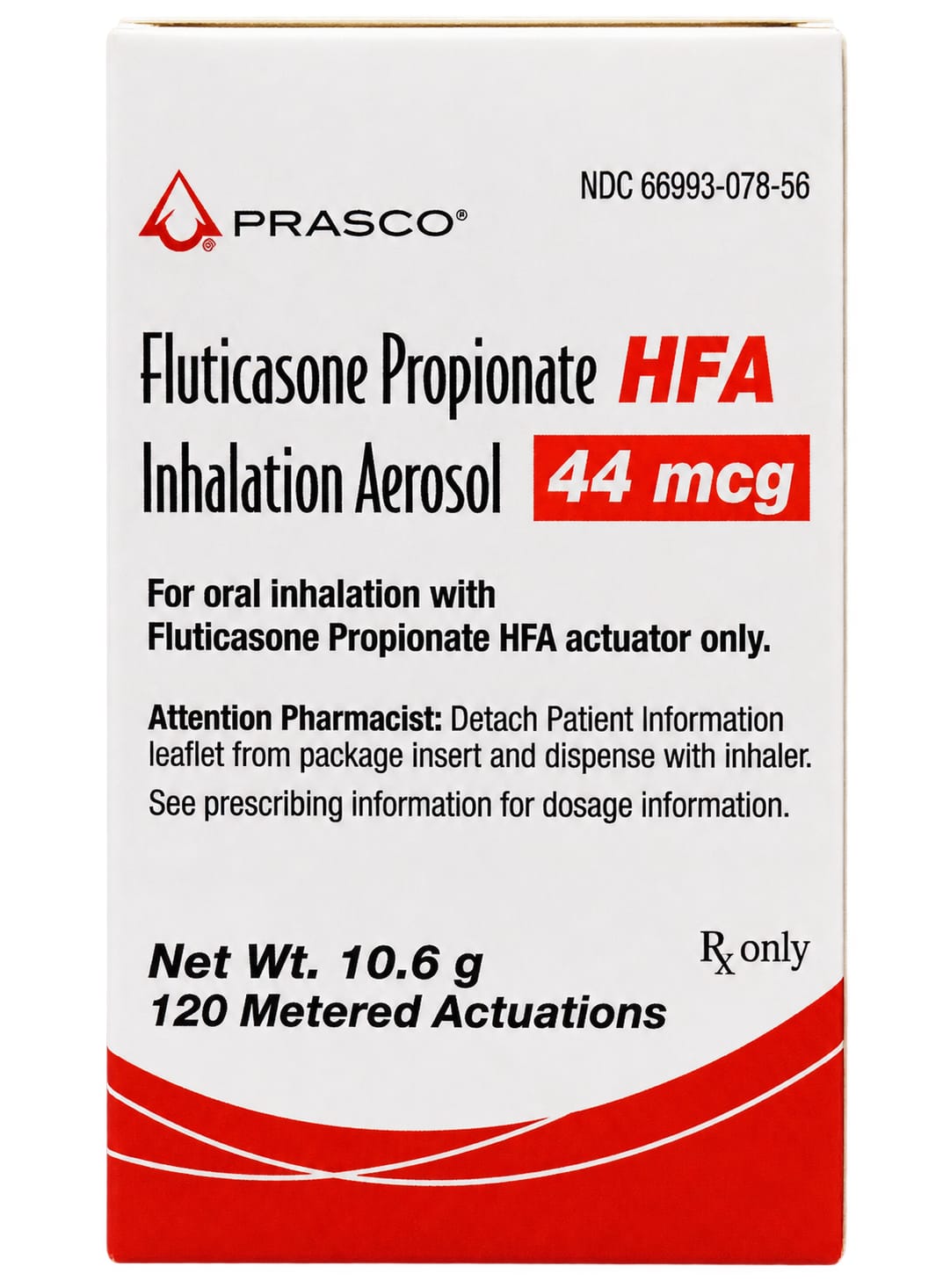
Fluticasone Inhaler (generic name fluticasone) is a prescription-only inhaled corticosteroid used to control asthma. It is used regularly every day to decrease the number and severity of asthma attacks and may be combined with other medicines for ongoing lung conditions such as chronic bronchitis, emphysema, or COPD, as well as for a certain esophagus condition. It is available as an aerosol inhaler and a powder inhaler.
What is Fluticasone Inhaler
Fluticasone is an inhaled corticosteroid medicine used to control asthma. It is only available with a doctor's prescription and comes in aerosol and powder inhaler forms.
Fluticasone Inhaler uses
- Prevents difficulty breathing, chest tightness, wheezing, and coughing caused by asthma
- Used regularly every day to decrease the number and severity of asthma attacks
- May be used with other medicines to control symptoms of ongoing lung disease such as chronic bronchitis, emphysema, or COPD
- May be used for a certain esophagus problem (eosinophilic esophagitis)
Benefits of Fluticasone Inhaler
- Decreases the number and severity of asthma attacks when used regularly every day
- Helps you maintain normal activities and decreases time lost from work or school by controlling asthma symptoms
How Fluticasone Inhaler works
Fluticasone reduces swelling and irritation in the airways of the lungs, which makes breathing easier and helps prevent asthma attacks. It does not relieve an attack that has already started.
Fluticasone Inhaler dosage
Use this medicine only as directed by your doctor; do not use more, less, or more often than prescribed. Use it regularly every day, at around the same times each day, in evenly spaced doses. Do not use this medicine to treat an asthma attack that has already started; use a short-acting (rescue) inhaler instead for sudden symptoms. Continue using this medicine even if you feel well; do not stop without talking to your doctor. The full benefit of this medicine may take one to two weeks or longer to achieve, though symptoms may improve within a day of starting.
If you use other inhaled medicines, ask your doctor whether to space them apart from this medicine, and use the corticosteroid inhaler last if using a reliever inhaler too. Shake the aerosol inhaler well before each use. Prime the aerosol inhaler before first use or if it has not been used for about a week, spraying away from your face. If more than one puff or inhalation is prescribed, wait about 30 seconds between them and shake the inhaler again before the second puff.
Breathe out fully before inhaling, then breathe in slowly and deeply through the mouth, and hold your breath for about 10 seconds before breathing out slowly. Gargle and rinse your mouth with water after each dose without swallowing, to help prevent hoarseness, throat irritation, and mouth infections. Clean dentures after each dose if you wear them.
Children should be watched by an adult each time they use the inhaler to make sure they are using it correctly. Do not use this inhaler with any other medicine's canister, and do not use any other inhaler to take this medicine. Keep track of the number of inhalations used and discard the canister once the labeled number has been used, even if it seems to still contain medicine.
| Age group | Dose |
|---|---|
| Under 4 Years | Use only if prescribed by a doctor |
| 4–11 Years | 50–100 mcg twice daily (as prescribed) |
| 12 Years and Above | 100–250 mcg twice daily (adjusted based on severity) |
| Adults | 100–500 mcg twice daily (maximum dose depends on product strength) |
| Older Adults (65+ years) | Individualized dose based on condition and response |
Available forms and strengths
- Aerosol inhaler (metered-dose inhaler)
- Powder inhaler (dry powder device)
Side effects of Fluticasone Inhaler
Common
- Headache
- Stuffy or runny nose
- Hoarseness or voice changes
- Sore or irritated throat
- Fever
- Ear infection or ear ache
- Cough
- Difficulty sleeping
- Sore mouth and tongue
- Nasal congestion
Serious
- White patches or painful sores in the mouth or throat (possible thrush infection)
- Signs of infection such as sore throat that doesn't go away, fever, or chills
- Vision problems, blurred vision, or eye pain
- Increased thirst or urination
- Easy bruising or bleeding
- Mental or mood changes such as depression, mood swings, or agitation
- Bone pain or bone fractures
- Sudden severe wheezing or trouble breathing right after using the inhaler
- Signs of a serious allergic reaction such as rash, itching, swelling of the face, tongue, or throat, or severe difficulty breathing
- Signs of too much corticosteroid such as round face, rapid weight gain, increased sweating, thinning skin, or muscle weakness
- Symptoms of decreased adrenal function such as tiredness, weakness, nausea, vomiting, or low blood pressure
- Slowed growth in children and adolescents
- Signs of high blood sugar such as frequent urination, increased thirst, or unexplained weight loss
Warnings and precautions
- This medicine should not be used to treat an asthma attack that has already started. A separate short-acting inhaler should be used for sudden symptoms, and you should make sure you understand how to use it.
- This medicine can cause a fungal infection of the mouth or throat (thrush). Tell your doctor right away if you notice white patches in the mouth or throat, or pain when eating or swallowing.
- This medicine may cause paradoxical bronchospasm, meaning your breathing or wheezing could suddenly get worse right after using it. This can be life-threatening.
- Serious allergic reactions, including anaphylaxis and severe swelling, can occur and may be life-threatening, requiring immediate medical care.
- Long-term use may lower bone density, increasing the risk of weak bones or osteoporosis.
- Long-term use may increase the risk of adrenal gland problems, especially with high doses.
- This medicine may cause children to grow more slowly than usual.
- Do not stop this medicine suddenly, as this may cause withdrawal symptoms related to suppressed adrenal glands, such as stomach discomfort or worsening asthma. Your doctor will guide you on how to lower the dose gradually if you need to stop.
- This medicine can hide the early signs of a serious infection and can make you more likely to get infections such as chickenpox or measles, or make current infections worse. Avoid people who are sick with these illnesses.
- The safety of this medicine during pregnancy has not been fully established. Talk with your doctor about the risks and benefits, especially in the first trimester.
- It isn't fully known if this medicine passes into breast milk in amounts that could affect a baby. Discuss the benefits and risks with your doctor before breastfeeding while using this medicine.
- Use regularly as prescribed; it is not a rescue inhaler for sudden breathing attacks. Rinse your mouth with water after each use to reduce the risk of oral thrush. Inform your doctor if you have tuberculosis, fungal infections, or other respiratory infections.
- People with moderate to severe liver disease should use this medicine with caution, since the effects may be increased because the body may remove the medicine more slowly.
- Use with caution if you have glaucoma, cataracts, osteoporosis, or a weakened immune system. Do not stop using the inhaler suddenly without medical advice. Tell your doctor about all medicines you are taking, especially other steroid medicines.
- Use the correct inhaler technique for effective medicine delivery. Monitor children's growth during long-term use. Keep the inhaler clean and store it properly.
Storage
- Store at room temperature, away from heat and direct light. Do not freeze.
- Keep the medicine in the foil pouch until you are ready to use it.
- Store the aerosol canister with the mouthpiece pointing down.
- Do not store the inhaler inside a car where it could be exposed to extreme heat or cold.
- Do not poke holes in the canister or throw it into a fire, even if the canister is empty.
- Do not use the inhaler near an open flame or heat source; it may explode if exposed to very high temperatures.
- Keep out of the reach of children.
- Do not keep outdated medicine or medicine no longer needed.
- Ask your healthcare professional how you should dispose of any medicine you do not use.
- Do not flush this medication down the toilet; use a medicine take-back program if available.
- If a desiccant packet is included, do not eat or inhale it; throw it away out of reach of children and pets.
When to see a doctor
- Get medical care right away if your or your child's symptoms don't improve after two weeks of treatment or if they get worse, or if your short-acting rescue inhaler stops working as well as it used to.
- Check with your doctor right away if you have coughing, difficulty breathing, or wheezing right after using this medicine, since this could be a serious reaction called paradoxical bronchospasm.
- Get emergency help right away for signs of a serious allergic reaction, such as chest tightness, rash, itching, hoarseness, cough, large hive-like swelling of the face, lips, tongue, or throat, or trouble breathing or swallowing.
- Seek emergency medical help right away for signs of overdose such as darkening skin, fainting, loss of appetite, mental depression, or unusual tiredness or weakness.
- Check with your doctor right away if you notice blurred vision, difficulty reading, or any other change in vision.
- Tell your doctor right away if you have white patches in the mouth or throat, or pain when eating or swallowing, as this could be a mouth infection.
Alternatives
- Pulmicort
- Asmanex
- Arnuity Ellipta
Watch the video
FAQs
What is Fluticasone Inhaler used for?
It is used regularly every day to prevent and reduce the number and severity of asthma attacks, and may be combined with other medicines for conditions like chronic bronchitis, emphysema, COPD, or eosinophilic esophagitis.
Can Fluticasone Inhaler be used to treat a sudden asthma attack?
No, it should not be used to treat an asthma attack that has already started. A separate short-acting rescue inhaler should be used for sudden symptoms.
How long does it take for Fluticasone Inhaler to work?
Symptoms may improve within a day of starting, but the full benefit of this medicine may take one to two weeks or longer to achieve.
What are the common side effects of Fluticasone Inhaler?
Common side effects include headache, stuffy or runny nose, hoarseness or voice changes, sore throat, fever, ear infection, cough, difficulty sleeping, and sore mouth and tongue.
How should I use Fluticasone Inhaler to avoid mouth infections?
Gargle and rinse your mouth with water after each dose without swallowing, which helps prevent hoarseness, throat irritation, and mouth infections like thrush.
General information, not medical advice
Your prescriber and the leaflet in your pack know your situation. This page does not.
- Follow your prescriber and the leaflet
- Don't start, stop, or change a dose on your own
- Doses and warnings differ by country and product
Sources
- Mayo Clinic: Fluticasone (inhalation route) - https://www.mayoclinic.org/drugs-supplements/fluticasone-inhalation-route/description/drg-20067663
- MedlinePlus: Fluticasone Oral Inhalation - https://medlineplus.gov/druginfo/meds/a601056.html
- MyHealth Alberta: Fluticasone HFA Inhaler - Oral Inhalation - http://myhealth.alberta.ca/Health/medications/Pages/conditions.aspx?hwid=fdb0460
Video
Related medicines
Beclate Inhaler: Uses, Dosage, Side Effects, Precautions and Alternates
Corticosteroid (Inhaled corticosteroid)
Beclate Inhaler (beclomethasone) is a daily corticosteroid for asthma and COPD control. Learn dosage, uses, side effects, and precautions here.
Pulmicort Inhaler: Uses, Dosage, Side Effects, Precautions and Alternates
Corticosteroid (inhaled corticosteroid)
Pulmicort Inhaler (budesonide) prevents asthma symptoms with daily use. Learn about dosage, side effects, warnings, and safety tips before starting treatment.