
Safety
General information, not medical advice
Your prescriber and the leaflet in your pack know your situation. This page does not.
- Follow your prescriber and the leaflet
- Don't start, stop, or change a dose on your own
- Doses and warnings differ by country and product
Pulmicort Inhaler: Uses, Dosage, Side Effects, Precautions and Alternates
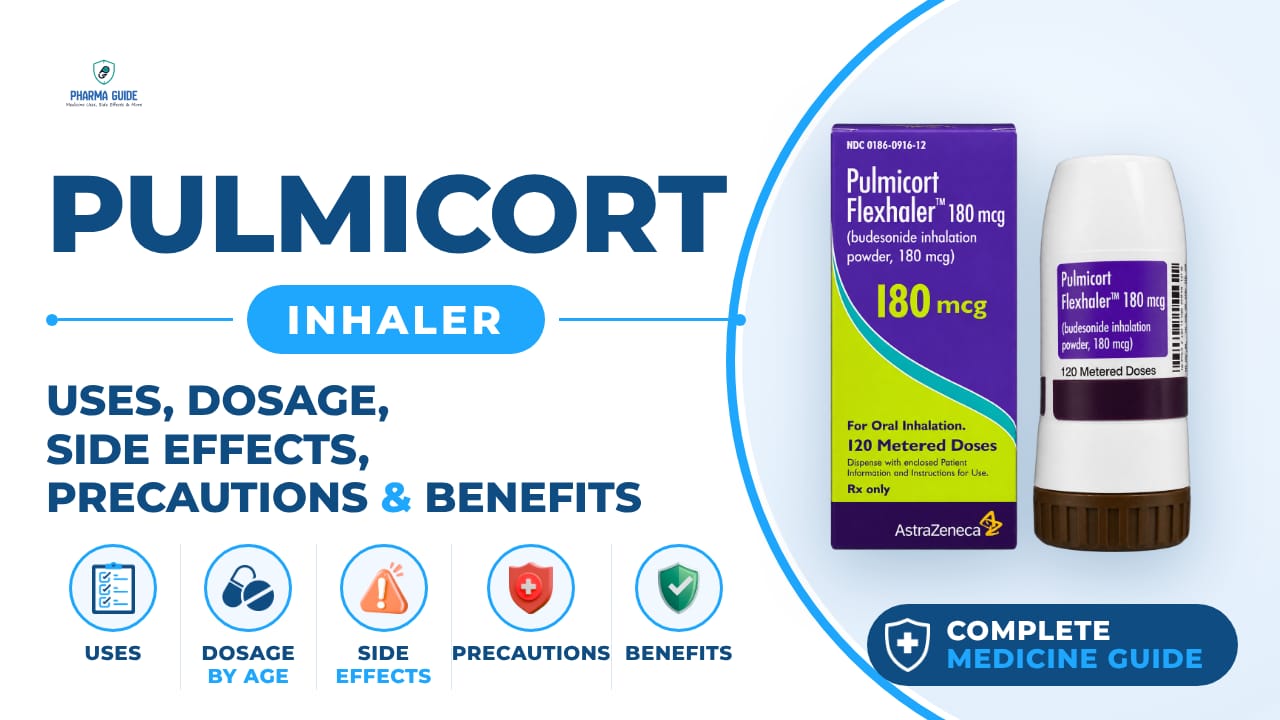
| Generic name | budesonide |
|---|---|
| Drug class | Corticosteroid (inhaled corticosteroid) |
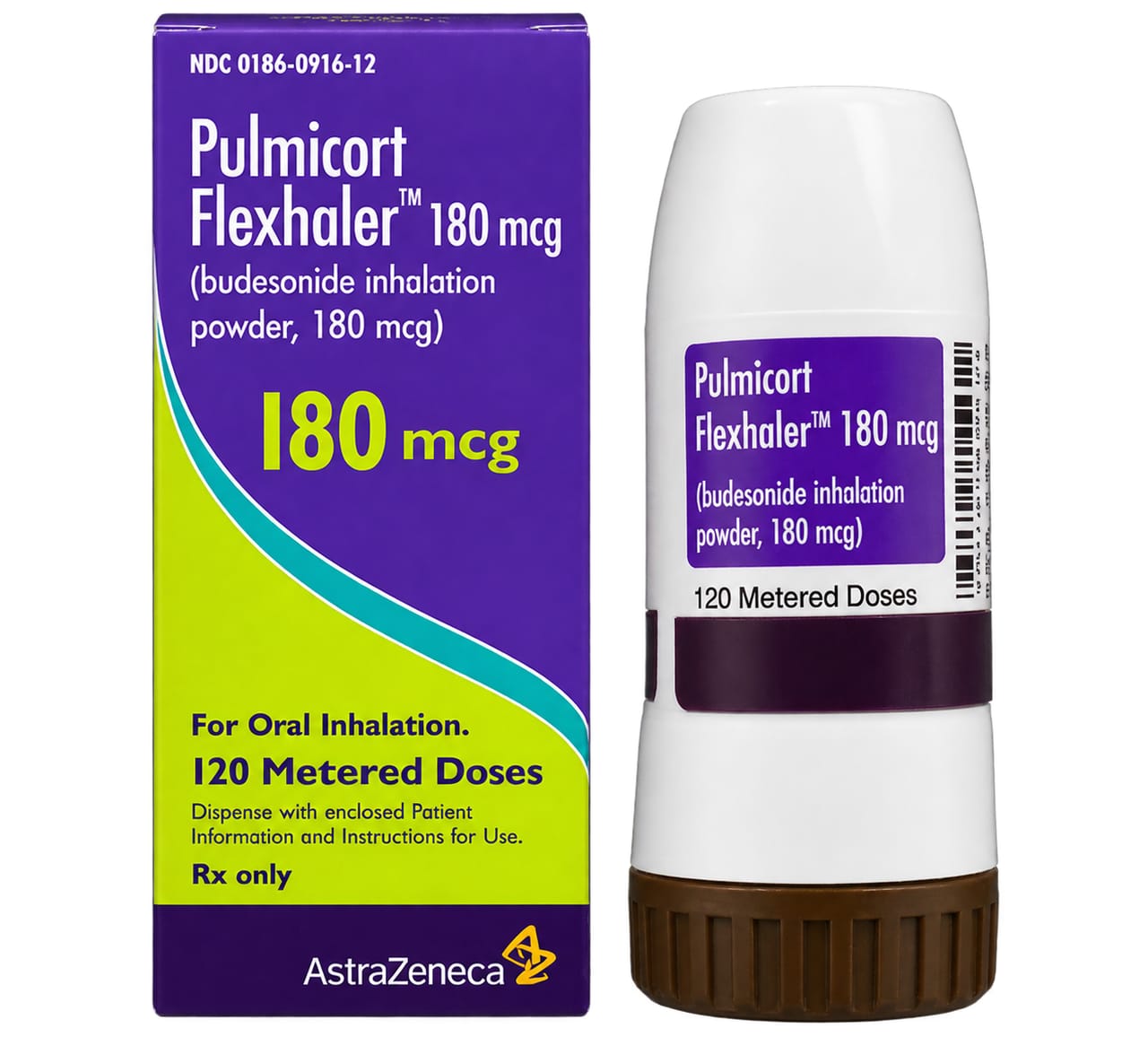
| Forms | Flexhaler (dry powder inhaler), Respules (liquid used with a nebulizer) |
Quick overview
Pulmicort Inhaler (budesonide) is a prescription corticosteroid used as a maintenance treatment to prevent asthma symptoms in adults and children. It is taken consistently each day to reduce airway inflammation, even when symptoms are not present. Pulmicort is not a rescue inhaler and will not stop a sudden asthma attack. It is available as a Flexhaler dry powder inhaler and as Respules used with a nebulizer.
What is Pulmicort Inhaler
Pulmicort is a prescription medicine used to prevent asthma symptoms in adults and children. It contains the active drug budesonide, which is a corticosteroid. It is a maintenance treatment, meaning it is taken consistently each day to reduce inflammation in the airways and manage asthma symptoms over time, even when there are no symptoms.
Pulmicort Inhaler uses
- Maintenance treatment of asthma in adults and children
- Prevention of asthma symptoms (it does not treat sudden asthma attacks)
- Sometimes used off-label to treat COPD flare-ups in adults
- Sometimes used off-label to treat cough caused by croup in infants and children
Benefits of Pulmicort Inhaler
- Reduces inflammation in the airways over time
- Helps manage asthma symptoms such as coughing and wheezing
- Helps prevent sudden breathing problems and asthma attacks when used regularly
- Makes airways less sensitive to irritants that can trigger asthma attacks
How Pulmicort Inhaler works
Pulmicort contains budesonide, a corticosteroid that reduces inflammation. When you breathe it into your lungs, it stops the cells lining your airways from making substances that cause swelling. This makes it easier for air to move in and out of your lungs and makes your airways less sensitive to things that can trigger asthma attacks.
Pulmicort Inhaler dosage
Do not use Pulmicort to treat a sudden asthma attack; use a fast-acting rescue inhaler instead and keep it with you at all times. Most people use Pulmicort Flexhaler twice a day, once in the morning and once in the evening. Pulmicort Respules are generally used once or twice a day using a jet nebulizer connected to an air compressor, not an ultrasonic nebulizer. Do not swallow the liquid medication inside Pulmicort Respules.
To use the Flexhaler, twist the base to load the dose, then take a deep, forceful breath in through the mouthpiece. Do not repeat a dose even if you are unsure whether the medicine reached your lungs. Rinse your mouth with water and spit it out after each dose to help prevent a fungal mouth infection (oral thrush). If using a nebulizer with a face mask, wash your face after each use.
If you have sudden breathing problems right after inhaling a dose, use your rescue inhaler right away, do not use Pulmicort again, and call your doctor as soon as possible. Do not stop using Pulmicort suddenly unless your doctor tells you to, since your asthma symptoms could get worse. If you miss a dose, skip it and take your next dose at the regular time; do not take two doses at once.
| Age group | Dose |
|---|---|
| Under 1 Year | Use only if prescribed by a doctor |
| 1–8 Years | 0.25–0.5 mg once or twice daily (as prescribed) |
| 9–17 Years | 0.5–1 mg daily, adjusted based on symptoms |
| Adults | 0.5–2 mg daily, divided into one or two doses depending on severity |
| Older Adults (65+ years) | Individualized dose based on medical condition |
Available forms and strengths
- Flexhaler (dry powder inhaler)
- Respules (liquid used with a nebulizer)
Side effects of Pulmicort Inhaler
Common
- Nausea
- Hay fever/allergic rhinitis
- Cough
- Pink eye (conjunctivitis)
- Nosebleeds
- Skin rash
- Runny nose
- Stuffy nose
- Respiratory infections such as the common cold
- Sore nose and throat
- Ear infections
- Viral stomach infection (gastroenteritis)
- Headache
- Back pain
Serious
- Paradoxical bronchospasm (sudden tightening of the airways after taking a dose)
- Increased risk of infections
- Reduced bone mineral density (weakened bones) with long-term use
- Slowed growth in children and teenagers
- Severe allergic reaction
- Oral thrush (fungal infection in the mouth and throat)
- Eye problems such as glaucoma and cataracts with long-term use
- Adrenal insufficiency (reduced ability of the adrenal glands to make natural steroid hormones)
Warnings and precautions
- Do not use Pulmicort to treat a sudden asthma attack. It works too slowly and will not help right away. Always keep a fast-acting rescue inhaler with you for sudden breathing problems.
- Pulmicort can weaken the immune system, making infections worse or harder to fight off. Tell your doctor about any current infections before starting treatment.
- If you have had tuberculosis in the past, talk with your doctor before starting Pulmicort, since the medicine can weaken the immune system and let inactive TB become active again.
- Long-term use can weaken bones, increasing the risk of fractures, especially in people already at risk of weak bones.
- Long-term use can cause or worsen eye problems such as glaucoma or cataracts. Report any vision changes to your doctor right away.
- Do not stop Pulmicort suddenly without talking to your doctor, as this can worsen asthma or, in some cases, cause adrenal insufficiency if you have been on a high dose for a long time.
- If you have a severe allergy to milk proteins, do not use Pulmicort Flexhaler because it contains lactose, which may contain small amounts of milk protein.
- If you have not been immunized against chickenpox or measles, try to avoid exposure to these infections while using Pulmicort, since they can be more serious in people using this medicine.
- Pulmicort is generally considered safe to use during pregnancy.
- Doctors often prescribe budesonide over other options for pregnant people because of its long safety record, and stopping treatment can make asthma worse, which is riskier than continuing the medicine. Talk with your doctor if you are pregnant or planning to become pregnant.
- Budesonide passes into breast milk in small amounts, but no side effects have been reported in breastfed babies whose mothers used Pulmicort.
- It is generally considered safe to use while breastfeeding, but talk with your doctor first.
- Use only as prescribed; it is not a rescue inhaler for sudden asthma attacks. Rinse your mouth with water after each use to reduce the risk of oral thrush.
- Pulmicort is broken down in the liver. If your liver isn't working well, the drug could build up in your body and raise your risk of side effects. Tell your doctor if you have liver problems before using Pulmicort.
- Pulmicort does not directly interact with alcohol, but alcohol may worsen some side effects like nausea and can trigger asthma symptoms in some people. Ask your doctor how much alcohol is safe for you.
- Use with caution if you have osteoporosis, glaucoma, cataracts, or a weakened immune system. Do not stop using the inhaler suddenly without medical advice.
Storage
- Store at room temperature of 68°F to 77°F (20°C to 25°C)
- Always store the Flexhaler inhaler with the cover placed on tightly
- Keep the Flexhaler dry and avoid storing it in areas where it could get damp or wet, such as bathrooms
- Store Respules upright and keep them in their aluminum foil envelope to protect them from light
- Once the foil envelope is opened, Respules are good for 2 weeks
- If you have leftover or expired medicine, ask your pharmacist about how to safely dispose of it
When to see a doctor
- Get emergency help right away for signs of a severe allergic reaction, such as hives, rash, severe itching, chest pain, trouble breathing, feeling anxious, or swelling of the face, lips, tongue, or throat.
- Call your doctor right away if your asthma symptoms get worse, or if you have wheezing, choking, or other breathing problems after using this medicine.
- Call your doctor if you notice white patches or sores in your mouth or on your lips, which can be signs of a fungal infection.
- Call your doctor if you have blurred or tunnel vision, eye pain or swelling, or see halos around lights.
- Call your doctor if you notice signs of infection like fever, chills, body aches, ear pain, nausea, or vomiting.
- Call your doctor if you have signs of low adrenal hormone levels, such as worsening tiredness or muscle weakness, feeling light-headed, nausea, or vomiting.
- If your rescue inhaler doesn't relieve sudden breathing symptoms and you think you're having a medical emergency, get emergency help immediately.
Alternatives
- Flovent
- Asmanex
- Beclomethasone
Watch the video
FAQs
Is Pulmicort Inhaler a rescue inhaler for asthma attacks?
No, Pulmicort is not a rescue inhaler. It is a maintenance treatment used daily to prevent asthma symptoms and will not stop a sudden asthma attack. A fast-acting rescue inhaler should always be kept on hand for sudden breathing problems.
How often should Pulmicort Flexhaler be used?
Most people use Pulmicort Flexhaler twice a day, once in the morning and once in the evening.
What should I do after using Pulmicort to prevent side effects?
Rinse your mouth with water and spit it out after each dose to help prevent a fungal mouth infection (oral thrush). If using a nebulizer with a face mask, wash your face after each use.
What forms does Pulmicort Inhaler come in?
Pulmicort is available as a Flexhaler dry powder inhaler and as Respules, a liquid medication used with a nebulizer.
Is Pulmicort safe to use during pregnancy?
Pulmicort is generally considered safe to use during pregnancy. Doctors often prescribe budesonide over other options for pregnant people because of its long safety record, since stopping treatment can make asthma worse. Talk with your doctor if you are pregnant or planning to become pregnant.
General information, not medical advice
Your prescriber and the leaflet in your pack know your situation. This page does not.
- Follow your prescriber and the leaflet
- Don't start, stop, or change a dose on your own
- Doses and warnings differ by country and product
Sources
Video
Related medicines
Fluticasone Inhaler: Uses, Dosage, Side Effects, Precautions and Alternates
Corticosteroid (inhaled corticosteroid)
Fluticasone Inhaler is a prescription corticosteroid used daily to control asthma and reduce attacks. Learn dosage, side effects, and safety tips.
Beclate Inhaler: Uses, Dosage, Side Effects, Precautions and Alternates
Corticosteroid (Inhaled corticosteroid)
Beclate Inhaler (beclomethasone) is a daily corticosteroid for asthma and COPD control. Learn dosage, uses, side effects, and precautions here.