
Safety
General information, not medical advice
Your prescriber and the leaflet in your pack know your situation. This page does not.
- Follow your prescriber and the leaflet
- Don't start, stop, or change a dose on your own
- Doses and warnings differ by country and product
Foscarnet Injection: Uses, Dosage, Side Effects, Precautions and Alternates
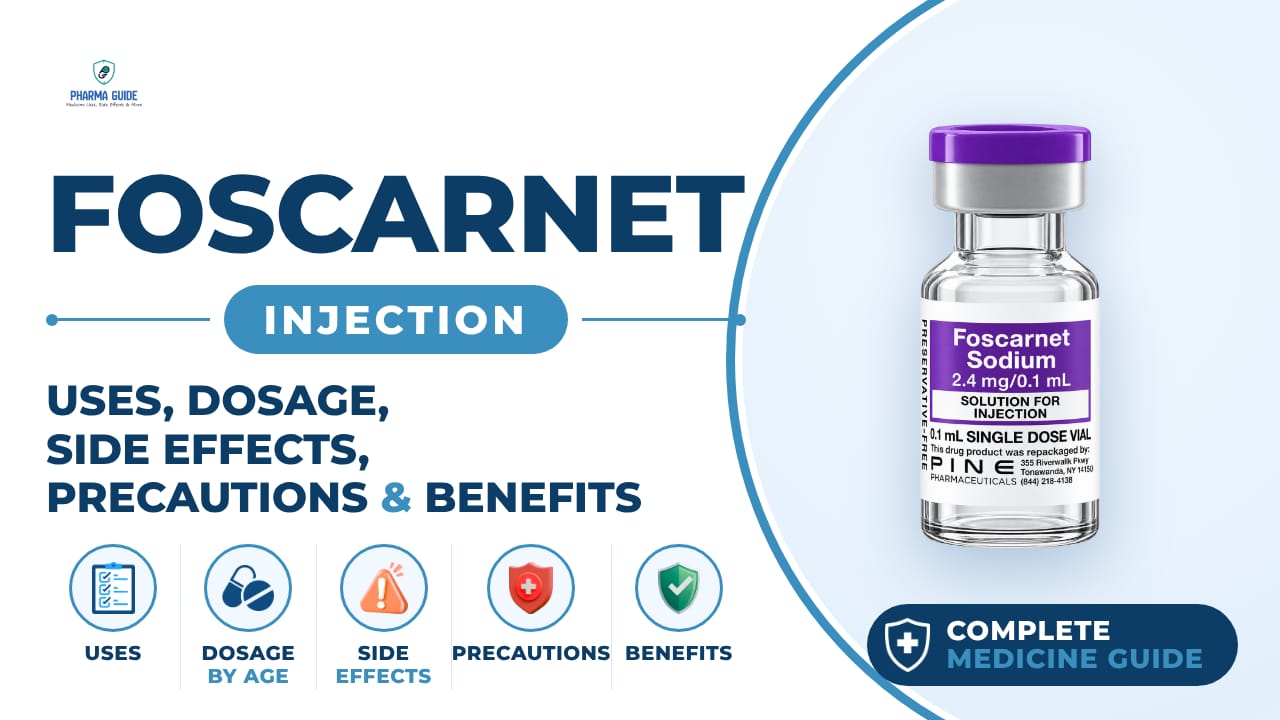
| Generic name | foscarnet |
|---|---|
| Drug class | antiviral |
| Forms | Solution (injection/infusion) |
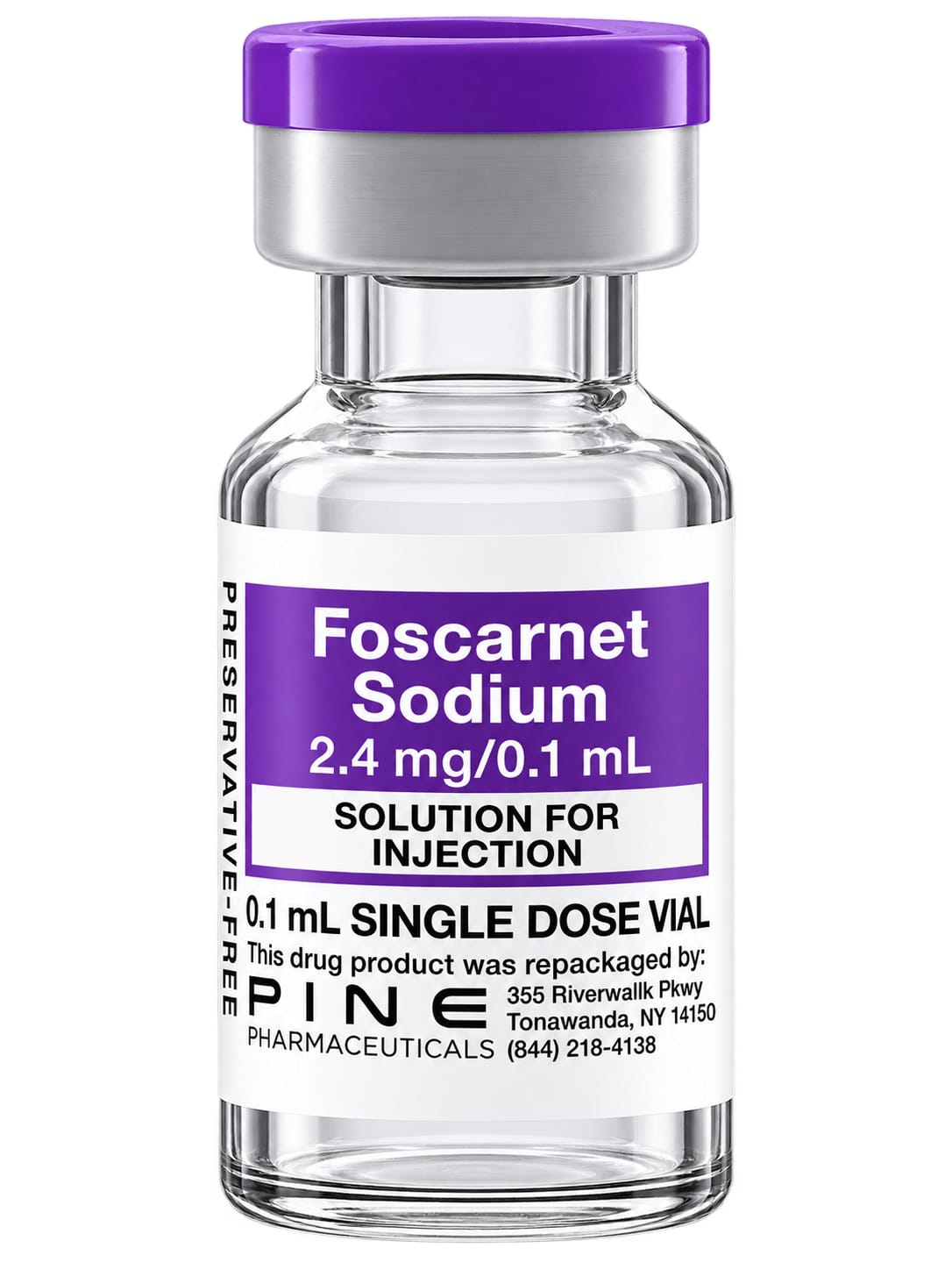
Quick overview
Foscarnet is an antiviral medicine given through an IV infusion into a vein. It treats infections caused by viruses like cytomegalovirus (CMV) and herpes simplex virus (HSV). It does not cure these infections, but helps control and slow them down, and it does not kill the virus, so it may still be possible to spread it to others. It will not treat colds, the flu, or bacterial infections.
What is Foscarnet Injection
Foscarnet is an antiviral medicine given through an IV infusion into a vein. It treats infections caused by viruses like cytomegalovirus (CMV) and herpes simplex virus (HSV). It does not cure these infections, but helps control and slow them down. It does not kill the virus, so it may still be possible to spread it to others. It will not treat colds, the flu, or bacterial infections.
Foscarnet Injection uses
- Treats cytomegalovirus (CMV) eye infections (retinitis) in people with AIDS, to help control symptoms and lower the risk of blindness
- Can be combined with ganciclovir for CMV retinitis if other treatments fail
- Treats acyclovir-resistant herpes simplex virus (HSV) infections of the skin and mucous membranes in people with weakened immune systems
- Sometimes used to treat and prevent other CMV infections in people with HIV
Benefits of Foscarnet Injection
- Helps control CMV eye infections and lower the risk of blindness
- Treats herpes infections that have not responded to acyclovir
- Helps manage and slow down viral infections in people with weakened immune systems
How Foscarnet Injection works
Foscarnet works by blocking the virus's ability to make copies of its genetic material, which slows the spread of the virus in the body.
Foscarnet Injection dosage
This medicine is given as a slow infusion into a vein, usually over one to two hours. It is usually given on a regular schedule every 8 or 12 hours to keep a steady amount of the medicine in your blood. You may receive this medicine in a hospital, or you may be shown how to give it to yourself at home. You may be given extra fluids before or during treatment to help protect your kidneys, and your doctor may ask you to drink extra fluids. Treatment should be completed for the full length of time your doctor prescribes for best results. Talk to your care team about using this medicine in children, since special care may be needed. Unless your doctor tells you otherwise, you can continue your normal diet.
| Age group | Dose |
|---|---|
| Under 18 years | Pediatric dosing is specialist-directed and based on weight, infection type, and kidney function |
| 18–64 years – CMV retinitis induction | 90 mg/kg IV every 12 hours or 60 mg/kg IV every 8 hours |
| 18–64 years – CMV maintenance | Usually 90 mg/kg IV once daily; selected patients may receive 120 mg/kg once daily |
| 18–64 years – acyclovir-resistant HSV | 40 mg/kg IV every 8–12 hours |
Available forms and strengths
- Solution (injection/infusion)
Side effects of Foscarnet Injection
Common
- Fever
- Nausea and vomiting
- Diarrhea
- Headache
- Fatigue (tiredness)
- Irritation, pain, or burning at the IV injection site
- Loss of appetite or weight
- Stomach pain
- Back pain
- Constipation
- Vision changes
- Increased or decreased urination or thirst
Serious
- Kidney damage (decreased urination, swelling of the face, hands, feet, or ankles, unusual tiredness or weakness)
- Low calcium levels (tingling around the mouth, muscle cramps, spasms, confusion)
- Low magnesium or potassium levels (muscle cramps, weakness, fast or irregular heartbeat)
- High phosphorus levels (muscle pain or cramps, bone or joint pain, numbness and tingling around the mouth)
- Seizures
- Heart rhythm changes (fast, pounding, or irregular heartbeat, dizziness, fainting, chest pain, trouble breathing)
- Allergic reactions (rash, itching, hives, swelling of the face, lips, tongue, or throat, trouble breathing or swallowing)
- Sores or ulcers on the mouth, throat, penis, or vulva
- Unusual bleeding or bruising, black and tarry stools, or bloody vomit
Warnings and precautions
- Foscarnet can cause serious kidney problems, and the risk is higher in people who are dehydrated. Your doctor will run lab tests before and during treatment to monitor your kidneys.
- Foscarnet can cause seizures, especially if you have a history of seizures or low calcium levels. Your doctor will check your calcium levels before and during treatment.
- This medicine can cause serious allergic reactions, including a life-threatening reaction called anaphylaxis.
- This medicine can change your heart rhythm, so tell your doctor if you or a family member has ever had a heart rhythm problem such as QT prolongation. You will need regular eye exams while on this medicine since vision loss from retinitis can still occur even during treatment. This medicine can cause sores on the genitals.
- Washing the genital area after urinating may lower the chance of this happening.
- Tell your doctor if you are pregnant, planning to become pregnant, or if you become pregnant while receiving this medicine.
- There is not enough research on whether this medicine is safe during breastfeeding. Talk with your doctor about weighing the benefits and risks before using it while breastfeeding.
- This medicine can damage the kidneys, especially if you are dehydrated or already have kidney disease. Your doctor will check your kidney function with blood tests before and during treatment.
- No routine liver-specific dose adjustment is generally required.
- Drinking alcohol while using this medicine can increase the risk of dizziness or fainting spells.
- This medicine may affect your coordination, reaction time, judgment, or cause dizziness. Do not drive or operate machinery until you know how it affects you.
Storage
- Keep out of the reach of children and pets
- You will be instructed on how to store this medication
- Get rid of any unused medication after the expiration date
- Take the medication to a medication take-back program; check with your pharmacy or law enforcement to find a location
- If you cannot return the medication, ask your pharmacist or care team how to get rid of this medication safely
When to see a doctor
- Call your doctor right away if you have tingling or numbness in your mouth, arms, or legs, as this may be a sign of a serious problem
- Get medical help immediately if you have signs of an allergic reaction, such as rash, itching, hives, or swelling of the face, lips, tongue, or throat
- Contact your doctor right away if you notice signs of kidney problems, such as a decrease in urine, or swelling of the ankles, hands, or feet
- Seek emergency care if you have a seizure, numbness or tingling around the mouth or fingers and toes, or a fast, pounding, or irregular heartbeat
- Get emergency help if you have difficulty breathing or swallowing, fainting, or large swelling of the face, lips, tongue, throat, hands, legs, or feet
- If you think you have taken too much of this medicine, contact a poison control center or emergency room right away
Alternatives
- Maribavir
- Cidofovir
- Valganciclovir
- Ganciclovir
Watch the video
FAQs
What is Foscarnet Injection used for?
Foscarnet treats CMV eye infections (retinitis) in people with AIDS, can be combined with ganciclovir if other treatments fail, treats acyclovir-resistant HSV infections of the skin and mucous membranes in people with weakened immune systems, and is sometimes used to treat and prevent other CMV infections in people with HIV.
How is Foscarnet Injection given?
It is given as a slow infusion into a vein, usually over one to two hours, on a regular schedule every 8 or 12 hours to keep a steady amount of medicine in your blood. It may be given in a hospital or at home after proper instruction.
What are the common side effects of Foscarnet Injection?
Common side effects include fever, nausea and vomiting, diarrhea, headache, fatigue, irritation or pain at the injection site, loss of appetite or weight, stomach pain, back pain, constipation, vision changes, and changes in urination or thirst.
What are the serious risks of Foscarnet Injection?
Serious risks include kidney damage, low calcium, magnesium, or potassium levels, high phosphorus levels, seizures, heart rhythm changes, allergic reactions, sores or ulcers on the mouth or genitals, and unusual bleeding or bruising.
Does Foscarnet cure CMV or HSV infections?
No, Foscarnet does not cure these infections. It helps control and slow them down, and it does not kill the virus, so it may still be possible to spread it to others.
General information, not medical advice
Your prescriber and the leaflet in your pack know your situation. This page does not.
- Follow your prescriber and the leaflet
- Don't start, stop, or change a dose on your own
- Doses and warnings differ by country and product
Sources
Video
Related medicines
Valganciclovir Tablet: Uses, Dosage, Side Effects, Precautions and Alternates
Antiviral
Valganciclovir Tablet treats CMV retinitis and prevents CMV disease after transplant. Learn uses, dosage, side effects, warnings, and precautions.
Famciclovir Tablet: Uses, Dosage, Side Effects, Precautions and Alternates
antiviral
Famciclovir Tablet treats shingles, genital herpes, and cold sores by stopping viral multiplication. Learn uses, dosage, side effects, and precautions.