
Safety
General information, not medical advice
Your prescriber and the leaflet in your pack know your situation. This page does not.
- Follow your prescriber and the leaflet
- Don't start, stop, or change a dose on your own
- Doses and warnings differ by country and product
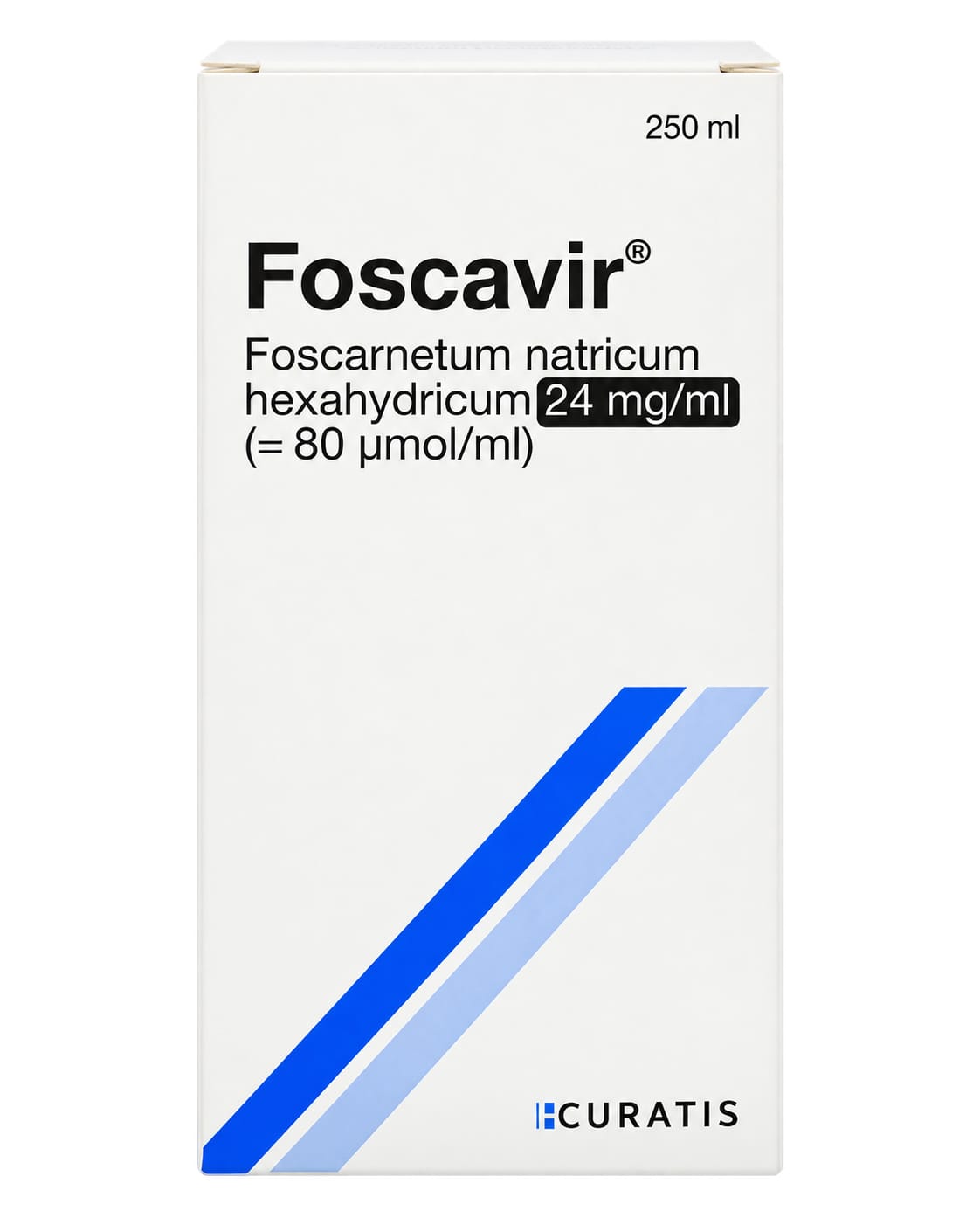
Foscavir Injection: Uses, Dosage, Side Effects, Precautions and Alternates
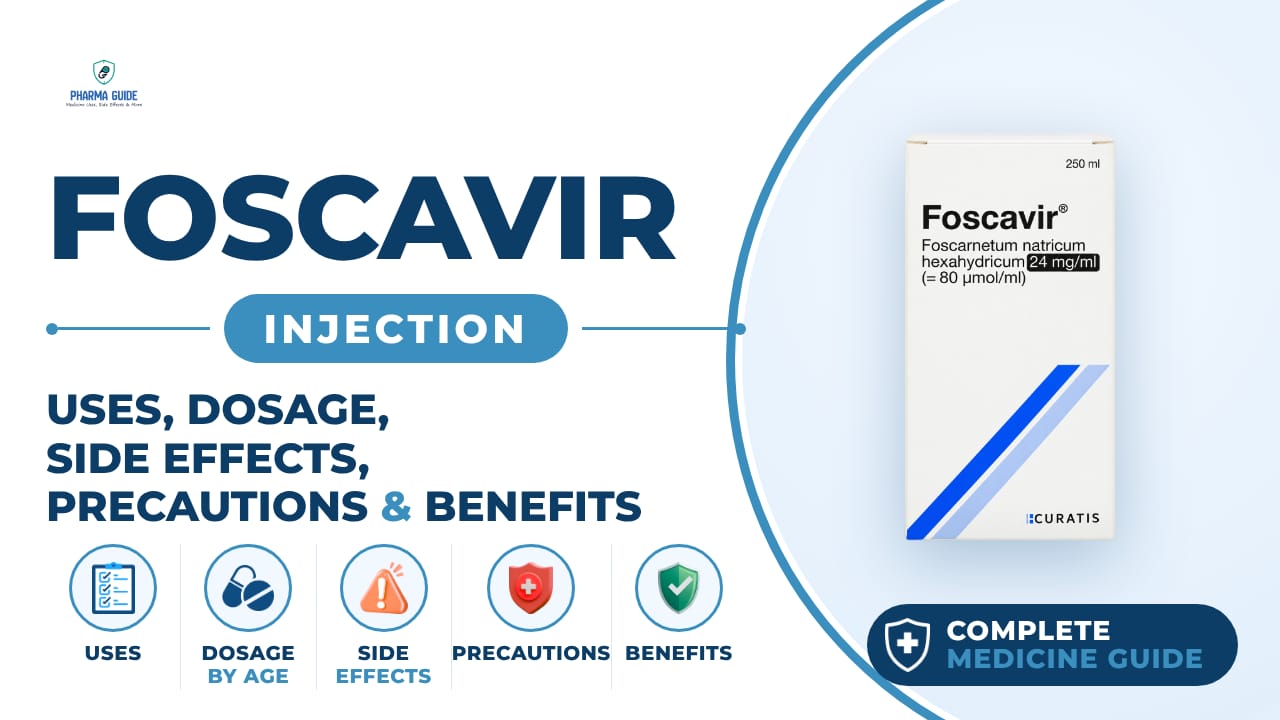
| Generic name | foscarnet sodium |
|---|---|
| Drug class | antiviral |
| Forms | Injection (liquid given into a vein) |
Quick overview
Foscavir Injection (foscarnet sodium) is a prescription antiviral medicine given through a vein (IV). It is used to treat serious viral infections, including CMV retinitis and herpes simplex virus infections, in people with weakened immune systems. It works by blocking an enzyme the virus needs to copy its DNA, stopping the virus from multiplying. It is given by a doctor or nurse as a slow IV infusion, usually over one to two hours.
What is Foscavir Injection
Foscavir is a prescription antiviral medicine given through a vein (IV). It is used to treat serious viral infections in people whose immune systems are weakened.
Foscavir Injection uses
- Treats cytomegalovirus (CMV) retinitis, a viral eye infection, in people with AIDS, helping slow the disease and lower the risk of blindness
- Treats herpes simplex virus (HSV) infections of the skin and mucous membranes in people with weak immune systems, usually after other antiviral medicines like acyclovir have not worked
Benefits of Foscavir Injection
- Controls and suppresses CMV and HSV virus growth
- Helps slow progression of CMV retinitis and reduce risk of blindness
- Can be used when the virus has stopped responding to other antivirals like acyclovir
How Foscavir Injection works
Foscavir works by blocking an enzyme the virus needs to copy its DNA, which stops the virus from multiplying in the body.
Foscavir Injection dosage
Foscavir is given by a doctor or nurse as a slow injection into a vein, usually taking one to two hours to complete. It must not be injected too quickly, as this can cause dangerous side effects. It is usually given for two to three weeks as an initial course of treatment.
You may also receive extra fluids through a vein to help prevent dehydration and protect your kidneys. Drink plenty of water while receiving this medicine.
Keep the medicine and your urine off your skin, since it can irritate the skin; wash and dry yourself well after using the toilet. If it touches your skin or eyes, rinse right away with water.
Not enough information is available to recommend its use in children.
| Age group | Dose |
|---|---|
| Under 18 years | Pediatric dosing is specialist-directed; no standard age-only regimen |
| 18–64 years | 90 mg/kg IV every 12 hours or 60 mg/kg IV every 8 hours for about 2–3 weeks |
| 65 years and older | Same weight-based regimens may be used, but dosing must be adjusted carefully for kidney function |
Available forms and strengths
- Injection (liquid given into a vein)
Side effects of Foscavir Injection
Common
- Nausea and vomiting
- Diarrhea
- Fever and flu-like symptoms
- Headache
- Fatigue or weakness
- Skin rash
- Dizziness
- Chest pain or back pain
- Decreased appetite
- Swelling in feet, legs, or other body parts
- Pain or swelling at the injection site
- Genital discomfort or sores
Serious
- Kidney damage (reduced urination, swelling in feet/ankles/legs, unusual tiredness, trouble breathing, confusion)
- Electrolyte imbalances such as low calcium, magnesium, potassium, or phosphate (weakness, muscle cramps or twitching, confusion, numbness or tingling)
- Seizures
- Heart rhythm changes, including QT prolongation and torsades de pointes (fast, slow, or irregular heartbeat, fainting)
- Bone marrow suppression leading to low blood cell counts (fever, easy bruising or bleeding, frequent infections, pale skin, shortness of breath)
- Severe allergic reactions (swelling of face, lips, tongue, or throat; difficulty breathing; hives)
- Severe skin reactions (skin lesions or sores, rapidly spreading rash, blistering of skin and mucous membranes)
- Stomach bleeding (vomiting blood or material like coffee grounds, black or bloody stools, severe abdominal pain)
- Blood clot signs near the injection site (swelling and redness along a vein)
- Pain or burning when urinating, or changes in urine color or amount
Warnings and precautions
- Do not use this medicine if you are allergic to foscarnet sodium or any of its ingredients.
- People on hemodialysis should not use this medicine, since there isn't enough information about its safety in that situation.
- Men being treated with this medicine should avoid fathering a child during treatment and for six months afterward.
- Trying to become pregnant while being treated with this medicine is not recommended, so effective contraception should be used.
- Injecting this medicine too fast can cause dangerous or unwanted side effects.
- This medicine does not cure CMV or herpes infections, and the virus may still get worse during or after treatment.
- It is not known if Foscavir can harm an unborn baby, and it is not usually recommended during pregnancy. Tell your doctor if you are or might become pregnant.
- It is not known if this medicine passes into breast milk. You should not breastfeed while using Foscavir.
- Foscavir can damage the kidneys, especially if you already have kidney disease. Your doctor will check your kidney function with blood and urine tests before and during treatment.
- No standard liver-specific adjustment is generally required, but overall clinical monitoring is necessary.
- There are no known interactions between this medicine and alcohol, but heavy drinking can weaken your immune response and make it harder for your body to fight infection.
- This medicine can cause dizziness, tiredness, or seizures in some people, which can affect your ability to drive or use machinery safely.
Storage
- Store Foscavir at room temperature away from very hot or very cold temperature.
- Store Foscavir below 25°C, in a cool, dry place.
- Keep this and all other medicines out of the reach of children, never share your medicines with others, and use this medication only for the indication prescribed.
When to see a doctor
- Get emergency help right away for signs of a severe allergic reaction, such as swelling of the face, lips, tongue or throat, hives, or trouble breathing.
- Call your doctor right away if you have signs of kidney problems, such as little or no urination, painful urination, swelling in your feet or ankles, or feeling tired or short of breath.
- Tell your doctor right away if you have a seizure or signs that one may be coming, such as muscle twitching, jerking, confusion, or loss of consciousness.
- Tell your doctor right away if you faint or notice a change in your heart rate or rhythm, such as a fast or skipping heartbeat.
- Tell your doctor right away if you have signs of bone marrow problems, such as fever, shortness of breath, pale or yellowish skin, easy bruising or bleeding, or frequent infections.
- Seek urgent medical attention for severe stomach pain, vomiting blood or material that looks like coffee grounds, or black or bloody stools.
- Get medical help right away if you accidentally receive too much of this medicine.
Alternatives
- Maribavir
- Cidofovir
- Valganciclovir
- Ganciclovir
Watch the video
FAQs
What is Foscavir Injection used for?
Foscavir treats cytomegalovirus (CMV) retinitis in people with AIDS and herpes simplex virus (HSV) infections of the skin and mucous membranes in people with weak immune systems, usually after other antivirals like acyclovir have not worked.
How is Foscavir given?
Foscavir is given by a doctor or nurse as a slow injection into a vein, usually over one to two hours. It must not be injected too quickly, as this can cause dangerous side effects. It is usually given for two to three weeks as an initial course of treatment.
What are the serious side effects of Foscavir?
Serious side effects include kidney damage, electrolyte imbalances, seizures, heart rhythm changes, bone marrow suppression, severe allergic reactions, severe skin reactions, and stomach bleeding.
Can Foscavir be used during pregnancy?
It is not known if Foscavir can harm an unborn baby, and it is not usually recommended during pregnancy. You should tell your doctor if you are or might become pregnant.
What precautions should men take while on Foscavir?
Men being treated with this medicine should avoid fathering a child during treatment and for six months afterward.
General information, not medical advice
Your prescriber and the leaflet in your pack know your situation. This page does not.
- Follow your prescriber and the leaflet
- Don't start, stop, or change a dose on your own
- Doses and warnings differ by country and product
Sources
Video
Related medicines
Valganciclovir Tablet: Uses, Dosage, Side Effects, Precautions and Alternates
Antiviral
Valganciclovir Tablet treats CMV retinitis and prevents CMV disease after transplant. Learn uses, dosage, side effects, warnings, and precautions.
Famciclovir Tablet: Uses, Dosage, Side Effects, Precautions and Alternates
antiviral
Famciclovir Tablet treats shingles, genital herpes, and cold sores by stopping viral multiplication. Learn uses, dosage, side effects, and precautions.