
Safety
General information, not medical advice
Your prescriber and the leaflet in your pack know your situation. This page does not.
- Follow your prescriber and the leaflet
- Don't start, stop, or change a dose on your own
- Doses and warnings differ by country and product
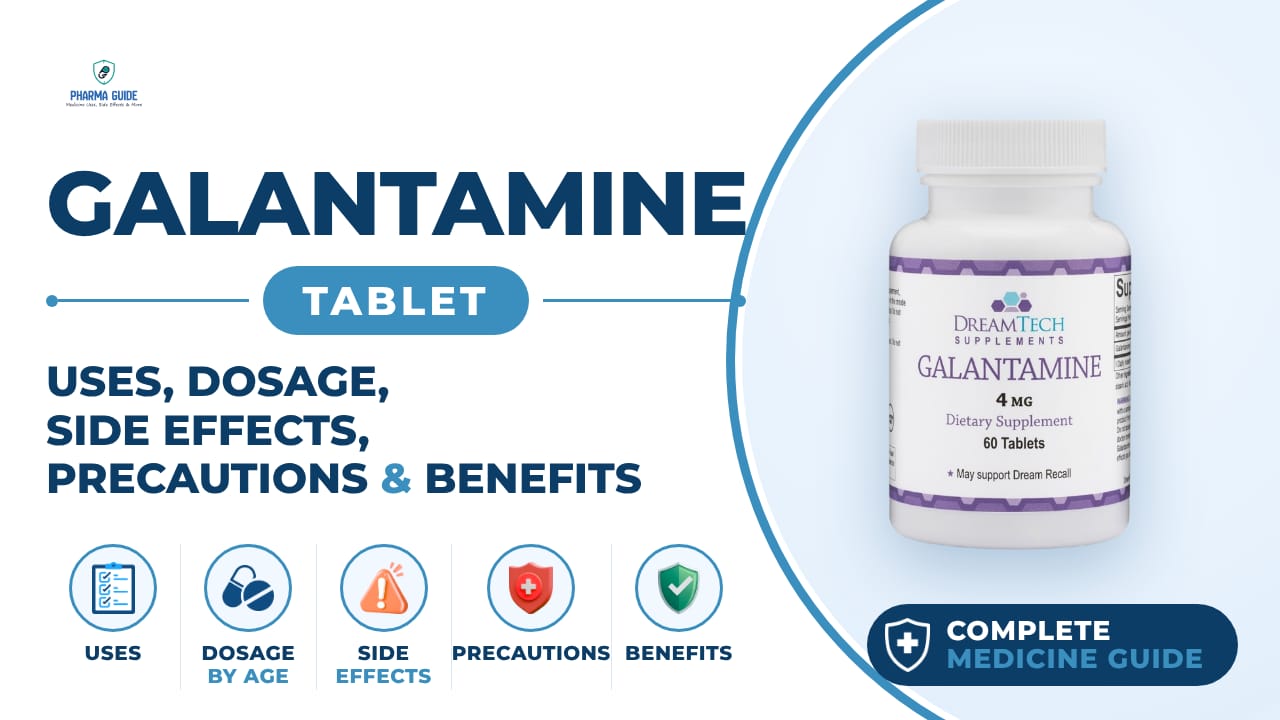
Galantamine Tablet: Uses, Dosage, Side Effects, Precautions and Alternates
| Generic name | galantamine hydrobromide |
|---|---|
| Drug class | Cholinesterase inhibitor |
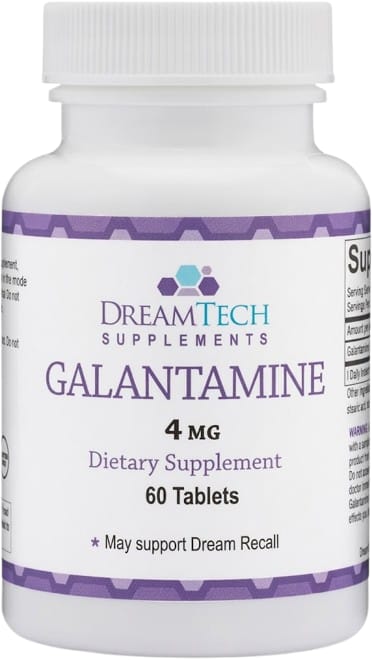
| Forms | Tablet (4 mg, 8 mg, 12 mg), Oral solution (4 mg/mL) |
Quick overview
Galantamine Tablet (galantamine hydrobromide) is a cholinesterase inhibitor prescribed for mild to moderate dementia caused by Alzheimer's disease. It works by increasing a brain chemical called acetylcholine to help nerve cells communicate better, supporting memory and thinking. It is taken as directed by a doctor, with common side effects like nausea and dizziness, and certain precautions apply for people with heart, kidney, or liver conditions.
What is Galantamine Tablet
Galantamine is a prescription medicine used to treat mild to moderate dementia caused by Alzheimer's disease. It helps nerve cells in the brain communicate better by increasing the level of a brain chemical called acetylcholine.
Galantamine Tablet uses
- Mild to moderate Alzheimer's disease
- Memory problems associated with Alzheimer's disease
- Cognitive impairment
- Difficulty with thinking and reasoning
- Decline in daily functioning due to Alzheimer's disease
Benefits of Galantamine Tablet
- Helps manage mild to moderate Alzheimer's disease
- Supports memory function
- May improve attention and thinking
- Helps maintain daily functioning
- May help manage cognitive symptoms
How Galantamine Tablet works
Galantamine blocks the breakdown of acetylcholine, a brain chemical needed for memory and thinking, which raises its level in the brain. This may improve symptoms of Alzheimer's disease because the condition is linked to a loss of acetylcholine-producing nerve cells.
Galantamine Tablet dosage
Take this medicine twice a day, preferably with the morning and evening meals. If using the extended-release capsule, take it once daily in the morning, preferably with food, and swallow it whole without opening, dividing, crushing, or chewing it. If you miss a dose, take it at the next scheduled time; do not take two doses at once. If treatment is stopped for several days or longer, do not restart on your own; contact your doctor, as you may need to restart at a lower dose and build back up gradually. Drink plenty of liquids while taking this medicine to stay hydrated.
| Age group | Dose |
|---|---|
| Under 18 years | Not recommended |
| 18–64 years | 16 mg/day |
| 65+ years | 16 mg/day |
Available forms and strengths
- Tablet (4 mg, 8 mg, 12 mg)
- Oral solution (4 mg/mL)
Side effects of Galantamine Tablet
Common
- Nausea
- Vomiting
- Diarrhea
- Abdominal pain
- Decreased appetite/anorexia
- Dizziness
- Headache
- Tiredness/fatigue
- Weight loss
- Dyspepsia/heartburn
- Runny nose
- Sweating
- Leg cramps
- Muscle spasms
- Tingling in hands or feet
- Tremor
- Blurred vision
- Trouble sleeping or sleepiness
- Urinary tract infection
Serious
- Severe allergic reaction (rash, hives, swelling of face, lips, tongue or throat, difficulty breathing or swallowing)
- Serious skin reactions such as Stevens-Johnson syndrome, acute generalized exanthematous pustulosis, or erythema multiforme (severe rash with blistering and peeling skin)
- Slow heart rate, fainting, or abnormal heart rhythm
- High blood pressure (headache, dizziness, vision problems, shortness of breath)
- Low blood pressure, especially when standing up (dizziness, lightheadedness, fainting)
- Seizures or convulsions
- Severe confusion
- Behavioral changes such as agitation or aggression
- Hallucinations
- Signs of stomach ulcer or gastrointestinal bleeding (blood in stool, black tarry stools, vomiting blood)
- Signs of liver problems (yellowing of skin or eyes, dark urine, nausea, loss of appetite)
- Low potassium levels (irregular heartbeat, muscle weakness, feeling unwell)
- Thoughts of suicide or self-harm
- Signs of a heart attack (chest pain, pain spreading to arm, sweating, nausea)
- Signs of stroke (sudden weakness or numbness, slurred speech, vision problems)
- Difficulty passing urine or inability to empty bladder
- Significant or unhealthy weight loss
Warnings and precautions
- This medicine can slow the heart rate and affect heart rhythm, which may be risky for people with certain heart conditions, including sick sinus syndrome or unexplained fainting episodes.
- This medicine can cause significant weight loss, so your doctor will check your weight regularly during treatment.
- This medicine can increase stomach acid, raising the risk of stomach bleeding, especially in people with a history of ulcers or those taking anti-inflammatory pain medicines.
- Treatment should be stopped right away if a skin rash appears, since serious skin reactions have been reported.
- This medicine should be used carefully in people with a history of seizures, asthma, or breathing problems, since it may worsen these conditions.
- Taking too much of this medicine can cause a serious reaction called cholinergic crisis, with symptoms like severe nausea, vomiting, sweating, slow heart rate, muscle weakness, and difficulty breathing, which can be life-threatening.
- This medicine is not recommended for children under 18, as it has not been studied in this age group.
- If you need surgery or a procedure requiring general anesthesia, tell your medical team you are taking this medicine, as it may affect certain anesthesia drugs used during surgery.
- Galantamine should not be used in women who could become pregnant unless the potential benefit justifies the potential risk to the unborn baby, since its safety in pregnancy has not been established.
- It is not known whether galantamine passes into breast milk, so it should not be used by nursing mothers.
- People with kidney problems may need a lower dose and careful monitoring, since the body clears galantamine more slowly. It is not recommended for people with very severe kidney impairment.
- People with liver problems may need a lower dose and close monitoring. It is not recommended for people with severe liver impairment.
- It isn't known exactly how alcohol affects this medicine, but drinking alcohol may increase the chance of feeling dizzy.
- This medicine may cause dizziness or sleepiness, especially during the first few weeks of treatment, which can affect your ability to drive or use machines safely.
Storage
- Store between 15°C to 30°C
- Keep out of the reach and sight of children
- Do not use after the expiry date printed on the package
- Always return old or unused medicine to your pharmacist for disposal
When to see a doctor
- Get emergency medical help right away if you have signs of a severe allergic reaction, such as hives, difficulty breathing, or swelling of the face, lips, tongue, or throat.
- Stop the medicine and get emergency help if you develop a painful, burned-looking rash, blistering, or peeling skin, especially around the mouth, nose, eyes, or genitals.
- Seek immediate medical help for chest pain, a very slow or irregular heartbeat, or fainting, as these may signal a serious heart problem.
- Get medical help immediately if you notice signs of stomach bleeding, such as bloody or black tarry stools, or vomit that looks like blood or coffee grounds.
- Stop taking the medicine and seek immediate medical attention if you have a seizure, severe confusion, or signs of a stroke such as sudden weakness, numbness, or slurred speech.
- If you think you or someone else has taken too much of this medicine, contact a healthcare professional, hospital emergency department, or your local poison control center immediately, even if there are no symptoms.
- Tell your doctor right away if you notice any skin rash, inflammation, blisters, or swelling of the skin while taking this medicine.
Alternatives
- Tacrine
- Rivastigmine
- Donepezil
Watch the video
FAQs
What is Galantamine Tablet used for?
It is used to treat mild to moderate dementia caused by Alzheimer's disease, helping with memory problems, cognitive impairment, and decline in daily functioning.
How does Galantamine Tablet work?
It blocks the breakdown of acetylcholine, a brain chemical needed for memory and thinking, raising its level in the brain to help improve symptoms of Alzheimer's disease.
How should I take Galantamine Tablet?
Take it twice a day, preferably with the morning and evening meals. Extended-release capsules are taken once daily in the morning with food and must be swallowed whole. If a dose is missed, take it at the next scheduled time without doubling up.
What are the common side effects of Galantamine Tablet?
Common side effects include nausea, vomiting, diarrhea, abdominal pain, decreased appetite, dizziness, headache, tiredness, weight loss, dyspepsia, and trouble sleeping or sleepiness.
Who should avoid taking Galantamine Tablet?
It is not recommended for children under 18, people with very severe kidney or liver impairment, and should be used cautiously in those with certain heart conditions, seizure history, or breathing problems.
General information, not medical advice
Your prescriber and the leaflet in your pack know your situation. This page does not.
- Follow your prescriber and the leaflet
- Don't start, stop, or change a dose on your own
- Doses and warnings differ by country and product
Sources
Video
Related medicines
Exelon Capsule: Uses, Dosage, Side Effects, Precautions and Alternates
Cholinesterase inhibitor
Exelon Capsule (rivastigmine) treats mild to moderate Alzheimer's or Parkinson's dementia. Learn uses, dosage, side effects, and precautions.
Rivastigmine Capsule: Uses, Dosage, Side Effects, Precautions and Alternates
cholinesterase inhibitor
Rivastigmine Capsule treats dementia from Alzheimer's or Parkinson's disease by boosting a brain chemical for memory and thinking. Learn dosage, side effects,