
Safety
General information, not medical advice
Your prescriber and the leaflet in your pack know your situation. This page does not.
- Follow your prescriber and the leaflet
- Don't start, stop, or change a dose on your own
- Doses and warnings differ by country and product
Rivastigmine Capsule: Uses, Dosage, Side Effects, Precautions and Alternates
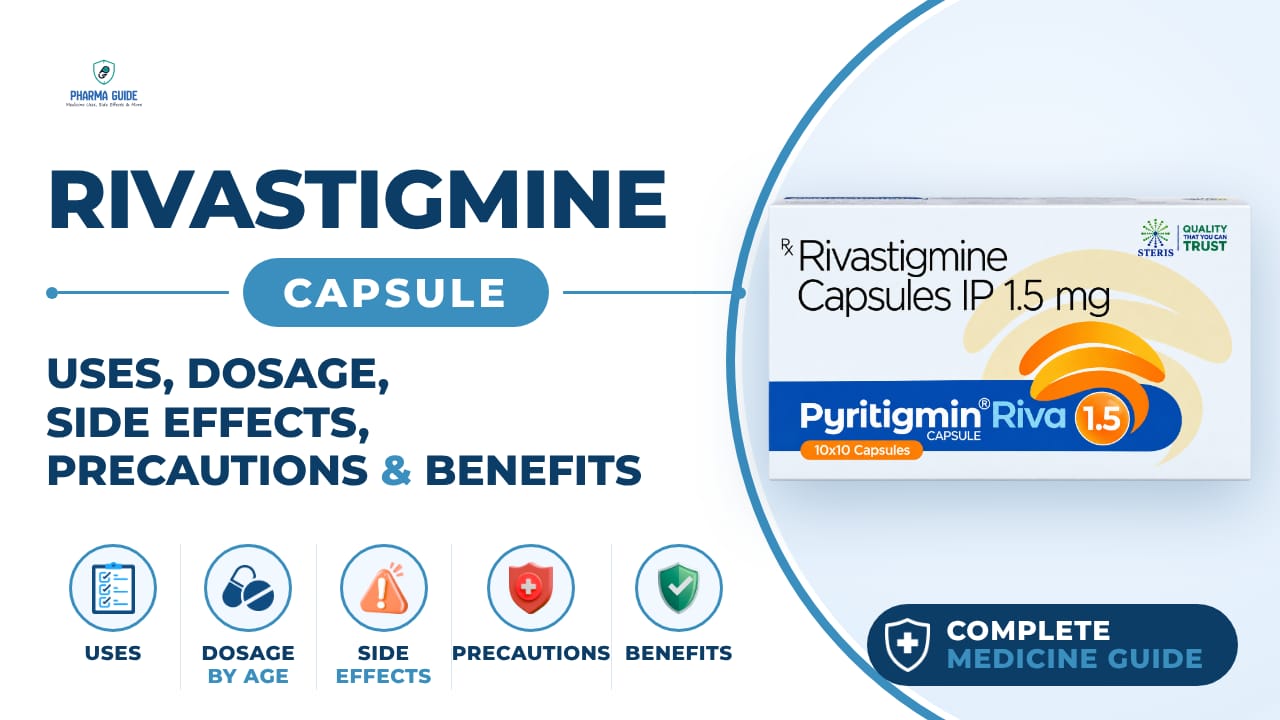
| Generic name | rivastigmine |
|---|---|
| Drug class | cholinesterase inhibitor |
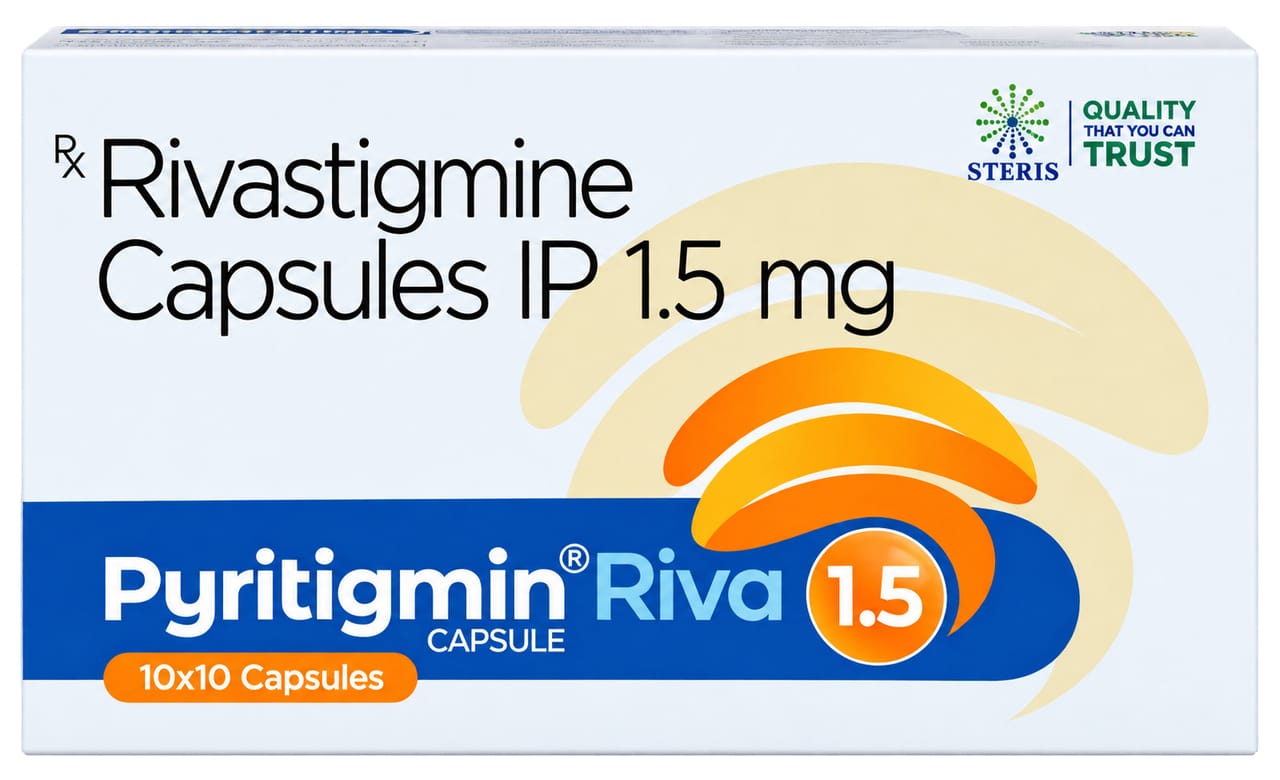
| Forms | Capsule |
Quick overview
Rivastigmine Capsule contains rivastigmine, a cholinesterase inhibitor used to treat dementia caused by Alzheimer's disease or Parkinson's disease. It works by increasing a natural brain chemical involved in memory and thinking. The capsules are taken twice daily with food, with doses adjusted gradually by a doctor based on response.
What is Rivastigmine Capsule
Rivastigmine is a medicine used to treat dementia caused by Alzheimer's disease or Parkinson's disease. It belongs to a group of medicines called cholinesterase inhibitors, which work by increasing a natural brain chemical involved in memory and thinking.
Rivastigmine Capsule uses
- Treatment of mild to moderately severe Alzheimer's dementia in adults, a progressive brain disorder that gradually affects memory, intellectual ability and behaviour
- Treatment of mild to moderately severe dementia in adults with Parkinson's disease
- Sometimes used to treat mild cognitive impairment
Benefits of Rivastigmine Capsule
- Cognitive Support: Helps improve or maintain memory and thinking abilities in certain dementias.
- Alzheimer's Disease Support: Used to manage symptoms of mild-to-moderate Alzheimer's disease.
- Parkinson's Dementia Support: Can help manage cognitive symptoms associated with Parkinson's disease dementia.
- Daily Function Support: May help maintain ability to perform everyday activities.
- Cholinergic Support: Increases acetylcholine activity in the brain by slowing its breakdown.
How Rivastigmine Capsule works
In people with Alzheimer's dementia or Parkinson's disease dementia, certain brain nerve cells die, lowering levels of a chemical messenger called acetylcholine. Rivastigmine blocks the enzymes that break down acetylcholine, so more of it stays available in the brain, which helps reduce dementia symptoms.
Rivastigmine Capsule dosage
Take the capsules twice a day, in the morning and evening, with food. Swallow the capsules whole with a drink; do not open or crush them. Take it at around the same times every day.
Treatment usually starts with a low dose, and your doctor will slowly increase it over time, no more than once every 2 weeks, depending on how you respond. Keep taking it every day even if you feel well; do not stop without talking to your doctor.
If you miss a dose, take it as soon as you remember, unless it is almost time for the next dose — then skip the missed one; do not double up. If you have not taken it for more than three days, talk to your doctor before starting again, since you will likely need to restart at a lower dose.
| Age group | Dose |
|---|---|
| Under 18 Years | Not routinely recommended; use only under specialist supervision |
| 18–64 Years | 1.5 mg twice daily initially, increased gradually according to response and tolerance |
| Older Adults (65+ Years) | 1.5 mg twice daily initially, with gradual adjustment under medical supervision |
Available forms and strengths
Capsule
Side effects of Rivastigmine Capsule
Common
- Feeling dizzy
- Loss of appetite
- Nausea, vomiting, diarrhoea
- Headache
- Heartburn or indigestion
- Weight loss
- Stomach pain
- Feeling agitated or anxious
- Drowsiness
- Feeling tired or weak
- Generally feeling unwell
- Trembling or feeling confused
- Nightmares
- Sweating
- Constipation, gas
Serious
- Fits (seizures)
- Chest pain that may become worse when exercising
- Ulcers in your stomach or intestine
- Inflammation of the pancreas (serious upper stomach pain with nausea or vomiting)
- Signs of Parkinson's disease getting worse, such as stiff muscles or difficulty moving
- Irregular or slow heartbeat, which may cause fainting
- Bleeding in the gut, shown as blood in stools or vomit
- Liver disorders (yellow skin, yellowing of the eyes, dark urine, unexplained nausea, vomiting, tiredness, loss of appetite)
- Severe vomiting that can tear the tube connecting the mouth to the stomach
- Seeing, hearing, or feeling things that are not there (hallucinations)
- Fainting or accidentally falling
- Difficulty breathing or swallowing, rash, or hives (allergic reaction)
- Difficulty or painful urination
- Uncontrollable movements and muscle contractions
Warnings and precautions
- Do not take this medicine if you are allergic to rivastigmine or similar medicines called carbamate derivatives, such as neostigmine or darunavir. Do not take this medicine if you previously used a rivastigmine skin patch and had a bad skin reaction that spread beyond the patch area and did not improve within 48 hours of removing the patch.
- Talk to your doctor before taking this medicine if you have heart problems (such as irregular or slow heartbeat), low blood potassium or magnesium, stomach ulcers, difficulty urinating, seizures, asthma or severe breathing problems, kidney or liver problems, or low body weight.
- If you have not taken this medicine for three days in a row, do not take the next dose until you have talked with your doctor, since you may need to restart at a lower dose. This medicine should not be combined with other medicines that have similar effects, and caution is needed with anticholinergic medicines, beta-blockers, and other drugs that affect heart rate or rhythm.
- If you are having surgery, including dental surgery, tell your doctor or dentist you are taking this medicine, as it can increase the effects of some muscle relaxants used during anesthesia.
- If you are pregnant or think you may be pregnant, talk to your doctor before taking this medicine. It should not be used during pregnancy unless your doctor decides it is clearly necessary, after weighing the benefits against possible risks to the unborn baby. You should not breastfeed while taking this medicine.
- Tell your doctor if you have or have ever had kidney disease, since your doctor may need to monitor you more closely. Tell your doctor if you have or have ever had liver problems, since your doctor may need to monitor you more closely.
- This medicine can cause dizziness and sleepiness, especially at the start of treatment or when your dose is increased. Do not drive, use machines, or do tasks that need your full attention if you feel dizzy or sleepy.
Storage
- Keep this medicine out of the sight and reach of children
- Do not use this medicine after the expiry date stated on the blister/bottle and carton
- This medicinal product does not require any special storage conditions
- Do not throw away any medicines via wastewater or household waste; ask your pharmacist how to throw away medicines you no longer use
- Store it at room temperature and away from excess heat and moisture (not in the bathroom)
- Dispose of unneeded medications so that pets, children, and other people cannot take them; do not flush down the toilet; use a medicine take-back program
When to see a doctor
- Contact your doctor right away if you develop trembling, severe nausea/vomiting/diarrhea leading to dehydration, skin irritation or blistering, hallucinations, unusual shaking (especially after a dose increase), constant vomiting, or unexplained weight loss.
- Seek medical help immediately if you have seizures, chest pain that worsens with exercise, signs of a stomach or intestinal ulcer, severe upper stomach pain, worsening Parkinson's symptoms, an irregular heartbeat, or blood in your stool or vomit.
- Get medical help right away if you notice yellowing of the skin or eyes, dark urine, or unexplained nausea, vomiting, tiredness, or loss of appetite, as these could be signs of liver problems.
- If you think you have taken too much of this medicine, tell your doctor right away, as you may need medical attention for symptoms like slowed breathing, seizures, slow heartbeat, or fainting.
- Call your doctor immediately if you develop a rash, hives, difficulty breathing or swallowing, confusion, black or tarry stools, blood in stool or vomit, painful urination, seizures, fainting, slow heartbeat, chest pain, or new breathing problems.
Alternatives
- Donepezil
- Galantamine
- Memantine
Watch the video
FAQs
What is Rivastigmine Capsule used for?
It is used to treat mild to moderately severe dementia caused by Alzheimer's disease or Parkinson's disease, and is sometimes used for mild cognitive impairment.
How should I take Rivastigmine Capsule?
Take it twice a day, in the morning and evening, with food. Swallow the capsules whole with a drink; do not open or crush them, and take it at the same times each day.
What happens if I miss a dose of Rivastigmine Capsule?
Take it as soon as you remember unless it is almost time for the next dose, in which case skip the missed one. Do not double up, and if you miss doses for more than three days, talk to your doctor before restarting, as you may need a lower dose.
What are the common side effects of Rivastigmine Capsule?
Common side effects include dizziness, loss of appetite, nausea, vomiting, diarrhoea, headache, heartburn, weight loss, stomach pain, agitation, drowsiness, tiredness, trembling, confusion, nightmares, sweating, and constipation.
Who should not take Rivastigmine Capsule?
Avoid it if you are allergic to rivastigmine or similar carbamate medicines, or if you previously had a severe skin reaction to a rivastigmine patch that spread and did not improve within 48 hours of removal.
General information, not medical advice
Your prescriber and the leaflet in your pack know your situation. This page does not.
- Follow your prescriber and the leaflet
- Don't start, stop, or change a dose on your own
- Doses and warnings differ by country and product
Sources
Video
Related medicines
Galantamine Tablet: Uses, Dosage, Side Effects, Precautions and Alternates
Cholinesterase inhibitor
Galantamine Tablet treats mild to moderate Alzheimer's dementia by boosting acetylcholine. Learn uses, dosage, side effects, and precautions here.
Exelon Capsule: Uses, Dosage, Side Effects, Precautions and Alternates
Cholinesterase inhibitor
Exelon Capsule (rivastigmine) treats mild to moderate Alzheimer's or Parkinson's dementia. Learn uses, dosage, side effects, and precautions.