
Safety
General information, not medical advice
Your prescriber and the leaflet in your pack know your situation. This page does not.
- Follow your prescriber and the leaflet
- Don't start, stop, or change a dose on your own
- Doses and warnings differ by country and product
Genotropin Injection: Uses, Dosage, Side Effects, Precautions and Alternates
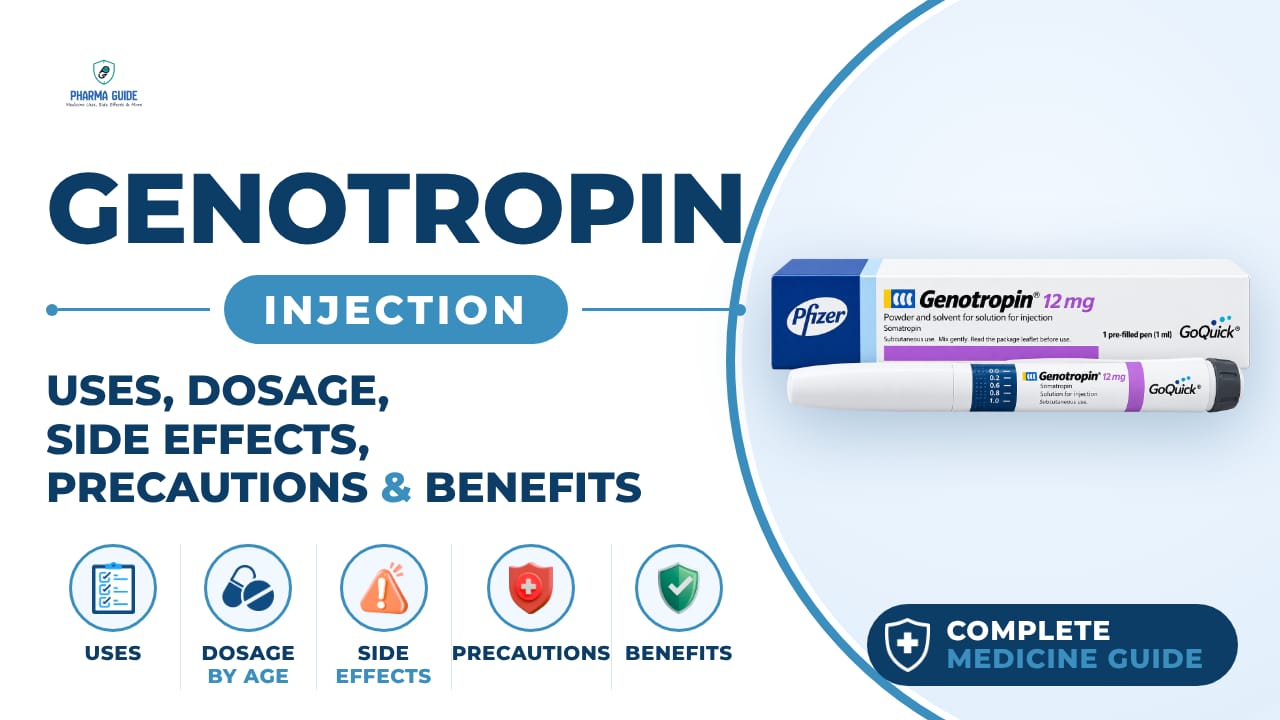
| Generic name | somatropin |
|---|---|
| Drug class | Growth hormone |
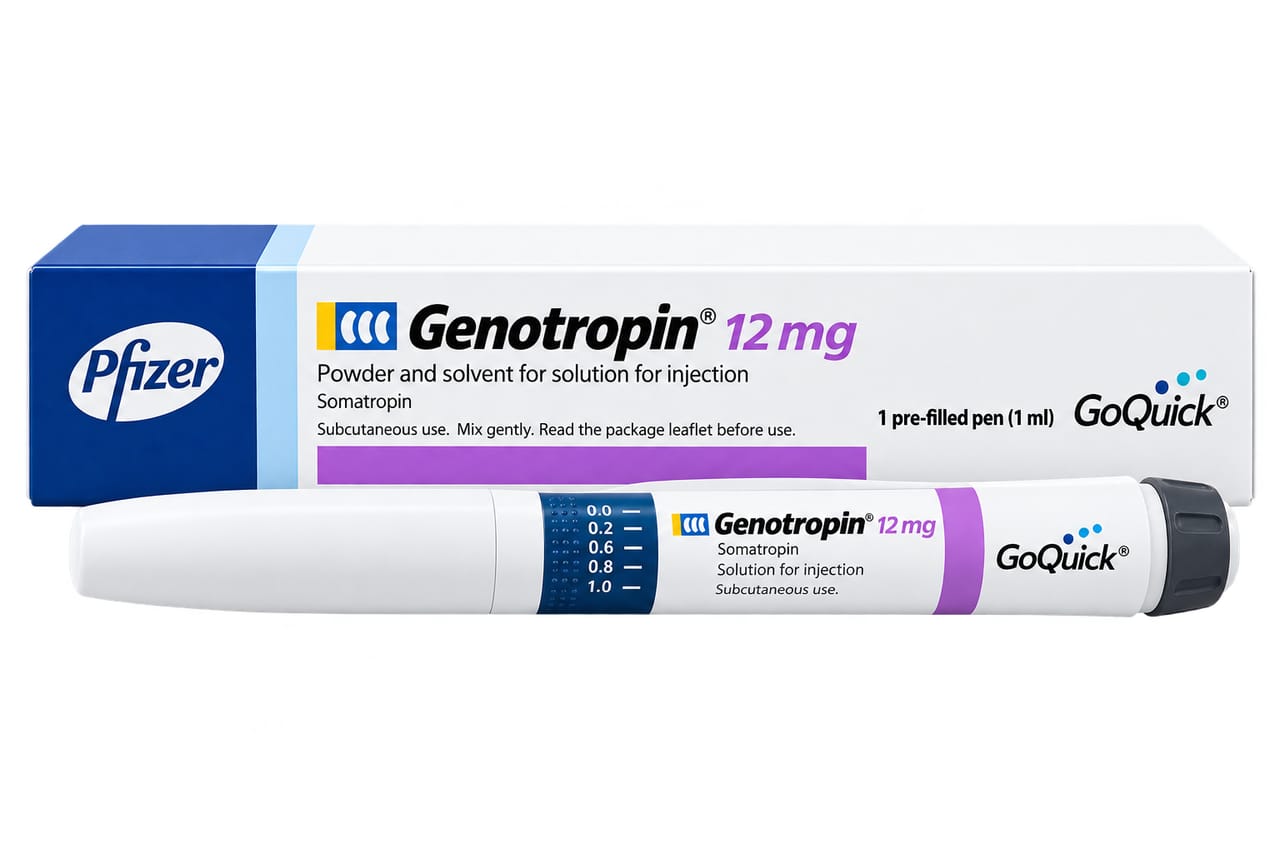
| Forms | Lyophilized powder in a two-chamber color-coded cartridge (5 mg and 12 mg, with preservative) for use with the GENOTROPIN Pen, GENOTROPIN MINIQUICK single-use delivery device containing a two-chamber cartridge (without preservative), available in doses from 0.2 mg to 2.0 mg |
Quick overview
Genotropin Injection (somatropin) is a man-made version of human growth hormone belonging to the growth hormone drug class. It works like the natural growth hormone made by the body's pituitary gland and is used to help children and adults grow and develop normally when their own bodies do not make enough of it. It is given by injection and is used for a range of growth-related conditions in children and for growth hormone deficiency in adults.
What is Genotropin Injection
Genotropin is a man-made version of human growth hormone. It works like the natural growth hormone made by the body's pituitary gland and is used to help children and adults grow and develop normally when their own bodies do not make enough of it.
Genotropin Injection uses
- Treatment of children with growth failure due to growth hormone deficiency (GHD)
- Treatment of children with growth failure due to Prader-Willi syndrome (PWS)
- Treatment of growth failure in children born small for gestational age (SGA) who have not caught up in growth by age 2
- Treatment of growth failure associated with Turner syndrome
- Treatment of idiopathic short stature (ISS) in children
- Replacement of growth hormone in adults with growth hormone deficiency (adult-onset or childhood-onset)
Benefits of Genotropin Injection
- Helps children grow taller by stimulating bone growth
- Helps normalize growth hormone-related body changes such as reduced fat mass and increased lean body mass in adults
- Can improve body composition and muscle mass in children with Prader-Willi syndrome
How Genotropin Injection works
Genotropin works just like the body's natural growth hormone. It stimulates bone and muscle growth, affects how the body processes protein, fat, and sugar, and helps normalize levels of a growth-related substance called IGF-I.
Genotropin Injection dosage
Genotropin is given as an injection just under the skin (subcutaneously), not as a pill, because it does not work when swallowed. The weekly dose is usually divided into 6 or 7 separate injections given on different days. It must not be injected into a vein.
Many people find it best to inject in the evening, since this mimics the body's natural pattern of releasing growth hormone at night and helps make it part of a regular bedtime routine. Use a different injection site each time (such as the thigh, abdomen, or buttocks) and rotate spots to help prevent skin or fat tissue changes at the injection site.
Do not shake the medicine when mixing it, as shaking can damage the growth hormone and stop it from working properly. Only inject the solution if it is clear and colorless; do not use it if it looks cloudy or has particles in it.
If a dose is missed, take the next injection at the regular time the next day — do not double up to make up for a missed dose. A healthcare provider should train patients or caregivers on proper injection technique before first use.
Use exactly as prescribed by your doctor or pharmacist.
Available forms and strengths
- Lyophilized powder in a two-chamber color-coded cartridge (5 mg and 12 mg, with preservative) for use with the GENOTROPIN Pen
- GENOTROPIN MINIQUICK single-use delivery device containing a two-chamber cartridge (without preservative), available in doses from 0.2 mg to 2.0 mg
Side effects of Genotropin Injection
Common
- Injection site reactions (pain, redness, swelling, bruising, itching, bleeding, lumps, or rash)
- Joint pain (arthralgia)
- Muscle aches and stiffness
- Swelling of the arms or legs (fluid retention)
- Headache
- Fat loss or changes at injection sites (lipoatrophy)
- Blood in the urine
- Low thyroid activity
- Mildly increased blood sugar
- Respiratory illnesses, flu, sore throat, stuffy nose, ear infections
- Stomach pain, increased appetite, fever
- Mood changes
Serious
- Signs of allergic reaction such as rash, wheezing, or swelling of the face, lips, eyelids, or throat
- Signs of increased pressure in the brain such as severe or recurring headaches, nausea, vomiting, or vision problems
- New limping, or hip or knee pain
- Worsening curvature of the spine (scoliosis)
- Signs of diabetes such as increased thirst, increased urination, or fruity breath odor
- Severe stomach pain that may indicate pancreatitis
- Signs of low adrenal hormone (hypoadrenalism) such as extreme weakness, dizziness, or weight loss
- Breathing problems or increased snoring, especially in children with Prader-Willi syndrome
- Numbness, tingling, or pain in the wrist or hand (carpal tunnel syndrome)
- Changes in the size or shape of moles
- Leukemia (reported rarely in children treated with growth hormone)
Warnings and precautions
- This medicine should not be used in people who are critically ill from recent heart or stomach surgery, major trauma, or breathing failure, since it has been linked to an increased risk of death in these situations.
- Children with Prader-Willi syndrome who are severely obese or have serious breathing problems should not use this medicine, as there have been reports of sudden death in such cases.
- This medicine should not be used in people with active cancer, and any tumor should be ruled out or fully treated before starting treatment.
- This medicine can increase the risk of a second tumor in childhood cancer survivors who received radiation to the head, particularly certain brain tumors.
- This medicine should not be used in people with certain types of diabetic eye disease.
- This medicine should not be used in children whose growth plates (bone-growing areas) have already closed.
- Serious allergic reactions including severe swelling and anaphylaxis have been reported; seek medical help right away if this happens.
- This medicine may unmask or worsen diabetes, so blood sugar should be checked regularly during treatment.
- A small number of patients have developed increased pressure in the brain, usually within the first 8 weeks of treatment, causing headache, vision changes, nausea, or vomiting.
- Growth hormone should only be used during pregnancy if clearly needed, since there isn't enough research in pregnant women to know its full effects.
- It is not known whether this medicine passes into breast milk, so it should be used with caution while breastfeeding.
- No specific studies have looked at how this medicine works in people with kidney problems, though it is used to help children with kidney disease grow.
- No specific studies have looked at how this medicine works in people with liver problems.
- Be careful before driving or using machines or tools until you know how this medicine affects you.
Storage
- Store GENOTROPIN lyophilized powder under refrigeration at 36°F to 46°F (2°C to 8°C)
- Do not freeze
- Protect from light
- The 5 mg and 12 mg cartridges, which contain a preservative, may be stored under refrigeration for up to 28 days after mixing
- The GENOTROPIN MINIQUICK may be stored at or below 77°F (25°C) for up to three months before mixing; after mixing it has no preservative and should be used right away or stored in the refrigerator for up to 24 hours
- The GENOTROPIN MINIQUICK should be used only once and then thrown away
- Always remove the needle before storing the pen or device
- Dispose of used needles and syringes in a proper puncture-resistant sharps container; do not throw them in household trash
- Do not recycle the sharps container
When to see a doctor
- Get emergency help right away for signs of a serious allergic reaction, such as hives, trouble breathing, or swelling of the face, lips, tongue, or throat.
- Call your doctor promptly if you have breathing problems, coughing, shortness of breath, or new or increased snoring, especially if you have Prader-Willi syndrome.
- Call your doctor if you develop nausea, vomiting, headaches, or vision problems, which could be signs of increased pressure around the brain.
- Call your doctor if you start limping or have pain in your hips or knees.
- Seek medical attention for severe upper stomach pain spreading to the back, with nausea and vomiting, as this may signal pancreatitis.
- Seek medical help for symptoms of an adrenal gland problem such as extreme weakness, severe dizziness, weight loss, or changes in skin color.
Alternatives
- Genotropin
- Humatrope
- Norditropin
Watch the video
FAQs
What is Genotropin Injection used for?
Genotropin is used to treat children with growth failure due to growth hormone deficiency, Prader-Willi syndrome, being born small for gestational age, Turner syndrome, or idiopathic short stature, and to replace growth hormone in adults with growth hormone deficiency.
How is Genotropin Injection given?
Genotropin is given as an injection just under the skin (subcutaneously), not as a pill. The weekly dose is usually divided into 6 or 7 separate injections given on different days, with the injection site rotated each time, such as the thigh, abdomen, or buttocks.
What should I do if I miss a dose of Genotropin?
If a dose is missed, take the next injection at the regular time the next day. Do not double up to make up for a missed dose.
What are the common side effects of Genotropin Injection?
Common side effects include injection site reactions, joint pain, muscle aches and stiffness, swelling of the arms or legs, headache, fat loss at injection sites, low thyroid activity, mildly increased blood sugar, and mood changes.
Who should not use Genotropin Injection?
Genotropin should not be used in critically ill people from recent heart or stomach surgery, major trauma, or breathing failure, in children with Prader-Willi syndrome who are severely obese or have serious breathing problems, in people with active cancer, certain diabetic eye disease, or in children whose growth plates have already closed.
General information, not medical advice
Your prescriber and the leaflet in your pack know your situation. This page does not.
- Follow your prescriber and the leaflet
- Don't start, stop, or change a dose on your own
- Doses and warnings differ by country and product
Sources
Video
Related medicines
Nutropin Injection: Uses, Dosage, Side Effects, Precautions and Alternates
Growth hormone
Nutropin Injection (somatropin) treats growth failure in children and growth hormone deficiency in adults. Learn uses, dosage, side effects, and warnings.

Injectafer Injection: Uses, Dosage, Side Effects, Precautions and Alternates
Iron products
Injectafer (ferric carboxymaltose) treats iron deficiency anemia and heart failure-related iron deficiency via IV. Learn uses, dosage, side effects, and